
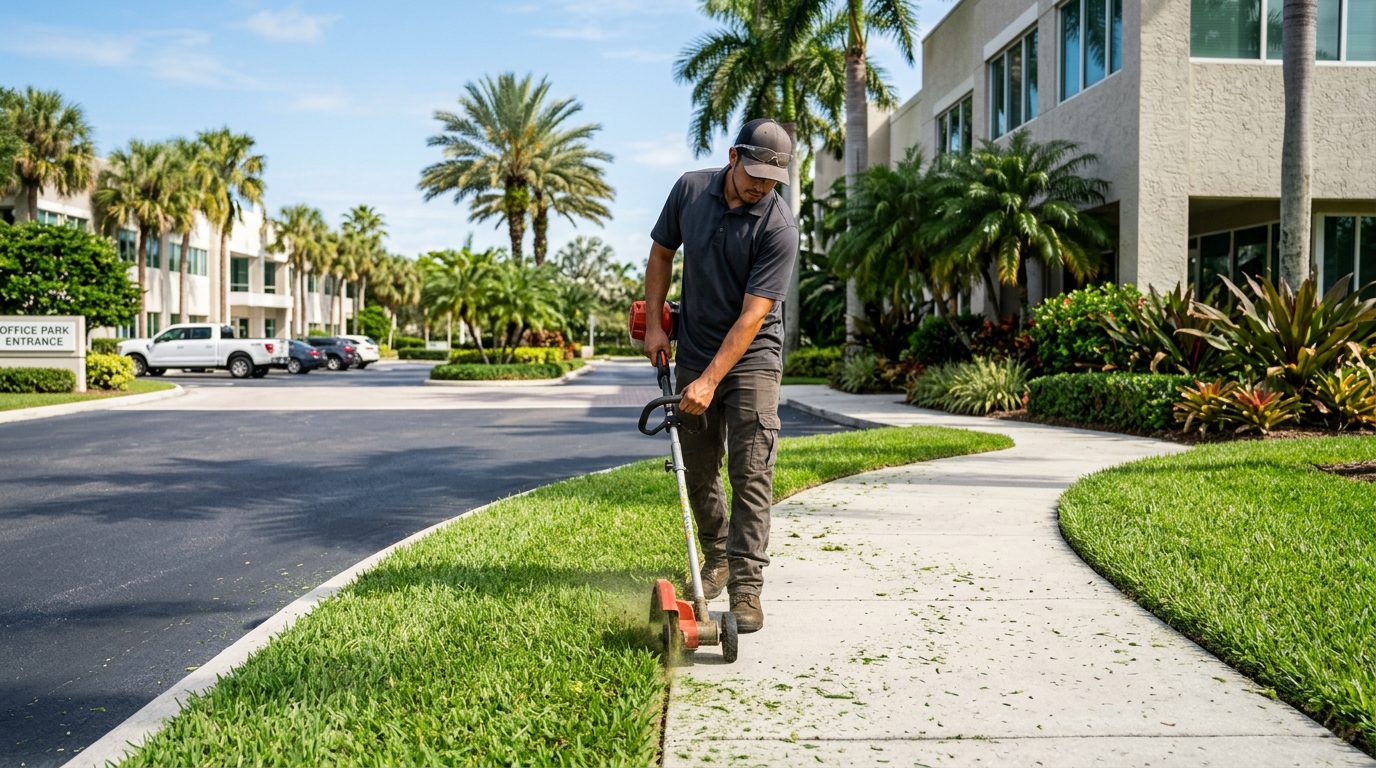
Landscape Services · South Florida
What Insurance Does a Florida Landscape Company Need?
Here is how to think through them.
By Ryan Jurney · Published November 22, 2026
So what insurance does a commercial landscape company need in Florida? Most carry general liability, commercial auto, and workers’ compensation insurance. Those three cover the most common risks on a client’s property, and other coverage gets added based on equipment, chemicals, and contract terms.
If you manage a condo, office, or common area, you’ll want proof of this coverage before a crew starts work. This guide explains what each policy does and what to check before you sign.
Core Coverage a Commercial Landscape Company Carries in Florida
A commercial landscape company typically carries general liability, commercial auto, and workers’ compensation insurance. Each policy covers a different kind of loss, so a gap in one leaves a gap in your protection. The right mix depends on the company’s crews, vehicles, equipment, and services.
A crew with several mowers, blowers, trucks, and pressure washers has more exposure than a small operation with a few hand tools. That’s why the contract should spell out the coverage it requires. Don’t leave it to the vendor’s judgment.
Gator Protection, Inc. offers landscape services and pressure washing across South Florida. The coverage questions in this guide apply to any landscape vendor on a commercial site. For the wider service picture, read our landscape services guide for Miami-Dade condos.
General Liability Insurance for Landscape Work on Client Property
General liability insurance pays for bodily injury and property damage that a third party can claim because of the vendor’s work.
Landscape work throws debris, cuts branches, and sprays water. A mower can kick debris across a walkway and hurt someone. A limb cut near a parking lot can land on a parked car. A pressure washer aimed too close to a painted wall or window can strip the finish or crack the glass. When damage like this happens on your property, the claim may reach you as the owner as well as the vendor.
That’s why property managers ask for proof of general liability before a crew starts. A certificate of insurance shows that the policy is active, which limits it carries, and which dates it covers. Keep that certificate in the contract file.
Check the limits against the contract’s insurance clause. If the clause asks for a higher limit than the vendor carries, close that gap before the first mow, not after a claim.
Commercial Auto Insurance for Crew Trucks and Equipment Haulers
Commercial auto insurance covers the vehicles a business uses for its work, such as crew trucks and trailers that carry equipment.
Personal auto policies often exclude vehicles used for business work. That means a company’s trucks usually need their own policy. Landscape crews drive all day. They travel between sites, haul mowers and trimmers on trailers, and carry fuel and fertilizer. An accident on any of those trips can raise hard questions about who was covered and for what.
A commercial auto policy should list the vehicles and drivers that actually do the work. If a crew member drives a truck that isn’t on the policy, the coverage may not match what the contract assumes. Ask the vendor to confirm both the vehicles and the drivers before the contract starts.
Loads matter too. Equipment that isn’t secured can shift or fall on the road. For South Florida service details, see our South Florida landscape services page.
Workers’ Compensation Requirements in Florida
Florida law requires employers covered by Chapter 440 to secure workers’ compensation for their employees.
Under Fla. Stat. § 440.10, each covered employer must secure the compensation payable to its employees. The policy must also use Florida class codes, rates, and rules. Failing to comply is a felony of the second degree under the same section.
Here’s what happens when coverage is missing. If an employer fails to secure compensation, an injured worker may choose to claim benefits under the chapter or sue for damages instead, under Fla. Stat. § 440.11.
Contractors face a related rule.
Who counts as an employee and who counts as an independent contractor depends on the facts. Ask for a certificate that shows workers’ compensation covering the crew members on your property.
Other Coverage to Ask About: Umbrella, Equipment, and Chemical Exposure
Umbrella, inland marine, and pollution coverage are worth raising with a vendor, but they aren’t automatic requirements for every company.
An umbrella policy adds liability limits above the primary general liability and auto policies. Inland marine coverage insures mobile equipment, such as mowers, trimmers, and pressure washers, that moves from one job site to the next. Pollution coverage matters when crews apply herbicides, fertilizers, or cleaning solutions, because runoff or a spill can lead to a claim.
Chemical work also carries state rules. The Florida agriculture department’s pesticide licensing page describes licensing and certification for commercial applicators of pesticides and fertilizer on landscapes. Our team can explain how landscape maintenance is scheduled for your property during the free first consultation, which is confidential and carries no obligation to continue. The UF IFAS GI-BMP program covers fertilizing, irrigation, and water quality for landscape professionals.
Ask whether the crew members who apply chemicals hold the credentials state rules require. Ask to see copies rather than relying on verbal assurances.
What Drives the Cost of Landscaping Insurance
Insurers set landscaping premiums based on the company’s exposure, including payroll, vehicles, equipment, service area, and claims history.
Each factor tells the insurer how much risk the business brings to the policy. A company with more crew members, more trucks, and more chemical applications usually presents a different risk than a small, equipment-light operation. Two vendors can carry the same policy types and still pay different premiums.
Limits and endorsements also shape the price. A lower premium can come with lower limits than the contract asks for. When you review a vendor’s proposal, read the coverage terms alongside the price. Ask what limits the figure includes, and check them against the insurance clause. Pressure washing and chemical work can change the risk picture, so mention those services when you ask.
Not sure what your next step is?
Talk it through with our team — the first consultation is free, confidential, and carries no obligation.
What Property Managers Should Verify Before Signing
Before you sign, get a current certificate of insurance and check it against the contract’s insurance clause, line by line.
- Confirm the policy types, limits, and policy periods listed on the certificate.
- Confirm whether the contract requires the property owner or management company to be named as an additional insured.
- Confirm the coverage dates run through the full contract term, and that renewal is addressed.
- Confirm the workers’ compensation coverage includes the crew members who will work on the property.
A certificate is a summary, not the policy itself. Ask about anything the contract requires that the certificate leaves out. If you’re replacing an existing vendor, timing matters too. The vendor change timing guide covers timing a switch around an existing contract.
Talk With Gator Protection About Your Landscape Contract
Gator Protection, Inc. offers landscape services and pressure washing across South Florida, including Miami-Dade, Broward, and Palm Beach counties.
If you’re reviewing a contract for a condo, office, or common area, settle the coverage questions above before a crew starts. Use the checklist in the section before this one.
Frequently asked questions
Does a commercial landscape company in Florida need workers’ compensation?
Florida law requires employers covered by Chapter 440 to secure workers’ compensation for their employees.
Is general liability the same as workers’ compensation?
No. General liability covers injury and damage claims from third parties, while workers’ compensation covers injuries to the company’s own workers.
What should a property manager check on a landscape vendor’s certificate?
Check the policy types, limits, and dates. Then confirm whether the contract requires you to be named as an additional insured.
Can our team help with fertilizer work on your property?
If a landscape contract for your property is nearing signature and the vendor’s coverage doesn’t yet match it, reach out to Gator Protection, Inc. through the contact form. We can talk through your landscape services and contract timing with you. La consulta inicial es gratuita, confidencial y sin compromiso de continuar. (The first consultation is free, confidential, and carries no obligation to continue.)
Your Job Sites
Note the properties you service, including residential, commercial, and high-traffic locations across Miami-Dade, Broward, and Palm Beach counties.
Coverage Needs Change Over Time
As you add clients, crew members, or new service lines, your exposures shift.