
Landscape Services | Miami-Dade County
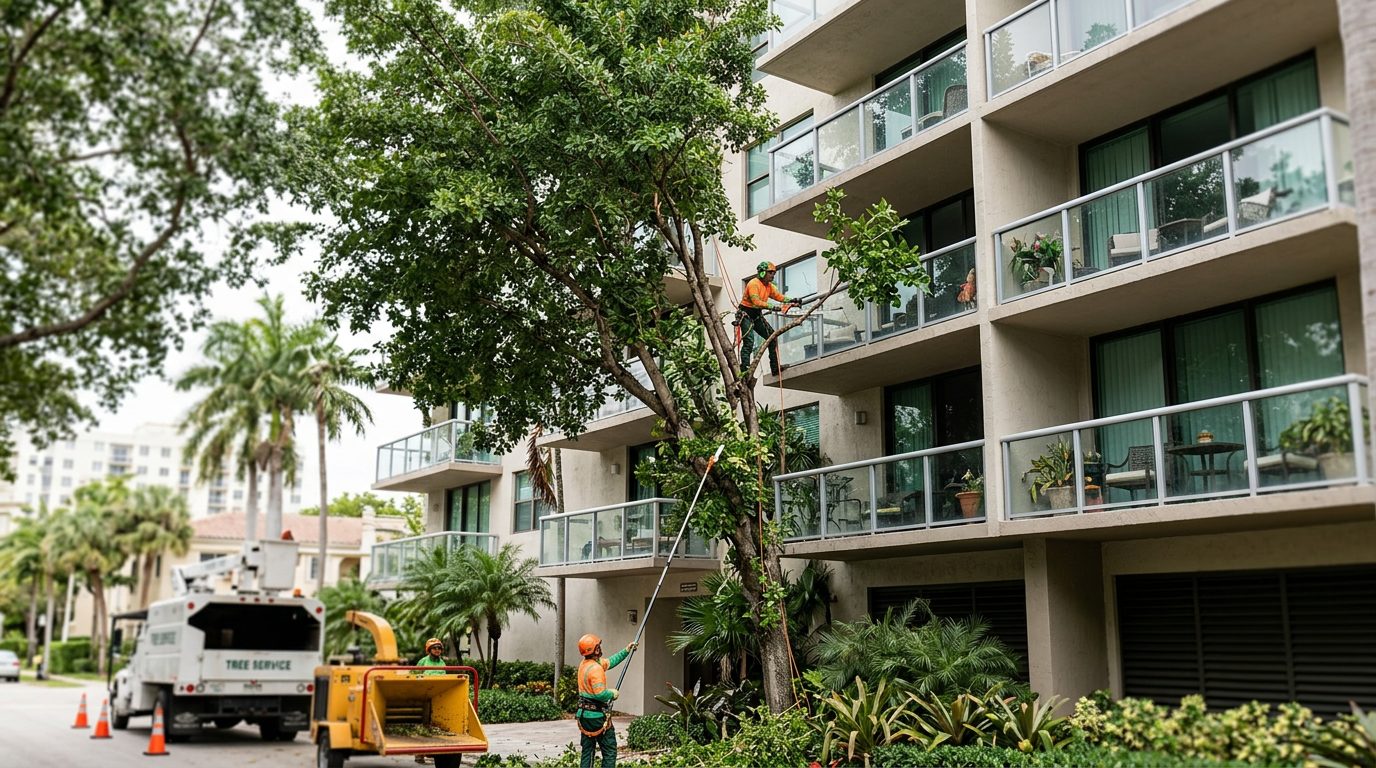
Tree Trimming Built Around Your Condo Balconies
Careful, scheduled trimming for condo communities across Miami-Dade, from Coral Gables and Brickell to South Beach. Our team plans each cut around balconies, walkways, and the people who use them.
Start With a Free Consultation
Free
First consultation, confidential and with no obligation to continue
Miami-Dade
Condo and commercial landscape work across South Florida
By Ryan Jurney · Published November 3, 2026
Tree trimming near condo balconies comes down to three things: clearance, timing, and who is responsible for the tree. A branch that looks fine from the parking lot can still scrape a screen, block a walkway light, or drop debris onto a balcony below. This guide explains what to check in Miami-Dade and how to plan the work. It is written for board members, property managers, and owners who did not expect to make these calls.
Why Branches Near Balconies and Walkways Need Their Own Check
A tree that looks healthy from the street can still cause trouble at balcony height. Branches grow toward light, so they often reach sideways over railings, screens, and walking paths. Over time they can rub on surfaces, hang low over a sidewalk, or shed leaves, flowers, and fruit onto a balcony. Those small problems add up.
Condo trees often sit in mixed-ownership areas. The association may maintain the grounds while an owner uses the balcony the branch hangs over. So the first question is not “how much should we cut?” It is “who looks after this tree, and who lives under it?”
Start with a walk of the site, with the board or property manager, before anyone picks up a saw. For a wider view of how condo grounds are managed, read our condo landscape maintenance guide.
Not sure what your next step is?
Talk it through with our team — the first consultation is free, confidential, and carries no obligation.
Timing: Matching Trims to the Miami-Dade Calendar
Plan trims before storm season starts, so weak limbs come down on a schedule instead of during a storm. The Atlantic hurricane season is the main planning window for Miami-Dade condos. Trees trimmed and checked before it begins give crews time to remove hanging or cracked limbs. After a strong storm, those same limbs can fall without warning.
Growth speed matters too. Warm, wet weather pushes new shoots fast. A branch that cleared a railing in spring may touch it by late summer. Check the trees again during the rainy months, not only once a year.
Light maintenance cuts and heavy removals are usually scheduled differently. A large cut stresses a tree more than routine shaping does. Ask the crew to explain the timing for each tree, based on its species and how it grows.
Watering is part of the plan too. Crews should plan water use around those rules.
Clearance: What to Measure Around Balconies, Railings, and Walkways
Clearance means no branch touches, presses on, or leans into a surface people use or a part of the building that can be damaged. Walk five zones and check each one:
- Balcony rails and screening
- Air conditioning units
- Windows and sliding doors
- Walkway headroom
- Lighting fixtures
Walk the zones at two heights. Stand on the walkway and look up at the canopy. Then, with the owner’s permission, look from each balcony the branch reaches.
Contact points matter more than overall tree size. A thin limb that rubs a screen every windy day can do more harm than a big limb that clears the building. Look for branches that touch, lean toward, or brush against these zones, and photograph each one.
Write the target down for each zone. For example, a note might say no branch touches a balcony rail, and walkway headroom stays clear of hanging limbs. When the board and the crew work from the same written target, the result is easier to check afterward.
Safety Checks: Dead Wood, Root Lift, and Walkway Hazards
Dead limbs, cracked stem joints, and lifting roots need prompt attention, because each one can fail or trip someone. Watch for these warning signs:
- Dead or hanging limbs
- Cracks or splits where stems join
- Two main stems growing side by side, which can split apart
- Fungal growth or soft spots at the base of the trunk
Roots matter as much as the canopy. Roots that lift pavers or crack walkway edges create trip hazards. Check them in the same visit as the branches. That standard is a useful benchmark for shared walkways too. See the federal walking-surface standards.
Fruit, flowers, sap, and leaves make walkways slick and stain balconies below. A cleanup scheduled right after each trim keeps that buildup from returning.
If a branch touches a power line, keep well clear. Report it to building staff or the property manager right away. Don’t try to cut it yourself.
Have questions about what happened?
Ask our team directly. The first conversation is free, confidential, and there is no obligation to continue.
Common Areas vs. Private Balconies: Who Decides and Documents
Trees in shared grounds usually fall under the association’s maintenance plan and board decisions. Florida’s condominium law sets how those boards meet. See Florida Statutes § 718.112.
A problem affecting only a private balcony may need its own talk with the board or property manager. Before that meeting, keep dated photos, a short written description of the branch, and any resident complaints.
Records matter too. Under Fla. Stat. § 718.112(1)(a), a condominium association in Florida is run according to its bylaws and, where it is incorporated, its articles of incorporation.
Managers have duties as well. The manager must also account for all association funds. See Florida Statutes § 468.4334.
What a Clear Scope of Work Should Include
A clear scope of work lists each step, each zone, and how the job will be checked. A practical scope covers:
- A pre-trim walk of each balcony and walkway zone
- A written clearance target for each zone
- Each tree and branch to be cut, with its location
- Debris removal and disposal
- Before-and-after photos
- A follow-up check after the crew leaves
Contact our team to walk through what is included in the scope of work, not just the price. A bid that skips the site walk or the cleanup may leave the work unfinished or leave debris on the walkway. Ask our team to show what is included in writing. Keep the agreed scope with the association’s records so the board can show what was approved.
Cost depends on the size of the trees, the access, and the number of zones. For how condo landscape costs are structured, see our condo landscape cost guide.
Storm Readiness and Your Next Step
Pre-season trimming and a post-storm check are the planned way to keep branches off balconies and walkways. Read the hurricane damage guidance for condo grounds for what to inspect after a storm. The Florida-friendly landscaping guide for condo common areas covers shared grounds. The UF IFAS Florida-Friendly Landscaping GI-BMP Program is a training program for landscape professionals on fertilizing, irrigation, and water quality.
You may be watching a limb hang over a balcony you don’t own. Or you may be writing a board report about a tree you never chose to manage. That is a hard position to be in, and you don’t have to work through it alone.
Frequently Asked Questions
Who decides on trimming trees in a condo’s common areas?
The association’s board usually makes that call under its maintenance plan.
When should condo trees be trimmed in Miami-Dade?
Plan trims before hurricane season starts, then check the trees again during the rainy months.
What should a tree trimming scope of work include?
It should include a site walk, clearance targets, debris removal, and before-and-after photos.
How long must condo bids be kept?
If a branch is hanging near a balcony or walkway in your building, reach out to us through our contact page. We can talk through the branches, walkways, and balcony zones you’re dealing with. Your first consultation is free, confidential, and comes with no obligation to continue (consulta inicial gratuita, confidencial y sin compromiso).
Want to know where you stand?
Tell us what happened and our team will walk you through the options available to you, at no cost.
Why Condo Associations Work With Gator Protection
Scheduled Around Residents
We plan trimming visits so balconies, pool areas, and parking are disrupted as little as possible.
Careful Work Near Balconies
Our crews keep branches clear of railings, screens, and building surfaces, and they clean up as they go.
Clear Scope of Work
Every proposal spells out which trees are included, the pruning method, and the cleanup schedule before work begins.
Support Staff You Can Reach
Our office and support team keep communication simple, so board members and property managers always know what is happening.
Do Not Cut Limbs Near Balconies Yourself
Branches that touch balconies, power lines, or roofs can cause sudden falls and property damage. Leave large cuts and overhead limbs to trained crews with the right equipment and a clear plan for cleanup.
What Our Condo Tree Trimming Includes
Balcony Clearance
Pruning to open sightlines and keep branches away from railings, glass, and balcony furniture.
Canopy Shaping
Selective trimming that keeps trees healthy, balanced, and in proportion to the building.
Debris Removal
Cuttings are bagged, hauled, and removed from walkways, planters, and parking areas.
Follow-Up Maintenance
Recurring visits that keep trees in check between major trims, based on a plan agreed with your property team.
Plan Your Condo Tree Trimming With a Free Consultation
Related practice areas
- Why Is My Condo Lawn Turning Brown Florida? Causes