
Landscape Services | South Florida
Planting in Groups That Look Intentional
A simple design idea that helps commercial landscapes feel balanced, orderly, and easy to maintain.
By Ryan Jurney · Published November 18, 2026
What Is the 3-5-7 Rule in Landscaping?
What is the 3-5-7 rule in landscaping? The 3-5-7 rule in landscaping is a planting guideline. It says to group plants in odd numbers, such as three, five, or seven, instead of pairs or even rows. Designers use it to make beds look natural and settled.
This guide explains the idea, how to choose group sizes, and the mistakes that most often cause problems. Our team provides commercial landscape maintenance across South Florida, including Miami-Dade, Broward, and Palm Beach counties. Planting choices affect how a property looks and how much work it takes to keep that look.
Not sure what your next step is?
Talk it through with our team — the first consultation is free, confidential, and carries no obligation.

What the 3-5-7 rule means in landscaping
The 3-5-7 rule is a common planting convention. It suggests that plants look best when grouped in odd numbers: three, five, or seven of the same plant in one cluster. Many people treat it as part of the wider “rule of three” in garden design, which uses odd-numbered groups of plants and other design elements.
The numbers are guidelines for visual effect. They are not fixed requirements. A group of four can look fine in the right spot. Think of the rule as a starting point for a design, not a formula that guarantees a result.
Choosing 3, 5, or 7 by plant size and bed scale
Choose the group size by two things: how large the plant gets at maturity and how much space the bed has. Plant size matters more than the number itself.
Groups of three suit larger specimen plants or small beds. A few plants in this setting read as a deliberate accent instead of a scattered handful. A single large shrub often works best this way.
Groups of five fit mid-size shrubs in a border or along a building’s foundation. Five plants give enough mass to tie a bed together without crowding it.
Groups of seven or more suit ground covers or a repeated plant that forms a drift across a larger area. Drift planting means one plant type repeated in a loose, flowing band.
Clusters also make a bed read as one connected mass. Scattered single plants can look like leftovers. A cluster tells the eye the planting was designed as a whole.
Why odd-number clusters look more natural
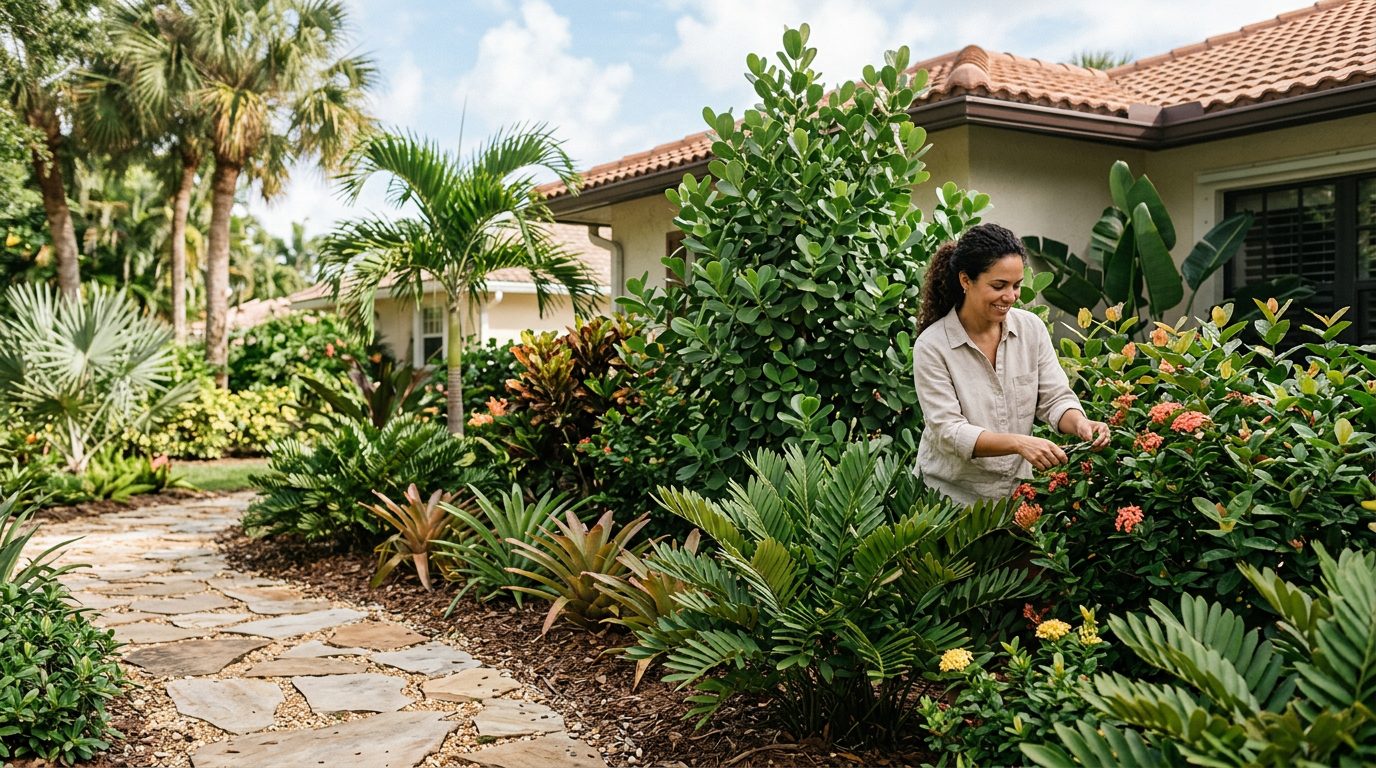
Odd numbers avoid the stiff, mirrored look that pairs or even counts can create. Two identical shrubs placed side by side often look like a formal entry. Odd groups feel less symmetrical and more like plants that grew on their own.
Repeating the same cluster across a bed ties the design together. The eye follows the repeated groups from one end of the bed to the other. This guides people through the space without any extra hardscape.
Spacing matters just as much. Place plants for their mature size, not their size at purchase. If you space them too tightly, the cluster never fills in as designed. If you space them too loosely, the group looks like separate plants that happen to sit near each other.
The 3-year rule and how it differs from the 3-5-7 rule
The 3-year rule is a gardening saying about plant establishment. A common version is “sleep, creep, leap.” In year one, the plant mostly grows roots. In year two, top growth picks up slowly. By year three, growth is usually more visible.
The 3-year rule describes timing. The 3-5-7 rule describes arrangement. One tells you when a plant may start to look its best. The other tells you how many plants to group together. People mix them up because both use numbers, but they answer different questions.
Establishment timing varies by plant type, soil, sun, and watering. Treat the three-year pattern as a general expectation, not a guarantee. A fast-growing plant may fill in sooner, and a slow one may take longer.
Common mistakes when applying the 3-5-7 rule in landscaping
The first mistake is planting too closely. Crowded clusters never develop their intended shape, and plants compete for light and water.
The second mistake is choosing group sizes without checking mature height and width. A group of seven tall shrubs can overwhelm a walkway or block a window. Ground covers can spill onto a lawn edge if nobody planned for it.
The third mistake is using one plant type in every grouping. Repeating one plant can look flat when heights and textures never change. Mix heights and textures across the bed while keeping each cluster consistent.
The fourth mistake is blocking access. Tight clusters make pruning, irrigation repair, and pest checks harder. Leave room to reach valves, sprinkler heads, and the base of each plant.
The fifth mistake is ignoring local rules. Watering needs for commercial grounds vary with weather and season, so schedules are best reviewed against current local guidance. A bed plan should show how new plantings will get water and when.
Not sure what your next step is?
Talk it through with our team — the first consultation is free, confidential, and carries no obligation.

Planning your beds with a landscape team
A planting plan shapes how a property looks for years. If you sit on a condo association board or manage a property, the grouping in a proposal affects both appearance and upkeep. Ask the contractor how the group sizes were chosen and which mature size the plan uses.
Plain questions help. Ask whether the plan shows spacing for mature size. Ask how irrigation will reach each group. Ask how the beds will be maintained after planting. Ask which parts of the plan depend on the plant species, such as planting timing.
Is the 3-5-7 rule required?
No. It is a design guideline for visual effect, not a required standard.
How many plants should be in a group?
Groups of three, five, or seven are common, chosen by mature plant size and bed scale. Larger ground covers may need bigger groups to read as a drift.
What is the 3-year rule for plants?
It is a general “sleep, creep, leap” pattern for establishment: roots first, slow top growth in year two, and more visible growth by year three.
Planning a new bed or reviewing a landscape proposal can feel like a lot to sort out alone, and you don’t have to do it that way. The initial consultation is free, confidential, and comes with no obligation to continue. You can reach out through our contact page to talk through your beds.
Why Work With Our Team
South Florida Coverage
We provide commercial landscape maintenance across Miami-Dade, Broward, and Palm Beach counties, including South Beach, Coral Gables, and Brickell.
Free, Confidential First Consultation
The initial consultation is free, confidential, and without obligation to continue.
Ongoing Maintenance
Landscape services are one part of how we keep commercial properties looking their best throughout the year.
Related Property Services
Our team also offers day porter service, floor care maintenance, and pressure washing for the same properties.
Use the Rule as a Starting Point
Groupings of three, five, or seven are a guideline for visual effect, not a requirement. Always confirm plant size, spacing, and site conditions before you finalize a planting plan.
Applying the Rule in Practice
Start With Mature Size
Choose group counts based on how large each plant will grow, not how it looks at planting.
Match the Bed Scale
Small beds often read best with smaller groups, while large areas can carry bigger drifts of the same plant.
Vary Height and Texture
Mix heights and leaf forms within the groups so the planting has depth and visual interest.
Plan for Maintenance
Spacing groups with room to grow makes pruning, edging, and access easier over time.