
Commercial Landscape Maintenance | South Florida
Commercial Landscape Proposal: Which Line Items to Include?
A clear line-item list shows property managers exactly what the monthly price covers, and what it leaves for another day.
By Ryan Jurney · Published November 22, 2026
A landscape proposal can look complete and still leave gaps. When you are reviewing landscape maintenance pricing for a commercial property, a good proposal lists every zone, visit, season, price, exclusion, and term.
This guide walks through the commercial landscape maintenance proposal line items that matter most, and why each one changes what you pay and what you get.
What a Commercial Landscape Maintenance Proposal Is Meant to Cover
A commercial landscape maintenance proposal is the written plan that sets the scope, schedule, price, and terms for ongoing work at a property. It is an operating document, not a single number. A low monthly price can hide missing visits, excluded zones, or extra charges for work the property expects every season.
Think of the proposal as a draft contract you can check line by line. Each line should answer a plain question. Which areas are covered? How often does the crew come? What happens in spring and fall? What costs extra?
A proposal that says “as needed” leaves the property guessing about what it bought.
Check each category below against your property, not against a generic template.
If a landscape proposal for your property is sitting on your desk, we can walk through each line with you, so you know exactly what you're signing. Talk it through with our team — the first consultation is free, confidential, and carries no obligation.
Property Scope and Service Areas
The scope section should name every zone the crew maintains and state which zones are left out. Start with the property address, the landscaped area in acres or square feet, and a site map or zone breakdown. Without a map, a proposal can price a yard without showing exactly which areas it covers.
Give each zone its own line. Front entrances, common areas, parking islands, perimeter beds, turf areas, and amenity spaces like pool decks or courtyards each need one. Lumping them together hides which areas get attention.
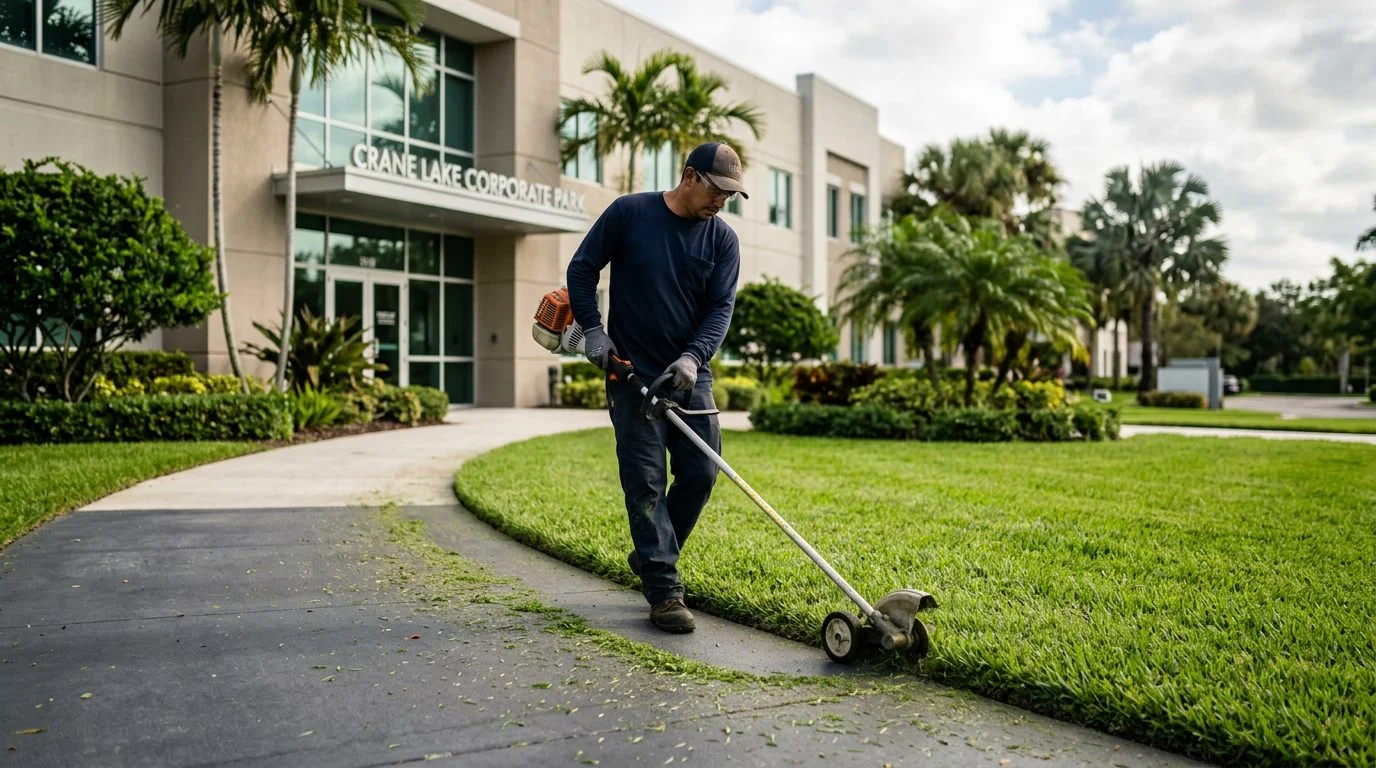
Include hardscape edges too. Walkways, curbs, and bed lines are the boundaries crews must keep clean and edged. If a proposal mentions edging but never names the walkways, you can’t tell what is included.
Write down exclusions. Private patios, areas owned by individual units, or a neighboring lot may sit outside the contract. A property manager or board should not learn at invoice time that a zone was never covered.
Finally, confirm the scope matches the site walk and any measurements taken before pricing. If the numbers in a proposal do not match the scope you discussed, ask our team for a revised proposal.
Recurring Maintenance Services and Visit Frequency
Each recurring service should show how often it happens, not just its name. “Mowing” tells you little. “Mowing weekly from spring through fall, at a stated cutting height” tells you what you’re buying.
Mowing should list the frequency for each season, the cutting height range, and how clippings are handled. Clippings left on turf cost less to manage than clippings bagged and hauled away.
Edging and trimming of walks, curbs, and bed lines need their own frequency. Weeding and bed maintenance should say whether mulch refresh is included or billed separately. Shrub and hedge trimming should state whether it covers shaping or only maintenance cuts. A shaping cut and a light trim are different jobs.
Litter and debris removal needs a schedule for each visit. A property with heavy foot traffic needs more than a monthly sweep. List visit days and typical arrival windows too, so property staff and tenants can plan around the work.
Seasonal and Periodic Work: Spring and Fall Items
Spring and fall cleanup should each appear as its own line with a month or window. Vague wording such as “seasonal cleanup” leaves the work unclear. A clear scope spells out items such as bed clearing and first-round weeding.
Spring cleanup usually covers bed clearing, leaf and debris removal, and a first round of weeding. Fall cleanup covers leaf removal, bed preparation, and end-of-season trimming. Write out each task so the reader can see the work and its timing side by side.
Mulch installation needs more detail than a single line. State the material type, the depth, the quantity, and whether it is part of the base price. Mulch can be a large expense on commercial beds, and a surprise invoice for it is a common complaint.
Storm and fallen-limb cleanup needs a clear rule. The proposal should say whether storm cleanup is part of the monthly price or priced per event. It should also say how the property will be notified before the crew starts.
Describe how one-time tasks outside the normal schedule will be quoted and approved before work begins.
Plant Health, Irrigation, and Fertilization Line Items
Plant health line items should state how often irrigation is checked and how fertilizer is applied. These items affect the grounds and how the property uses water and chemicals, so they need specific wording.
Irrigation checks should name the inspection frequency, what the crew checks, and how leaks or clogged heads are reported. Irrigation repairs should say whether parts and labor are billed separately or covered by a repair allowance. Florida’s water conservation guidance covers landscape irrigation restrictions and water-saving practices, so the proposal should show how watering is handled. FDEP water conservation
Fertilization needs a clear program. State the number of applications per year, the product type in general terms, and the timing by season. Grounds care on commercial properties involves careful planning, and our team can review your site’s needs during a free, confidential initial consultation with no obligation to continue. Ask whether the crew has completed Green Industries Best Management Practices training. Training through the UF IFAS Green Industries Best Management Practices program covers fertilizing, irrigation, and water quality.
Plant replacement should state whether replacing dead or damaged plants is included, and how replacements are approved and priced.
Pricing Structure, Exclusions, and Change Orders
The price section should show the base monthly or annual figure and what it covers. Each recurring service should sit beside the price. Otherwise you can’t tell whether mulch, storm cleanup, or irrigation checks are included.
Keep one-time and seasonal work out of the base figure. Show it as separate priced lines. List exclusions plainly, such as tree removal, major irrigation installation, or hardscape work.
Change orders need their own process. The proposal should explain how a request outside scope is described, priced, and approved in writing before work starts. Verbal approvals cause disputes later.
Payment terms belong in the proposal: the payment schedule, invoicing cycle, and any late-payment terms. State the contract term, renewal terms, and the written notice needed to change or end service.
If the property requires vendor insurance, list the certificate of insurance details the contractor must provide.
Not sure what your next step is?
Talk it through with our team — the first consultation is free, confidential, and carries no obligation.
Understanding Your Landscape Maintenance Proposal
Confirm that the scope, seasons, and exclusions in your proposal match what was discussed with our team. Price makes the most sense when you know exactly which acreage, seasons, and exclusions it covers.
Confirm that the proposal addresses each category above. Check that each one states frequency, not just a service name. A weekly bed visit and a monthly one cost different amounts, and a visit count makes that visible.
Look for matching assumptions. Are the acreage figures the same? Do the seasonal windows line up? Are the same zones excluded? If a proposal leaves out the parking islands, the scope is incomplete, so ask our team to confirm whether they are included.
Flag vague wording such as “as needed,” “seasonal cleanup,” or “routine care.” These phrases have no dates, quantities, or limits. Ask the provider to replace them with specifics. Ask for an explanation of any line that does not match the site walk.
Keep a written record of approved changes so the final contract reflects what was agreed.
Will a proposal list every exclusion?
It should. Exclusions show what the price does not cover, such as tree removal or major irrigation installation.
What should I check in a landscape maintenance proposal?
Use a simple checklist to confirm the tasks included in your service plan. Confirm they cover the same zones, visit frequency, seasons, and exclusions.

Get Help Reviewing Your Commercial Landscape Proposal
If a landscape proposal is in front of you, a short walkthrough can confirm what each line covers before you sign. Picture a property with parking islands, a shared courtyard, and an irrigation system nobody has checked in months. Each of those details changes the scope, frequency, and price.
La consulta inicial es gratuita, confidencial y sin compromiso de continuar.
Reach out through our contact form and we’ll go through the scope, frequency, and exclusions for your property, line by line.
What a Complete Landscape Line-Item List Covers
Every Zone Named
Each area of the property should appear by name, such as front entry, parking islands, rear courtyard, and perimeter beds.
Visit Frequency
The proposal should state how often each task happens, from weekly mowing to quarterly shrub pruning.
Seasonal Tasks
Seasonal work, such as mulch refreshes and cleanup after storms, should be listed so it is not treated as an add-on surprise.
Exclusions
Work outside the agreed scope, such as tree removal or major irrigation installation, should be written out plainly.
Do Not Approve a Proposal With Vague Scope
If a line item says only "landscape maintenance" or "as needed," the price may not match the work you expect. Ask for each task, zone, and visit schedule to be written out before you approve the price.
Line Items to Confirm Before You Sign
Turf and Bed Maintenance
Confirm mowing, edging, weeding, and bed care for each zone, along with the cut height and clean-up after each visit.
Trees and Shrubs
Check whether routine pruning and shaping are included, and whether trimming near structures or large-tree work is excluded.
Irrigation and Water Features
Confirm whether system checks, adjustments, and minor repairs are included, and which parts or installations fall outside the proposal.
Hardscape Cleaning and Pressure Washing
List which walkways, entries, or exterior surfaces are cleaned, how often, and whether that work is priced separately.