
Day Porter Service | Miami Condos
Lobby Water Leak? Know Your Day Porter's First Steps
A fast, organized response protects residents, guests, and your lobby floor. Here is what should happen from the first report to the final check.
By Ryan Jurney · Published November 6, 2026
Why a Reported Lobby Leak Needs a Fast, Documented Response
If you’re asking what to do when a resident reports a water leak in the lobby, start with safety and a clear record. The first steps are to make the spot safe, tell building management, and write down what happened.
Wet floors are slippery, and a leak can spread quickly. The day porter is often the first trained person on site during working hours, so those first few minutes matter.
A fast, documented response lowers the risk of a slip. It also gives the building a clear timeline if questions come up later.
This page describes typical day porter duties. Each building has its own leak and emergency procedures, and those set the exact order. Use the steps below as a checklist to compare against your building’s plan.
If a leak in your building's lobby has you deciding who should act next, we can walk through your day porter routine with you. Talk it through with our team — the first consultation is free, confidential, and carries no obligation.

First Minutes: Confirm the Report and Make the Area Safe
The porter should go to the spot right away, confirm the water, and make the area safe. Quick observation tells management how urgent the problem is.
Check whether the water is dripping from a visible source, spreading across the floor, or pooling near a wall or ceiling. Note each detail. Those facts shape the next call.
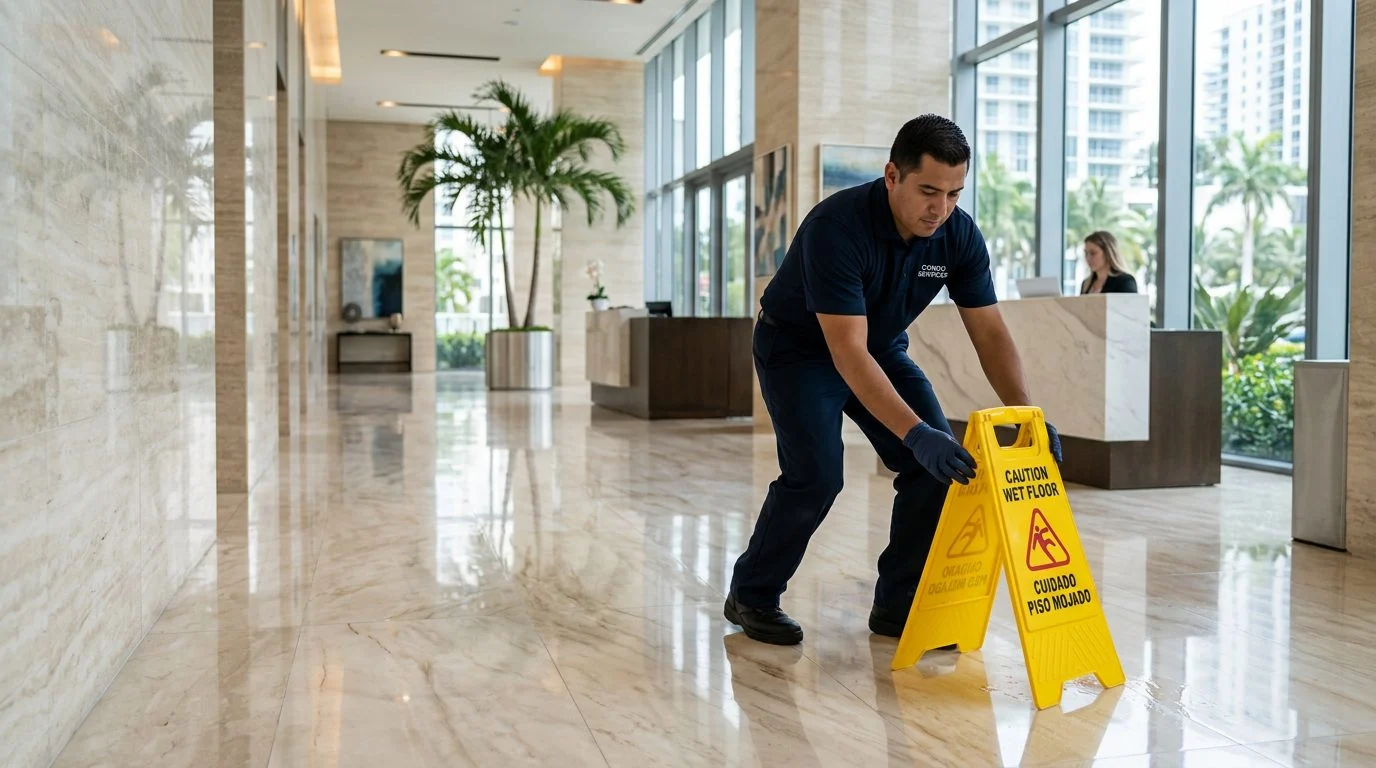
Next, place wet floor signs and block off the slick area. Keep residents, visitors, and deliveries away from it. If the building has a second entrance, guide foot traffic there.
Routine floor care is a regular service for commercial spaces.
Do not climb, reach into ceilings, or attempt repairs. The porter’s job is to report what’s visible, not to fix the source.
Notify the Right People and Log the Report
Once the area is safe, the next part of what to do when a resident reports a water leak in the lobby is notification. The porter should contact building management or the property manager through the building’s set contact path.
Say what was seen, where it is, and how far the water has spread. Keep the message short and specific.
Use a simple log. Record the time the report came in and the time the porter arrived. Note the exact lobby location, the visible extent of the water, the actions taken, and who was told.
Take dated photos before cleanup starts, if it is safe to do so. Photos show the condition before anything is moved or wiped up.
Keep the log factual. Stick to what was seen and done, not guesses about the cause. A shared log also helps the next shift pick up where the last one stopped.
Water Removal and Floor Care After the Leak
Standing water should come up with equipment and absorbent methods that suit the floor. Tile, stone, and sealed concrete react differently to water and cleaners, so the method should match the surface.
Dry the floor fully before the signs come down. Moisture can stay under mats and along grout lines. A slip can happen there later if the floor isn’t truly dry.
Use cleaning products that follow the flooring manufacturer’s guidance. When a disinfectant is needed, check its label against the surface and the use. The EPA’s list of registered disinfectants shows the label claims for each product.
Note any staining, lifted tile, or dull finish. Report those marks to building management for follow-up. Floor care maintenance can restore and protect lobby floors after an incident like this.
Preventing a Repeat: Hallway and Lobby Safety Checks
Extra checks in the days after a leak help catch a second problem early. Add the lobby entry, elevator landing, and hallway floors to the porter’s regular rounds for a while.
Watch for moisture near entrances, planters, and exterior walls. Outdoor water can reach the lobby threshold, especially when sprinklers run close to the building.
Watering-day rules can affect how much water reaches the entry area.
If drainage or planting beds near the entry seem to add water, note those spots. Landscape services can review those areas with building management. Record repeat problem spots so the building can address them together.
Planning Ahead: Questions to Ask About Your Building’s Day Porter Procedure
Boards and managers should set the leak procedure before a problem happens. Ask who the porter calls after hours and how each leak report gets logged.
Ask how quickly the porter is expected to respond. Ask what the written log must include and who reviews it. Ask how floor care after a leak gets handled.
If a lobby leak has you deciding who should act next, reach out through our contact page. Your first consultation is free, confidential, and carries no obligation to continue.
Frequently Asked Questions
What should happen when a resident reports a water leak in the lobby?
The porter confirms the water, makes the area safe, and notifies management. Then the report gets logged, and the floor is dried and checked.
Should a day porter try to fix a lobby leak?
No. The porter reports what’s visible and stays off ceilings and equipment. Repairs are handled by the building’s own contacts.
Does day porter service include floor care after a leak?
A porter can support water removal and drying. Ongoing floor care maintenance can restore and protect the floor, as the building requests.
The Four Steps After a Lobby Leak Is Reported
1. Confirm and Secure the Area
Verify the water, place wet-floor signage, and keep residents and guests away from the spot so no one slips.
2. Notify Building Management
Tell management what was seen, where it is, and how far it has spread. Clear, specific details help the right people act quickly.
3. Log the Report
Record the time, location, and conditions in the shift log so there is a clear written history of the event.
4. Dry and Check the Floor
Clean up and dry the affected floor, then inspect it again for residual moisture or new signs of water.
Do Not Attempt the Repair
A day porter should report what is visible and stay off ceilings, light fixtures, and building equipment. Leak sources are handled by building maintenance or qualified repair crews, not by lobby staff.
How Our Day Porter Service Supports Miami Condos
Prompt Response
Our team is on site during the day to spot and report water issues before they spread across the lobby.
Safety First
Wet floors are marked and cordoned off right away to reduce the risk of slips and falls for residents and guests.
Clear Documentation
Every incident is logged so management has a written record of what happened, when, and where.
Coordinated With Management
We keep building management informed so repairs can be scheduled and handled by the right professionals.
Protect Your Lobby With a Day Porter Plan Built for Your Building. Start With a Free First Consultation, Confidential and With No Obligation.
Related practice areas
- Day Porter Service in Miami-Dade: What It Covers and How to Switch Vendors
- How to Reduce Day Porter Turnover at a Miami Condo Without Cutting Coverage
- What Should a Day Porter Not Do in a Miami Condo?