
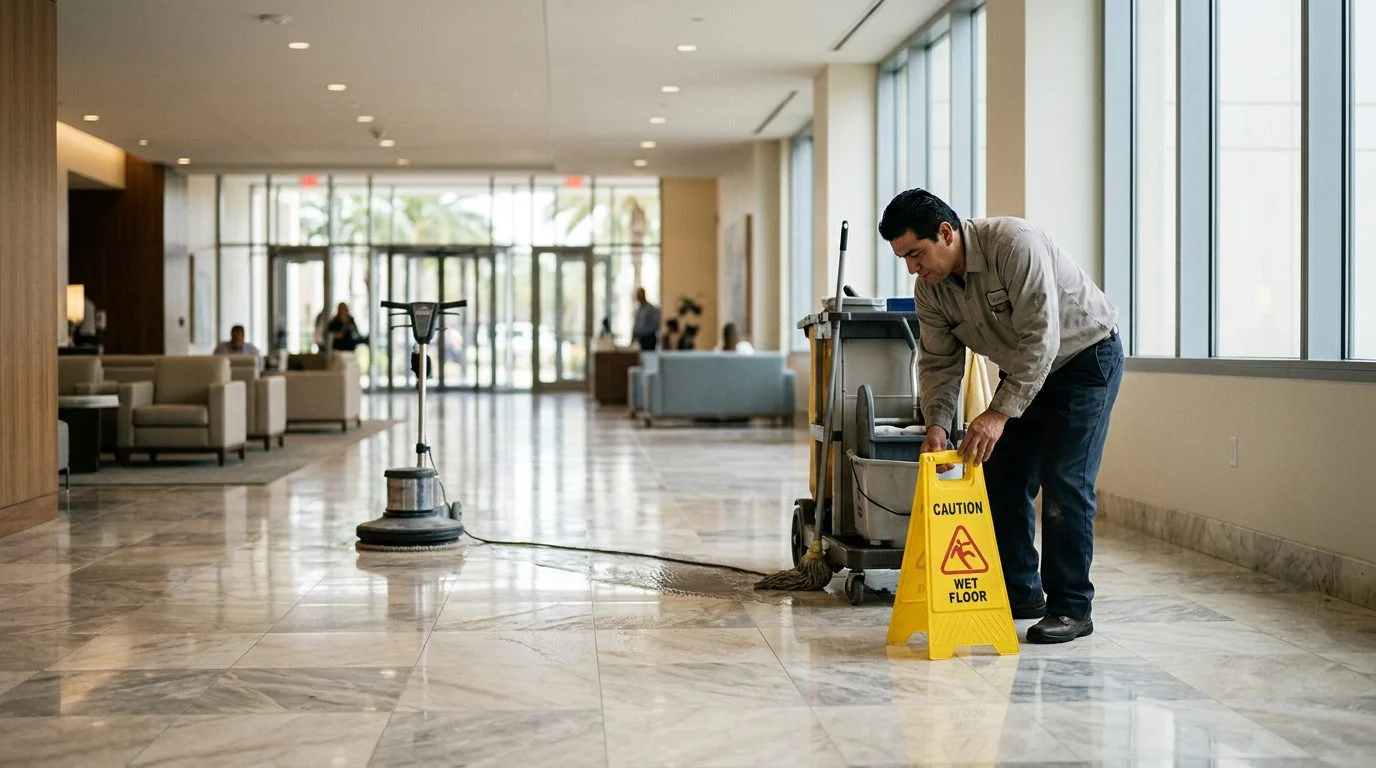
Floor Care Maintenance · South Florida Condo Lobbies
Keep Your Condo Lobby Floors Safe Before Residents Slip
Lobby floors take heavy foot traffic, rain, and humidity every day. A steady routine helps your building stay safer and look its best.
By Ryan Jurney · Published November 9, 2026
If you run a condo lobby, you already know a wet floor can cause a slip and fall. Day porter service lowers that risk when mopping follows a set method, warning signs stay up until the floor is dry, and each step is written down.
This guide covers the cleaning side of that work in South Florida buildings. It walks through the mopping steps, the warnings, and the records that show what was done.
Short Answer: Careful Mopping Keeps a Lobby Floor Safer
A day porter keeps a Florida condo lobby safer by mopping in small sections, marking each wet area, and checking that the floor is dry before people walk on it. The method matters as much as the mop. Rain and humidity bring water and sand through the entrance all day. Each wet spot is a possible slip hazard, so the work should be planned around entry traffic.
Regular floor care supports a safer environment for the people who use commercial spaces every day. Good cleaning practice aims at that goal on every shift.
If a wet lobby floor has you worried about a fall in your building, you don't have to work out the cleaning plan alone. Reach out and we'll talk it through with you. Talk it through with our team — the first consultation is free, confidential, and carries no obligation.
How a Day Porter Mops a Lobby Without Creating a Hazard
A day porter keeps a lobby safer by finishing one section before starting the next. Work in small blocks so no large area stays wet and open at once.
Start at the far side of the lobby and work back toward the entrance. That way, the porter doesn’t walk across the floor that was just cleaned.
Wring the mop well. A dripping mop leaves standing water that spreads toward rugs, corners, and elevator doors. Pick up pools with a dry pad or squeegee instead of pushing them around.
Keep the method the same every shift. Use the same tools, the same dilution, and the same order. A steady routine makes it easy to spot when a step was skipped.
Give extra attention to the spots people cross most. These include the mat inside the entrance, the area by the elevators, and the path from the front doors. Those spots collect water first.
Timing counts too. Mopping during the busiest arrival hours means more people walk on a damp floor. Where the building allows, schedule heavy mopping for slower periods and use quick spot checks during busy times.
Wet Floor Signs and Warnings During Cleaning
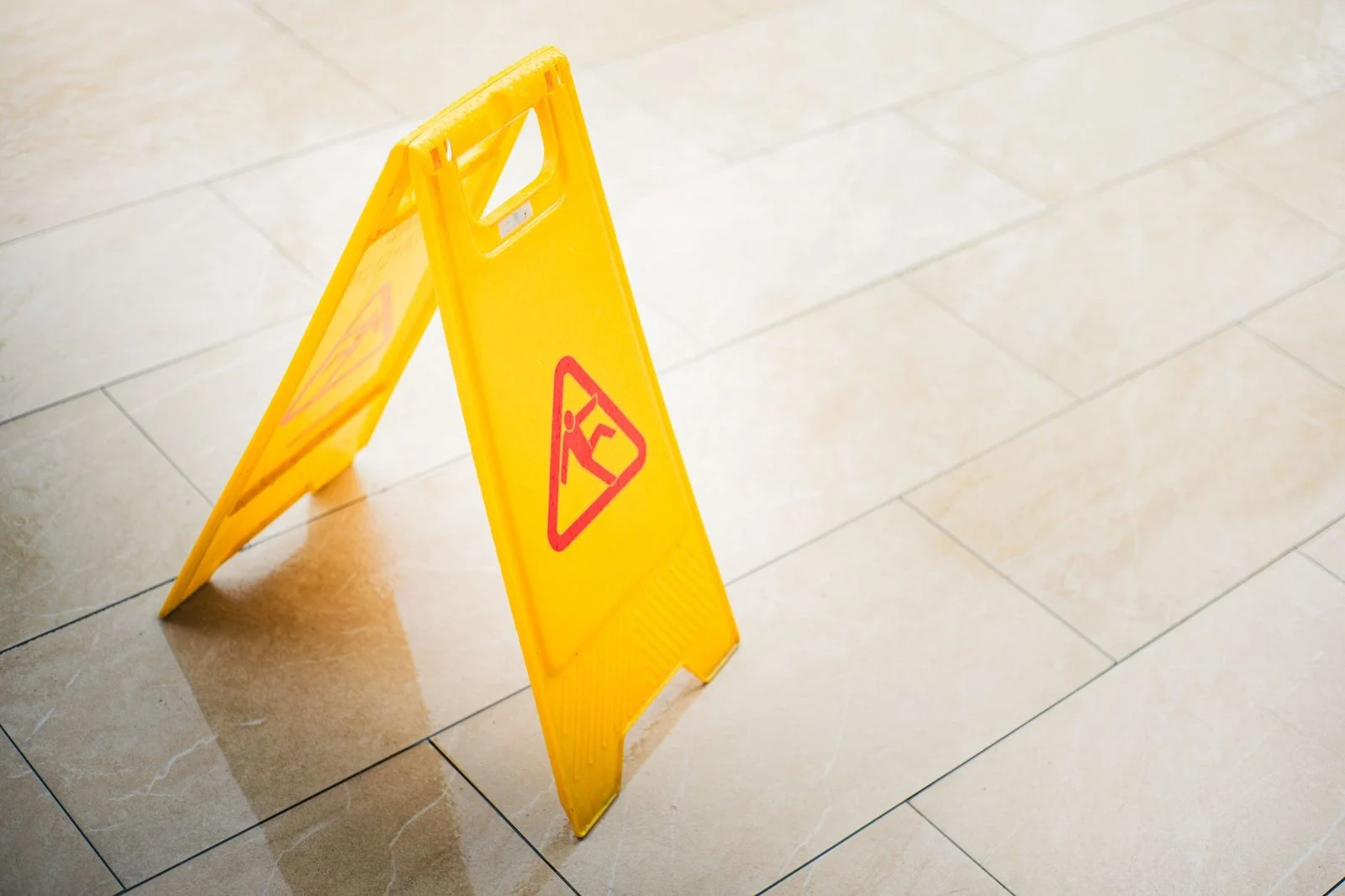
Place a wet floor sign at every open approach to a mopped area while the floor stays wet. One sign at one end leaves people free to walk in from the other side.
Set signs so they don’t block an exit, an elevator door, or a path someone needs. Move them as the work moves. Pick them up only after the floor has been checked and is dry.
Signs work best when they are used the same way every time. A sign left out after the floor dries can teach people to ignore it. A missing sign during mopping leaves the hazard without a warning. Build sign checks into every round.
Drying Time, Traffic Control, and Inspection Rounds
A lobby floor is ready for foot traffic only after the porter checks it, not just when it looks dry. Build a short check into the end of each mopping section.
Walk the section and look for shine, film, puddles, or water tracked toward the door. Run a dry pad over any dull spots. Some residue shows up as a slick patch, not a visible puddle.
Drying time varies with the product and the room, so let the floor dry fully before pulling the sign. Don’t rush it because the floor looks finished.
Set inspection rounds through the shift. A check at the start, another after heavy traffic, and one before the building’s peak hours catches problems early.
Choosing Cleaning Chemicals and Training Staff
Lobby cleaning products should come with a clear label and a current Safety Data Sheet. Staff should know how to use both.
Dilution matters for slip safety. A product mixed too strong, or left sitting on the floor, can leave a film that makes the surface slick. Mix to the label and don’t leave product to pool.
Use a disinfectant only when its label claims match the job. The EPA’s list of selected registered disinfectants publishes registered products and their label claims. Use it as the reference for disinfection claims on restrooms and high-touch surfaces.
Records That Show What Was Done and When
A written log turns a good routine into a record you can review. Keep it simple. Record the date, time, area, the porter’s initials, sign placement, the drying check, and any notes.
For a lobby, the most useful entries are when each section was mopped, when signs went out and came back in, and any tracked water or spill reported during the shift. Review the log each week and note anything that repeats.
Logs also help with contracts. A board or manager can compare the log against the service agreement and the invoice for the same period. Matching those three documents shows whether the work was scheduled, done, and billed.
A recognized framework can shape what you track. The ISSA Cleaning Industry Management Standard covers service quality, staffing, and green cleaning practices for commercial cleaning organizations. Use it as a checklist for what belongs in the log.
Not sure what your next step is?
Talk it through with our team — the first consultation is free, confidential, and carries no obligation.
Keeping Walkways and Entrances Clear of Slick Residue
Clean exterior walkways keep less water, grime, and debris from reaching the lobby doors. Pressure washing and landscape upkeep both play a part.
Pressure washing removes buildup on entrance walks, steps, and parking-area paths where algae, dirt, and residue collect. A cleaner approach gives the lobby mat less to catch.
Landscape crews should keep leaves, mulch, and sprinkler overspray off walkways. Wet debris and standing water at the door create a slip hazard before anyone reaches the lobby. Plan irrigation around those rules and check that spray doesn’t reach the walks.
Talk Through Your Condo Lobby Floor With Gator Protection
If a wet floor near your front doors has caused a near miss, or a residents’ complaint has put the cleaning routine under review, you may feel stuck with it. Board members, property managers, and family members often reach this point with a problem already in front of them.
Gator Protection, Inc. provides day porter service, floor care maintenance, landscape services, and pressure washing across South Florida. We can look at your lobby, entrances, and walkways with you. Together we can talk through mopping order, signage, drying checks, and logs. Our first consultation is free, confidential, and without obligation.
For how our day porter service is set up in South Florida buildings, see our day porter service page. When you’re ready to talk, you can reach us through our contact page.
Frequently asked questions
Should a wet floor sign stand at every approach?
Yes, place a sign at every open approach to a mopped area while the floor is wet.
How do you know a lobby floor is dry enough?
Walk the section and check for shine, film, or pooled water before pulling the sign. Write the check in the log.
What records help a condo board review its cleaning?
A dated log of mopping, sign placement, and floor checks works well. Keep it with the service agreement and the invoices for the same period.
How We Support Safer Condo Lobbies
Routine Floor Care
Scheduled cleaning and floor care maintenance that fits the traffic and wear patterns of your lobby.
Day Porter Coverage
On-site day porter service that attends to spills, tracked-in water, and wet areas as they happen.
Clear Documentation
Simple logs of cleaning and dry-floor checks that your board and management team can review.
Coordinated Communication
Our team keeps building staff and residents informed about work in progress so the lobby stays easy to navigate.
Safety Tip
Place a wet floor sign at every open approach to a freshly mopped area, and keep it there until the floor is dry and free of shine, film, or pooled water.
Where We Serve
Miami-Dade County
Condo lobbies and common areas throughout Miami-Dade County, including Brickell, Coral Gables, and South Beach.