
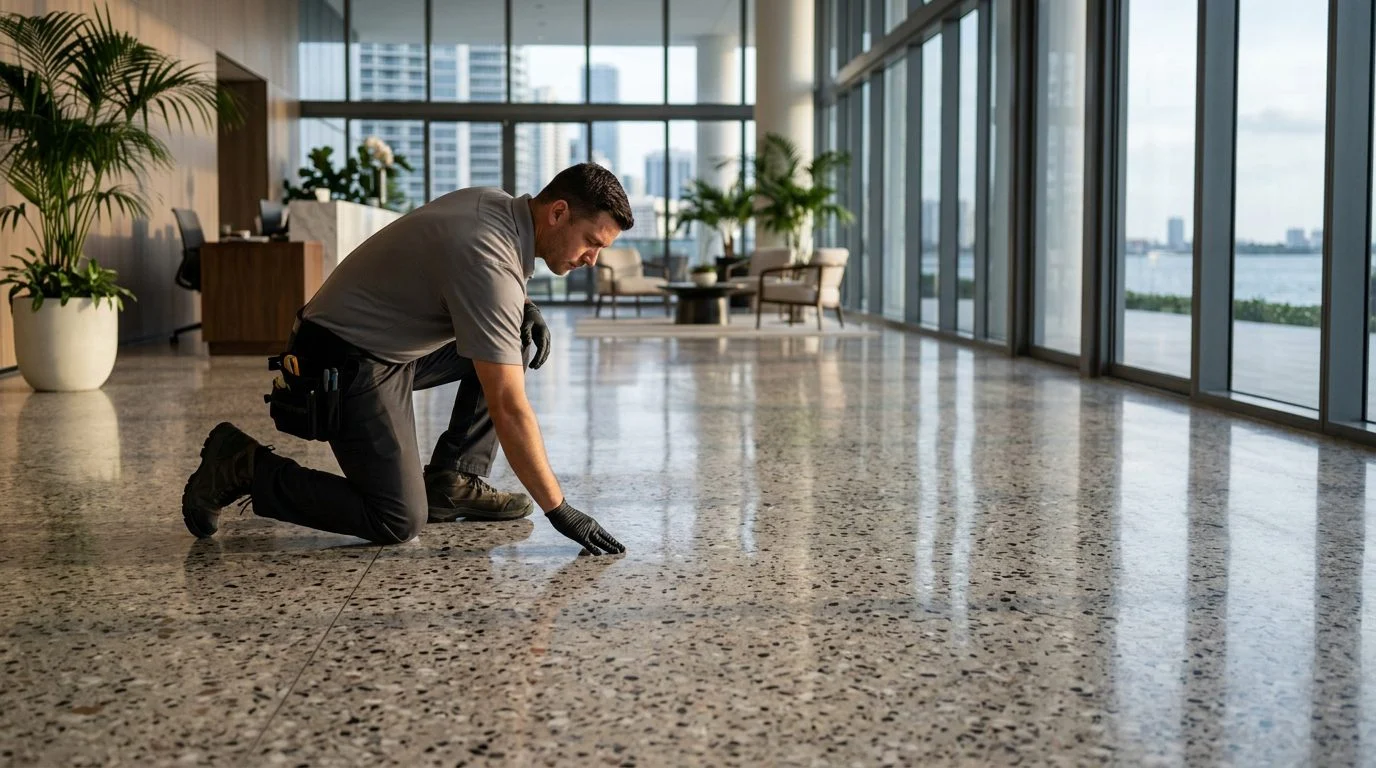
Floor Care Maintenance · Miami, FL
How Often Should a Condo Lobby Floor Be Buffed in Miami?
Buffing frequency depends on foot traffic, finish type, and how the lobby is maintained day to day. Here is how property managers in South Florida plan a buffing schedule.
By Ryan Jurney · Published November 7, 2026
For most busy condo lobbies in Miami, buffing is done about every one to two weeks. Stripping is usually needed only once or twice a year. These are planning starting points, not rules. The right schedule depends on the floor, its finish, and how many people walk across it each day.
If you sit on a condo board or manage a property, you may be the one deciding when the lobby floor needs work. Residents notice a dull or scuffed floor fast. This guide explains how buffing and stripping differ, how often each one usually makes sense, and what a day porter can do between cycles.
Buffing and Stripping Are Two Different Jobs
Buffing polishes the finish already on a floor. Stripping removes that finish so a new one can go on.
Buffing, also called burnishing, uses a machine and a fine pad to smooth the top layer of the finish. The result is a higher shine and a cleaner look. It does not remove the finish. It works best on a finish that is still in good shape but has gone hazy, dull, or lightly scuffed.
Stripping is a deeper job. A crew applies a chemical stripper, lets it work, and removes the old finish layers down to the bare floor. Crews handling these chemicals should follow chemical hazard communication rules. Then they apply fresh coats. Stripping deals with buildup, yellowing, and damage that buffing cannot reach.
Confusing the two leads to wrong schedules. A board that strips too often spends money and time the floor did not need. A board that only buffs may wait too long on a finish that has built up grime in layers.
Buffing is the lighter, repeatable step, so it comes far more often. Stripping resets the floor, so it comes later in the cycle. Two lobbies of the same size can still need very different plans.
If your lobby floor looks dull, scuffed, or slippery and the decision has landed on your desk, we can talk it through with you. Talk it through with our team — the first consultation is free, confidential, and carries no obligation.
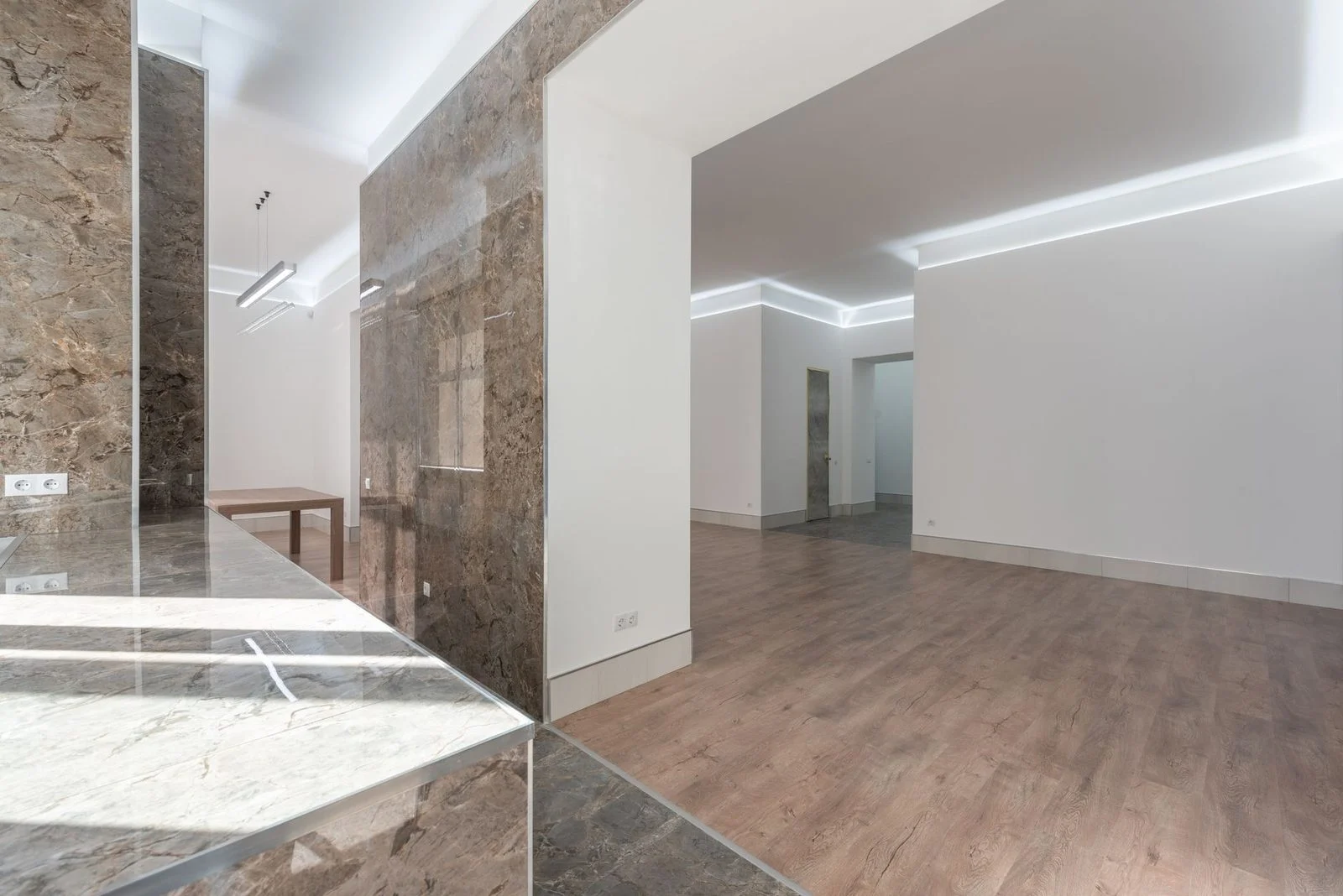
How Often a Condo Lobby Floor Should Be Buffed
A heavily used entry often needs buffing about once a week. A moderate-traffic lobby often does well every two weeks.
Those ranges are a starting point. A lobby with a busy front door, a delivery route, and a steady flow of residents wears faster than a quiet one. Use the cadence as a first draft. Then adjust it after you see how the floor looks at the end of each cycle.
Buffing usually follows routine cleaning. The floor should be dust-mopped, damp-cleaned, and fully dry first. Buffing over grit grinds that grit into the finish and leaves fine scratches. The order matters.
Expect the entrance mat zone and the path from the elevator to the front door to show wear first. Those spots take the most foot traffic and the most grit. They may need buffing on a tighter schedule than the rest of the room.
Over-buffing can hurt too. Each pass removes a little of a thin finish. If the finish wears through, you may need stripping sooner than planned. Let the floor’s condition guide the next pass, not the calendar alone.
How Often a Lobby Floor Should Be Stripped and Refinished
Stripping is needed when buffing can no longer restore the floor. For a heavily used lobby, that often means once or twice a year.
Lighter-use lobbies can go longer. The schedule depends on the finish and the flooring material. Terrazzo, porcelain tile, and vinyl composition tile each need a different finish and care approach. Check the material before you plan a stripping job.
Timing matters for residents. After stripping, a fresh finish needs curing time before foot traffic returns. Ask the crew for the cure window and plan the job around it. A slow period or a weekend works well, and a notice posted in advance keeps people informed.
Three mistakes come up often. Some boards strip a floor because it looks a little dull, when buffing would have helped. Others skip the cure time. Others start the job without a written scope. A written scope lists the area, the steps, and the cure window.
How Miami’s Climate Changes the Schedule
Miami’s humidity, salt air, and rainy season often shorten the time between buffing cycles.
Humid air keeps floors damp longer after cleaning. Damp floors hold dirt and can leave a sticky film. Salt air from the coast can leave a haze that makes a finish look cloudy sooner than it would in a drier place.
The rainy season brings sand, grit, and water in from the street and parking areas. Grit scratches the finish. Wet shoes spread a film across the floor. Both speed up dulling. During heavy rain months, mop and dry entry zones more often. Then buff on the schedule the floor actually needs.
A few habits help. Keep entry mats clean and in place. Rinse them when they get wet. Dry the entry floor after mopping. These steps do not replace buffing. They slow the wear that buffing has to undo.
Warning Signs That Buffing Is No Longer Enough
Buffing is no longer enough when a haze won’t clear, scuffs stay dark, the finish yellows, or it lifts in patches.
Slippery patches are a safety concern. Treat any slick spot near the entry or elevator as a priority. Assess it quickly and tell the people responsible for the floor. Walking surfaces in workplaces are covered by walking-working surface standards, which address slip hazards.
Uneven sheen often means some areas need different treatment. A patch that looks different from the rest may have a worn finish, a stain, or an old repair. Treat those areas on their own.
Document the condition. Take dated photos of the same spots every month, from the same angle. Over time, the photos show whether buffing is holding or whether the floor needs more than it is getting.
Building a Schedule With Your Day Porter
A day porter keeps the lobby in shape between buffing and stripping cycles. The daily work handles dust, spills, and entry upkeep.
Between professional cycles, the day-to-day work matters most. A day porter sweeps and dust-mops, spot-cleans scuffs and spills, and keeps entry zones dry and clear. This routine slows the buildup that makes a floor look dull. See our day porter service page for how these daily tasks fit the broader plan.
Entry control reduces the grit that reaches the lobby. Mats, a tidy entry walk, and grounds kept clear of loose sand all cut what gets tracked in. Our guide on coordinating the day porter with the landscape crew explains how these pieces work together.
The trash room is a connected high-traffic area. Its cleanliness affects the air and the traffic that passes through the lobby. The daily trash room odor and cleaning guide covers that routine.
Put the plan in writing. A shared schedule between building staff and the floor care provider shows who does what and when. It reduces missed cycles and surprise costs. Industry cleaning management standards support this kind of organized service planning. The Community Associations Institute maintenance best practices report supports organized maintenance programs and checklists for vendor scopes of work.
Not sure what your next step is?
Talk it through with our team — the first consultation is free, confidential, and carries no obligation.
Talk Through Your Lobby’s Floor Schedule
Plan a stripping project as its own line item, so the notice and the spending match.
How often should a condo lobby floor be buffed?
Heavily used lobbies are often buffed about once a week. Moderate-traffic lobbies often do well every two weeks.
What is the difference between buffing and stripping?
Buffing polishes the existing finish. Stripping removes the finish down to the floor, and then new coats go on.
How often should a lobby floor be stripped?
Heavily used lobbies often need stripping once or twice a year. Buffing that no longer restores the finish is the usual sign.
Our first consultation is free, confidential, and comes with no obligation to continue. If your lobby floor looks dull, scuffed, or slippery, you can reach out through our contact page to talk through the floor, its traffic, and its condition.
Typical Buffing Schedules by Lobby Traffic
Heavy traffic
Busy lobbies with constant resident, visitor, and delivery foot traffic are often buffed about once a week to keep the finish looking clean and even.
Moderate traffic
Lobbies with steady but lighter daily use often do well with buffing every two weeks, paired with regular dust mopping in between.
Light traffic
Quieter buildings may only need buffing every few weeks. Watch for dull spots, scuffs, and fading shine as signs it is time.
Daily upkeep
Routine dust mopping and spot cleaning between buffing sessions keep grit from wearing the finish down faster.
Why Property Managers Work With Gator Protection
Floor care maintenance
Buffing, cleaning, and finish upkeep planned around your building's traffic and finish type.
Schedules that fit your building
Visits timed to your lobby's busiest hours and your tenants' routines.
Day porter support
On-site day porter service keeps lobbies, entries, and common areas presentable between floor care visits.
South Florida coverage
Service across Miami-Dade, Broward, and Palm Beach counties, including Brickell, Coral Gables, and South Beach.
Free first consultation
A confidential, no-obligation first consultation to review your lobby floor and recommend a schedule.
Tip: Clean Before You Buff
Buffing over grit and dirt can scratch the finish and leave haze. Dust mop or scrub the floor first, then buff, so the shine comes out even.
Not Sure How Often Your Lobby Floor Needs Buffing? Let's Talk.
Related practice areas
- Day Porter Service in Miami-Dade: What It Covers and How to Switch Vendors
- Why Lobby Floors Look Dull: Miami Condo Guide