
Pressure Washing | Miami, FL
Keep Your Miami Condo Garage Clean, Safe, and Ready for Residents
Heavy daily traffic and South Florida conditions leave a garage dirty faster than most owners expect. Here is how to plan a washing routine that fits your property.
By Ryan Jurney · Published November 17, 2026
Your condo garage floor feels slick, shows dark stains, or collects debris at the drains, and someone has asked how often it should be pressure washed. Most Miami condo garages do best with a recurring deep wash plus spot cleaning in between. The right interval comes from traffic, staining, debris, safety, and season, not from a fixed calendar date.
The Short Answer: Set the Schedule by Conditions, Not the Calendar
A condo garage should run on a written, recurring cleaning cycle. Deep pressure washing sits on that cycle, and smaller cleanings fill the gaps.
Writing the cycle down matters as much as picking the interval. Residents see the garage every day. A board that can show a plan can answer a complaint with a schedule instead of a guess.
Treat your first cycle as a starting point. Watch how fast the garage gets dirty over the next few months, then adjust. A garage with heavy daily turnover usually needs attention sooner than a small building with few cars.
Many boards start with a complaint, such as a slippery ramp or a stain that won’t lift. That’s a fair reason to look at the whole garage, not just the spot that caused the complaint. The sections below cover the conditions that matter in Miami, the warning signs, and how deep washes pair with spot cleaning.
If slippery floors, oil stains, or resident complaints have you looking for a plan, our team is glad to talk through your garage with you. Talk it through with our team — the first consultation is free, confidential, and carries no obligation.
Why Miami Condo Garages Get Dirty Faster Than Many Expect
Miami garages collect grime from cars, weather, and the air around them, often faster than an owner expects.
Every car brings in brake dust, road grime, and tire marks. Those marks build up along turns, ramp edges, and the lanes where cars brake. Visitor and delivery traffic adds more to the pile.
Oil and fluid drips are a steady source. A small leak in one stall can spread across a lane over time. Left alone, the stain sinks into the concrete and takes more work to lift.
Coastal air adds its own load. Salt in the air and high humidity help grime cling to concrete. Rain then carries leaves, sand, and palm debris from entries and landscaped areas into the garage and across the floor.
Partly enclosed garages can hold moisture and odors. Less airflow lets greasy residue and damp film stick around, so surfaces can feel dirty sooner than an open lot would.
A common mistake is waiting until stains look dark before scheduling a wash. By then the marks are set, and one wash may not lift them fully.
Factors That Set the Right Washing Frequency
Five conditions set how often a garage needs pressure washing: traffic, surface, staining, safety, and season.
Traffic volume. Count daily entries and exits, and note whether the garage serves only residents or also visitors and deliveries. More vehicles mean more residue and faster wear on the floor.
Surface type and age. Sealed and unsealed concrete hold dirt differently. An older floor with worn spots may hold stains that a newer, sealed surface sheds more easily.
Staining history. Track how quickly oil and tire marks come back after a wash. A fast return usually means the cycle is too long or the spot treatment is too light.
Safety conditions. Slick patches near ramps, entries, stairs, and drains call for quicker attention, even when the rest of the garage looks fine.
Seasonal timing. Debris and moisture rise in the rainy season. Plan a deep wash before the wet months and another after them.
Setting the interval. The right interval depends on the facts of each garage, so review these five conditions for your building before you lock in a cycle.
Signs a Condo Garage Needs Pressure Washing Now
A garage needs pressure washing when floors feel slick, stains spread, or debris gathers where water should flow.
- Slippery patches or a film that makes floors feel unsafe, especially near entry lanes, ramps, and drains.
- Dark oil stains or tire scuffs that have spread across several parking stalls.
- Debris, sediment, or leaf matter collecting at floor drains or along walls and curbs.
- Persistent odors or greasy residue that suggests buildup beyond surface dirt.
- Resident or guest complaints about dirty or unsafe conditions. Complaints often mean the last cleaning isn’t enough.
Check the drains first. Standing water and sediment at drains often show where buildup starts, and they’re easy to miss from a parked car.
Slip risk deserves the fastest response. A floor that’s slick near the ramp shouldn’t wait for the next scheduled wash. Any one of these signs is reason to schedule a deep wash. Two or more together usually means the cycle needs to get shorter.
Building a Recurring Schedule: Deep Washes and Spot Treatment
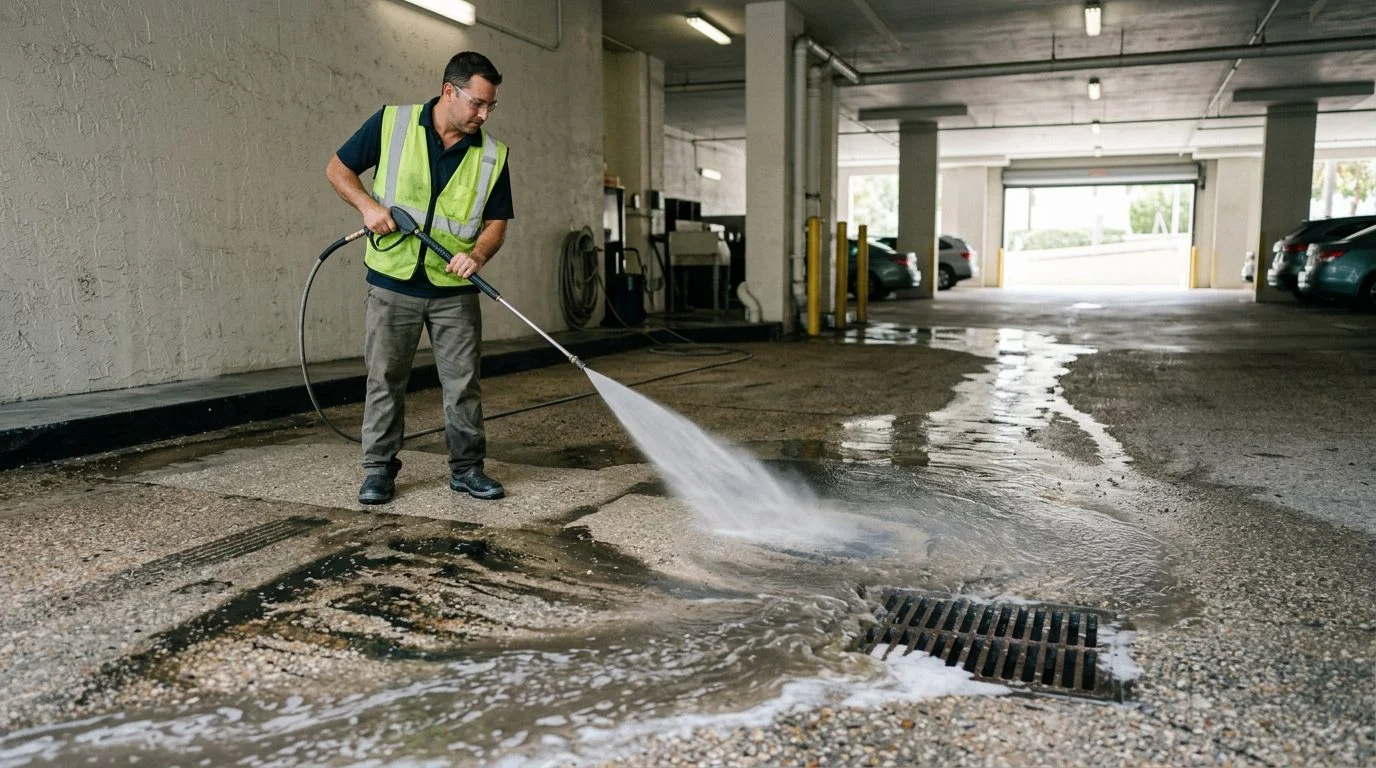
The most practical plan pairs a recurring deep pressure wash with spot treatment between washes.
A deep wash resets the floor. It lifts built-up grime, oil film, and debris from the concrete. Spot treatment handles what comes back in between, like a fresh oil drip at a stall or a tire mark at a turn.
Write the schedule down. A written plan lets the association show residents what’s being done, when, and why. It also makes it easier to change the cycle after a bad season, because the change is on record.
The CAI condo maintenance best practices report supports organized maintenance programs and checklists when a condo association develops vendor scopes of work.
Florida law also shapes how a board talks about the plan. The Fla. Stat. § 718.112 rules say the operation of the association is governed by its articles of incorporation, if it is incorporated, and its bylaws.
Adjust the cycle as conditions change. Raise the frequency when staining, debris, or traffic rises. Reassess after heavy rain periods.
How Garage Pressure Washing Fits with Day Porter and Floor Care
Pressure washing removes deep buildup, while day porter and floor care keep the garage presentable between washes.
Day porter service covers routine housekeeping and quick response to spills, debris, and entry-area problems. A porter who catches a fresh drip early makes the next deep wash simpler.
Floor care maintenance handles surface upkeep on the floor itself. Pressure washing is the heavier step for buildup that surface care can’t lift.
Entries deserve attention too. Palm fronds and landscape debris from building grounds are often what gets tracked into the garage. Managing debris at the entrance reduces how much reaches the floor.
Our day porter service page covers the full scope for Miami-Dade condos. Pairing services also gives the association one schedule to review at each board meeting.
Not sure what your next step is?
Talk it through with our team — the first consultation is free, confidential, and carries no obligation.
Is Pressure Washing a Garage Appropriate, and What Should Be Controlled?
Yes, pressure washing is a common method for cleaning parking garage concrete when the goal is to remove buildup, not just dust.
Wash water needs control.
Runoff matters because it doesn’t stop at the curb. Polluted runoff entering South Florida storm drains is discharged untreated into connected water bodies, according to the South Florida Water Management District guidance.
Cost is a separate question that boards ask early. Under Fla. Stat. § 718.116, a special assessment’s specific purpose must be stated in a written notice to each unit owner. Its funds may be used only for that purpose. If money is left over, it’s treated as common surplus, and the board may return it or credit it toward future assessments.
Talk Through Your Garage’s Condition With Our Team
A workable schedule starts with a clear picture of how your garage is used and where it breaks down.
Common Questions
How often should a condo garage be pressure washed in Miami?
Most garages do best with a recurring deep wash plus spot cleaning between washes. Traffic, staining, debris, safety, and season set the exact interval.
Is it okay to pressure wash a parking garage?
Yes, it’s a common method for cleaning parking garage concrete. Wash water should be controlled because runoff from paved surfaces reaches storm drains.
Who pays for condo garage cleaning in Florida?
Cost usually comes down to how the association funds the work. Under Florida law, special assessment funds may be used only for the purpose stated in a written notice.
If slippery floors, stubborn oil stains, or resident complaints have your board or building looking for a plan, our team is glad to talk through your garage with you. La consulta inicial es gratuita, confidencial y sin compromiso de continuar. You can reach out through our contact form.
Factors That Shape Your Washing Schedule
Vehicle Traffic
The more cars that enter and exit each day, the faster oil, tire residue, and grime build up on the concrete.
Staining and Spills
Fluid drips and stains set into concrete over time, so they are easier to remove when they are addressed early.
Debris and Organic Matter
Leaves, sand, and wind-blown debris collect in corners and drains, which can hold moisture and create slippery spots.
Seasonal Conditions
Rainy months and heavy humidity in South Florida speed up mildew and grime, so the schedule may need to tighten during those periods.
Tip: Spot Clean Between Full Washes
Quick spot cleaning of drips, debris, and high-traffic areas keeps the garage presentable and makes each full pressure wash faster and more effective.
Why Property Managers Work With Gator Protection
A Plan Built for Your Property
We look at your garage's traffic, surfaces, and conditions to recommend a washing frequency that fits your building.
Safety-Minded Service
Our team keeps slip hazards, wash water, and work areas in mind while we clean around residents and vehicles.
Scheduled Around Your Building
We plan service times that minimize disruption to residents and parking access.
Clear, Written Quotes
You receive a straightforward quote for the services you need, with no hidden surprises.
Responsive Communication
Our office staff and team stay in touch so you always know when and what to expect.
Serving South Florida
We provide commercial pressure washing and related services throughout South Florida, including Miami-Dade, Broward, and Palm Beach counties.