
Floor Care Maintenance | South Florida
Protect Your Terrazzo Floors Before Wear Shows
A practical look at how floor traffic, cleaning routines, and daily conditions shape the protection your terrazzo needs.
By Ryan Jurney · Published November 17, 2026
If you manage a terrazzo floor, you probably want one clear number. There isn’t one number that fits every floor. The right schedule comes from how much traffic the floor carries, how it is cleaned, and which sealer was used.
This guide explains what sets that schedule, how to check a floor yourself, and how floor care helps keep sealer working in South Florida commercial spaces.
How often do terrazzo floors need to be sealed?
Most terrazzo floors need resealing when checks show the protective layer is thinning, not on one fixed calendar date. Terrazzo is a composite. It is made of marble, quartz, or other chips set in a cement or epoxy base, then ground smooth.
The surface is porous enough to take in liquid and dirt. A sealer reduces how much it absorbs. Over time, the sealer wears down, and foot traffic, mopping, and cleaning products all speed that up.
A busy lobby may need attention sooner than a private office in the same building. Records of the original sealer help set the schedule when they’re available. Review the schedule regularly rather than setting it once and forgetting it. A consultation is the right place to plan one specific floor.
If a terrazzo floor you manage looks dull or stained, our team is glad to talk through its traffic and cleaning routine with you. Talk it through with our team — the first consultation is free, confidential, and carries no obligation.
Should terrazzo be sealed?
Sealing is a common part of terrazzo care because it slows staining and moisture absorption. It is not the same as polishing or restoration. Sealing adds a protective layer on top of the stone.
Polishing and restoration renew the surface itself through grinding and refinishing. A sealer will not repair a worn or damaged surface, so restoration may need to come first.
Commercial spaces usually need the most sealing attention where traffic and spills concentrate. Entryways, lobbies, corridors, and food-service areas are common examples. Exterior entries also face sun, rain, and grit, which add to the wear.
A floor care maintenance program covers these areas with scheduled cleaning. That way the sealer is not left to wear down unchecked.
What happens if you don’t seal terrazzo?
An unsealed terrazzo floor takes in spills and dirt more easily. That can leave stains that are harder to remove over time. Many people wait until they see stains before they act. By then the marks are already in the stone.
Grime also settles into the surface. The finish can look dull or grayed, and the wear often looks uneven. Darker traffic lanes usually show first.
Moisture can cause problems too. Efflorescence is a white mineral residue that can appear on cement-based surfaces. Sealing is one way floor care programs address moisture-related surface issues, along with regular cleaning and drying.
Once a floor is badly stained or worn, cleaning alone may not bring back its look. Restoration costs for a neglected floor are a separate question, and it’s worth asking early.
Signs your terrazzo floor needs sealing again
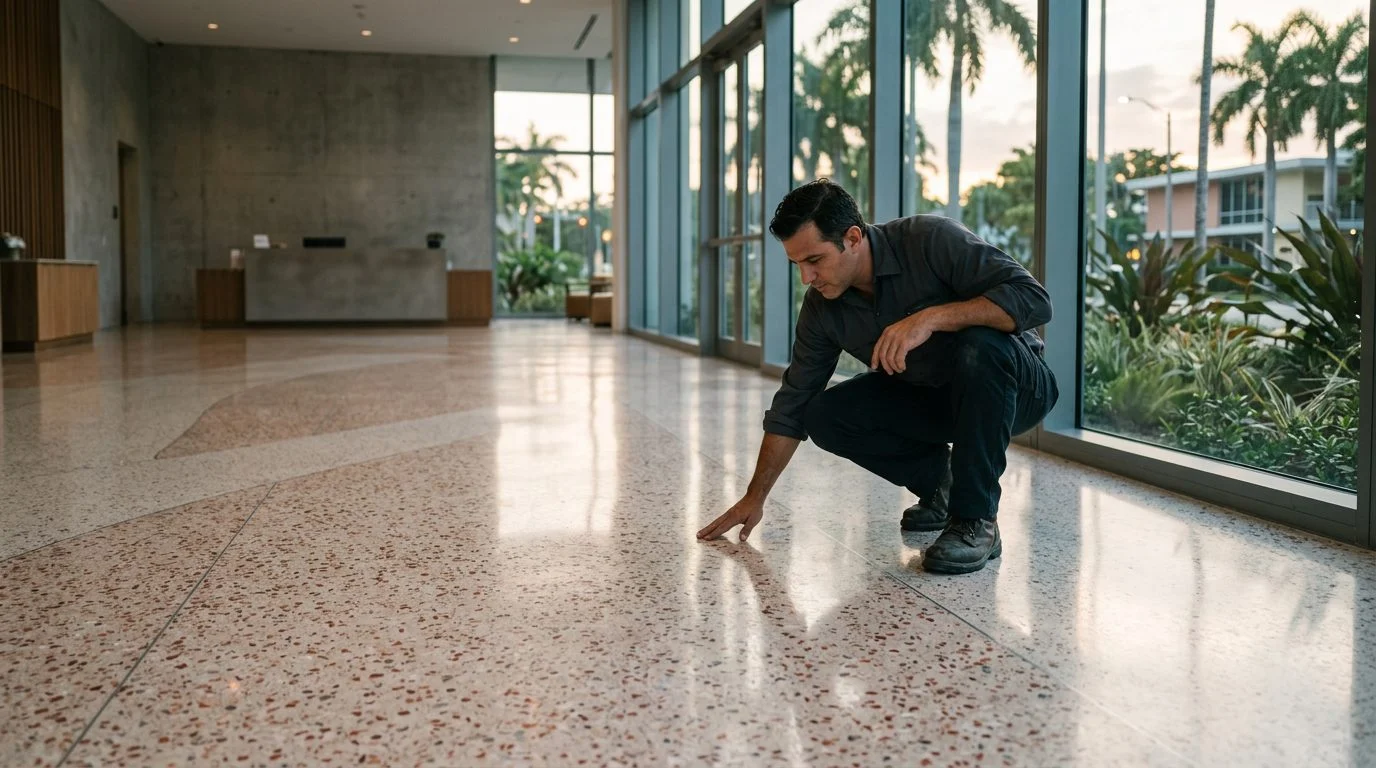
The quickest check is a water test on a clean, dry area of the floor. Place a few drops of water on the stone and watch them. If the drops bead and sit on top, the sealer is likely still doing its job. If the water darkens the stone or soaks in quickly, the floor may be due for resealing.
Test more than one spot. Check high-traffic lanes, the area near entrances, and a quieter corner. Wear is rarely even across a whole floor.
Visible signs add to the picture. Look for darker traffic lanes, spots that stay after mopping, or a finish that looks dull next to the rest of the floor. Staining that returns soon after cleaning suggests liquid is being absorbed again.
A water test is a quick check, not a full inspection. It shows where to look more closely. It doesn’t replace a review of the floor’s condition.
Factors that change the sealing schedule
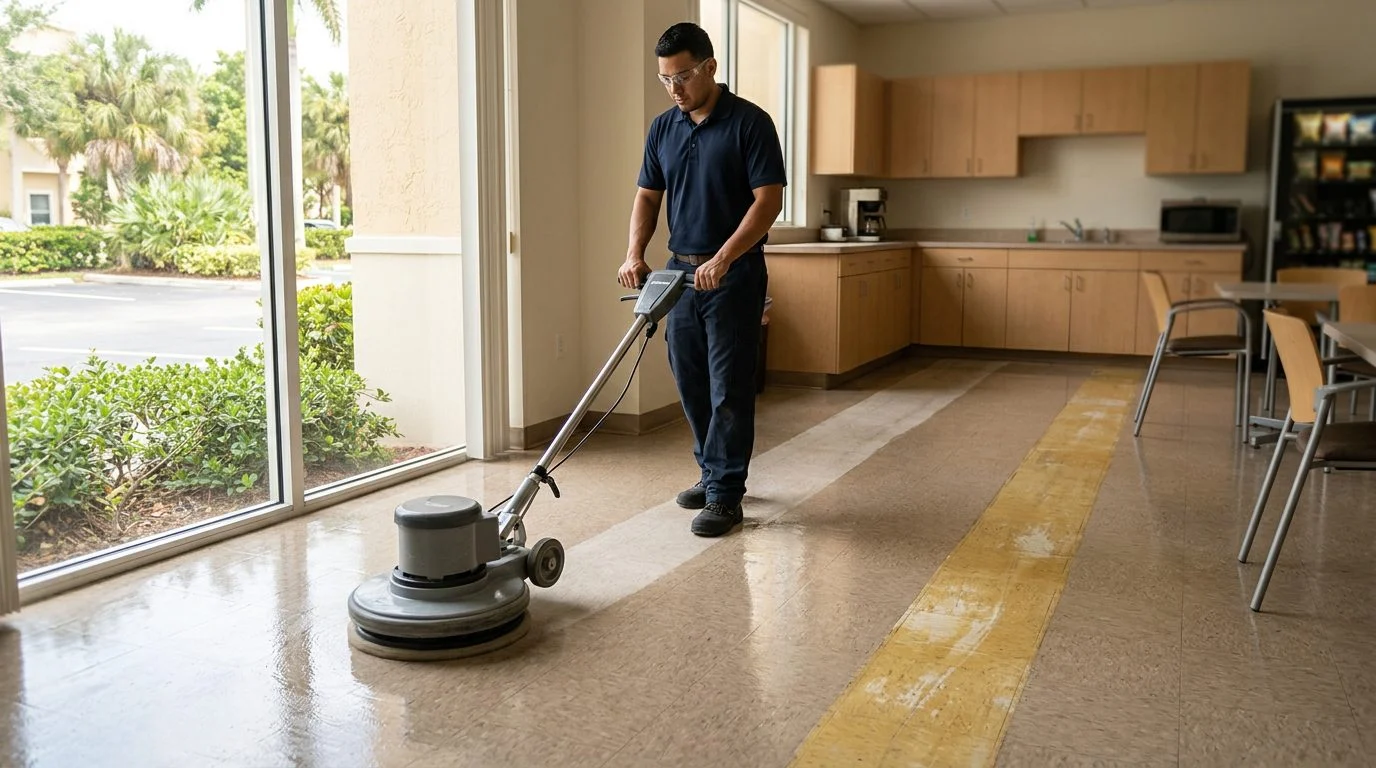
Traffic, cleaning, and exposure change the schedule more than the calendar does. Heavy foot traffic wears sealer faster. Lobbies, corridors, and retail or food-service floors see more wear than private offices.
Cleaning products and methods matter too. Harsh or incompatible products can strip sealer and dull the finish. Frequent wet cleaning with a lot of water adds moisture to the surface, so the method should suit the floor.
Exposure is another factor. Terrazzo at exterior entries, pool decks, or covered walkways faces sun, rain, and grit. Those areas often need a schedule of their own.
Finally, the sealer type and how well it was applied both affect how long it lasts. Review the original product and application when you plan the schedule.
What not to use on terrazzo floors
Avoid cleaners that are not made for terrazzo or sealed stone. They can dull the finish or strip the sealer. Product choice matters as much as how often you clean.
For background on chemicals and cleaning supplies in school and facility settings, see EPA guidance on cleaning supplies. Read the label before using any product on a sealed floor.
The EPA Safer Choice products list includes floor-cleaning, floor-finish, floor-stripper, and granite/stone products that are Safer Choice-certified. Checking a product against that list is one way to screen it.
Abrasive pads and harsh scrubbing tools can scratch a sealed surface. Rinse away cleaning residue so it doesn’t build up and dull the floor.
Not sure what your next step is?
Talk it through with our team — the first consultation is free, confidential, and carries no obligation.
Keeping sealed terrazzo in shape with floor care maintenance
A regular floor care routine protects the sealer. It keeps grit and residue off the surface between deeper service. Organized planning helps. For general background on maintenance practices, see the Community Associations Institute maintenance best practices report.
Day porter service keeps traffic areas clean through the day. That way grime doesn’t sit in the lanes that wear the sealer fastest.
Pressure washing of exterior terrazzo should be planned with the sealer in mind. The work should match the floor’s condition and the cleaning method used.
Landscape maintenance around entries cuts the grit that gets tracked onto interior floors.
Safety matters too. Floors that stay clean and dry help reduce slip risks in busy commercial spaces. The U.S. Consumer Product Safety Commission has also considered slip-resistance labeling for floor coverings. A wet, slick terrazzo lobby is a concern for everyone who walks on it.
Talk with our team about your terrazzo floor
Our team can review a terrazzo floor’s condition, traffic, and cleaning routine with you. If a floor you’re responsible for is dull, stained, or worn, you don’t have to work out the sealing plan alone.
Is sealing the same as polishing?
No. Sealing adds a protective layer on top, while polishing and restoration renew the stone’s surface.
How can I tell if the sealer is still working?
Place a few drops of water on a clean spot. If they bead on top, the sealer is likely still working.
Does a sealed floor still need checks?
Yes. A sealer wears down over time, so periodic checks and reapplication keep the floor protected.
If a terrazzo floor you manage is looking dull or stained, the next step is a conversation about its traffic and cleaning routine. Contact Gator Protection, Inc. through the contact page to talk through floor care maintenance or day porter service for the space. La consulta inicial es gratuita, confidencial y sin compromiso de continuar.
What Affects Sealing Frequency
Foot Traffic
Busy lobbies, hallways, and entrances wear through protective coatings faster than quiet offices or storage areas.
Cleaning Methods
Routine cleaning with the right products helps preserve the sealer, while harsh or abrasive methods can thin it over time.
Exposure
Sunlight, moisture, and tracked-in grit can all affect how quickly a sealed surface loses its protection.
Surface Condition
Dull patches, darkened spots, or water that no longer beads are signs the floor may be due for attention.
Watch Your Cleaning Products
Acidic or harsh chemical cleaners can break down sealer faster than normal wear.
Why Work With Gator Protection
South Florida Coverage
We serve Miami-Dade, Broward, and Palm Beach counties, including South Beach, Coral Gables, and Brickell.
Commercial Floor Care
Our floor care maintenance is designed around the demands of commercial buildings and their daily traffic.
A Responsive Team
Our support staff and team keep communication clear from first call to completed service.
Free First Consultation
The initial consultation is free, confidential, and carries no obligation to continue.