
Floor Care Maintenance | South Florida
Bring Back the Shine in Your Wood Floors
Simple routines, careful products, and the right tools can keep hardwood looking its best between professional visits.
By Ryan Jurney · Published November 16, 2026
How to Get Wood Floors to Shine
Learning how to get wood floors to shine starts with removing loose grit first. Then clean with a wood-safe product on a barely damp mop, and buff the dry floor. Harsh chemicals and excessive soaking may not suit every floor surface.
This guide walks through each step for lobbies, hallways, and office common areas in Miami-Dade, Broward, and Palm Beach counties.
If you manage a building with a dull floor, contact our team to talk through its condition. Talk it through with our team — the first consultation is free, confidential, and carries no obligation.
Why Do Wood Floors Look Dull?
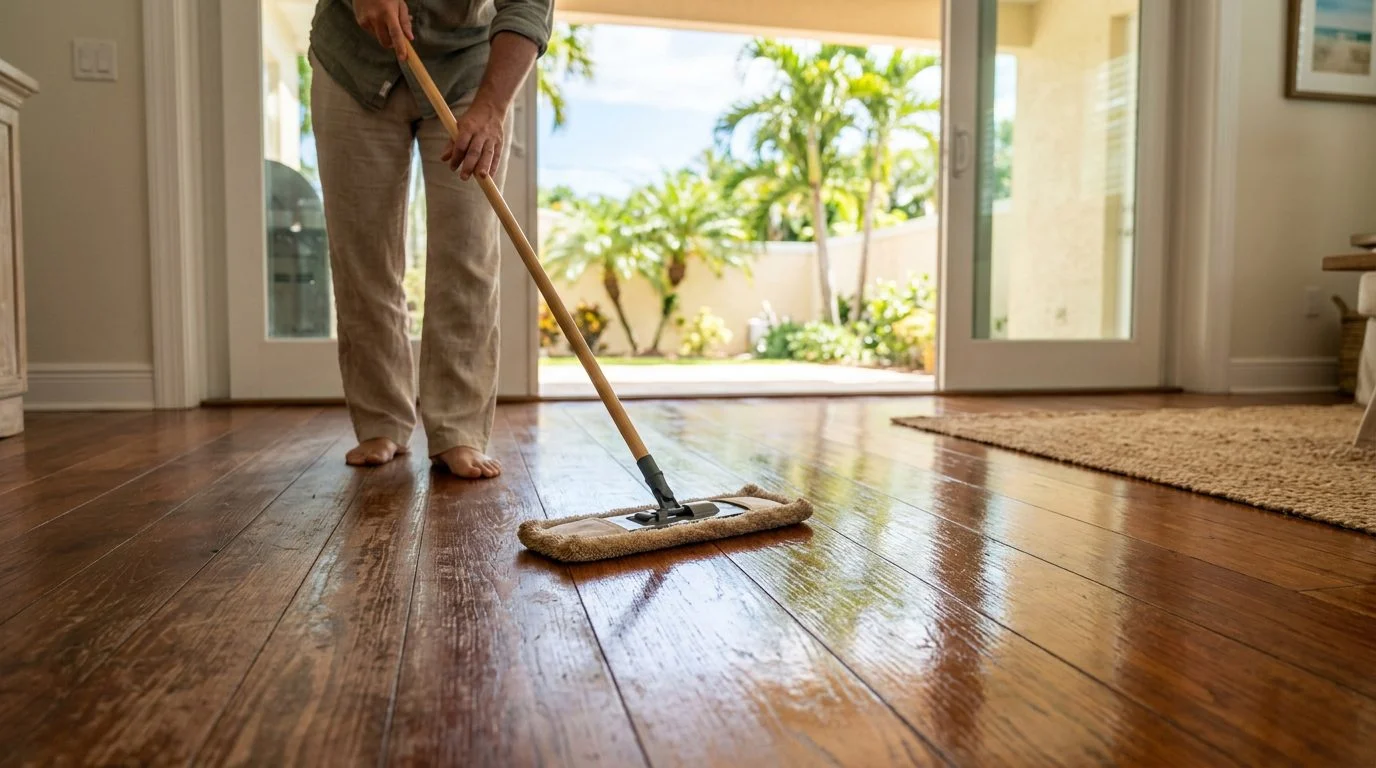
Wood floors look dull when dirt, residue, and small scratches build up on the surface. Three problems usually work together. Grit from shoes acts like sandpaper on the protective finish. Cleaner left on the floor forms a thin film. Foot traffic wears down the finish along the paths people use most.
High-traffic areas show dullness first. Lobbies, hallways, and entry mats collect the most grit. A floor can look fine in a back office and cloudy near the front door.
Residue also builds up over time. If each mopping leaves a little cleaner behind, the layers add up. Mopping frequency is one factor to review when a floor looks hazy.
Start With Dry Removal: Sweep and Vacuum First
Remove loose dust, sand, and grit before any water touches the floor. Wet cleaning over grit smears the dirt and can scratch the finish.
Use a soft-bristle broom, a dust mop, or a vacuum set to a hard-floor setting. Soft tools lift debris without marking the boards.
Work in one direction, along the grain of the boards. Overlap each pass a little. Keep the dust moving toward a collection point so it doesn’t settle back down.
Regular floor care is part of keeping busy commercial spaces maintained. Loose grit and wet spots both add to slip risk, so dry removal supports that goal.
Clean With a Wood-Safe Product and a Damp, Not Wet, Mop
Use a cleaner labeled for wood floors, with a neutral pH. Gentle, balanced cleaners lift dirt without eating into the finish.
Wring the microfiber mop until it feels damp, not dripping. Too much water can seep into seams and swell the boards. A soaking mop is the wrong tool for wood.
Rinse the mop and change the water often. Dirty water spreads residue across the floor. Wring out the mop every few passes so you lift dirt instead of moving it around.
How to Get Wood Floors to Shine: DIY Methods and Polishes
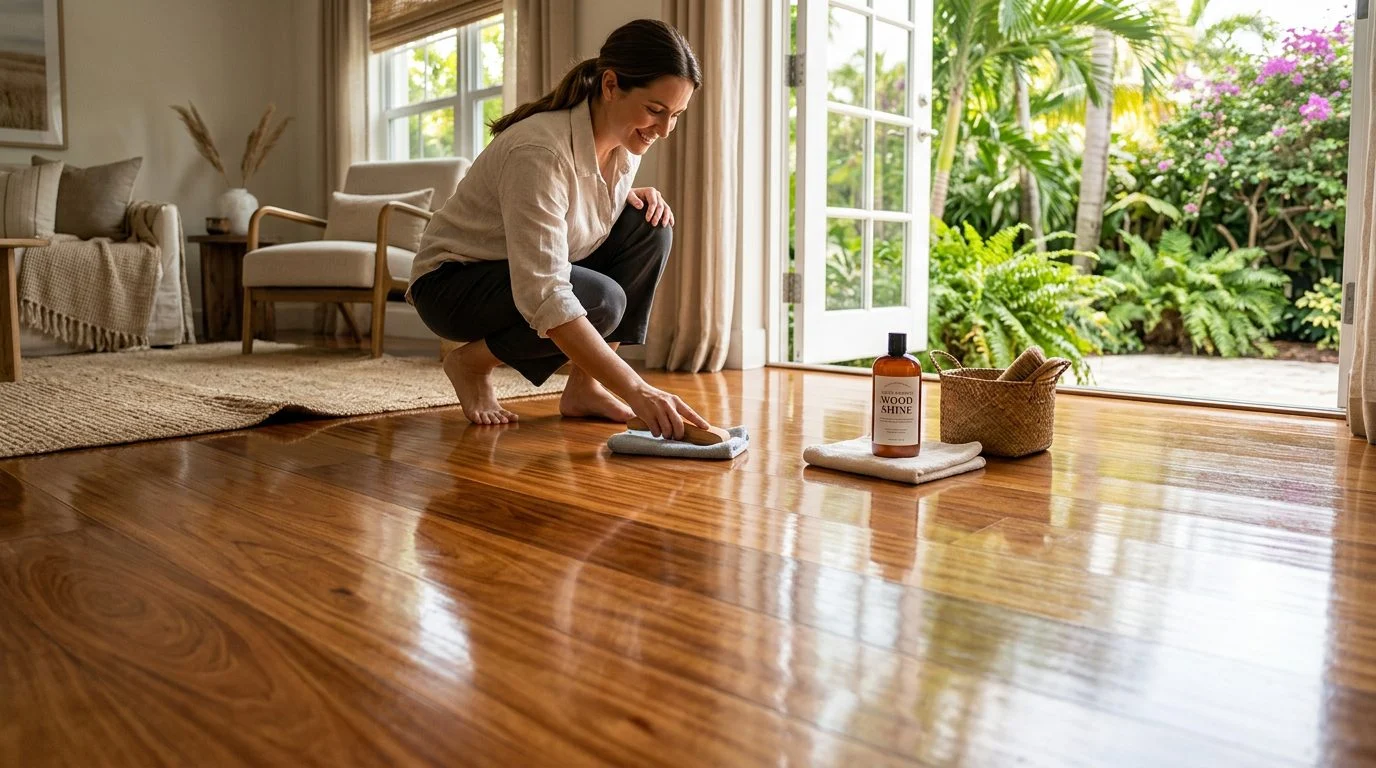
Buffing a clean, dry floor is the simplest way to bring back sheen. Use a clean, dry microfiber pad or a buffer with a soft pad. The friction lifts light haze without adding any product.
A finish restorer or polish works best when it matches the floor’s existing finish. Identify the finish before you buy or apply anything. A mismatched product can leave a cloudy film or an uneven look.
Oil-based soaps are a common home choice. Overuse can leave a film that dulls the floor over time. Use only a small amount, and keep the floor as dry as possible after cleaning.
Floor waxes add gloss, but they build up. Thick coats trap dirt and turn cloudy. If you use wax at all, keep the coat thin and even.
What You Should Not Use on Hardwood Floors
Avoid harsh, abrasive, and strongly alkaline products on wood. Ammonia-based cleaners, bleach-based products, and scouring pads can strip or scratch the finish.
Avoid soaking the floor, leaving standing water, and using steam. Water that sits in seams can cause warping, swelling, or finish damage. Steam pushes moisture into the wood.
Skip unlabeled home remedies. Mixing vinegar, oil, and dish soap may seem harmless. The film it leaves can look cloudy and be hard to remove. Check that a cleaner is labeled for wood floors before using it.
Not sure what your next step is?
Talk it through with our team — the first consultation is free, confidential, and carries no obligation.
Keeping Wood Floors Shining: A Maintenance Routine for Commercial Spaces
A steady routine stops the buildup that causes dullness. Dust-mop lobbies and entrances every day. Damp-clean on a set schedule. Buff high-traffic paths on a regular cycle.
Write the routine down. A written checklist shows who cleans what, and how often.
Common Questions
How do you make wood floors shine without wax?
Buff a clean, dry floor with a soft pad. Use a finish restorer that matches the floor’s existing finish.
Is Murphy’s Oil Soap good for hardwood floors?
It can work in small amounts. Overuse can leave a dulling film, so whether it suits a floor depends on the finish and how much is applied.
Why do my hardwood floors look dull?
Residue, worn finish, and grit usually combine to dull the surface.
If you manage a building with a dull floor, contact our team to talk through its condition. Reach out through our contact page. The first consultation is free, confidential, and carries no obligation to continue. We’ll talk through the floor’s condition and your maintenance needs.
Avoid Standing Water
Excess water and heavy cleaning solutions can swell wood, cloud the finish, and leave seams dull. Damp-mop with a barely wet pad and dry the floor promptly.
Everyday Habits That Protect the Finish
Sweep or Dust Often
Grit acts like sandpaper under foot traffic. Regular dust mopping removes it before it scratches the surface.
Use Entry Mats
Place mats at exterior doors to catch sand, moisture, and grit before they reach the floor.
Buff with a Soft Pad
A clean, dry floor buffed with a soft pad can restore a soft luster without heavy layers of product.
Match Your Products
Choose cleaners and finish restorers that suit the floor's existing finish to avoid dulling or buildup.