
Day Porter Service | South Florida Condos
How to Write a Day Porter Scope of Work That Your Condo Board Can Use
A clear scope turns daily upkeep of shared spaces into a schedule everyone can check. Here is what to include, from task lists to restocking.
By Ryan Jurney · Published October 26, 2026
To write a day porter scope of work, list each daytime task, the place it happens, how often it repeats, and what “done” looks like. That answer covers the core of the document. Below is how to build one for a South Florida condo, step by step.
A scope of work is the written plan for what gets done, where, how often, and by whom. A job description covers the porter’s role. The scope covers the work itself, so the board, the manager, and the crew all check against the same page.
What a Day Porter Scope of Work Is and Why Your Condo Needs One
A day porter scope of work is the written plan for daytime upkeep of shared spaces. Day porter service handles the cleaning that happens while residents and visitors are around. It is separate from a lobby attendant’s front-desk role, which is about greeting people and managing access.
Most boards start this work for a clear reason. A resident complains about a dirty lobby or a restroom left too long. A new board wants defined coverage instead of informal promises. Or the building is moving to a day porter program for the first time.
Every task in the scope should answer four questions: where, how often, to what standard, and who does it. If one answer is missing, the task invites argument. For background on the service, see our day porter service page.
Not sure what your next step is?
Talk it through with our team — the first consultation is free, confidential, and carries no obligation.
Start With a Walkthrough of Your Building
Start with a walkthrough, because the scope should describe your building, not a generic one. Walk every shared area with a notepad and write down what you see. A template written for an office tower will miss things like a pool deck or a trash room that opens onto the garage.
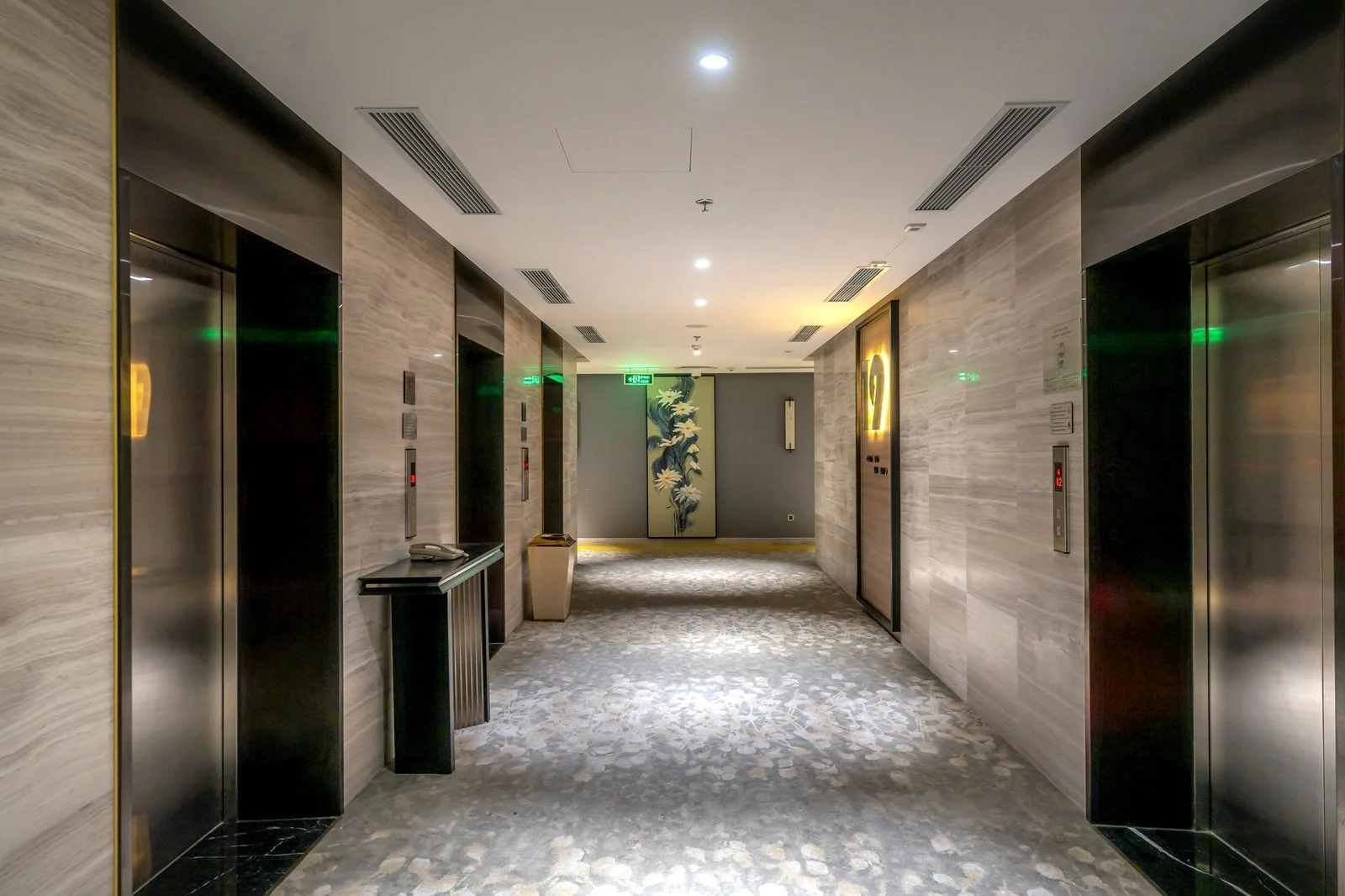
List each area separately. South Florida condos often include the main entrance and vestibule, the lobby, elevator cabs and landings, stairwells, garage entries, trash rooms, amenity rooms, the mailroom, the pool deck, and exterior walkways.
Next, note when each area gets busy. A lobby may peak in the morning and again in the late afternoon. A garage entry may collect the most dirt after a rainstorm. Record the surfaces too. Tile, terrazzo, glass, stainless steel, and carpet each need a different method. Finally, capture the problem spots, such as recurring spills, scuffed walls, and overflowing bins. Keep these notes as the baseline. Every task should trace back to something you saw on the walk.
Write the Daily Task List by Zone
Write the daily task list by zone, and tie each task to a location and a frequency. “Clean the lobby” is too loose. “Empty and reline the lobby trash can every two hours” can be checked.
Start with trash and recycling. Name each bin location, when liners change, and where full bags go. Then cover the common-area restrooms. List what gets cleaned on each visit, such as toilets, sinks, mirrors, floors, dispensers, and waste bins. If the building uses disinfectants, pick products whose label claims match the job. The EPA-registered disinfectants list is a useful reference for that step.
High-touch surfaces need their own line. Elevator buttons, door handles, railings, and call panels get a stated frequency, such as twice per shift. Glass entry doors need spot cleaning on a set schedule. Sweeping and wet-mopping hard floors should fall in set windows, away from peak traffic.
Restocking is where many scopes fall short. If the porter restocks paper goods and soap, say so, and say who buys them. Swap “as needed” for a time or a trigger.
Set the Schedule, Hours, and Periodic Services
Put daily porter tasks and periodic services on separate schedules, each with its own frequency. Daily work repeats every shift. Floor stripping, pressure washing, and landscape edging may run weekly, monthly, or quarterly. Mixing them in one list hides what is due.
State the shift start and end, the days covered, and whether weekends and holidays count. Write the schedule day by day rather than assuming a standard week.
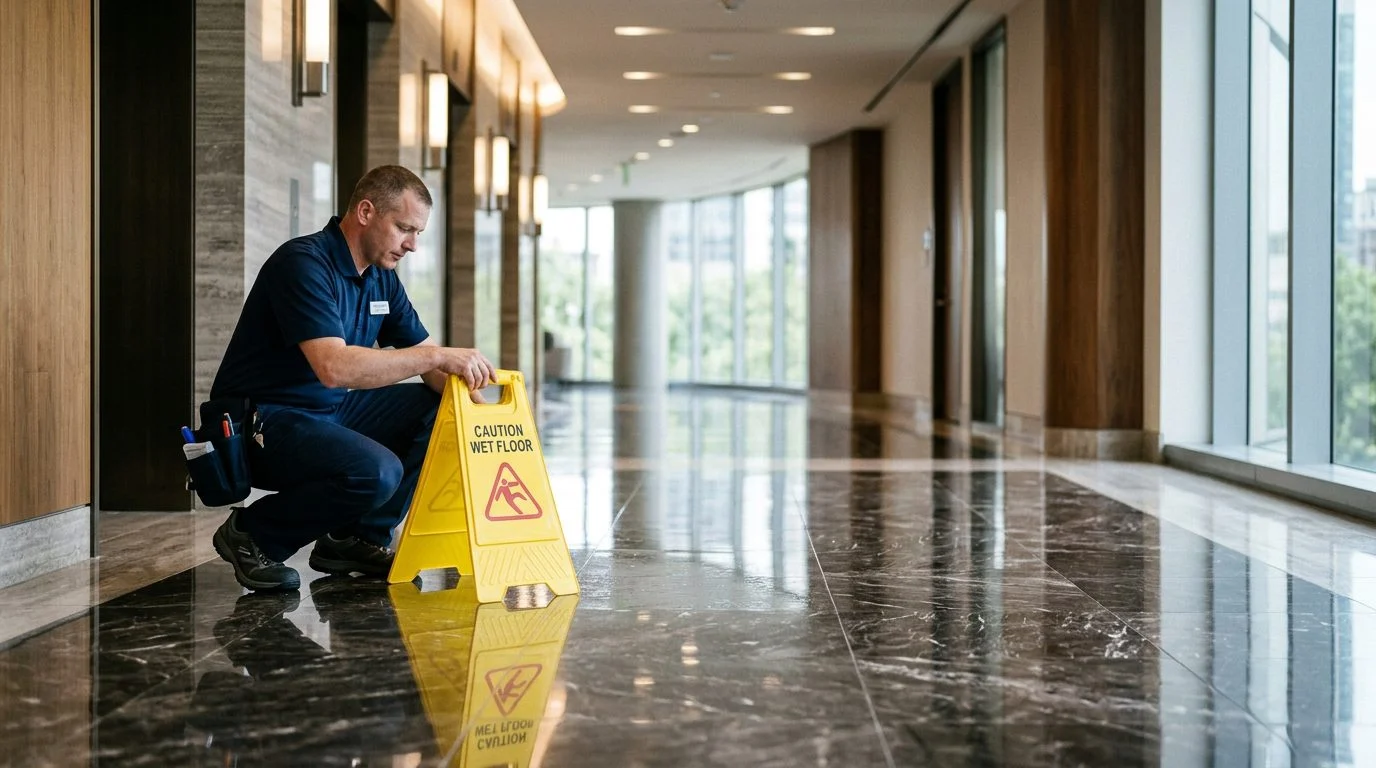
Floor care belongs on the periodic list, with a date or interval for stripping, buffing, or scrubbing. Floors in busy commercial buildings collect dirt and residue, which is one reason regular floor care maintenance matters. Keep spill response on the daily list so a wet floor gets handled right away.
Pressure washing covers sidewalks, garage entries, and exterior surfaces. Name each area and its frequency. Landscape work touches the porter’s routine at trash-area edges, walkways, and entry planters, so decide who handles each one. If irrigation is part of your property, our team can explain how watering needs are handled during your free first consultation. Write those rules into the scope.
Have questions about what happened?
Ask our team directly. The first conversation is free, confidential, and there is no obligation to continue.
Set Quality Standards, Supplies, and Equipment
Each task needs an observable standard, a named supply owner, and a sign-off. A standard you can see ends the debate. “Clean glass” is vague. “No streaks on lobby glass when viewed from the entrance” can be checked on a walk.
Write a standard for each zone. Examples include no standing water on tile after mopping, fresh liners in every bin, and dry restroom floors at the end of each visit. Build a simple checklist the porter signs each shift. The board gets a record, and the crew gets a clear finish line.
Supplies need an owner too. State who buys and stores chemicals, paper goods, liners, and equipment. A restroom that runs out of paper mid-shift usually means no one owned the reorder.
Chemical handling needs its own line. Our team can explain how cleaning products are selected and used on your property during your free first consultation. Say where the sheets are kept and who does the training. Close the loop with a weekly walk with the building manager, using the checklist.
Build in Reporting, Communication, and Change Control
A scope stays useful when it has a daily log, one contact, and a written way to change it. Without those three parts, the document goes stale and the board ends up arguing from memory.
Keep the daily log short so the porter will actually fill it in. Record completed tasks, issues found, and follow-up items. Name one contact on the management side, plus a way to reach the porter’s supervisor.
Explain how urgent problems move. A leak, a broken fixture, or a safety hazard should reach the right person the same shift. Write who gets the call and what the porter does in the meantime, such as blocking off a wet area.
Change requests should be in writing, with a review date and approval by the board or manager. That stops a verbal request from quietly replacing a line item.
Confirm vendor credentials before work starts, including proof of insurance and any required licensing. Landscape work can involve a range of products, and our team can explain our approach during your free first consultation. For a broader benchmark, the ISSA Cleaning Industry Management Standard addresses service quality, staffing, and green cleaning practices.
Avoid the Common Scope Mistakes
The most common scope mistakes are vague frequencies, missing areas, and mixed task lists. Each one makes the document harder to enforce. Fixing them takes time on the walkthrough, not a bigger budget.
Vague frequencies allow two readings of “daily.” Tasks without areas let the lobby and the garage get different meanings for “sweep floors.” A one-time deep clean should not sit beside the nightly trash run.
Forgetting seasonal needs is another gap. South Florida’s rainy season can bring debris into garages and walkways. Decide whether extra clearing or pressure washing belongs in the base scope or in a separate request.
Writing the scope without a cost review is the last trap. Check which details drive price, such as zones, hours, and periodic services. The final figure depends on the facts of your building, so start with your walkthrough notes.

Take the Next Step With Your Draft
Writing this scope under pressure is hard, and you don’t have to do it alone. Board members and managers often draft it after a resident complaint or a contract renewal. The work is methodical: walk the building, give each task a place and a time, and set a way to report and change it.
Our first consultation is free, confidential, and comes with no obligation to continue.
Common questions
What is the difference between a day porter and a lobby attendant?
A day porter handles daytime cleaning and upkeep of shared spaces. A lobby attendant handles the front desk and access.
Should a day porter scope include restroom cleaning?
It should, if the building wants that service. List what gets cleaned, how often, and who restocks supplies.
Does the scope need to cover pressure washing?
Only if the building needs it. Name the areas and the frequency so the work is clear.
If your board or management team is working through this scope now, you can bring your walkthrough notes to our contact form or call the office to start the conversation.
Want to know where you stand?
Tell us what happened and our team will walk you through the options available to you, at no cost.
Why a Written Scope Matters
Shared expectations
A written scope gives the board, property manager, and day porter the same list of duties for each shift.
Measurable tasks
Defined tasks and frequencies make it easier to confirm that work was completed as agreed.
Predictable daytime coverage
Stating when each area is serviced helps residents know when to expect a clean lobby, elevator, or entrance.
Fewer misunderstandings
A shared reference point helps reduce questions about who handles supplies, spills, and common-area requests.
Avoid Vague Language
Phrases such as 'as needed,' 'regularly,' or 'keep clean' leave room for different interpretations. Replace them with specific areas, tasks, and times.
Core Elements of the Scope
Areas Covered
List every shared space the porter serves, such as lobbies, elevators, stairwells, garages, pool decks, mailrooms, and entrances.
Tasks and Frequency
For each area, state the tasks and how often they occur, such as sweeping, mopping, glass cleaning, trash removal, or restroom cleaning.
Supplies and Restocking
Name who provides cleaning products, paper goods, and liners, and who restocks restrooms and dispensers during the day.
Reporting and Requests
Describe how issues are reported, how resident requests are routed, and how the property manager receives updates.
Ready to Put Your Day Porter Scope in Writing? Start with a Free, Confidential Consultation.
Related practice areas
- Day Porter Service Cost in Miami-Dade: What Drives the Price for a Condo or Apartment
- Day Porter Company References for Miami Condos: What to Ask