
Day Porter Service | South Florida
Right-Size Day Porter Coverage for Your Large Condo
There is no single headcount that fits every building. Learn what drives the number, and how our team can help you plan coverage for your lobbies, restrooms, and peak hours.
By Ryan Jurney · Published November 6, 2026
A large condo needs enough day porters to keep its shared areas clean through the busiest hours of the day. There is no single headcount that fits every tower. The answer starts with how the building is used.
Why “one or two porters?” is harder to answer than it looks
If you sit on a condo board or manage a large tower, you may not have chosen this question. It may have landed on your desk with a budget line, a resident complaint, or a service proposal that didn’t match what you see in the lobby every morning.
So how many day porters does a large condo need? It depends on the building’s daily use, not just its square footage or unit count. Two towers of the same size can need very different coverage.
For an overview of the service and its scope, read our day porter service page. This guide focuses on one decision. It covers what the role handles, the building facts that set coverage, the trade-offs of one porter versus two, and a checklist to bring to your next meeting.
If you're carrying this decision for a large tower, reach out and we'll talk through your building's size, traffic, and amenities together. Talk it through with our team — the first consultation is free, confidential, and carries no obligation.
What a day porter actually covers in a high-rise
A janitorial day porter is a staff member on site during daytime hours. The role keeps the building looking clean while people use it. A day porter handles the wear that builds up as residents, guests, and deliveries move through shared areas.
Typical duties include:
- Lobby and common-area upkeep. A lobby can look polished at 7 a.m. and show heavy foot traffic by mid-morning.
- Restroom upkeep. Restrooms can look fine in the morning and need attention again by noon in a busy building.
- Trash removal and waste handling in shared areas.
- Touchpoint sanitization. Elevator buttons, door handles, and lobby railings get touched all day long.
- Breakroom and shared-space tidying, plus restocking and supply checks.
- Light maintenance tasks that fit within day porter duties.
Cleaning chemicals bring their own rules. Training janitorial, day porter, and floor care staff on chemical hazards is a practical step for any commercial cleaning operation. A sound day porter plan includes that training.
The building facts that set the coverage level
The number of porters follows how the building is used every day. Start by counting the spaces that see daily traffic. Then look at when that traffic peaks.
- Floors, units, and elevator banks. Each elevator bank is an arrival point that needs clean floors and surfaces.
- Lobbies and entrances. More than one entrance splits the work.
- Shared amenities. Pool decks, fitness rooms, party rooms, and rooftop spaces add restrooms and surfaces to check.
- Garage and valet entries. These bring traffic straight into the building.
- Resident traffic patterns. Move-in and move-out days, deliveries, and commuting peaks all add load.
- Public or guest hours. The hours the building is open to residents, tenants, or guests set the window coverage must span.
- Ground-floor retail or office space. Street-level businesses add shared-area load on top of residential use.
Consider two buildings with the same square footage. One has a single lobby and quiet amenities. The other has three entrances, a busy garage, and street-level retail. The second building needs more coverage, even though the numbers on paper look similar.
When one day porter can keep up and when a second makes sense
One day porter may be enough for a building with moderate traffic, a single lobby, and limited shared amenities. That person can follow a set route through the lobby, restrooms, and common areas during the day.
A second porter, or split shifts, may be worth considering when:
- The building has several lobbies or entrances.
- Midday traffic is heavy and steady.
- Amenity areas are large or used often.
- Guests or deliveries arrive frequently.
The main risk with one porter is coverage gaps. Restrooms and high-touch surfaces can sit unattended for long stretches during peak hours. Splitting coverage across two people can help when the busiest hours don’t line up with a single shift.
A second person also changes cost and scheduling. Compare both options against the building’s actual use. Ask which option keeps restrooms and touchpoints checked during the hours residents use them most.
Matching coverage hours to when the building is busiest
Coverage works best when it lines up with the building’s peak hours. Opening and closing checks alone often miss the busiest part of the day. Start by mapping when the building is busiest on a normal weekday.
Common peaks include the morning commute, the lunch period, afternoon deliveries, and evening events. Plan lobby and restroom checks around those windows. A check at 7 a.m. and another at 6 p.m. can leave the midday crowd without support.
Weekends and holidays often look different from weekdays in residential towers. Move-in days, pool use, and guest visits can push traffic into hours a weekday schedule never covered. Ask the property’s management office for a calendar of known busy days, and build those into the schedule.
Shift start and end times matter too. Coordinate them with management so coverage overlaps where it’s needed most. A short overlap between shifts can cover a lunch rush that one shift would miss.
Planning for water leaks, spills, and emergency clean-ups
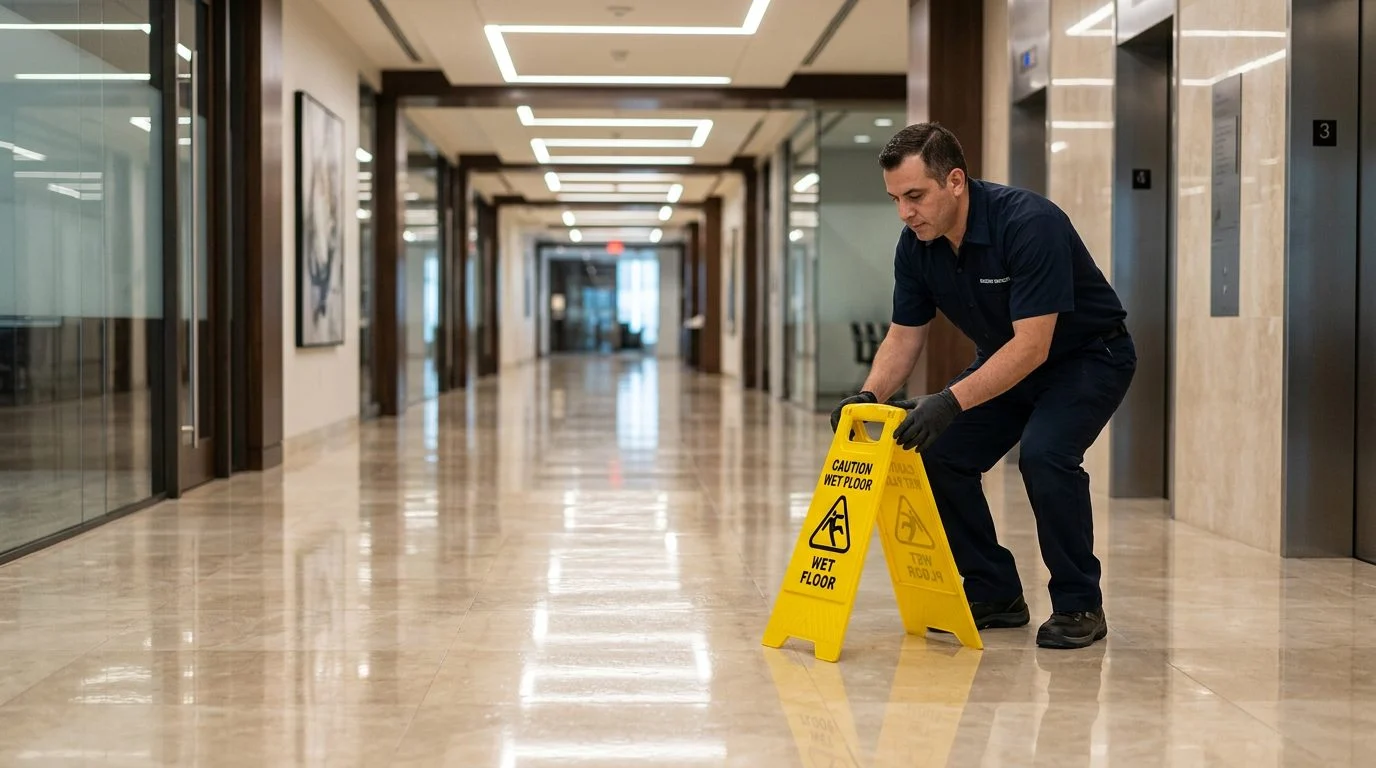
Staffing level affects how fast a spill or leak gets attention in a shared area. When one porter is on a routine round, an urgent spill may have to wait. That delay can leave residents walking past a slippery floor.
Reactive work can pull a single porter away from scheduled rounds. That’s why some buildings weigh an extra person for emergencies, or set a clear backup plan. Floor safety is a real concern here. Keeping floors clean, dry, and free of slip hazards is a practical goal for commercial spaces with heavy foot traffic.
Ask whether the building has a written protocol for spills and leaks. The protocol should name who responds, who gets notified, and how long an area stays closed. A clear answer to those three questions makes any staffing choice easier to judge.
Not sure what your next step is?
Talk it through with our team — the first consultation is free, confidential, and carries no obligation.
A checklist to bring to the coverage decision
Bring these facts to your next board or management meeting. They will show whether one porter can cover the building or whether a second makes sense.
- Count the lobbies, entrances, elevator banks, and restrooms that need regular attention.
- List amenity spaces and their daily and weekend hours of use.
- Note the busiest hours and the days with heavy move-in, move-out, or delivery activity.
- Decide which tasks must be done by a set time each day, such as lobby presentation before residents leave for work.
- Clarify which tasks fall under day porter duties and which belong to a separate scope, such as floor care.
- Consider how staff turnover would affect coverage. Consistent staffing keeps the same standards in place each day.
Use the board’s own calendar to move this decision forward. Put the coverage question on an agenda.
Keep the paper trail, too. The Community Associations Institute maintenance report also supports organized checklists when writing a vendor scope of work.
Common questions
How many day porters does a large condo need?
There is no single number. A large condo needs enough staff to cover its lobbies, restrooms, and peak hours.
What does a day porter do in a condo?
A day porter keeps lobbies, restrooms, and shared areas clean during daytime use. The role also covers trash, touchpoints, and restocking.
Is one day porter enough for a high-rise?
It can be, for a building with one lobby and moderate traffic. Several entrances or heavy midday use often call for a second person or split shifts.
Talk through your tower’s coverage with our team
If you’re responsible for a large tower, this decision carries real weight. It affects residents every day, and it may have landed on you without warning. You don’t need every answer before you start.
Our team can review your building’s size, traffic, and amenities with you, one factor at a time. Our first consultation is free, confidential, and carries no obligation to continue. To begin, send a message through our contact form or call the office.
Citation status: NOT PUBLISHABLE. Escalating to human reviewer. Only two links were added, which meets the minimum of two. However, the two sources are weak matches for the claims they support: the OSHA link (chemical hazard training) fits, but the ISSA CIMS standard is only loosely related to the staffing sentence it supports, and the reviewer should confirm that fit. The provided list contained no source that directly supports the article’s central claims about porter coverage levels, and the Miami-Dade and Florida sources do not apply to this topic. The existing Community Associations Institute link is not on the approved URL list and should be verified or removed by a reviewer.
What a Day Porter Covers in a Condo
Lobbies and Shared Areas
Daytime cleaning and upkeep of lobbies, elevators, hallways, and amenity spaces so residents and guests see a well-kept building.
Restrooms and Touchpoints
Regular attention to restrooms and high-touch surfaces such as handrails, door handles, and call buttons during busy periods.
Trash and Restocking
Emptying bins, managing trash areas, and restocking supplies so shared spaces stay clean and orderly throughout the day.
Coverage Planned Around Your Building
Staffing built around your building's size, traffic, and schedule rather than a one-size-fits-all package.
Don't Size Coverage by Unit Count Alone
Two condos with the same number of units can need very different day porter coverage. Traffic, amenities, and peak hours often matter more than the number of residences.
Factors That Shape the Right Number
Building Size and Layout
Multiple lobbies, long corridors, and several floors of shared space can increase the area that needs regular attention.
Resident and Guest Traffic
Buildings with heavy move-in traffic, deliveries, or frequent visitors often need more daytime coverage.
Amenities
Pools, fitness centers, business centers, and party rooms add restrooms and surfaces that need consistent care.
Peak Hours
Morning and early-evening rushes can require extra attention to keep common areas presentable when use is highest.
Start With a Free First Consultation: Confidential and With No Obligation to Continue
Related practice areas
- Day Porter Service in Miami-Dade: What It Covers and How to Switch Vendors
- How to Reduce Day Porter Turnover at a Miami Condo Without Cutting Coverage
- Condo Entrance Debris Removal Miami: Day Porter Tips