
Pressure Washing | Miami-Dade County
Pressure Washing Runoff at a Miami-Dade Condo: Plan the Water Before the Wash Begins
Good runoff control starts with the site survey, the sequence of work, and clear communication with residents and the board.
By Ryan Jurney · Published November 17, 2026
Your condo has a pressure washing job on the calendar, and storm drains sit right beside the work. Before anyone turns on the wand, the board needs to know where that dirty water will go.
Pressure washing runoff is treated as a stormwater issue. Plan the job to keep dirty water out of drains, and confirm which Miami-Dade and state requirements apply before the crew starts.
Where Pressure Washing Wash Water Goes at a Condo
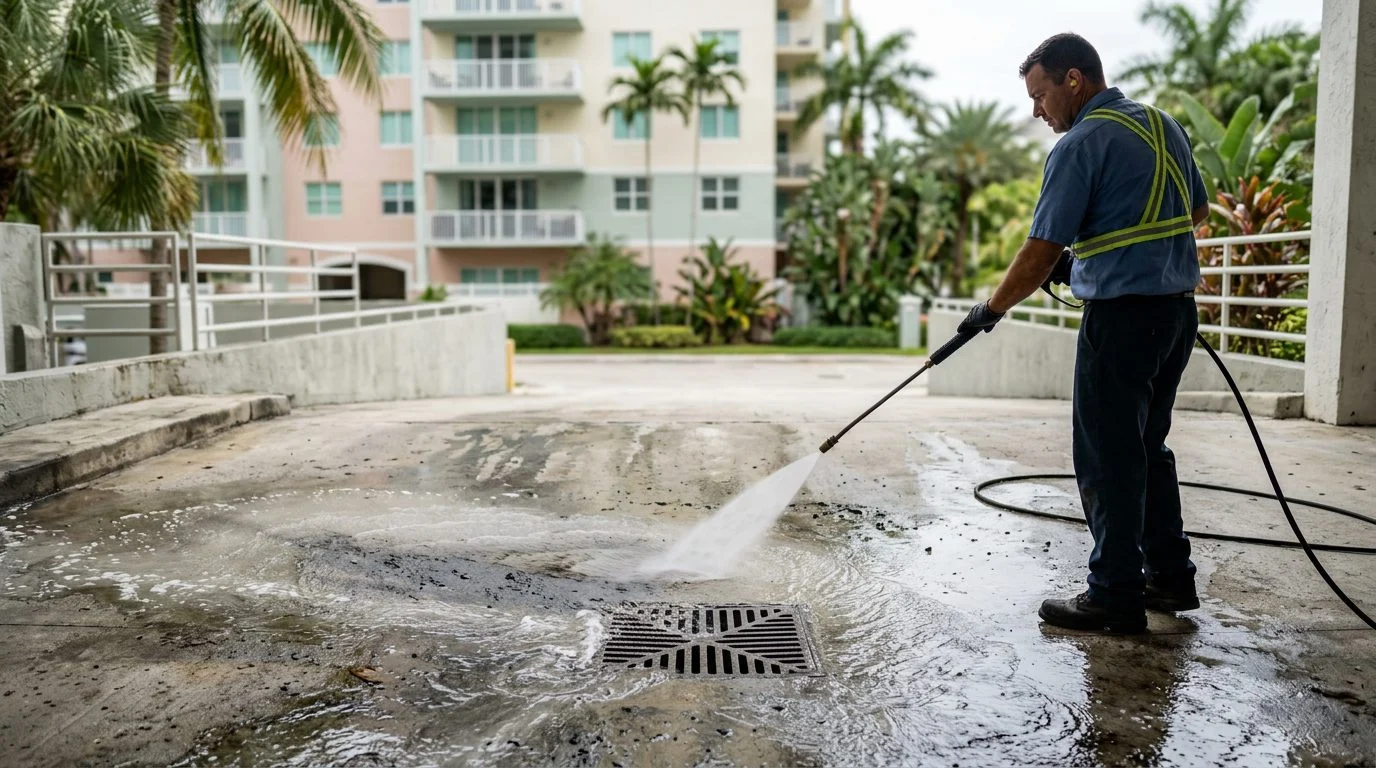
Most wash water runs across the pavement and into the nearest storm drain or catch basin. Driveways, parking garages, pool decks, and walkways are the usual routes on condo grounds. Hard surfaces give water nowhere to soak in, so it keeps moving until it finds an opening.
Water also finds the lowest point. On a sloped garage ramp, that can be a drain at the bottom that you didn’t plan to wash toward.
A sanitary sewer carries wastewater from sinks and toilets to a treatment plant. A storm drain carries rainwater and runoff, and it does not go to that plant.
Water bodies connected to storm drains can include canals, lakes, and the bay. Drains close to a canal or the bay leave little room for error, since the water goes straight to open water.
For the wider picture, read our day porter service guide on exterior and day-to-day upkeep.
If wash water from your condo's garage or pool deck is heading toward a storm drain, we can talk through the plan with you before the crew starts. Talk it through with our team — the first consultation is free, confidential, and carries no obligation.
Why Runoff From a Condo Property Is a Stormwater Concern
Runoff is a stormwater concern because of how much hard ground it crosses and what it picks up along the way. Impervious surfaces are hard, water-blocking areas like concrete, asphalt, pavers, and rooftops. Because water cannot soak through them, a large paved area sends more flow and debris into drains than a lawn does.
The surface type matters too. Painted concrete, sealed pavers, and oily asphalt each shed different material when washed.
Wash runoff usually carries loose sediment, organic debris such as leaves and mulch, oil and grease from vehicles, and cleaning agents.
Fla. Stat. § 403.031 defines a contaminant as any substance harmful to plant, animal, or human life. Some of this material can fit that description, so the question is what leaves the property. Fla. Stat. § 403.031(18) defines a stormwater management system as a system designed and constructed or implemented to control discharges that are necessitated by rainfall events, incorporating methods to collect, convey, store, absorb, inhibit, treat, use, or reuse water for the protective purposes the statute lists, or to “otherwise affect the quantity and quality of discharges from the system.”
Miami-Dade Stormwater and Environmental Rules to Confirm Before the Job
Before scheduling, ask Miami-Dade’s environmental regulator whether a permit or discharge practice applies to your scope of work. That regulator is the Department of Environmental Resources Management, known as DERM. These are the runoff rules to confirm before any wash starts.
For the state side of that program, see the FDEP stormwater program.
Requirements can change with a project’s size, its location, and nearby waterways. The board should confirm the specifics for its own property rather than assume. Ask about discharge limits and on-site practices too.
Write your questions down before you call, and bring a site map that marks the drains near the work. Keep the answers in the association’s file.
Practical Steps That Reduce Runoff Risk
The simplest way to cut runoff is to keep dirty water from reaching a drain at all. Try these steps:
- Sweep loose debris off the surface before you wash, so less sediment reaches the drain.
- Work from the top of a surface downward, and keep the flow away from storm drains and catch basins.
- Block or cover drains where the surface slopes toward them.
- Use the lowest pressure and the least cleaning product the surface needs.
- Avoid rinsing soap-heavy water into open drains.
- Pick dry weather when you can, so wash water doesn’t mix with rain runoff.
- Keep fuel, oil, and equipment leaks away from the work area, and clean up residue right after the job.
Test a small area first. A corner of the driveway can show how the water moves before you wash the whole deck. Waterfront edges need the closest watch, since water there reaches open water quickly.
Documenting the Job for the Board and Owners
Write down the scope, the drains protected, and the products used before the crew starts. A written scope that lists washed areas, surfaces, protected drains, and products gives the board one clear record.
Dated photos before and after the job help too. Keep them with any permit or county correspondence in the association’s records. A short runoff log can answer owner or county questions quickly.
Florida’s condominium law sets record rules for associations. Fla. Stat. § 718.111 says bids for work must be kept for at least 1 year after the bid is received. All other official records must be kept within the state for at least 7 years, unless another general law says otherwise. Records must be made available to a unit owner within 45 miles of the condominium property or within the county in which the condominium property is located within 10 working days after receipt of a written request by the board or its designee. However, such distance requirement does not apply to an association governing a timeshare condominium.
Making Runoff Control Part of Your Condo’s Routine
Runoff control is easier to manage as part of a regular exterior plan, not a one-time job. Pressure washing fits alongside floor care for lobbies and garages, and landscape upkeep for grounds. A schedule that covers all of these makes it easier to keep track of drains and surfaces.
Schedule a drain check after each wash to confirm nothing was left behind. Keep the same drain checklist for every visit, so each job starts from the same plan.
Our team serves South Florida, including Miami-Dade, Broward, and Palm Beach counties. If you manage a condo with wash water heading toward a storm drain and an exterior job on the calendar, this guide was written for you.
Not sure what your next step is?
Talk it through with our team — the first consultation is free, confidential, and carries no obligation.
Talk Through Your Building’s Runoff Plan With Us
Talking through the plan starts with the surfaces, drains, and permit questions on your building. Say you have a parking garage or pool deck wash on the calendar with storm drains close by, and you’re not sure whether a permit or discharge practice applies. That’s the situation we can talk through.
Reach Gator Protection, Inc. through the contact form, by phone, or by requesting a free quote. We’ll review the scope, the drains involved, and the surfaces to be washed. Bring your site plan and any county letters if you have them.
La consulta inicial es gratuita, confidencial y sin compromiso de continuar.
Frequently Asked Questions
Does pressure washing runoff have to be controlled under Florida law?
Some runoff falls under Florida’s stormwater program, so confirm which requirements apply to your property before the job.
Do storm drains in South Florida send water to a treatment plant?
Generally no. The SFWMD guidance says polluted runoff from South Florida storm drains is discharged untreated.
How long must a condo keep bids for exterior work?
At least one year after the bid is received, under Florida’s condominium law.
How our team approaches runoff on condo jobs
Plan before the first pass
We walk the property, identify drains and landscaped areas, and decide where rinse water should go before any equipment starts.
Protect drains and landscaping
Our team focuses on containment and cover measures that keep wash water away from storm drains, planting beds, and walkways.
Schedule around residents
Work windows are arranged to limit disruption to residents, parking, and building access.
Keep the board informed
We share the runoff plan with property managers and board members so everyone knows what to expect.
Do not let wash water run into storm drains
Rinse water from a pressure washing job can carry detergents, oils, and debris from the property into the storm drain system. Ask for a runoff plan before any work begins.
Common runoff controls for condo properties
Surface assessment
Identify the materials, staining, and drainage paths on each surface before choosing a method.
Cleaner selection
Choose products and concentrations suited to the surface and the sensitivity of nearby landscaping.
Capture and collection
Use barriers, berms, and collection methods to keep rinse water from reaching open drains.
Post-job cleanup
Remove residue, debris, and standing water so the property is left clean and safe for residents.