
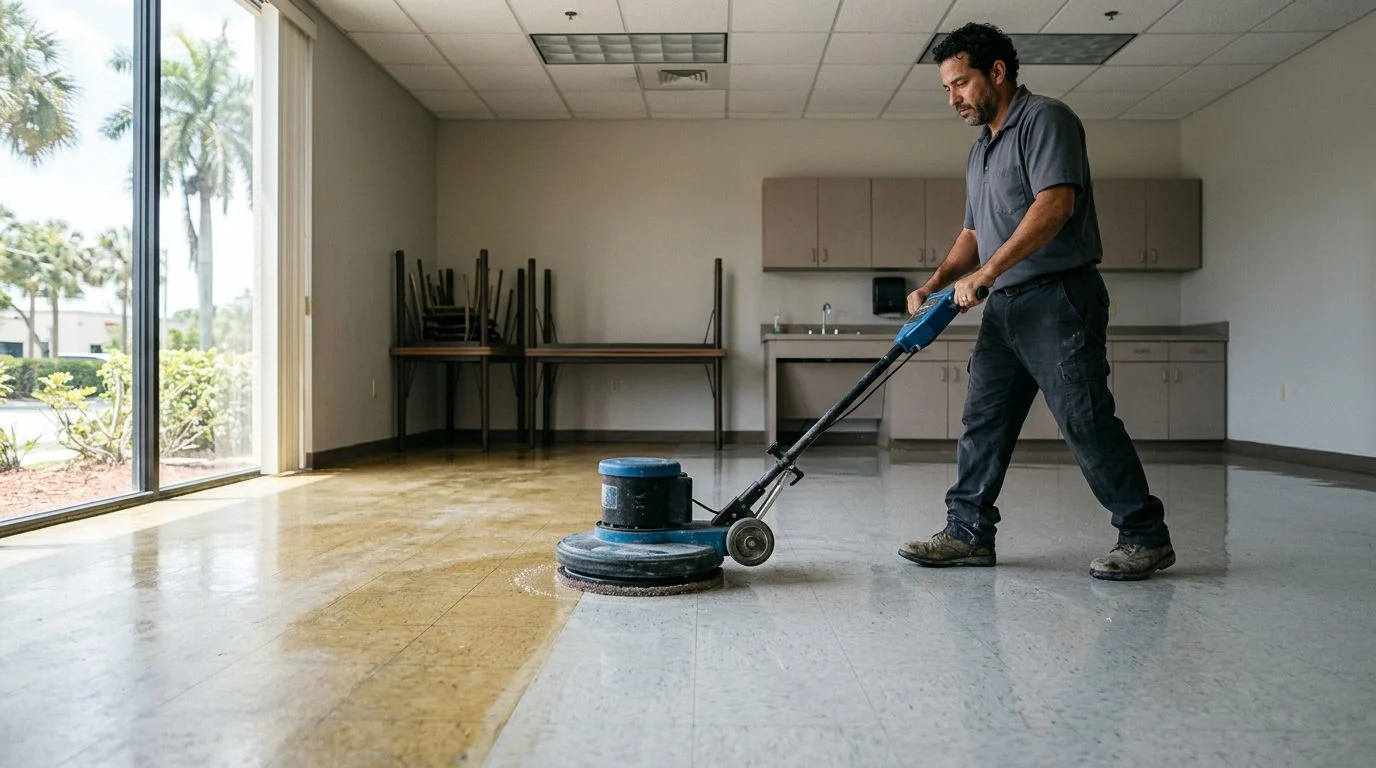
Floor Care Maintenance | South Florida
Floor Finish Curing: When Can Foot Traffic Return?
Humidity, temperature, and the product you chose all affect how long a fresh finish needs before people walk on it safely.
By Ryan Jurney · Published November 26, 2026
You just had a new floor finish put down, and your opening day or move-in is getting close. How long must people stay off it?
The manufacturer’s technical data sheet (TDS) for that exact product sets the cure window. Humidity and temperature in the building can stretch that window, so plan with a buffer.
The Technical Data Sheet Sets the Cure Window
The technical data sheet for your exact finish is the document that sets the cure window. Every floor finish comes with its own TDS from the manufacturer. It lists recoat times, light traffic intervals, and full cure times under stated conditions. Those numbers are your baseline, not a promise for your building.
Before you set any date, get the product name and its TDS from the flooring contractor or the finish’s manufacturer. Ask the installer to confirm the product family too, since the category shapes how the finish cures. Confirm which product went down in each area, because a lobby and a hallway can receive different finishes.
Write the product name, the application date, and each TDS interval on one page. Share that page with the installer, your maintenance crew, and anyone who books tenant or vendor access. Everyone works from the same dates, which prevents early foot traffic.
If a new floor finish is still curing and your opening day or move-in is close, contact Gator Protection, Inc. so we can build the schedule together. Talk it through with our team — the first consultation is free, confidential, and carries no obligation.
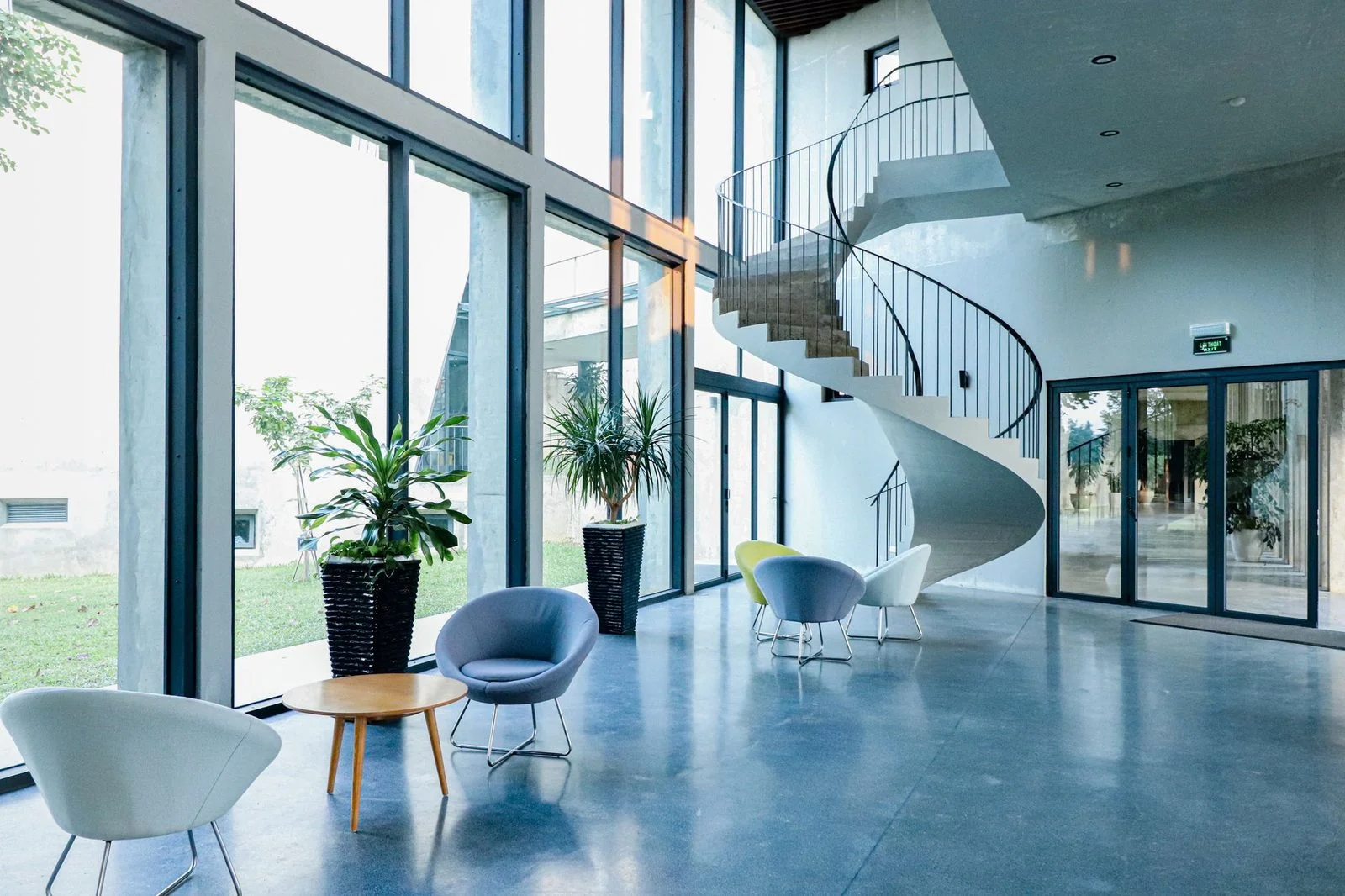
Dry Time vs. Cure Time: Why the Floor Feels Ready Too Soon
Dry time and cure time are different, and a floor can feel dry long before it is cured. Dry time is when the surface is no longer tacky. Cure time is when the finish film builds its full hardness and its resistance to scuffs, water, and cleaning chemicals.
The gap between those two stages is where most early damage happens. A soft film can mark under a chair leg or a cart wheel even when it feels dry. Surface readiness alone does not tell you that foot traffic is safe.
Different finishes also cure on different timelines. The Florida public-project floor finish specification covers several commercial finish types, including solvent-based concrete sealer and water-based epoxy. Waxes, water-based polyurethanes, and oil-based polyurethanes each have their own profile. A schedule that worked on one floor should not be copied to another, even when two floors look alike.
Light Foot Traffic vs. Full Traffic: What the Intervals Mean
Light foot traffic is careful walking, and full traffic is normal daily use. Light traffic means staff walking through in soft-soled shoes, without rolling loads. Full traffic means carts, rolling chairs, furniture moves, and heavy daily use.
Most TDS sheets list these as separate stages. Full traffic and full cure are later milestones than light traffic. Passing one does not mean you have reached the other.
Keep rolling chairs, carts, and heavy equipment off the floor until the full-traffic interval on the TDS has passed. Treat the light traffic stage as a limited window, not permission for everything.
Cleaning during the window needs care too. Ask your cleaning crew which products they plan to use, and check the TDS for cleaning instructions.
Why South Florida Humidity and Heat Can Extend Curing
High humidity and warm air can slow curing, so a South Florida building may need more time than the TDS baseline. Many finishes rely on the film forming while water or solvents leave it. Warm, moist air can slow both steps.
Air conditioning settings, open doors, and rainy-season humidity across Miami-Dade, Broward, and Palm Beach County can all change the cure environment inside an office. A lobby near open glass doors can cure differently from an interior hallway.
Plan for this before the finish goes down. Ask the installer what temperature and humidity the TDS assumed. If the building runs humid, add buffer days to every interval. Keep the HVAC on a steady setting during the cure window instead of switching it on and off.
Slip resistance matters during this stretch too. A PMC study on floor surface slip resistance reports that texture and roughness affect slip resistance under wet, soapy, and oily conditions. Entrance mats and wet-floor signs help keep people safe while the finish is still setting.
Scheduling Occupancy Around the Cure Window
Work backward from your opening day, move-in, or tenant traffic date. Start with the full-traffic interval from the TDS, then add a buffer for humidity. That gives you the last safe day to keep the floor closed to rolling loads.
Block the floor during light traffic with signage, barriers, and a staff-only route. Tell tenants and vendors the restricted dates in writing. Vendors need to know early that deliveries and service work must wait.
Burnishing and maintenance passes need the same timing. Burnishing is machine work on the finish, so schedule it only after the TDS stage allows. Hard-surface floors generally call for regular sweeping, mopping, stripping, waxing, and buffing. Line up that routine with the cure schedule so machine passes don’t start early.
Common office moves need the same planning. Furniture delivery, server or equipment installs, and desk moves should wait until after full traffic.

Plan Your Floor Schedule With Gator Protection
Confirm the product’s TDS, map the light and full traffic dates, add time for South Florida humidity, and lock down occupancy. Those four steps turn a vague cure window into dates you can keep.
If a new finish is down and your opening date is closing in, contact Gator Protection, Inc. through the contact form at gatorprotec.com/contact, by phone, or with a free quote request. Our team can review the floor and build a written floor schedule with you during a walk-through.
The initial consultation is free, confidential, and carries no obligation to continue. La consulta inicial es gratuita, confidencial y sin compromiso de continuar.
Frequently Asked Questions
How long does floor finish take to cure?
The TDS for your exact product sets the cure window. Humidity and temperature can extend it.
Can people walk on a new floor finish right away?
Only careful light traffic is safe at first. Full traffic waits for the interval on the TDS.
Does humidity change cure time in South Florida?
It can. High humidity and warm air may slow curing, so add buffer days to your schedule.
Why Plan Floor Finish Work With Our Team
Scheduling Around Your Hours
We plan floor finish work so the cure window fits your business day, with clear timing for when the area can reopen.
Protection During the Cure
We help keep a newly finished floor closed to traffic while it hardens, so the finish is not marked or dulled early.
Routine Floor Care Maintenance
Our floor care maintenance keeps finished floors in good condition after the initial cure, across South Florida.
Clear Communication
Our team keeps you informed about the cure timeline so staff and visitors know when the floor is ready.
Keep Traffic Off Until the Cure Is Complete
Light foot traffic before the finish has fully cured can leave marks or dull the surface. Plan a closed window before reopening the space, and check the product's technical data sheet for its cure interval.
Planning a Floor Finish Cure
Read the Product Data Sheet
The manufacturer's technical data sheet sets the baseline cure window for the finish you are using.
Account for Building Conditions
Humidity and temperature in your space can lengthen the cure, so plan extra time in humid weather.
Control Access During the Cure
Post clear signage and block entrances so people do not cross the finish before it is ready.
Confirm Before Reopening
Check that the finish is fully cured before returning carts, furniture, and regular foot traffic to the floor.