
Floor Care Maintenance · Miami
Floor Stripping During Business Hours in Miami: A Practical Plan
An open workday does not have to stop a floor project. The right layout, timing, and communication keep your staff and visitors moving while the work gets done.
By Ryan Jurney · Published November 25, 2026
Your lobby or store floor looks dull, and the wax buildup shows in every entryway. You need it stripped, but you can’t close the space for a day.
Floor stripping during business hours in Miami is sometimes possible. Whether it works depends on the floor material, the finish already on it, foot traffic, ventilation, and whether one section can be closed off.
What Floor Stripping Involves and Why Timing Matters
Floor stripping removes built-up wax and old finish from a hard floor so a fresh coat can go on. The work follows a set order. Crews clear the area, apply a stripper, and agitate the surface to loosen the old finish. They then pick up the residue, rinse the floor, let it dry, and recoat it.
Some floors need several passes before the old finish lets go. That adds wet time and more chemical contact.
Timing is the hard part. The floor stays wet through several steps, the chemicals give off odor, and the new finish needs time to dry before people walk on it again. Each of those factors affects how much of the space you can keep open.
Stripping is one part of floor care maintenance. Routine cleaning, burnishing, and buffing make up the rest of that work. Regular upkeep also helps push back the next full strip.
Terrazzo needs its own approach. For background on terrazzo care, see the National Terrazzo & Mosaic Association’s terrazzo care guide.
If you're planning a stripping job for a lobby or store that stays open, reach out and our team will help you plan the zones, the timing, and your quote. Talk it through with our team — the first consultation is free, confidential, and carries no obligation.
Can It Be Done While the Business Is Open?
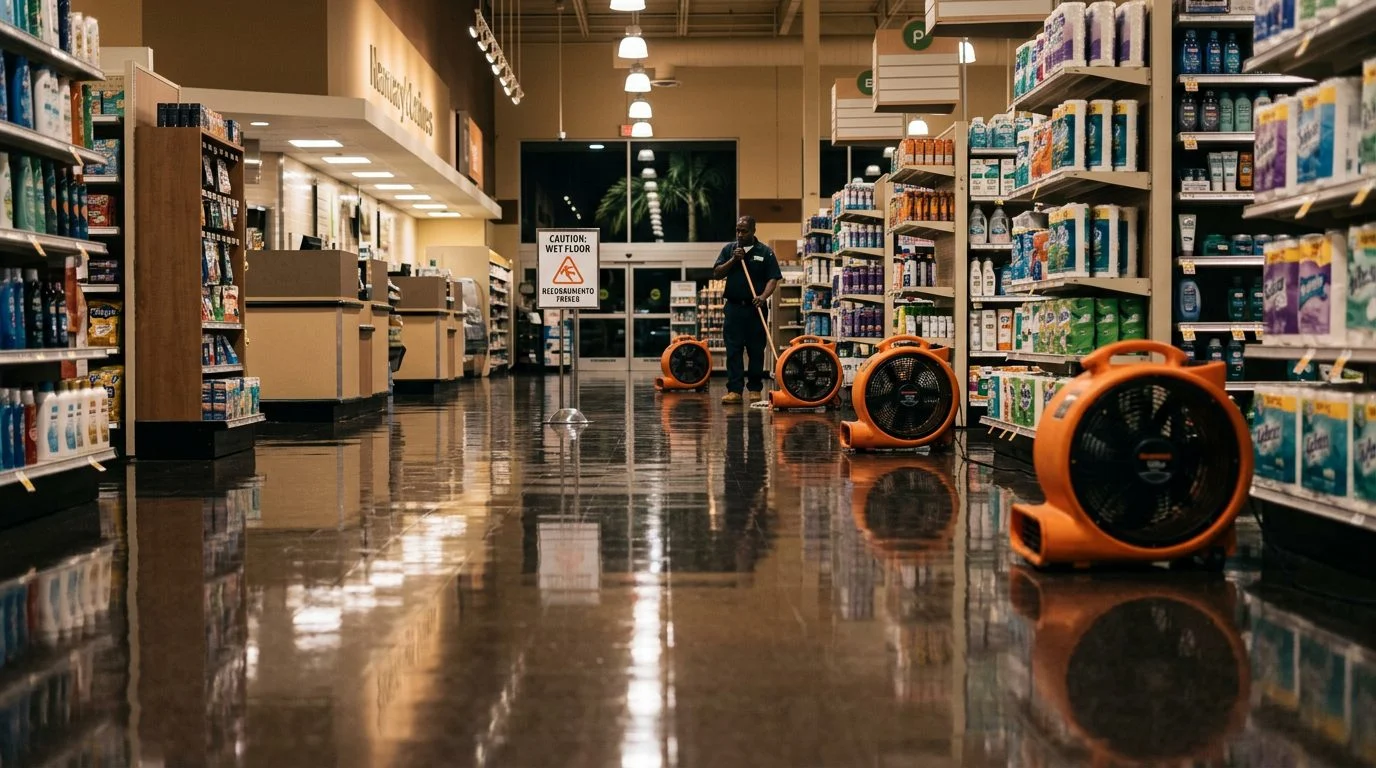
Yes, sometimes. Stripping during open hours works when the space can be split into zones and the chemical work stays away from customers and staff.
Five facts decide whether it’s practical:
- Floor material. Stone, terrazzo, vinyl, and wood react differently to stripper and water.
- Finish condition. Heavy buildup and several finish layers mean more passes and more wet time.
- Foot traffic. Constant walking through a work area makes it hard to keep the floor dry and clean.
- Ventilation. Stripping chemicals need airflow to keep fumes down.
- Zone isolation. You need a way to block off one section with barriers.
For general background on chemical hazards, see OSHA’s chemical hazards guidance. Ventilation belongs in the plan from the start.
Areas with heavy traffic and no way to close a section usually need a different schedule. Off-hours work or staged zones are options to consider.
A zone-by-zone approach keeps part of the room in use. One section is stripped and left to dry while the rest stays open. The crew then moves to the next section.
Miami Conditions That Affect Daytime Floor Work
South Florida humidity can slow drying, and drying time decides when a floor can reopen. A floor that stays damp longer keeps walkways closed longer. That cuts into the hours a lobby or store is fully open.
Wood and wood-look floors need extra care around water. Moisture is the main concern, so wetting steps must stay tight and controlled.
Scheduling changes by location. The work window has to fit around the hours when the space is in use. Zone work can help when a lobby sees foot traffic during the workday. Properties with several tenants may keep set hours, so it helps to confirm access early.
Properties in Broward and Palm Beach counties face similar humidity and traffic questions. Managers there should plan around their own operating hours and busiest times.
How Day Porter Service Supports Floors During Open Hours
Day porter service keeps entryways, lobbies, and busy floors clean while the business runs. That daytime coverage matters most when stripping work happens nearby.
Daytime staff handle spills, track-in dirt, and walkways next to active work zones. They also keep wet-floor signage in place and paths clear so people can move safely.
Slip risk deserves attention during stripping. For background on slip resistance of floor finishes, see this research paper.
Ongoing floor care maintenance also keeps buildup low. Less buildup can push back how soon a full strip is needed.
Planning a Business-Hours Stripping Job
Start with the floor type and a close look at the current finish. Then map the work zones with building staff before any chemicals come out.
A practical plan covers five steps:
- Confirm the floor material and how many finish layers are on it.
- Mark the work zones, entries, and walkways that must stay open.
- Set a timeline with building staff that includes the full drying window.
- Set up wet-floor signage, barriers, and clear walkways before work starts.
- Confirm ventilation for the chemicals in use.
Keep the plan in writing. Every shift should know which zone is active, which stays open, and when the floor is ready again. Burnishing or buffing may follow the recoat once the finish has cured.
Frequently Asked Questions
Can floor stripping be done during business hours?
Sometimes. It works best when the space can be split into zones and the chemical work stays away from people.
How long before people can walk on a stripped floor?
Drying time varies with the floor type, the number of coats, and the humidity, so the timeline is set before work starts.
Does stripping make a floor more slippery?
Finish texture affects slip resistance when floors are wet, so signage and barriers are part of the plan.
What does a day porter do during a stripping job?
Daytime staff manage spills, track-in dirt, and walkways beside active work zones.

Get a Quote for Your Floor Stripping Project
If you manage a lobby, store, or office with a dull, buildup-heavy floor, you need to know whether stripping can happen while people are still inside. Share your floor type, square footage, operating hours, and the areas that must stay open. Then use the contact form, call the office, or request a quote, and we’ll work through the zones and timing with you.
La consulta inicial es gratuita, confidencial y sin compromiso de continuar.
What Makes Daytime Stripping Workable
Zoned Work Areas
The floor is divided into sections so that people can keep using the rest of the space while one section is being treated.
Chemical Work Kept Apart
Stripping agents are applied and removed in areas that are closed off from foot traffic until the work is complete.
Drying Time Set in Advance
The timeline for when the floor can safely be walked on is agreed before work starts, based on the floor type and conditions.
Clear Communication
Staff and building contacts know which areas are affected and when, so daily operations are planned around the work.
Important: Do Not Start Without a Plan
Stripping a floor in an occupied space without zoning, ventilation, and a confirmed drying timeline can expose people to fumes and slippery surfaces. Plan the work before anyone is in the area.
How a Daytime Stripping Project Is Planned
Walk the Site
We review the floor type, traffic patterns, and the areas that must stay open during business hours.
Split Into Zones
The space is divided so that work can move in sections and the rest of the building keeps operating.
Set the Drying Timeline
Drying time depends on the floor, the number of coats, and humidity, so the schedule is confirmed before work begins.
Confirm Before Work Starts
The plan, the work zones, and the reopening times are reviewed with your contact so there are no surprises on the day.