
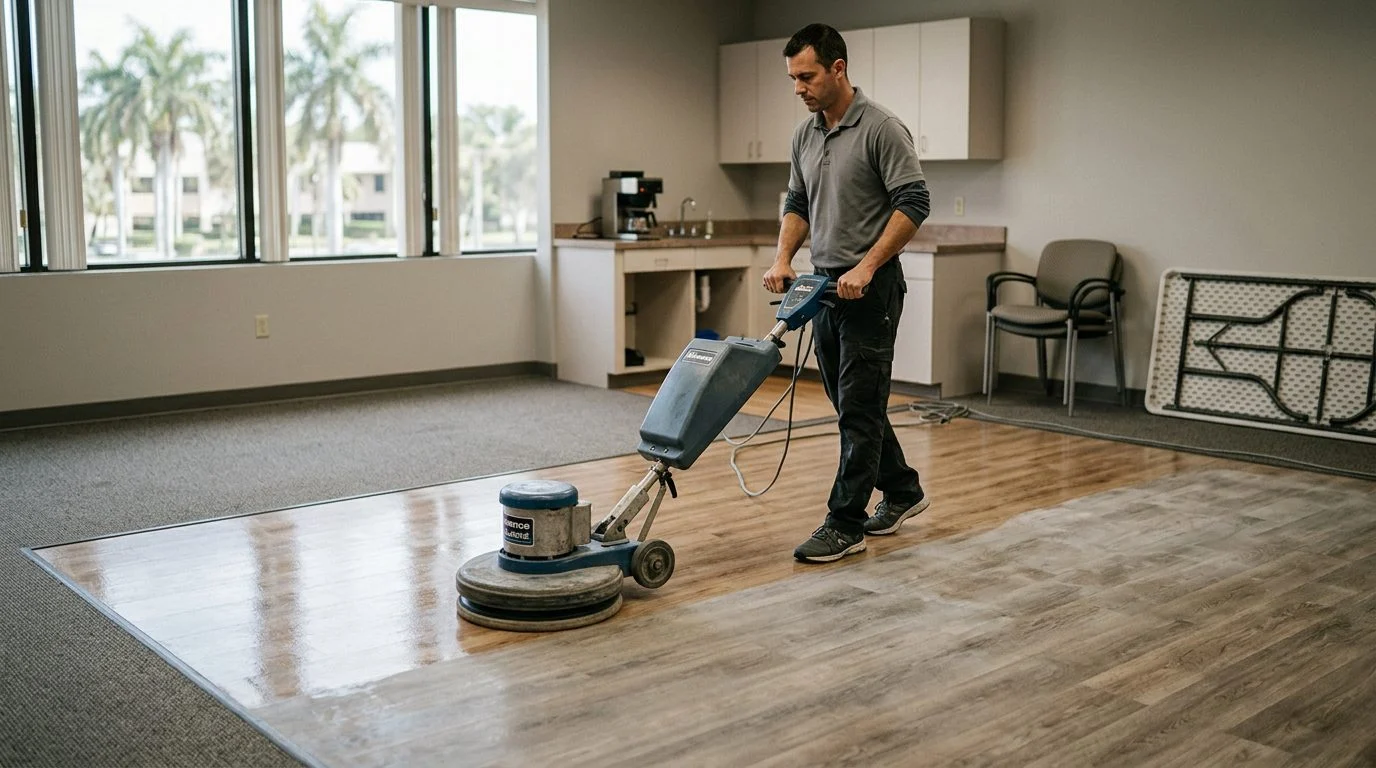
Floor Care Maintenance | South Florida
Is Your Commercial Floor Dirty or Failing?
Some floor problems wash out with routine cleaning, while others point to wear that no amount of mopping will fix. Here is how to tell the difference.
By Ryan Jurney · Published November 25, 2026
You walk a commercial floor and it looks tired. Is it just dirty, or has the finish worn out? That answer decides whether you need a cleaning visit or a full strip-and-wax, and the two cost very different amounts.
A simple spot test and a few visible signs can show you which problem you have. Many dull floors are only holding soil. A floor with a failing finish often stays dull after a proper cleaning.
Why the Difference Between Dirt and Finish Failure Matters
A floor that only needs cleaning does not need its finish removed. A strip-and-wax takes off the existing finish, then puts a new one on. That means more money, more labor, and time when the area can’t be used.
If you approve a strip for a floor that only needed cleaning, you pay for the bigger job and the dirt is still there. The floor can look no better than before.
A floor that needs stripping is not always obvious, though. Dull, yellow, or patchy floors can look alike from across a room. A short diagnostic before you book saves budget and keeps you from guessing.
Our floor care maintenance page gives an overview of the floor care services we offer in Miami-Dade and nearby areas.
If your floor lifts with cleaning in some spots but not others, we can look at it with you before you approve a strip. Talk it through with our team — the first consultation is free, confidential, and carries no obligation.

Run a Spot Test Before You Book Anything
Run a spot test by cleaning one small, hidden area with the method you already use, then comparing it to untreated floor nearby.
Pick a spot that people don’t walk on, such as a closet corner or the area under a fixed fixture. Clean it with the same cleaner, dilution, and tools your crew uses every day. Let it dry fully before you judge it.
Then compare the cleaned patch to the floor around it. If the dullness, haze, or marks lift, the problem is most likely surface soil. If they stay after a proper cleaning, the finish itself is the likely issue.
Write down the product, the dilution, the tools, and how long the cleaner sat on the floor. The test is only as good as the method behind it. A weak routine can make dirt look like finish failure, so fix the routine first.
Sign 1: The Floor Looks Dull Even Right After Mopping
A floor that looks flat or hazy right after a proper mopping is a warning sign. It is not a final answer.
When the finish is intact, a fresh clean with fresh solution should bring back some sheen. If the floor still looks flat, the finish may have built up or worn unevenly.
Check this in good light, from a low angle, across the open floor. Look for a film, streaks, or a dull band along the traffic path.
A common mistake is mopping with dirty water or too much product. That leaves a film that looks like a failing finish. Correct the method, then run the spot test again.
Sign 2: Visible Yellowing or Discoloration in the Finish
Yellow or amber tones that stay after cleaning usually point to the finish layers themselves.
This shows up most in traffic lanes and under fixed fixtures, such as cabinets, vending machines, and the edges of mats. Light areas beside those spots can make the color stand out.
Discoloration that stays after cleaning suggests the finish has aged or collected residue over time. Scrubbing harder will not remove it, and it can wear the finish further.
Because the color often spreads along traffic paths, check the whole floor, not just the spot that caught your eye. The pattern tells you more than one patch does.
Sign 3: Black Heel Marks and Scuffs That Won’t Come Out
Heel marks that lift with a cleaner are surface soil. Marks that stay dark after the floor is clean usually sit in a worn or heavily scuffed finish.
To test a mark, clean a small area with your routine cleaner and a damp pad. If the mark lifts, the finish under it is likely intact. If it stays, the finish has likely worn through in that path.
Note where the marks cluster. Heavy marks in doorways, between desks, or along cart routes point to a traffic problem, not a single bad day. That pattern changes the next step.
Avoid stronger products as a first fix.
Sign 4: Uneven Sheen or Patchy Finish Across the Floor
Glossy zones beside dull zones usually mean the finish has worn unevenly across the floor.
The pattern often follows foot traffic, doorways, and cart routes. Dull patches may sit at entries, where soil and grit come in from outside.
Uneven sheen can mean the finish is gone in some areas and still intact in others. That’s why a single dull patch tells you little. A clear pattern tells you more.
Map the glossy and dull zones on a simple sketch of the floor. A map like this helps a manager decide whether the whole floor needs work or only a few sections.
Grit tracked in from outside can speed up wear at entries. Our day porter service and pressure washing services can help reduce that soil before it reaches the floor.
Not sure what your next step is?
Talk it through with our team — the first consultation is free, confidential, and carries no obligation.
Sign 5: Finish Buildup Along Edges and Corners
Layered residue along baseboards and corners is one of the most common places buildup hides.
Mops and auto-scrubbers often miss edges and corners. Over time, a film builds up there and the edges look dirty even after the open floor looks clean.
Check the edges under good light and compare them to the open floor. If the edges show a ridge, a film, or a line where the finish stops, plan for edge work in the scope of any strip.
Don’t judge the whole floor by its edges alone. Edge buildup is a sign to look closer, not proof that the entire finish has failed.
Sign 6: A Slippery Surface That Cleaning Cannot Correct
A floor that feels slick underfoot after a thorough cleaning needs prompt review.
Slickness can come from finish buildup or a worn surface. Either one changes how the floor handles water and traffic, so don’t wait to address it.
Until the floor is reviewed, keep foot traffic off the slick area when you can. Then run the spot test and note where the slickness is worst.
Sign 7: Routine Buffing No Longer Restores the Shine
When buffing stops bringing back shine, the finish has likely worn past what routine maintenance can restore.
Think about how the floor responded in the past. If buffing used to bring up a clear shine and now leaves the same dull result, the finish is thinning.
Buffing works on an intact finish layer. Once that layer is worn through, more passes or heavier pads usually don’t help and can add more wear.
Combined with the spot test, this is one of the clearest signals that a strip may be needed. Note the date of your last strip, if you know it, so the decision has a clear record.
How to Check the Finish on Commercial Wood Floors First
Check a wood floor’s finish before any cleaning, because the finish type decides which method is safe.
Use a simple water-drop check on a hidden spot. Place a few drops of water on the surface and watch what happens.
If the water beads on top, the finish is likely sealed and intact. If the water soaks in and darkens the wood, the finish is likely unsealed or worn.
A wrong method on wood can cause damage that is harder to reverse. For more on that risk, see our new vendor floor damage repair guidance.
Deciding Between a Cleaning Visit and a Full Strip-and-Wax
Choose a cleaning visit when the spot test lifts the problem. Scope a strip when the finish fails the test and several signs appear together.
A strip removes the existing finish. A fresh finish then goes on, so the scope, the schedule, and the drying time differ from routine care.
Strip work also needs planning for chemicals and air. OSHA’s chemical hazards guidance says floor-stripping chemicals can cause serious health effects, and that ventilation, mixing, sprays, and mechanized equipment all affect exposure.
Products with the EPA’s Safer Choice certification are one option to ask about for floor-cleaning, finish, and stripper products.
Finish type and cleaning frequency both shape the scope of work, and our team can walk you through how they apply to your facility. Our team can explain what to consider in a floor care plan for your facility. An on-site floor walkthrough shows what the assessment covers.
If your floor lifts with cleaning in some spots but not others, we can look at it with you before you approve a strip. Talk it through with our team — the first consultation is free, confidential, and carries no obligation.
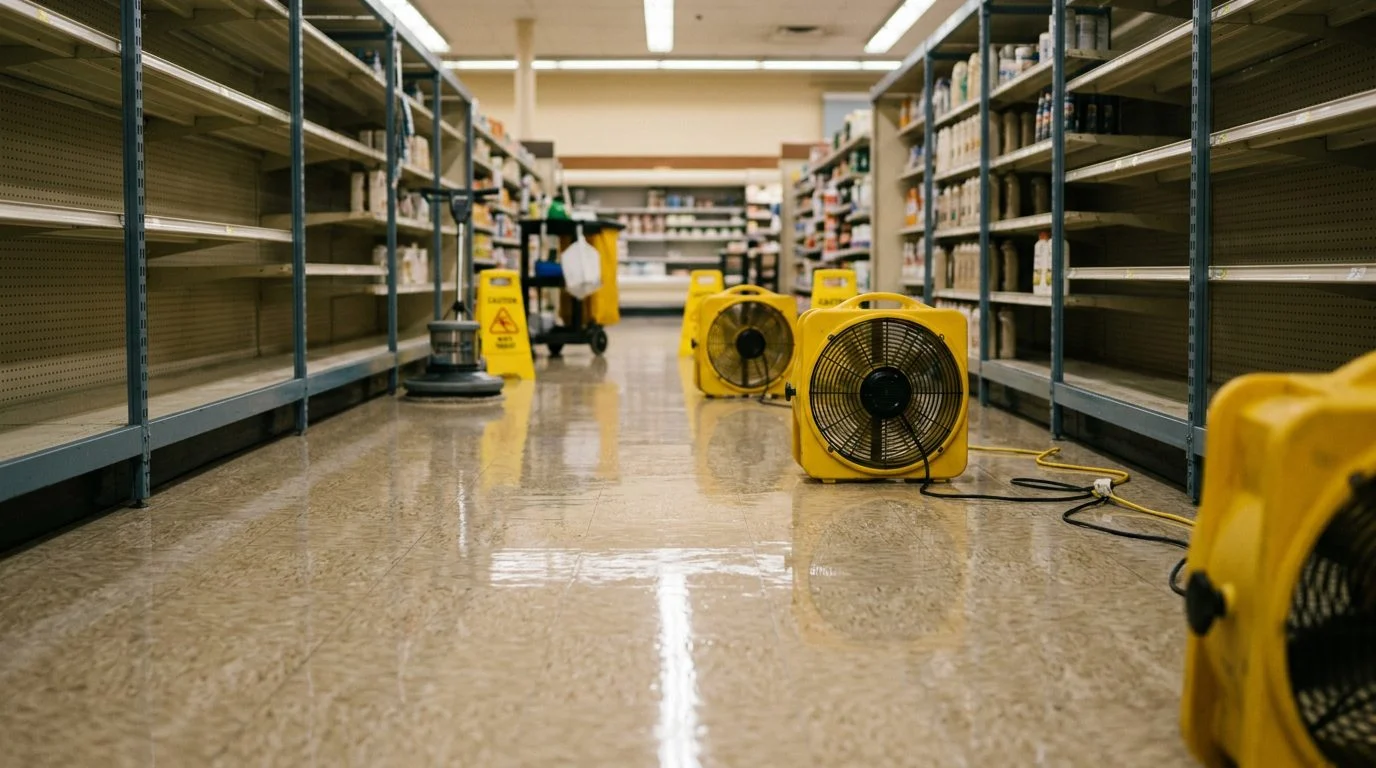
Talk Through Your Floor With Our Team
If your floor passes the spot test in some areas and fails in others, a floor assessment can help settle the strip question before budget approval.
Bring your spot-test notes, photos of the worst areas, and a simple map of the traffic lanes. These make the on-site visit faster and more specific to your floor.
How do I know if my commercial floor just needs cleaning?
Run a spot test on a small, hidden area. If the dullness lifts with routine cleaning, the problem is most likely surface soil.
Why does a floor look dull right after mopping?
A fresh clean should bring back some sheen when the finish is intact. Lasting dullness can point to buildup or uneven wear.
Can buffing fix a dull commercial floor?
Buffing helps when the finish is still intact. When it stops restoring shine, the finish may be worn past what maintenance can fix.
Contact our team through the contact form to set up a floor assessment. The first consultation is free, confidential, and carries no obligation to continue.
Before You Strip or Refinish
Stripping removes the protective finish along with the grime. Test a small, hidden area first, and have the floor assessed before choosing a method for the whole space.
Signs Your Floor Needs Attention
Dullness That Returns
If the floor looks hazy again soon after a proper cleaning, the cause may be buildup under the surface rather than simple soil.
Stains and Traffic Patterns
Dark paths near entrances and stains that resist routine cleaning often signal finish breakdown in high-traffic zones.
Lifting, Cracking, or Worn Tile
Loose or damaged flooring can create trip hazards and tends to worsen over time, so it deserves prompt attention.
Gaps and Edge Damage
Dirt collecting along edges and seams can spread into the wider floor and is often overlooked during routine cleaning.
How We Approach Commercial Floor Care
Honest Assessment
We look at what your floor actually needs, whether that is routine maintenance or deeper work, and explain our reasoning.
Confidential First Consultation
The first consultation is free, confidential, and comes with no obligation to continue.
Serving South Florida
We support commercial properties across Miami-Dade, Broward, and Palm Beach counties, including South Beach, Coral Gables, and Brickell.
A Team That Follows Through
Our team coordinates floor care alongside day porter and other maintenance services, so your property stays on schedule.
Start With a Free, Confidential Consultation. No Obligation to Continue.
More of our services
- Why Vinyl Floor Finish Dulls or Yellows in South Florida