
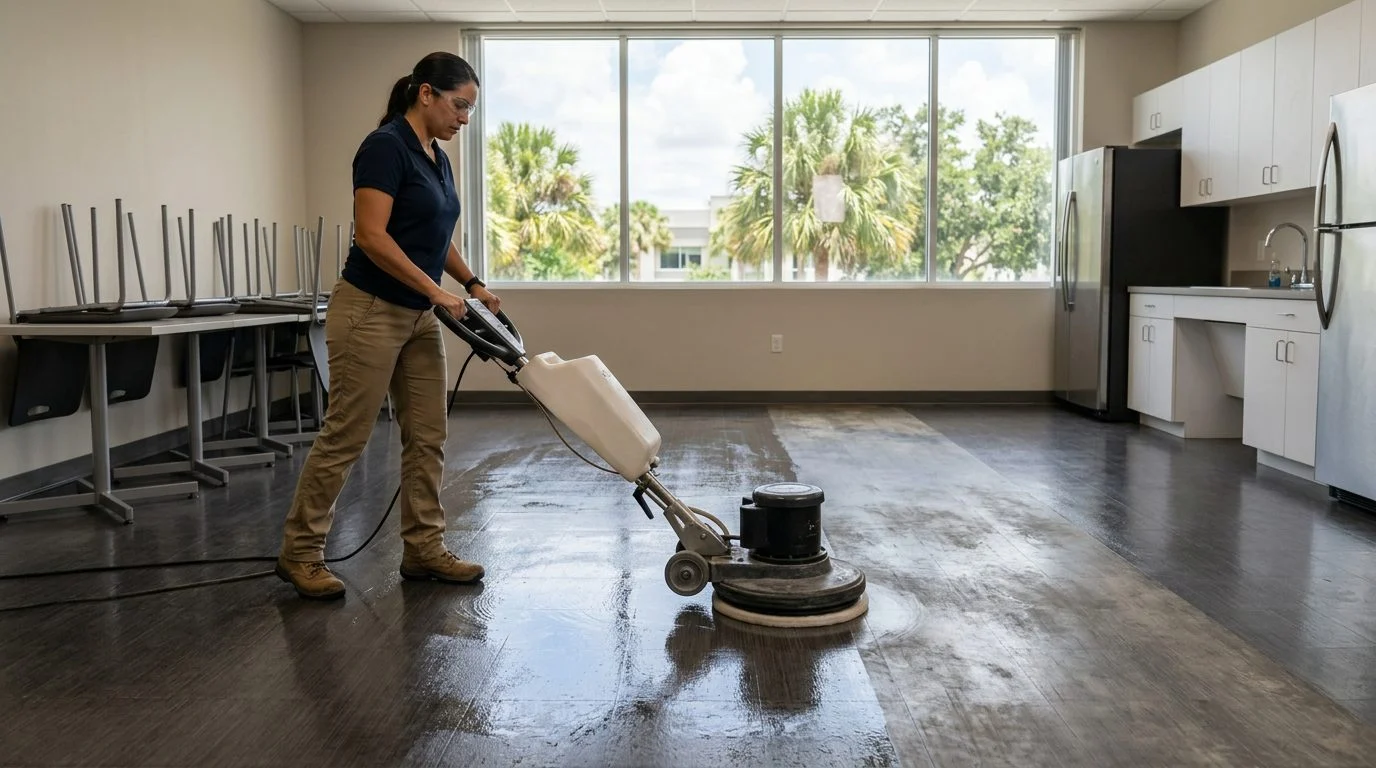
Floor Care Maintenance | South Florida
Bring Your Vinyl Floors Back to Life
Scuffs, dullness, and buildup can make even well-used vinyl look tired. Here is how to tell what your floor needs and what to avoid.
By Ryan Jurney · Published November 20, 2026
A dull vinyl floor can make a whole room look older than it is. If you’re trying to make a vinyl floor look new again, the short answer is this: clean it with a pH-neutral floor cleaner, remove any old buildup, and apply a thin, even finish coat. That routine often changes how a floor looks, but not every floor can be fixed that way.
This guide explains why vinyl loses its shine, the steps that help, the products people ask about, and the signs that a floor needs an in-person look. It’s written for floors in South Florida, where humidity, sand, and busy foot traffic are part of daily life.
Why does a vinyl floor lose its shine?
Vinyl loses its shine when soil, dust, and residue build up on the surface and on the finish above it.
Most vinyl floors have a protective finish on top. Foot traffic wears that finish first. Entryways, hallways, and kitchen paths often look duller than the rest of the room for that reason.
Cleaning habits add to the problem. Cleaners that leave film, or too much product, create a haze that makes a floor look older than it is. Adding more soap usually makes the haze worse, not better.
South Florida conditions speed up this wear. Humidity, sand tracked in from outdoors, and heavy use in offices, stores, and restaurants all bring grit and residue onto the floor. Grit under foot traffic acts like fine sandpaper, so the finish wears faster.
If a dull floor in a home or building you look after landed on you unexpectedly, our team is glad to talk through what you're seeing with you. Talk it through with our team — the first consultation is free, confidential, and carries no obligation.

How do you clean a vinyl floor so it looks fresh?
Sweep or dust-mop first, then wet-clean with a pH-neutral cleaner made for resilient flooring.
Removing loose dirt comes first. If you mop over grit, you grind it into the surface and risk fine scratches. A light sweep or dust mop does the job.
Next, dilute the cleaner as the label directs. Use a damp mop, not a soaking wet one. Standing water can seep into seams and edges and cause lifting over time.
Rinse the mop often, and change the solution when it looks gray. Dirty water puts soil right back on the floor.
Let the floor dry fully before anyone walks on it. Wet vinyl is slippery, and walking on it too soon leaves footprints and streaks. The OSHA slip and floor safety handout notes that wet or spilled floors increase slip risks, and that spills should be cleaned up or reported immediately.
How do you remove buildup and restore the finish?
Strip off the old finish and buildup, then apply a fresh, thin finish in even coats.
If a floor stays hazy or tacky after regular cleaning, old finish or residue is building up. Mopping alone won’t remove that layer.
Stripping is where most of the visible renewal happens. Use a floor stripper made for vinyl, follow the label, and rinse the floor well before the new finish goes on. Leftover stripper or residue will dull the new coat.
Apply finish in thin coats, letting each dry before adding the next. Thick coats can look cloudy and trap dirt underneath.
Buffing a dry, properly finished floor adds sheen. How much gloss you get depends on the product and how the floor was prepared.
When you choose a stripper or finish, follow the manufacturer’s instructions for your floor type.
Can you use dish soap or WD-40 on vinyl?
No. Neither one is a dependable choice for routine vinyl floor care.
Dish soap is made to cut grease on dishes. On a floor, it can leave a filmy residue that dulls vinyl and attracts more dirt. A dedicated pH-neutral floor cleaner is the more predictable choice for regular care.
WD-40 is an oil-based lubricant. It is not a floor cleaner or a floor finish. Oily products leave a slick, sticky film that collects grime and creates a slip hazard. That film also makes a later finish coat harder to apply evenly.
If either product has already been used on the floor, strip it before you apply a new finish.
Which cleaner keeps vinyl floors shiny?
A pH-neutral cleaner labeled for vinyl or resilient flooring, used at the label dilution, is the most suitable choice for everyday shine.
Avoid strong solvents, ammonia, and concentrated bleach. These can strip finish and dull the surface over time.
Consistency matters more than strength. Light cleaning on a regular schedule keeps buildup from forming, so heavy stripping is needed less often. A microfiber or well-wrung mop head spreads cleaner evenly and cuts down on streaks.
For a commercial floor, keep the Safety Data Sheet for each cleaning product on file. The EPA guidance on cleaning supplies supports choosing safer products and following label instructions.
What damages vinyl flooring and makes it look worn?
Grit, abrasive pads, harsh chemicals, and standing water all wear vinyl down and make it look worn.
Abrasive scrub pads, steel wool, and gritty dirt leave fine scratches. Scratches scatter light, so the surface looks cloudy even when it’s clean.
Strong solvents can soften or discolor vinyl and strip finish unevenly. Standing water can seep under the floor at seams and edges, causing lifting or staining.
Heavy furniture dragged across the floor, rubber-backed mats that trap moisture, and long direct sun can leave marks or fade the surface. Lift furniture instead of sliding it, and use felt pads underneath.
Not sure what your next step is?
Talk it through with our team — the first consultation is free, confidential, and carries no obligation.
When is a dull floor more than a cleaning job?
A floor needs an in-person look when cleaning and a fresh finish coat do not change its appearance.
The wear may be in the surface itself. Deep gouges, lifted seams, bubbling, and large areas of discoloration usually need evaluation before any appearance work begins. A new coat of finish usually won’t fix those problems.
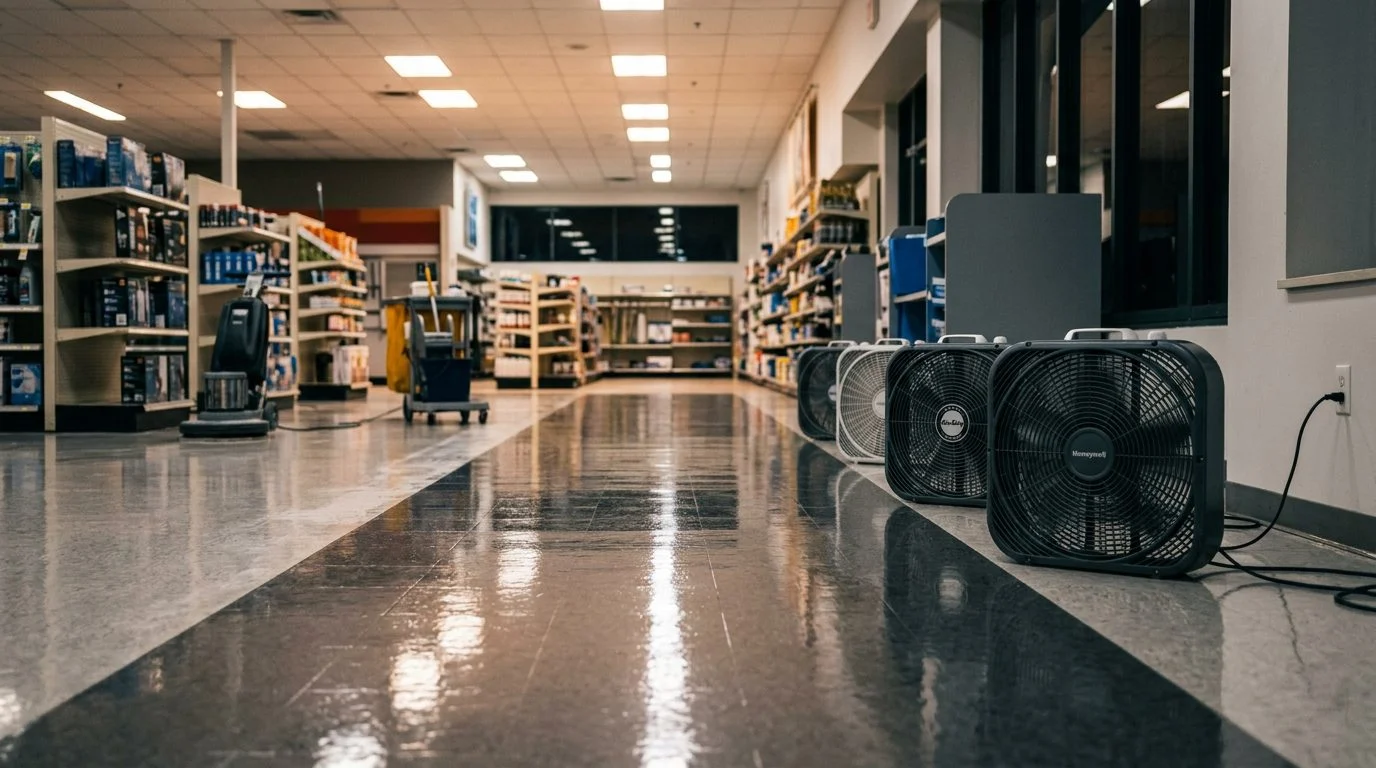
Commercial floors in offices, retail stores, and restaurants often need a regular schedule of cleaning and maintenance to keep their look steady. Floor care maintenance can be planned around the traffic patterns of your building.
Slip safety matters here too. A worn, uneven, or slick surface raises slip risk.
What should you do next if you manage a dull floor?
Start by writing down the affected areas, how long they have looked this way, and every product used on them.
Note which spots are worst, such as entry paths or the area near a kitchen. Note whether the dullness came on gradually or suddenly. List each cleaner, stripper, and finish used in recent months.
Photos of the worst areas, taken in good light, help too. This short record makes an in-person assessment faster and more useful.
Can Dawn dish soap be used to clean vinyl floors?
Dish soap is not a dependable choice for routine vinyl care. It can leave a film that dulls the floor and attracts dirt.
Does WD-40 restore vinyl?
No. WD-40 is a lubricant, not a floor cleaner or finish, and its oily film can make the surface slick and harder to refinish.
What is the most suitable cleaner for vinyl floor shine?
A pH-neutral cleaner labeled for vinyl or resilient flooring, used at the label dilution, is the most suitable option.
What destroys vinyl plank flooring?
Grit, abrasive pads, harsh chemicals, and standing water all cause visible wear over time.
If a dull floor in a home or building you manage landed on you without warning, our team is glad to talk it through. Contact Gator Protection to start the conversation. The first consultation is free and confidential, with no obligation to continue.
Services That Support Your Floors
Floor Care Maintenance
Routine care plans for vinyl and other hard floors in commercial spaces.
Day Porter Service
On-site attention during business hours to keep high-traffic areas presentable.
Pressure Washing
Exterior surfaces around entrances and walkways cleaned to reduce grime tracked indoors.
Landscape Services
Grounds maintenance that keeps the approach to your building looking well cared for.
Avoid Quick Fixes That Backfire
Household dish soap and oil-based products can leave a film that dulls vinyl and attracts more dirt. Before you try a new product, check the floor manufacturer's cleaning guidance.
A Practical Approach to Refreshing Vinyl
Assess the Floor
Look at whether the dullness is surface dirt, buildup, or scuffing from foot traffic.
Clean Thoroughly
Remove loose debris and grime first so the next steps can work on a clean surface.
Use Suitable Products
Choose cleaners made for vinyl floors and follow the label directions.
Keep Up Maintenance
Regular care between deep cleanings helps the floor keep its finish longer.