
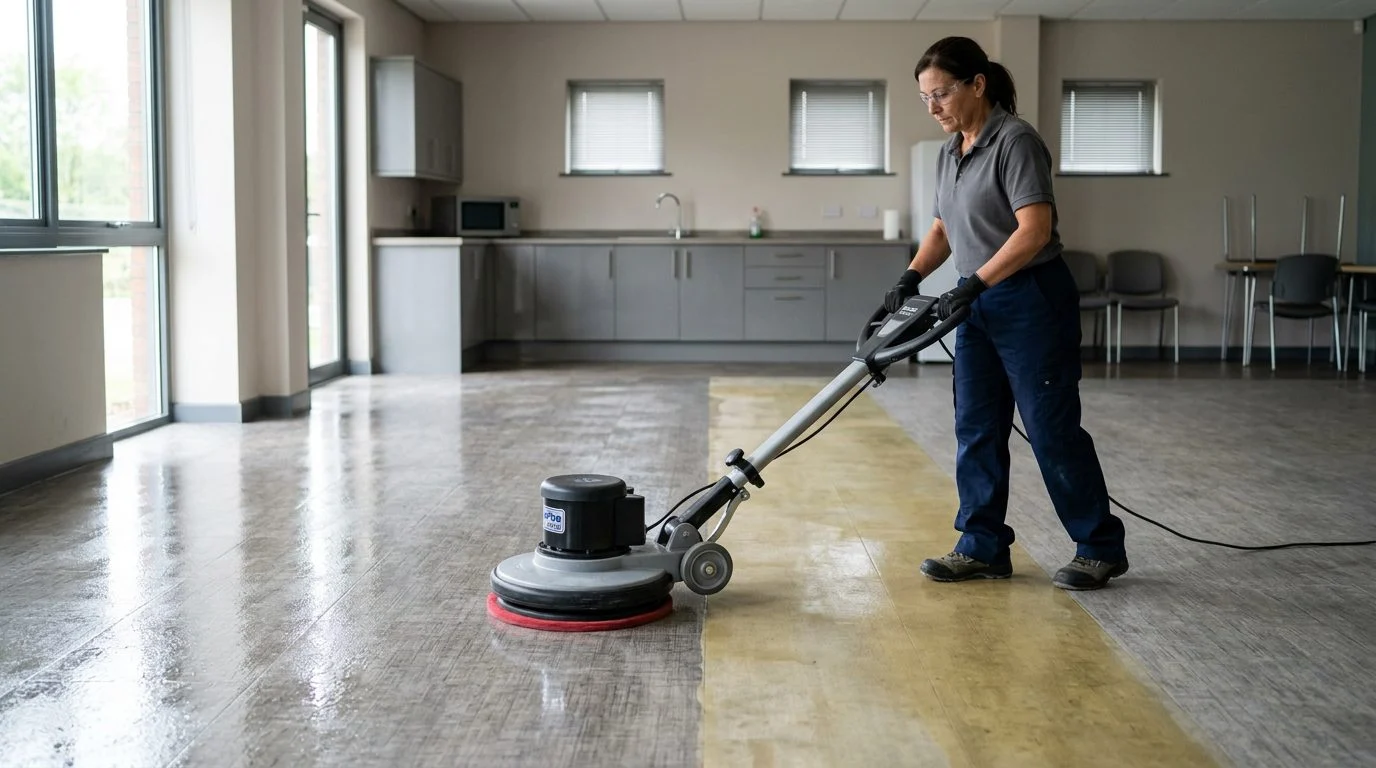
Floor Care Maintenance | South Florida
Keep Your Vinyl Floors Looking New with a Simple Care Routine
Daily, weekly, and monthly habits that protect your vinyl flooring, plus professional floor care maintenance from Gator Protection, Inc.
By Ryan Jurney · Published October 30, 2026
How do I maintain my vinyl flooring? Sweep grit daily, damp-mop once a week with a pH-neutral cleaner, and wipe spills as they happen. That routine keeps the surface clear and protects the seams and edges. Vinyl is durable, but grit and harsh products wear it down over time. This guide covers vinyl plank and luxury vinyl plank (LVP) floors in South Florida homes and commercial buildings. You’ll learn what to use, what to avoid, and how to handle scratches, stains, and pet wear.
Start with daily sweeping and vacuuming
Daily sweeping and vacuuming is the first step in vinyl floor care. Loose grit acts like sandpaper under foot traffic. Every step grinds it into the surface and dulls the top layer over time.
Focus daily on high-traffic areas. These include entryways, hallways, kitchens, and the path from a lobby door to the front desk. Use a soft-bristle broom or a vacuum on a hard-floor setting. Turn off the beater bar, the spinning brush on many vacuums, because it can scratch the surface.
Many facility managers make keeping floors clean and dry a routine part of their care plans. Routine removal of loose dirt is a common part of floor care maintenance. In busy buildings, a day porter can keep this sweep going through the shift.
For the full picture of how routine care fits a managed program, read our floor care maintenance guide.

If you manage a building, or inherited a worn vinyl floor you never planned to care for, you don't have to work out the routine alone. Talk it through with our team — the first consultation is free, confidential, and carries no obligation.
Damp-mop with the right cleaner
Damp-mopping is the right way to wash vinyl, not flooding it. Excess water can seep into seams and edges over time, and that can loosen the joints. Wring the mop well before each pass.
Choose a pH-neutral cleaner made for vinyl or LVP. Dilute it as the product directs. Use a microfiber mop or pad, rinse it often in warm water, and work in small sections so the floor never sits wet.
Cleaning products need careful handling. Clear product labels, Safety Data Sheets, and staff training are common practices in janitorial programs.
Dish soap is a common question. A small amount of mild soap in warm water can clean vinyl. Strong mixes can leave a dull film that attracts dirt, so rinse well with clean water. To see how cleaning chemicals are chosen for floor care, read how cleaning chemicals are chosen.
What not to use on vinyl floors
Avoid abrasive scrubbers, steel wool, and stiff scouring pads. They dull and scratch the wear layer, the protective top coat of the floor. Harsh solvents, undiluted bleach, and heavy degreasers also stay off the floor, unless the flooring manufacturer’s care guidance names them.
Skip oil-based cleaners and polishes. They can leave a sticky or hazy residue. Many vinyl floors are sealed at the factory and don’t need wax. Steam mops are another risk. Heat and moisture can loosen seams and edges, so a damp mop is the safer choice.
Any product that leaves a film should come off your list. Buildup makes a floor look worn sooner, even when the floor itself is in good shape.
If the floor needs disinfecting, the U.S. EPA publishes a list of selected EPA-registered disinfectants with their label claims. That list is the reference for which products are registered to disinfect surfaces (Selected EPA-Registered Disinfectants).
Not sure what your next step is?
Talk it through with our team — the first consultation is free, confidential, and carries no obligation.
Protect vinyl from scratches, dents, and pet wear
Felt pads under chairs, tables, and furniture help prevent scratches. Replace them when they flatten or collect grit. Trapped grit scrapes the floor every time furniture moves. Keep a few spare pads on hand so swaps are easy.
Entry mats catch sand and grit before it reaches the vinyl. Choose mats with a backing suited to vinyl. Some rubber backings can discolor the surface. In offices and reception areas, rolling chair mats help prevent wheel marks and gouges.
Pets add their own wear. Trim nails on a regular schedule. Clean up accidents quickly to prevent staining and surface damage.
Shared buildings with heavy foot and pet traffic feel this most. A monthly check of mats, pads, and nails keeps wear in check.
Tackling stains and spills
Wipe spills up right away with a dry or barely damp cloth. Fast action keeps liquids out of seams, where they can cause damage over time. A stain wiped within minutes is easier to lift than one left to dry.
For dried residue, use a soft cloth, a small amount of pH-neutral vinyl cleaner, and gentle pressure. Test any new product on a hidden spot first. A test patch shows how the finish reacts before you treat the whole floor.
Don’t scrub with abrasive pads. They leave a dull patch that is harder to clean than the stain itself. Repeat stain areas need steady attention too. Don’t wait for buildup. Routine cleaning keeps the finish even across the floor.
Have questions about what happened?
Ask our team directly. The first conversation is free, confidential, and there is no obligation to continue.
Vinyl floor care at a glance, and a next step
Use a simple schedule: sweep daily, damp-mop weekly, and check the floor monthly. Print it as a checklist for staff or household use.
- Daily: sweep or vacuum high-traffic areas, and wipe spills as they happen.
- Weekly: damp-mop the full floor with a pH-neutral vinyl cleaner and a microfiber mop.
- Monthly: check felt pads, entry mats, and chair mats. Look at seams and edges for lifting.
Quick questions
What should you not use on vinyl floors?
Avoid abrasive pads, steel wool, harsh solvents, oil-based polishes, and steam mops.
Can you use dish soap on vinyl plank flooring?
A small amount of mild soap in warm water can work. Rinse well so no film is left.
How often should vinyl floors be cleaned?
Sweep daily and damp-mop weekly. Busy entryways may need more.
If you manage a building, or inherited a worn vinyl floor you never planned to care for, you don’t have to work out the routine alone. The right plan depends on foot traffic, pets, and how the space is used. Shared buildings in Miami-Dade, Broward, and Palm Beach counties can review our condo and apartment floor care program. Our South Florida service area page covers the region. When a floor has moved past what daily routine can handle, reach out. Our free first consultation is confidential and carries no obligation to continue. Contact us through our contact page.
A Simple Vinyl Floor Care Routine
Daily
Sweep or dust mop to remove grit and loose dirt. Sand and debris can scratch the wear layer over time, so regular dry cleaning matters.
Weekly
Mop with a pH-neutral vinyl floor cleaner in warm water. Wring the mop well so the floor is damp, not wet, and rinse away any residue.
Monthly
Clean along baseboards and in corners where dirt builds up. Check for worn traffic areas and note spots that may need professional attention.
Avoid These Products on Vinyl Floors
Abrasive pads, steel wool, harsh solvents, oil-based polishes, and steam mops can dull, scratch, or damage vinyl. Stick with mild, pH-neutral cleaners and soft microfiber tools.
How Gator Protection Supports Your Floors
Scheduled Maintenance
Regular floor care maintenance keeps your vinyl on a consistent cleaning schedule, so dirt does not build up between visits.
Protective Care
Our team uses methods suited to vinyl surfaces to help protect the finish and extend the life of your flooring.
South Florida Service
We serve commercial properties across South Florida, including Miami-Dade, Broward, and Palm Beach counties.
Care Tailored to Your Space
We work with you to match the cleaning frequency to your foot traffic and the condition of your floors.