
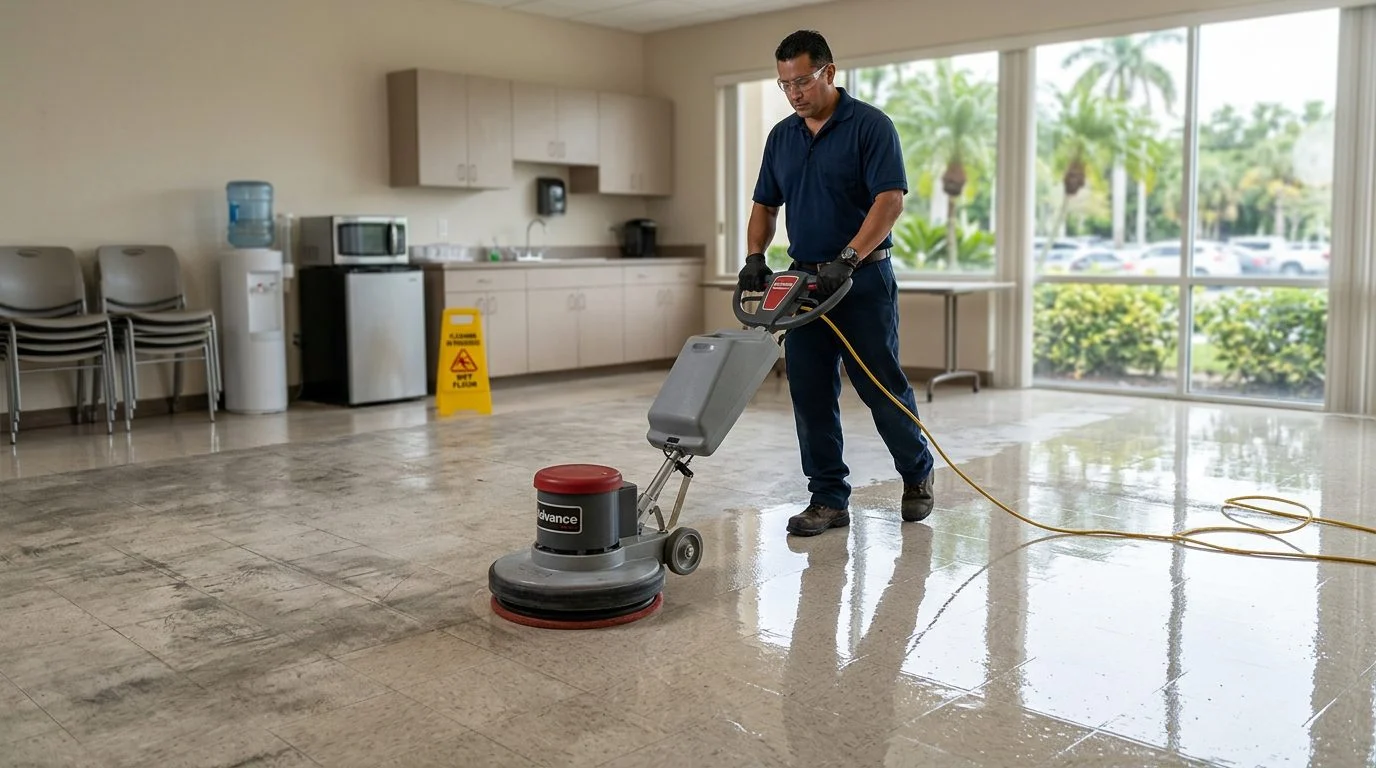
Floor Care Maintenance | South Florida
New Floor Finish Down? Plan Foot Traffic Before the First Step
A practical look at protecting a freshly finished commercial floor while it sets, and how our team can help keep it looking its best.
By Ryan Jurney · Published November 26, 2026
You have a newly finished commercial floor and a reopening date already on the calendar. Light foot traffic usually comes first. Full cure, when the finish reaches its final hardness, takes considerably longer, so heavy loads and furniture should wait. Plan around both stages, not one date.
Why the Walking Timeline Matters for a Commercial Space
A fresh finish can look dry long before it is ready for people. That gap is why the reopening date needs its own plan.
Reopening too early can leave footprints, dull patches, or dents. Fixing them may mean re-coating a section, which costs time and money. A floor that looks finished is not always a floor that can take weight.
Commercial spaces face extra pressure. Staff need to reach their stations, customers need the entrance, and carts and dollies need the aisles. Each group wants the floor on a fixed schedule. A lobby that reopens on Monday cannot wait for a finish that is still soft on Monday morning.
Walking traffic usually comes first. Full hardness, and resistance to scuffing, moisture, and cleaning products, takes considerably longer. Freshly coated floors also bring slip risk. Slip hazards are a recognized workplace concern, and OSHA slip resistance guidance offers general background on the topic. A new finish needs careful handling from day one.
If your reopening date is already on the calendar, tell us about your finish and expected traffic, and we'll help you map out the timing for your space. Talk it through with our team — the first consultation is free, confidential, and carries no obligation.
Two Clocks: Light Foot Traffic Versus Full Cure
Light foot traffic and full cure are two separate milestones. Light foot traffic means walking in socks or soft-soled shoes, with no moving furniture or heavy equipment. Full cure means the finish has reached its final hardness and resistance.
Dry to the touch is not the same as ready for walking. The surface can feel dry while the layers underneath are still soft. Treat dry-to-touch as a reason to check the schedule, not as a green light.
Heavy rolling loads, chairs, and furniture usually wait until well after light foot traffic is allowed. Pallet jacks, floor scrubbers, and rolling racks put concentrated weight on small areas. That weight can dent a finish that has not fully cured. Keep these items off the new surface until the full cure date.
A simple way to plan is to write down two dates. The first is when people can walk on the floor in soft-soled shoes. The second is when heavy equipment and furniture can return. Use the second date for anything that could leave a mark.
Decoding Common Finish Types and How They Set
Each finish type sets on its own schedule, so the product matters. Water-based polyurethane generally dries faster than oil-based products, and it is common in commercial settings. Oil-based polyurethane typically needs longer between coats and before traffic. It also brings stronger odor and longer ventilation needs.
Sealers, waxes, and floor coatings each set differently. A wax finish and a multi-layer coating will not share one walk-on window. Check the product type before you set a schedule. Don’t assume a floor that cured fast last time will cure fast now.
The manufacturer’s technical data sheet is the most specific source for that product’s cure figures. Ask your floor care crew for it before you pick a reopening date. The data sheet gives the product’s own timing, which beats a general rule of thumb. The safety data sheet also covers handling and ventilation notes.
Odor is a practical signal, too. A strong solvent smell means the finish is still releasing material into the room. That is a reason to keep ventilation running and keep people out longer.
Waiting Periods for Refinished Hardwood Floors
Refinished hardwood usually needs a longer wait than a light maintenance coat. A full refinish adds several layers of finish, and each layer adds to the total cure time.
Typical practice is to allow light foot traffic first. Then hold heavy traffic and furniture until the finish has fully cured. Staff can often walk the room in soft-soled shoes well before carts or furniture return. Don’t move furniture back early just because the floor looks good.
Each added coat can extend the timeline. A three-coat job will generally need more time than a single coat. A coat applied before the one below it has dried can trap moisture in the layers. Build the drying window between coats into the full schedule.
Protect the floor during the early period. Tape off areas that are still curing. Require clean, soft-soled footwear in the room. Keep chairs and rolling items off the floor until the heavy-traffic date. These steps cost little and prevent the marks that force a repair.
Laminate, Acclimation, and Pre-Finish Preparation
Acclimation is the period when wood or laminate sits in the room’s temperature and humidity before installation or finishing. Materials that skip this step can shift after the floor is set. That movement can stress the surface and affect how it holds up under foot traffic.
Prep before finishing matters too. A coating bonds best to a clean, dry, properly prepared surface. Dust, old wax, or moisture in the base can slow the set and weaken the bond. Many delays start at the prep stage, not the finish stage.
Laminate is sensitive to moisture and to heavy loads. Newly installed or refinished sections need protection from water and concentrated weight. Clean up spills right away.
Floor Paint and Coated Concrete Timelines
Floor paint needs time to cure before people walk on it. Early walking can leave footprints, or peel the coating at the edges where it is still thin.
Coated concrete and sealed surfaces follow their own schedule. That schedule depends on coat thickness and product type. A thin sealer and a thick coating will not set at the same pace, even on the same slab.
Multiple coats, thicker applications, and slow drying conditions push the walk-on window later. Cold, damp rooms slow the set. Warm, dry rooms speed it up, but heat applied too fast can cause uneven drying. Keep conditions steady while the coat cures.
Traffic patterns matter. Doorways, entrances, and turning areas take more wear than a quiet back office. A lobby with constant carts and shoes needs a longer protected period than a storage room. Plan the high-traffic zones for a later date than the low-traffic ones.
Not sure what your next step is?
Talk it through with our team — the first consultation is free, confidential, and carries no obligation.
Factors That Change the Wait
Temperature and humidity change drying speed. A warm, dry room generally moves the timeline forward, and a cold, damp room pushes it back. Check the room’s conditions each day during the cure.
Ventilation helps solvent-based finishes release moisture and solvents, which can shorten the wait. Chemical safety is an important part of floor care work, and OSHA chemical hazards guidance offers general background on the subject. Good airflow protects both the crew and the drying finish.
The number of coats and the thickness of each coat directly affect how long a finish takes to harden. Thick coats hold solvent longer. Thin, even coats generally set faster and more evenly.
The base material, moisture in the substrate, and the quality of prep all influence the set. Airflow from HVAC systems and fans can speed drying. Cold drafts or direct heat can cause uneven curing, so aim air at the room, not straight at the wet finish.
Planning a Safe Reopening Schedule
Map the space by zone so each area reopens on its own date. Entrances, restrooms, and main walkways may need to reopen in stages. Start with the low-traffic zones and move toward the busy ones.
Post clear signage and set up barriers at the edges of each zone. Make a firm rule that no one walks on the floor until the schedule allows it. A sign and a barrier work better than a verbal reminder during a busy morning.
Confirm the walk-on and heavy-traffic dates with the crew that applied the finish before you open the space. Ask them to confirm the coat count, the dry times between coats, and the conditions during the cure. Their record is the most reliable guide to your floor’s actual schedule.
Chemical handling also needs a plan. Keep a written log of application times, coat count, and room conditions. The log turns a guess into a record you can check later.
Talk With Our Floor Care Team About Your Reopening
If a newly finished commercial floor has a reopening date on the calendar, the timing is the hard part. Gator Protection, Inc. provides floor care maintenance and related commercial services throughout South Florida. Our day porter service can also help keep the floor clean and protected during the early period.
How long before people can walk on a new floor finish?
Light foot traffic usually comes first, in soft-soled shoes. Full cure takes considerably longer, and the exact timing depends on the product and conditions.
What is the difference between light foot traffic and full cure?
Light foot traffic means walking in soft-soled shoes with no furniture or heavy equipment. Full cure means the finish has reached its final hardness and resistance.
Can you walk on a floor finish that feels dry to the touch?
Dry to the touch is not the same as ready for walking. Check the schedule and the product’s data sheet before you open the space.
Does the number of coats change the wait?
Yes. More coats and thicker coats generally extend the time before a floor is ready for use.
If your reopening date is already set, contact Gator Protection through the contact form, call the office, or request a free quote, and we’ll help you map out the timing for your space. La consulta inicial es gratuita, confidencial y sin compromiso de continuar.
How Gator Protection Supports Your Floors
Protection From Day One
Our team helps property managers set up clear traffic routes and protective measures so a new finish is shielded during its most vulnerable period.
Scheduled Maintenance
Floor care maintenance is planned around your operating hours, so cleaning and upkeep happen without disrupting tenants, staff, or customers.
Dedicated Support Staff
Our assistants and office staff coordinate every service visit, so you always know who is on site and what has been completed.
Local Coverage
We provide commercial janitorial and landscape maintenance across Miami-Dade, Broward, and Palm Beach counties, including South Beach, Coral Gables, and Brickell.
Don't Rush the First Walk
Walking on a new finish too early can leave scuffs and marks that are hard to remove. Keep foot traffic light and follow the product manufacturer's guidance before returning floors to normal use.
Keeping a New Floor in Good Shape
Control the Traffic Path
Use signage and temporary barriers to keep people off freshly finished areas and direct them around the work zone.
Protect Furniture and Equipment
Hold off on moving desks, carts, and heavy equipment until the finish has fully cured to avoid permanent marks.
Start With Gentle Cleaning
When cleaning resumes, use methods and products recommended for the finish so the surface keeps its appearance.
Plan Ongoing Upkeep
Regular floor care maintenance helps protect the finish over time and keeps high-traffic areas presentable.