
Floor Care Maintenance | South Florida
Commercial Floor Stripping and Waxing That Keeps Your Floors Looking Their Best
Gator Protection, Inc. strips, refinishes, and waxes commercial floors across South Florida, from Miami-Dade and Broward to Palm Beach County, South Beach, Coral Gables, and Brickell.
By Ryan Jurney · Published November 4, 2026
The question of how often should commercial floors be stripped and waxed does not have one fixed answer. Traffic, flooring type, and the condition of the finish set the pace. This guide explains how to read those factors for condo lobbies, corridors, and apartment common areas in Miami-Dade, Broward, and Palm Beach counties, including South Beach, Coral Gables, and Brickell.
How Often Should Commercial Floors Be Stripped and Waxed?
A calendar interval is only a starting point. The finish’s condition tells you when stripping and waxing is actually due.
Two floors of the same size can need very different cycles. One may carry heavy foot traffic, tracked-in sand, and moisture every day. The other may see far less of each.
A busy lobby near the front doors wears its finish faster than a quiet back corridor. That’s why it helps to set a cycle for each zone instead of one number for the whole property. The goal is a floor that stays safe and looks clean between cycles.

Not sure what your next step is?
Talk it through with our team — the first consultation is free, confidential, and carries no obligation.
What Stripping and Waxing Floors Involves
Stripping removes the old finish and built-up wax. Waxing puts new protective coats on the clean floor. The two steps work as a pair, but they are not the same job.
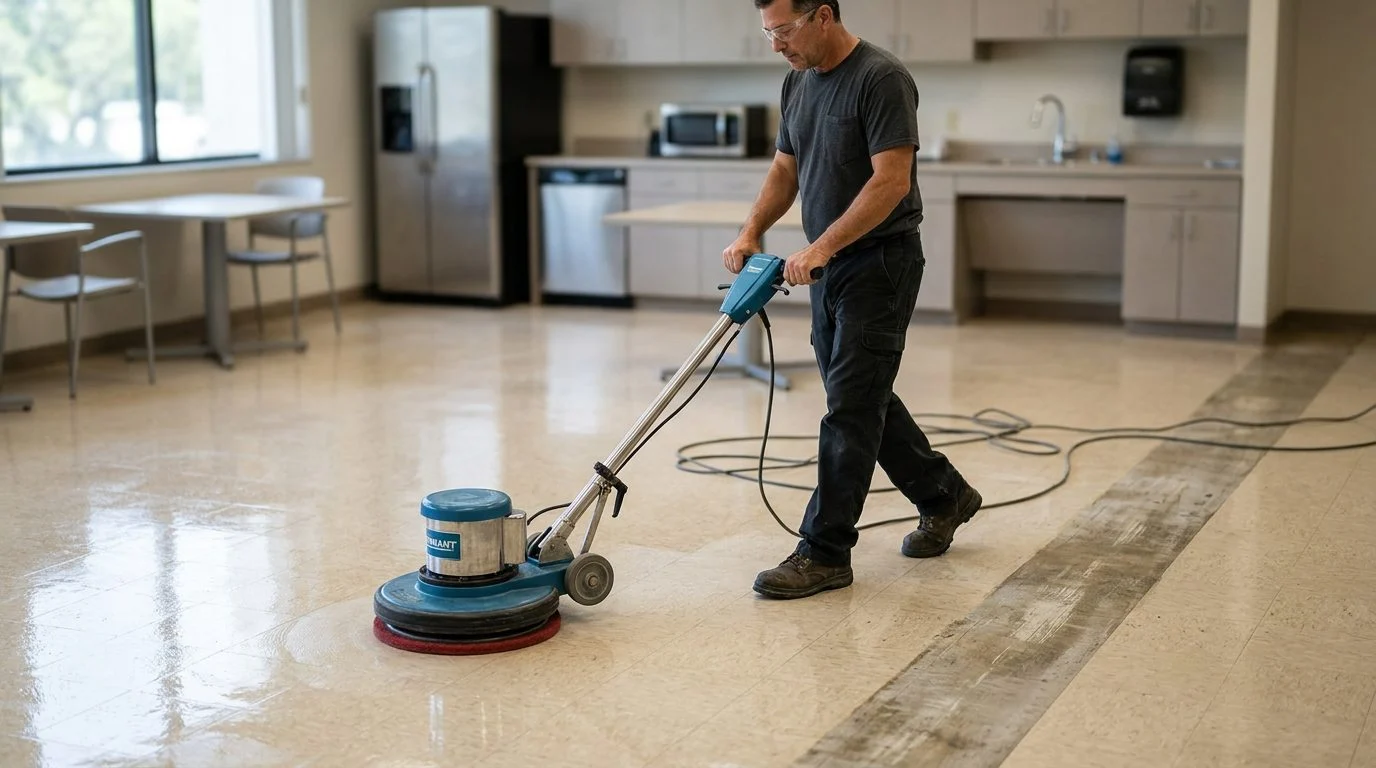
Stripping is the heavier step. The crew cleans the floor, applies a stripper to soften the old finish, lifts it off, and rinses the surface. The floor must dry fully before any wax goes on. Waxing follows in thin coats, and each coat needs time to dry before the next.
A recoat is different. It adds one or two coats over a finish that is still sound, usually after a light scrub. It doesn’t remove the old layers. Recoating over heavy buildup can leave grime trapped underneath.
Occupied buildings add a scheduling step. The area usually needs to be cleared, ventilated, and closed until it dries. Wet floors also create slip risks. Floor safety rules cover keeping walking surfaces clean, dry, and safe. Floor care maintenance focuses on keeping floors clean, dry, and safe to walk on. Strippers and finishes are chemicals too. Janitorial and floor care staff work with a range of cleaning products, so careful handling matters, and the Hazard Communication Standard requires chemical labels, safety data sheets, and staff training.
What Influences How Frequently You Should Strip and Wax Your Floors
Four factors set the pace: traffic, flooring type, local conditions, and the routine between cycles.
Foot traffic. Lobbies, elevator corridors, pool decks, and garage entries wear finish faster than unit hallways. Every cart wheel and shoe grinds grit into the surface.
Flooring material. Resilient vinyl and vinyl composition tile respond to wax differently than sealed stone or other hard surfaces. The material decides which stripping products are suitable, so the crew should confirm the floor type before work starts.
South Florida conditions. Humidity, sand and dirt tracked in after rain, and salt air near the coast all speed up finish wear. Landscaped entry beds and walkways feed grit onto lobby floors. Floor cycles and outdoor upkeep should be planned together.
Routine between cycles. Daily dust mopping, scrub-and-recoat passes, and entry matting stretch the interval. Skipped cleaning shortens it.
Routine cleaning is a separate job from stripping. If a crew uses disinfectants on these floors, the EPA’s list of selected registered disinfectants shows which products are registered and what their label claims are. Save stripping for when the finish itself has failed.
What Are the Signs It’s Time to Strip and Wax Your Floors?
Strip and wax when the finish looks worn, hazy, or uneven, and new coats no longer blend in. Check for these signs during regular walks through the building.
- Dull or uneven sheen. Traffic lanes look different from the edges of the room.
- Buildup or haze. A tacky film or cloudy look that new wax won’t bond to evenly.
- Stubborn scuffs. Dark marks that don’t respond to burnishing or spot cleaning.
- Discoloration. Yellowing or dark patches in the finish. Yellowing can have more than one cause, so confirm the source before choosing a strip.
Waxing over buildup is one of the most frequent mistakes. The new coats trap grime underneath and make the floor look dull sooner. A simple test helps. Clean a small patch, let it dry, and compare its shine to the rest of the floor.
Have questions about what happened?
Ask our team directly. The first conversation is free, confidential, and there is no obligation to continue.
Stripping, Recoating, or Deep Cleaning: Which Does the Floor Need?
Recoat a sound finish, strip a failed one, and deep clean first when the condition is unclear. That rule covers most decisions.
A recoat restores appearance when the old finish is still holding. It usually takes less time than a full strip, so the area stays in use for less time.
A full strip is the right step when buildup, haze, or flaking has taken over. Adding coats on top only hides the problem.
A deep clean sits before both choices. It lifts soil and grime without touching the finish layers. Running one first shows whether the floor still holds a sound finish. That helps you avoid a full strip the floor doesn’t need.
Building a Floor Maintenance Calendar for a Condo or Apartment Building
Build the calendar zone by zone, with a separate cycle for each area, and put it in writing.
Start by mapping each common area by traffic level. Lobbies, elevator corridors, and entry walkways usually need the shortest cycles. Back-of-house spaces often run on longer ones. Give each zone its own line on the calendar.
Schedule work during low-occupancy hours where you can. Give residents and staff advance notice of closures and drying times. Post signs and use cones on wet floors, since a freshly stripped floor stays slippery until it dries.
Keep a simple log. Record the date, the area, the work done, and what the floor looked like before and after. Over time, the log shows whether the interval should be shorter or longer for each zone.
A board or owners group often needs a written plan before approving spending. A zone-by-zone calendar with a log gives them that plan.
Common Questions
How often should commercial floors be stripped and waxed?
There’s no single fixed interval. Traffic, flooring type, and the finish’s condition decide when the work is due.
Does foot traffic change the schedule?
Yes. Lobbies and entries usually need shorter cycles than quiet hallways.
What’s the difference between stripping and recoating?
Stripping removes old finish and buildup. Recoating adds new coats over a finish that is still sound.
Should floors be stripped during business hours?
Plan for low-occupancy hours where you can. The area usually needs to stay closed until the finish dries.

Talk Through Your Building’s Floor Schedule With Our Team
If you need a written strip-and-wax calendar before your next budget cycle, start with a review of the building’s traffic zones and finish condition. Picture a lobby finish that looks worn between cycles, and a board that needs a plan before it signs off on the work. Our team can help you sort that out.
Our free first consultation is confidential and comes with no obligation to continue (consulta inicial gratuita, confidencial y sin compromiso). To set up that review, reach out through our contact page.
Want to know where you stand?
Tell us what happened and our team will walk you through the options available to you, at no cost.
Why Property Managers Choose Our Floor Care Service
Scheduled around your operations
We plan stripping and waxing work around business hours so your staff, tenants, and customers keep moving.
Protection for the floor underneath
Fresh finish coats help shield commercial flooring from everyday wear, scuffs, and grime.
A team you can reach
Our team stays in touch from the first walk-through through every maintenance visit.
Clear, written quotes
You receive a straightforward proposal that outlines the scope of work before anything begins.
Tip: Schedule a Floor Assessment Before You Strip
Stripping removes the existing finish, so the work should follow a floor inspection. A walk-through lets us check the flooring type, the condition of the current finish, and the traffic levels in each area before we recommend a plan.
How Our Floor Stripping and Waxing Process Works
1. Assessment
We inspect the floor type, the current finish, and the foot traffic in each area of your property.
2. Stripping
Old wax and built-up residue are removed so the new finish can bond evenly and look its best.
3. Waxing
Multiple thin coats of floor finish are applied and allowed to cure for a durable, even shine.
4. Ongoing Maintenance
Routine care between full cycles helps extend the life of the finish and keeps high-traffic zones looking sharp.
Ready to Restore the Shine on Your Commercial Floors? Start with a Free First Consultation.
Related practice areas
- Floor Care Maintenance for Miami-Dade Condos, Apartments and Gated Communities
- Condo Garage Floor Cleaning in Florida: Who Is Responsible
- Why Are Lobby Floors Slippery After Mopping? Causes