
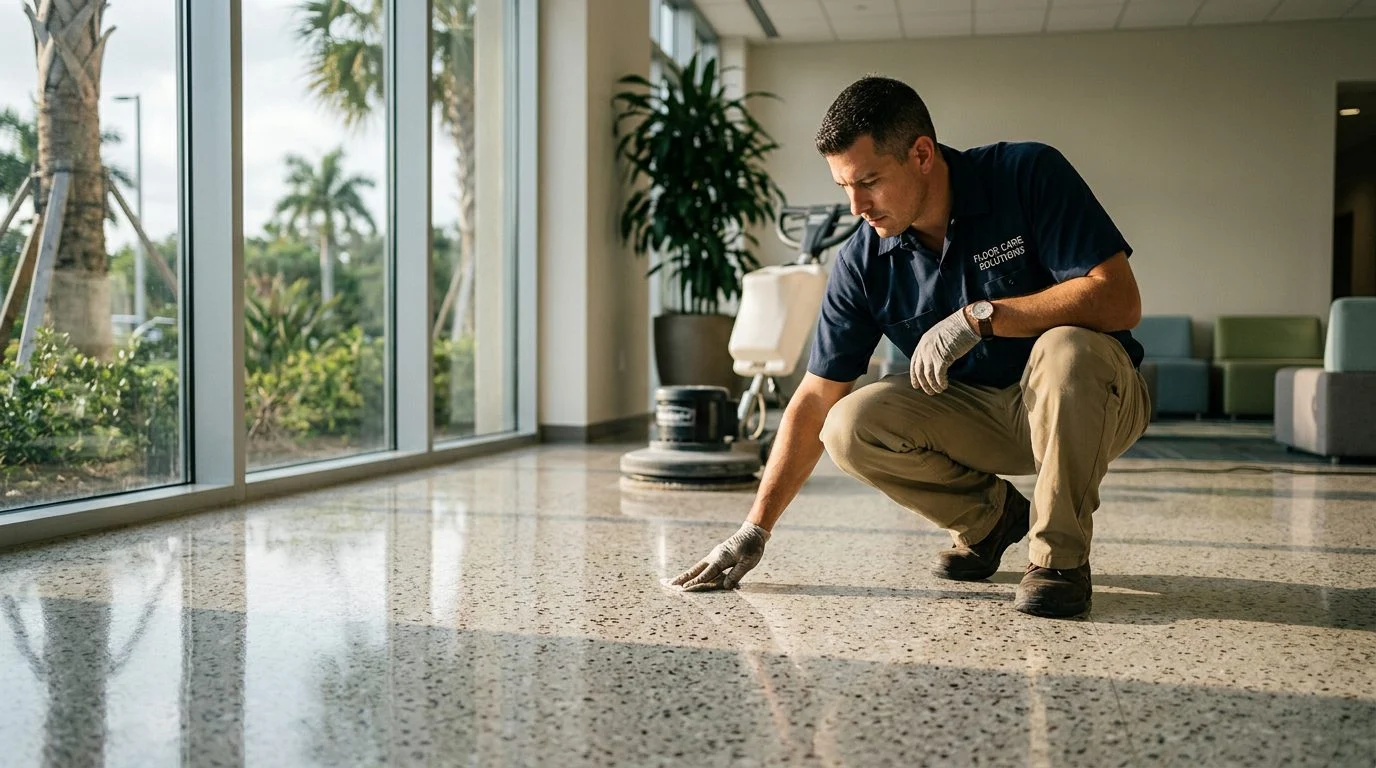
Floor Care Maintenance · South Florida
Keep Your Saltillo Tile Protected in South Florida's Demanding Climate
Humidity, sun, and heavy foot traffic all affect how long a saltillo floor stays protected.
By Ryan Jurney · Published November 18, 2026
If your saltillo tiles look dull, dark, or stained, you’re probably wondering when they need sealing again. Saltillo tiles should be resealed when the sealer stops repelling water, not on a fixed calendar. A simple water test shows you that, and the rest of this guide explains what changes the timing in South Florida.
Why Saltillo Tiles Need a Sealer in the First Place
Saltillo tiles need a sealer because they are unglazed terracotta, and that clay is porous. Liquids and dirt soak into bare tile unless something sits on top to slow them down.
A sealer creates a barrier. It slows staining, moisture absorption, and dirt that settles into the surface. A sealed floor lets a spilled glass of wine wipe away cleanly. An unsealed floor can darken right where the spill sat, and grime settles into the open pores of bare tile.
Sealer protects the tile, but it doesn’t replace regular cleaning. Dirt left on the floor still wears the surface down over time. Think of the seal as a shield that makes cleaning easier, not a substitute for it.
If your saltillo floor is wearing thin and you're not sure what it needs, we're glad to talk through its condition with you. Talk it through with our team — the first consultation is free, confidential, and carries no obligation.
What Sets the Interval for Resealing
The interval depends on the sealer type, how much foot traffic the floor gets, and how it’s cleaned. Those three factors do more to set the timing than any general rule you’ll find online.
Some sealers soak into the tile, while others sit on the surface as a film. Each type wears differently, so the same timing won’t fit both. Indoor and outdoor saltillo also wear differently. Patios, pool decks, and covered walkways face sun, rain, and standing water. Those conditions break down a sealer faster than a lightly used interior room does.
South Florida adds its own stress. Heat, humidity, strong sun, and frequent rain all work on exterior and semi-exterior tile. Entryways and kitchens usually wear sealer first, because people walk through them daily and carry in sand, grit, and spills. A quiet guest room may keep its seal far longer than the front hall.
How to Test Whether the Sealer Is Still Working
Start by cleaning the floor and letting it dry completely. Then place a few drops of plain water on several spots and watch them for a few minutes.
If the water beads up or sits on top, the sealer is likely still doing its job. If the tile darkens and the water soaks in quickly, the seal is wearing thin and the floor is ready for a new coat.
Test several areas, not just one. Wear is rarely even across a whole floor. High-traffic spots near doors and sinks may fail long before a corner by a window does.
Keep a simple log with the date, the location, and what you saw. Over time, the log shows whether the seal is holding steady or slipping. That record also gives a professional something concrete to look at.
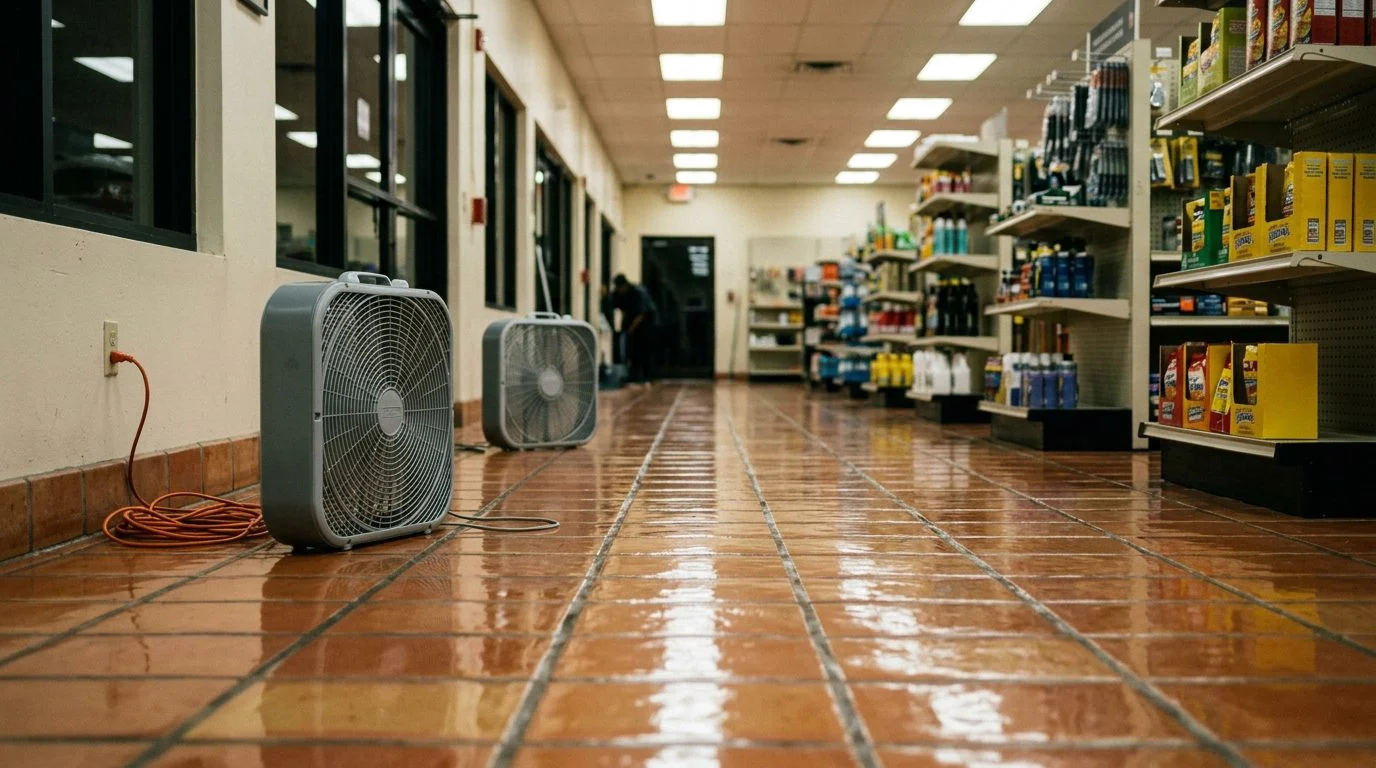
Warning Signs the Floor Needs Resealing or Restoring
A floor needs resealing when its seal is thinning, and it may need restoring when the surface itself is damaged. Knowing which one applies saves time and money.
Watch for dull or uneven sheen, dark patches that show up after mopping, and stains that set quickly. Dirt that collects in the tile surface and a chalky, worn look in traffic lanes are also signs. Each one points to a seal that has worn down.
Resealing suits a floor that is still in fairly good condition. Restoration is different. It addresses a surface that has been damaged or heavily soiled, and it often starts with stripping and deep cleaning.
Built-up wax or old sealer layers are a common problem. A new coat laid over residue may not bond well, so the floor needs to be stripped and cleaned first. A floor with heavy buildup usually needs a professional assessment before anyone applies new sealer.
Care Habits That Protect the Seal and Keep Floors Safer
Gentle cleaning protects the seal most. Use a pH-neutral cleaner, and avoid harsh acids, abrasive scrubbers, and strong solvents, which can break down sealer over time.
Pressure washing needs care too. High pressure can strip sealer and erode terracotta when the nozzle or pressure settings aren’t controlled. Keep the spray moving and use the lowest setting that gets the job done.
Many people ask whether saltillo gets slippery when wet. The finish, the surface texture, and any wax or residue all change how slick the tile feels. A clean, residue-free surface is easier to keep safe underfoot.
Don’t forget the grout. Grout is also porous, so it takes on stains and moisture too. Treat it as part of the same floor care plan, not an afterthought.
What to Do Next If This Floor Is Your Responsibility
If you’re responsible for this floor, start with the water test and your log. Then decide whether it needs resealing, deeper cleaning, or restoration. You may not have chosen to manage this floor this way, but the steps are the same.
Gator Protection, Inc. provides floor care maintenance, pressure washing, day porter service, and landscape services across South Florida, including Miami-Dade, Broward, and Palm Beach counties. Floor care maintenance and pressure washing are the services that relate most directly to this guide. Routine cleaning between visits also helps protect the seal.
Common questions
How often should saltillo tiles be sealed?
There’s no single answer for every floor. A water test shows when the sealer is wearing thin.
Can pressure washing damage saltillo tile?
Yes, if the pressure or nozzle settings are too aggressive. Careful, controlled washing protects both the tile and its seal.
Should grout be sealed along with saltillo tile?
Yes, grout is porous too, so it belongs in the same floor care plan.
To talk through your floor’s condition, contact Gator Protection, Inc. with your water test results and any photos or notes. La consulta inicial es gratuita, confidencial y sin compromiso de continuar.
How Our Floor Care Maintenance Works
Assessment First
We look at your floor's condition, traffic levels, and exposure before recommending any maintenance plan.
Scheduled Visits
Maintenance is planned around your property's hours so your space stays in service.
Careful Methods
Cleaning and resealing are carried out with methods suited to saltillo, protecting the tile and its existing finish.
Clear Communication
Our team explains what we find and what we recommend, so you can make informed decisions about your floors.
Tip: Test Before You Schedule
Do not wait for visible wear. Water that soaks into the tile instead of beading on the surface is an early sign the seal needs attention.
Signs Your Saltillo Seal May Be Wearing Thin
Water Soaks In
Spilled water darkens the tile quickly instead of beading up on the surface.
Dull or Uneven Finish
Worn areas, often in walkways and near doors, look flatter than the rest of the floor.
Dirt That Won't Mop Away
Grime settles into the tile surface and resists regular cleaning.
Stained Grout Lines
Grout absorbs dirt and moisture faster when the surrounding seal has thinned.