
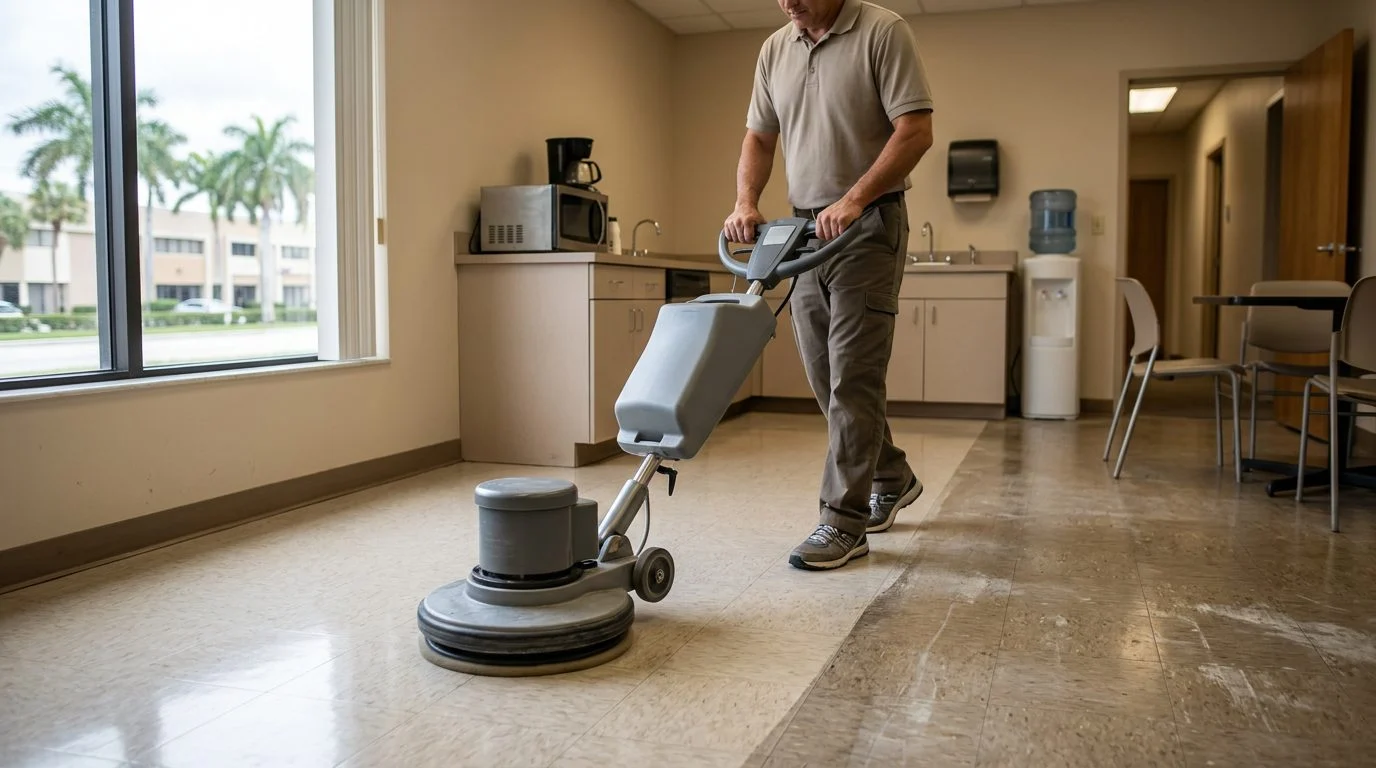
Floor Care Maintenance | Miami Condos
Keep Your Condo Floors Looking Their Best Between Strips
Heavy foot traffic, humidity, and daily cleaning all affect how a floor finish holds up. Here is how our team looks at a building's floors before deciding what they need.
By Ryan Jurney · Published November 18, 2026
If you manage a Miami condo or sit on its board, you have probably seen a lobby floor that looks dull no matter how often it gets mopped. Corridor floors can go the same way over time.
So how often should a condo floor be stripped and waxed in Miami? A full strip and wax is due when the old finish has worn thin or built up, not on a fixed date alone. Lobbies usually need the work sooner than corridors. The right interval depends on foot traffic, flooring type, and the current finish.
The Short Answer for Miami Condo Lobbies and Corridors
Lobby floors generally need stripping and waxing more often than corridors, because far more feet cross them every day. Many facilities start with a set cycle and then move it earlier or later after each floor check. A busy entrance may need attention long before an upper-floor corridor with light use.
A useful habit is to inspect the same spots each month and write down the date of the last strip. Over a year or two, that log shows how quickly your floor wears in your building. Note the finish condition, the traffic lanes, and any scuffs you find.
Check the lobby at peak hours too, when traffic is heaviest and the wear is easiest to see. A schedule built from those notes usually works better than one copied from a generic chart. It also gives your board or manager something concrete to discuss.
If the lobby floor near your elevators looks dull or the corridor finish is scuffed, our team can walk the floors with you and plan the next strip. Talk it through with our team — the first consultation is free, confidential, and carries no obligation.
What Floor Stripping and Waxing Actually Involves
Stripping removes old wax and finish layers, along with the dirt trapped inside them, down to a clean surface. Routine mopping cleans only the top of the finish. It leaves the layers underneath, and those layers slowly hold grit and turn cloudy or yellow.
Waxing, which is really the application of a new finish, comes after the floor is cleaned and fully dry. Thin, even coats dry hard and look uniform. Thick coats trap dirt, show streaks, and can take much longer to cure.
Floor care maintenance is a planned service that sits beside daily and weekly cleaning. Daily cleaning keeps surfaces presentable. A strip-and-wax cycle restores the protective layer that those cleanings depend on. Keeping both on a schedule is what keeps the floor looking right between major jobs.
Warning Signs a Lobby or Corridor Floor Is Due Now
A floor is due for a full strip when mopping no longer brings back its shine. Look for these signs in your building:
- Dullness or haziness across the whole floor, even after cleaning.
- Dark traffic lanes near entrances, elevator banks, and mail areas.
- Scuffs that routine cleaning no longer removes.
- Yellowing, cloudiness, or flaking finish.
Old finish holds dirt in its surface. Each mopping spreads a little more grime across it. The floor can look dirty even after it’s mopped, because the grime sits under the newest cleaning film. A strip removes that trapped layer so the floor can look right again.
A finish that feels tacky or looks uneven often means too many coats have built up. That is a strong sign a full strip is due, not another coat. The most common mistake is adding a coat to hide dullness. That seals the dirt in and makes the next strip harder.
How Traffic Patterns Change the Schedule
Traffic sets the pace of wear, so the busiest spots need attention first. Main lobby entrances, mail and package areas, and elevator landings take the heaviest load. Upper-floor corridors usually see far less foot traffic, so their finish lasts longer between strips.
Condo buildings also have busy stretches. Move-in and move-out seasons bring carts, boxes, and crews through common areas. Deliveries and building events add wear in short bursts. A strip planned before a heavy season helps the floor hold up through it.
Miami’s rainy months add another factor. Wet shoes and carts bring sand and grit in from outside. That grit works into the finish and scratches it, much like sandpaper scratches paint. Building entrances can wear faster in those months, which shortens the time between visits. Entry mats help, but they don’t stop all of the grit.
Stripping, Burnishing, and Interim Maintenance
Between full strips, burnishing and scrub-and-recoat keep a sound finish in shape. They push back the next full strip. Burnishing is a light buffing step. It restores shine on a finish that is still in good condition, without removing the finish.
A scrub-and-recoat cleans the existing finish, removes some surface buildup, and adds a fresh coat. A full strip goes further. It removes all finish down to the bare floor, then rebuilds it with new coats. Use a scrub-and-recoat when the finish is still sound but dull. Choose a full strip when buildup, yellowing, or flaking shows the old layers have failed.
Interim maintenance is what extends the time between full strips. Regular buffing and recoats keep buildup light. Skipping those steps lets grime build up until a full strip is the only fix left. Planning the interim steps on the same calendar as the full strip keeps the schedule easier to follow.
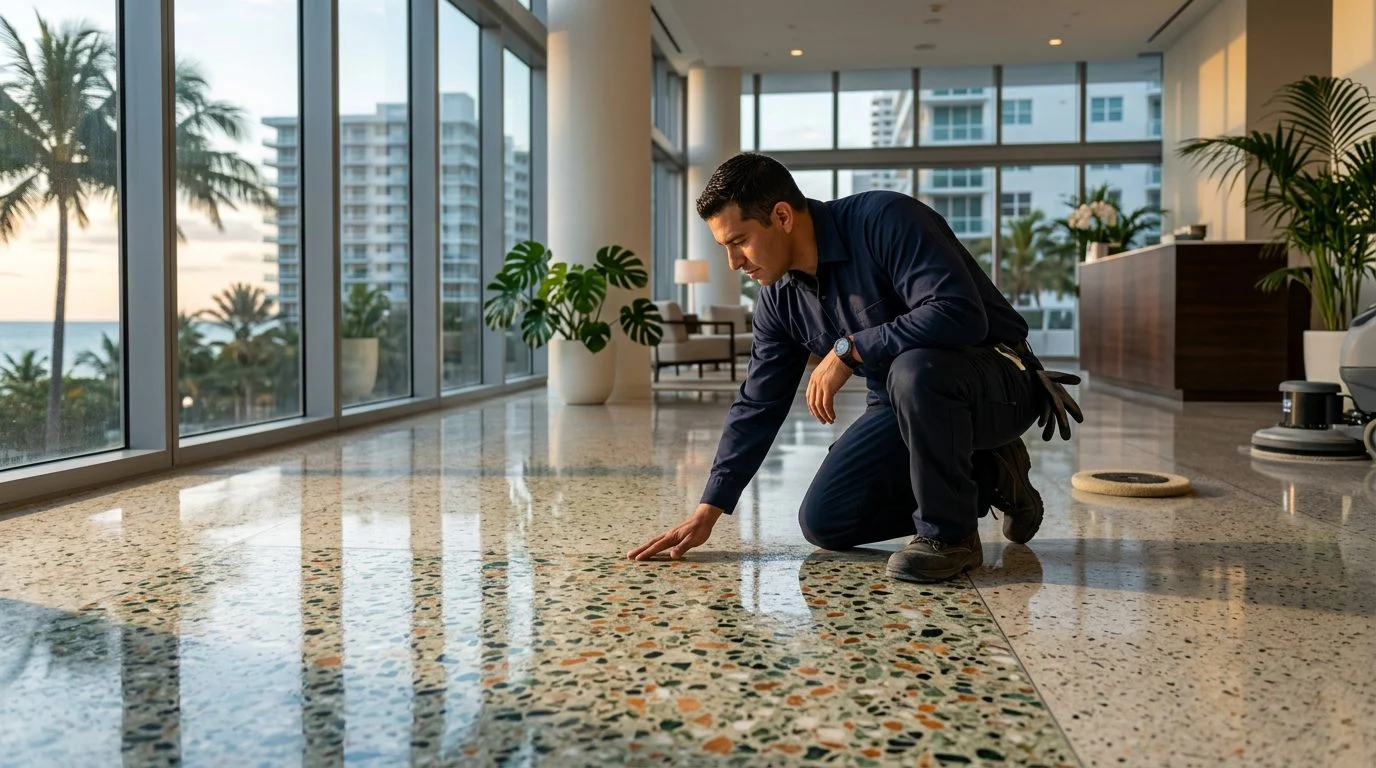
Flooring Type and Finish Matter for the Schedule
The floor material and the finish already on it shape the plan more than any single rule. Vinyl composition tile, often called VCT, is a common lobby and corridor floor. It is typically kept on a stripping and waxing cycle. Other floor types, such as sealed stone or polished concrete, may need a different approach.
Before any stripper or finish goes on, check the flooring manufacturer’s care guidance. Some products can damage certain floors. The manufacturer’s instructions state what the floor can take, so follow them closely.
The number of coats already on the floor affects how a strip is planned. The type of finish matters too. Mixing incompatible finishes can cause haze or peeling. Ask the people doing the work what is already on the floor before they begin.
Not sure what your next step is?
Talk it through with our team — the first consultation is free, confidential, and carries no obligation.
Coordinating Floor Work With Building Operations and Safety
Schedule strips for off-peak hours. Use wet-floor signs and close the work area until the floor is dry. Keep exits, stair doors, and elevator access clear so residents can still get in and out safely.
A wet or slick surface can be a safety concern, not just a cosmetic one.
Ask for the Safety Data Sheets for every product used on your floors.
Florida condo rules also shape the paperwork. Fla. Stat. § 718.111 requires an association to keep bids for work for at least 1 year after it receives them. A community association manager must discharge duties “loyally, skillfully, and diligently,” with “care and full disclosure,” under Fla. Stat. § 468.4334. A contract cannot waive those standards.
Boards can also ask about broader management practices. The ISSA Cleaning Industry Management Standard covers service quality, staffing, and green cleaning practices. Those topics make good questions during planning.
Frequently Asked Questions About Stripping and Waxing Condo Floors
How often should a corridor be stripped compared with a lobby?
Corridors usually go longer between strips than lobbies, because fewer people walk them. The actual date should follow wear and buildup, not the calendar.
Can a condo floor be waxed too many times?
Yes. Each new coat adds to the layers. Built-up finish traps dirt and turns cloudy, so it eventually needs a full strip.
Can a strip and wax be scheduled around residents?
Yes, it can be planned for off-peak hours and done in sections. That way one route stays open while the rest of the floor dries.
Arrange a Walk-Through of Your Building’s Floors
If you’re deciding whether your lobby or corridor is due, the next step is a look at the actual floors. A board member or property manager facing a dull entrance or scuffed hallway can use a walk-through to match the schedule to real wear and traffic.
If the lobby floor near your elevators looks dull or the corridor finish is scuffed, our team can walk the floors with you and plan the next strip. Contact our office to arrange a walk-through of the lobby and corridors. Our team can look at the finish, the traffic lanes, and the flooring type together.
La consulta inicial es gratuita, confidencial y sin compromiso de continuar.
How Gator Protection Supports Your Building
Floor Care Maintenance
Routine care that protects the finish between full stripping and waxing cycles.
Day Porter Service
On-site attention during business hours so lobbies, corridors, and common areas stay presentable.
Local Coverage
Service across Miami-Dade, Broward, and Palm Beach counties, including South Beach, Coral Gables, and Brickell.
Free First Consultation
Your first consultation is free and confidential, with no obligation to continue.
Don't Schedule by the Calendar Alone
A date on the calendar is a starting point. Check wear in high-traffic areas, dull patches, and built-up film before deciding it is time to strip.
Services for Miami Condo Buildings
Day Porter Service
Ongoing on-site cleaning and upkeep that keeps shared spaces ready for residents and visitors.
Floor Care Maintenance
Scheduled care for lobbies, corridors, and common-area floors, planned around your building's wear.
Landscape Services
Grounds maintenance that keeps entrances, courtyards, and common landscaping well kept.
Pressure Washing Services
Exterior cleaning for walkways, entries, and other surfaces that collect grime over time.