
Commercial Floor Care | South Florida and Atlanta
Slippery Floors Rarely Fix Themselves
Wet tile, product film, and worn surfaces are common culprits in busy commercial spaces. Here is how to spot the problem and address it.
By Ryan Jurney · Published November 17, 2026
How to Reduce Slippery Floors
How to reduce slippery floors starts with finding out what is making the surface slick. Most slick floors have a coating, a worn finish, or a film of moisture and grit, and each one needs a different fix. This guide covers the common causes, then the steps for tile, hardwood, outdoor tile, and wet areas in South Florida, where humidity and rain can add to the problem.
Not sure what your next step is?
Talk it through with our team — the first consultation is free, confidential, and carries no obligation.
Why Are My Floor Tiles Slippery?
Slick tile usually has a coating on it, not a damaged surface. The most common causes are leftover cleaning residue, wax or polish buildup, a worn or dulled finish, and oil or moisture carried in on shoes.
Glazed and polished tile shows the problem most. A thin film can reduce grip even when the floor looks clean. Your shoe sole meets that film, not the tile, so the floor feels slick underfoot.
Floors rarely turn slick overnight. The film builds up over weeks or months, layer over layer. A change in how a floor feels is often a sign that the cleaning routine needs a second look.
Check the spots you walk most. Doorways, sinks, and areas near entrances collect more oil, water, and grit than the middle of a room. That is usually where the slick feel shows first.
How to Reduce Slippery Indoor Tile and Remove Residue
Start by identifying the floor finish, then use a cleaner made for that finish and rinse with clean water. Guessing at the product is the most common mistake.
Work in this order:
- Find out what finish the floor has, such as glazed, polished, or sealed.
- Choose a cleaner suited to that finish and follow the label dilution.
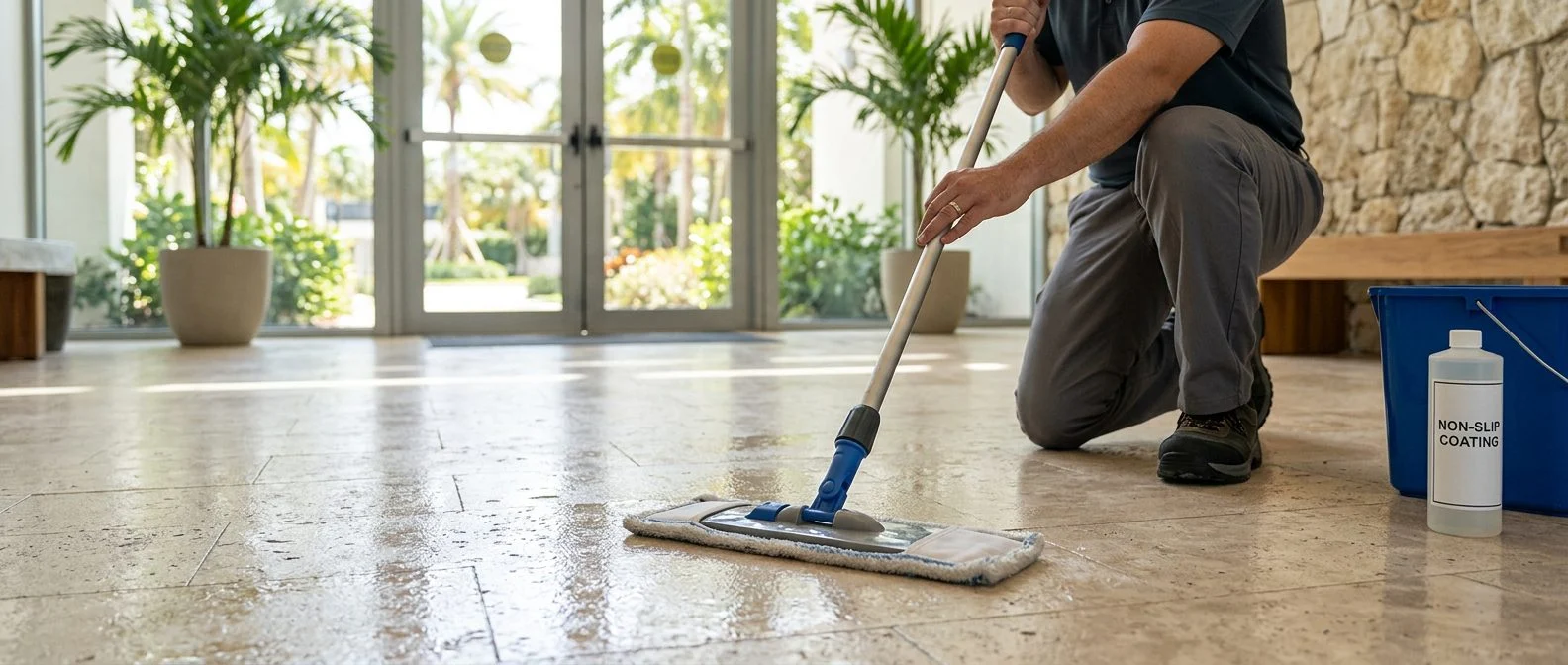
- Mop, rinse with clean water, and let the floor dry fully.
Too much detergent leaves a sticky, slick film. Skipping the rinse does the same. More soap does not clean better; it leaves more behind.
Some buildup won’t come off with regular mopping. Periodic stripping and refinishing removes layers of wax and polish that daily cleaning cannot reach.
Don’t forget grout lines. Residue collects in grout, and clean tile next to dirty grout can still feel uneven underfoot.
Following the manufacturer’s directions for any cleaning product is a sensible habit before every use.
What to Do When a Wood Floor Is Slippery
On hardwood, the finish is usually the cause. A worn topcoat, layers of wax, or polish residue can keep the surface slick even after cleaning.
Test before you commit. Clean one small area with a cleaner made for your wood finish. If grip improves there, residue is likely the problem, and the rest of the floor can follow the same routine.
Avoid excess water. Standing water can damage wood, so use a damp mop rather than a soaked one. Check the floor’s care instructions before using any solvent-based product, since some can strip a finish.
When the finish itself is worn, cleaning will not restore grip. Recoating, or professional screening and refinishing, is the next step. A finish that has lost its top layer needs repair, not just more cleaning.
How to Make Outdoor Tile Less Slippery
Outdoor tile usually turns slick from algae, mildew, dirt, and mineral film. South Florida’s humidity and rain keep these growing on pool decks, patios, and walkways.
Pressure washing removes the surface buildup and organic growth that makes outdoor tile slick. Use the right pressure and angle, because too much force can damage tile and grout. Rinse the area well afterward.
A regular cleaning schedule keeps film from building back up between washings. Whether sealing fits depends on the tile and the grout, so ask what suits your surface before you seal it.
Shaded spots and areas with poor drainage need more frequent attention. Water sits longer there, so algae and film tend to return sooner.
How to Prevent Slipping on Wet Floors
Prevention means keeping water and grit off the floor and cleaning on a schedule. Those two steps do most of the work.
Place entry mats and runners at high-traffic doorways. They catch water and grit before the wet spreads across the floor.
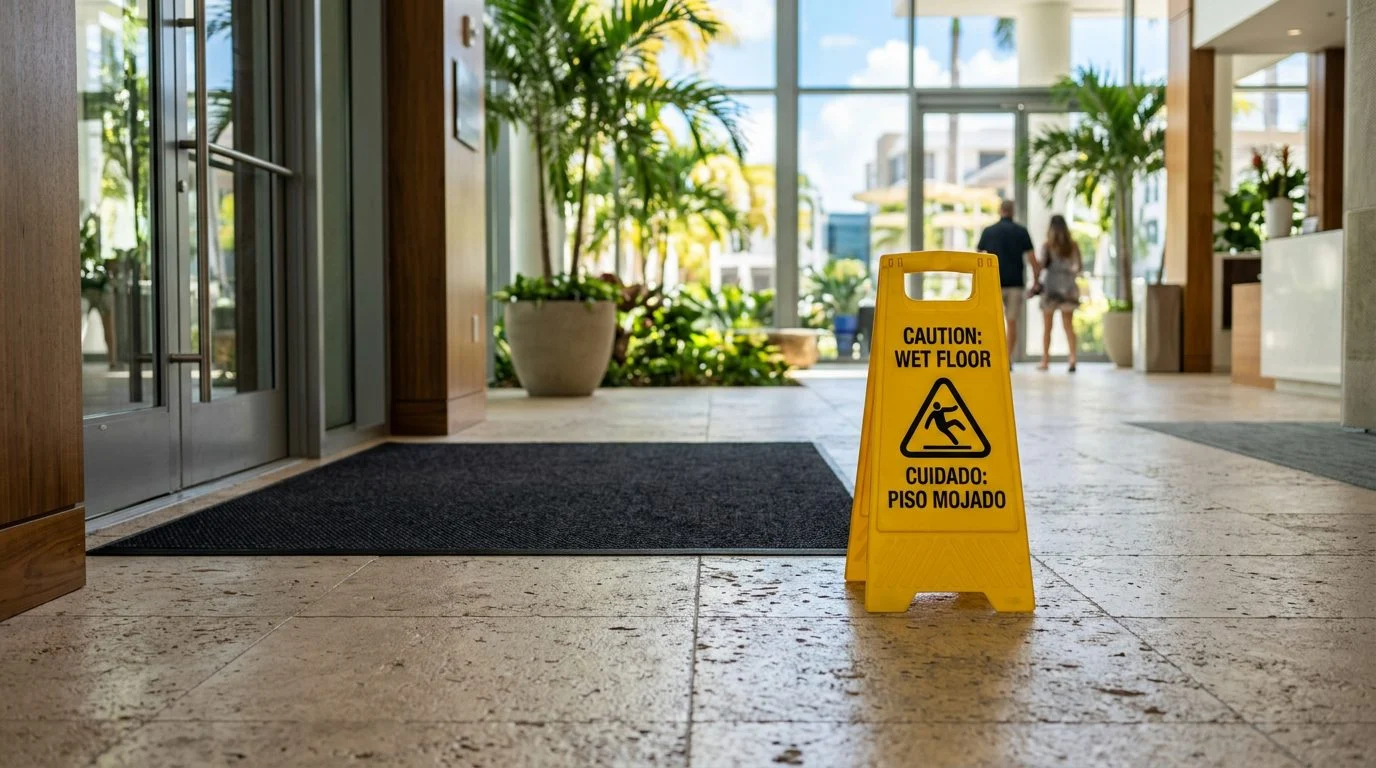
Use wet-floor signs while cleaning and while the floor dries. Clear the area before you mop, so people and carts stay off the wet surface.
Routine dry dust mopping removes grit that turns to paste when wet. Scheduled deep cleaning removes film that regular mopping misses. The right dilution and enough drying time matter as much as the product you choose.
Walkways that stay dry and uncluttered are a practical part of reducing slip risks in busy commercial spaces.
Does mopping alone stop slipping?
Mopping alone rarely fixes it. Using too much product or skipping rinses can leave a film that adds slickness.
Is a wet-floor sign enough?
A sign warns people, but it does not dry the floor. Pair it with mats and enough drying time.
Not sure what your next step is?
Talk it through with our team — the first consultation is free, confidential, and carries no obligation.
Talk Through Your Floor With Our Team
If a slippery floor is in a building you manage or a home you’re responsible for, you don’t have to sort out the fix alone.
A floor that slips is hard to ignore, especially after a fall, a recent cleaning, or a complaint from others. We can talk through the floor type, its condition, and whether floor care maintenance, day porter service, or pressure washing fits the job.
Our first consultation is free, confidential, and comes with no obligation to continue.
For more on routine floor care, read our guide to floor care maintenance in Miami-Dade. Related guides cover laminate cleaning, sticky floors after mopping, and epoxy garage floors.
Tell us about your floor, and we’ll help you decide what makes sense next. Request a free quote today.
How Gator Protection Helps Keep Floors Safer
Day Porter Service
On-site attention during business hours, so spills and tracked-in moisture can be addressed as they happen.
Floor Care Maintenance
Routine care that targets buildup and residue, the film that makes floors slick.
South Florida and Atlanta
Commercial janitorial and landscape maintenance across Miami-Dade, Broward, and Palm Beach counties, including South Beach, Coral Gables, and Brickell, with service in parts of Atlanta, Georgia.
A Dedicated Team
Our team works with your facility to plan routines that fit your space and schedule.
Key Reminder
A wet-floor sign warns people, but it does not dry the surface. Pair signs with mats, drying time, and a cleaning routine that leaves no residue.
Common Fixes at a Glance
Adjust Your Cleaning Routine
Use the right amount of product and rinse thoroughly so no film is left behind to add slickness.
Add Entry Matting
Mats at entrances trap water and grit before they spread across hard floors.
Plan for Drying Time
Schedule mopping and floor care for periods when foot traffic can stay off freshly cleaned surfaces.
Clean Exterior Walkways
Pressure washing removes algae, grime, and buildup from walkways and entry paths that become slick after rain.