
Floor Care Maintenance | South Florida
Bring Back the Shine on Your VCT Floors
Simple daily habits and smart cleaning choices can keep vinyl composition tile looking its best in busy commercial spaces.
By Ryan Jurney · Published November 18, 2026
You walk into a lobby, a stockroom, or a store and the floor looks tired. The VCT is dull in some spots and streaky in others. Someone has asked you to fix it, and you want to know how to make VCT shine.
Here’s the short answer. A VCT floor shines when a clean, even protective finish sits on top of the tile, and routine care keeps that finish from wearing away. When the finish is worn or dirty, a strip and wax can bring the gloss back. This guide walks through each step for commercial floors in South Florida.
What VCT flooring is and why it loses its shine
VCT, or vinyl composition tile, is a common hard floor in offices, schools, retail stores, and other commercial buildings. You’ll see it in hallways, back rooms, and busy entries across Miami-Dade, Broward, and Palm Beach counties.
The shine doesn’t come from the tile itself. It comes from the finish, a thin protective layer applied over the tile. The finish takes the wear so the tile underneath doesn’t have to.
Foot traffic wears that finish down first. Every step grinds in tiny bits of grit, and grit acts like fine sandpaper. Cleaning residue is the second problem. Soap film, leftover mop water, and built-up product cloud the surface. Over time the floor looks dull, scuffed, or patchy, even when it gets mopped.
If you've inherited a dull VCT floor you didn't install, our team is glad to talk through the options with you. Talk it through with our team — the first consultation is free, confidential, and carries no obligation.
Prep first: what a new VCT floor needs before it can shine
A new VCT floor needs time and a thorough clean before any finish goes on. Skipping either step makes a lasting shine harder to achieve.
Start with the cure time. Follow the flooring or finish manufacturer’s cure time before applying anything to the floor. Finish applied too early may not bond well.
Next, remove construction dust and debris. Sweep or dust mop the whole area, then clean with a pH-neutral cleaner diluted as the label directs. A neutral cleaner lifts soil without attacking the surface. Rinse well and let the floor dry completely.
If the floor came with pre-applied wax, that wax has to go. A floor scrubber paired with a stripper made for the floor removes it. Rinse thoroughly, let the floor dry, and only then apply new finish. A clean, dry surface lets the finish bond evenly, so the shine looks even from one end of the room to the other.
Daily and weekly habits that keep VCT looking glossy
Daily dust mopping and regular damp mopping do most of the work of keeping VCT shiny. These habits are simple. They make the difference between a floor that stays bright and one that needs restoring every few months.
Dust mop or sweep every day. Grit causes most of the scratches, and scratches dull a finish. Removing grit before foot traffic grinds it in protects the gloss.
Place walk-off mats at entrances. A mat catches sand, salt, and water from shoes before they reach the floor. Less soil coming in means less grit to remove later.
Damp mop on a regular schedule with a pH-neutral cleaner diluted as the product label directs. Too much cleaner leaves a film, so measure it carefully.
Change or rinse the mop head often. A dirty head spreads soil and grit back across the floor. Swap in fresh water when the bucket turns gray. A clean head and clean water do more than any extra product.
Routine upkeep like this is the kind of work a day porter service can take on between floor care visits. That way the floor gets attention every day, not only when it starts to look bad.
Buffing and burnishing for everyday gloss
Buffing and burnishing both bring up the shine on a finished VCT floor. Most maintenance plans use them between full restorations. Both need a finish that is still in good shape.
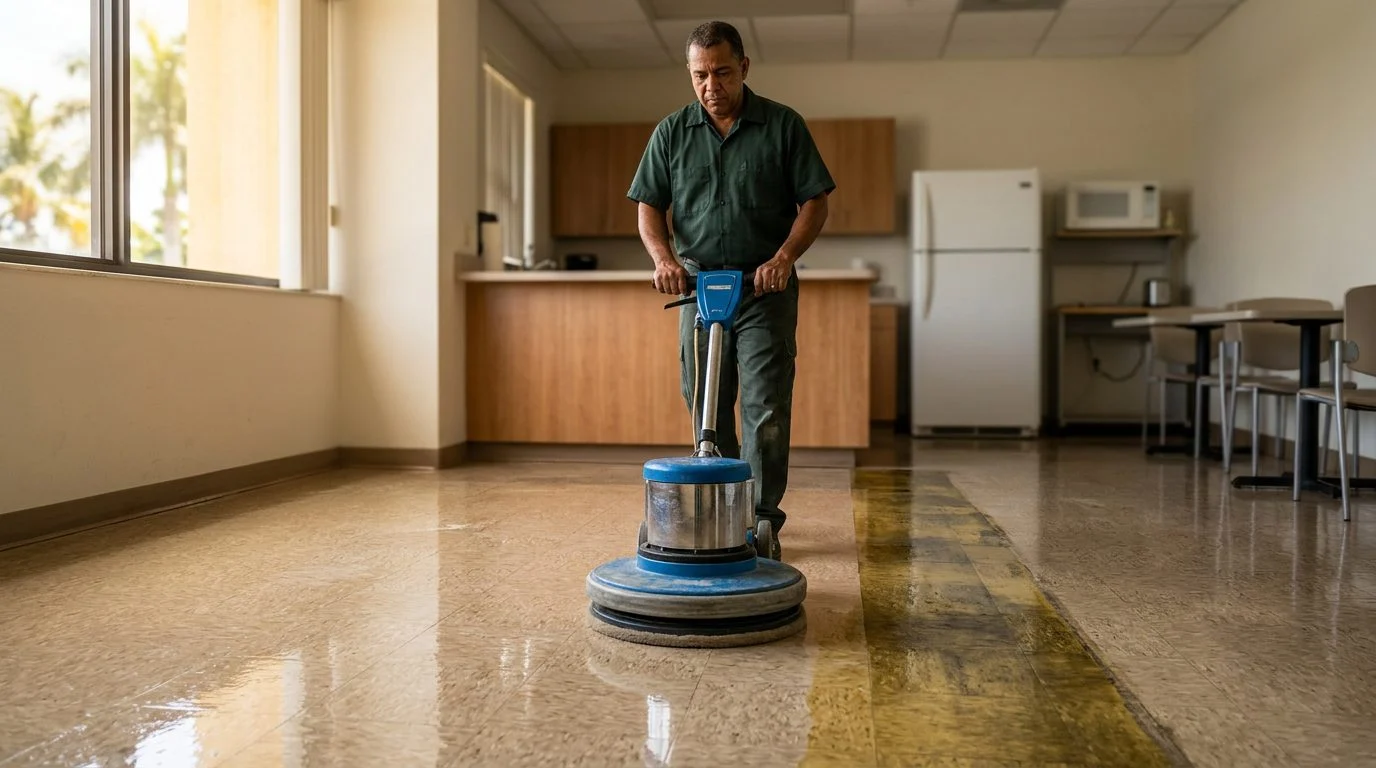
Buffing uses a machine and a pad to polish the surface and smooth out light marks. Burnishing uses a higher-speed machine and a pad to raise the gloss further. Neither one rebuilds a finish that has worn through.
Follow the same sequence each time. Clean the floor first, let it dry completely, then buff with the right pad. Buffing a damp or dirty floor smears soil and leaves streaks. Buffing before the finish has fully dried can mar it.
Buffing occasionally keeps the finish looking fresh between restorations. Burnishing extends that gloss. If the finish is gone in patches, though, routine polishing won’t fix it. That calls for a strip and wax.
How to wax a VCT floor: the strip and wax process
To wax a VCT floor, strip the old finish, rinse it clean, let it dry, then apply thin, even coats of floor finish. This restorative job is for when routine care no longer brings back the shine.
Know when you need it. A strip and wax makes sense when the floor still looks dull, scuffed, or patchy after routine cleaning. Old finish that has built up, yellowed, or clouded also needs it.
Work in order. First, use a stripper suited to the floor and a floor scrubber to remove the old finish. Second, rinse thoroughly, because leftover stripper will interfere with new finish. Third, let the floor dry completely. Fourth, apply thin, even coats of floor finish.
Thin coats matter. A thick coat can dry hazy, streaky, or sticky, and it takes longer to cure. Thin coats build an even shine. Let each coat dry fully before adding the next, and follow the product’s dry times.
Choose the finish to fit the floor and the traffic it gets. A busy lobby needs a different product than a quiet office. How often a floor needs this job depends on traffic, cleaning habits, and the finish already on it, so no single schedule fits every building.

Common mistakes that dull VCT and how to avoid them
The most common mistakes are using too much product, mopping with dirty water, and buffing too soon. Each one leaves residue or traps soil, and both make the floor look worse.
Too much cleaner or finish leaves a film. That film clouds the floor and attracts more dirt. Dilute cleaner as the label says, and apply finish in thin coats.
Mopping with dirty water spreads soil and grit across the floor. A mop head that hasn’t been rinsed does the same thing. Change the water when it turns gray, and rinse the mop head often.
Skipping dry time causes problems too. Buffing before the finish is fully dry can mar it. Applying a new coat over a wet one traps moisture under the surface.
Harsh or unsuitable chemicals can strip or dull a finish faster than they clean. Use a pH-neutral cleaner for routine care. Save stripper for restorative work, and choose one made for the floor.
Not sure what your next step is?
Talk it through with our team — the first consultation is free, confidential, and carries no obligation.
Answering common questions about VCT shine: products and homemade mixes
Use a floor finish or polish made for resilient flooring, and apply it as the label directs. Products made for VCT are built to bond to the tile and hold up to foot traffic.
Homemade shine mixes are risky on commercial floors. Uneven ratios can leave sticky or hazy residue. That residue is hard to remove, and it can make the floor look worse than before. A product made for resilient flooring avoids the guesswork.
To bring back the look of an older VCT floor, assess the finish first. Look for scuffs, worn traffic lanes, patchy areas, and yellowing. If the finish is mostly intact but dull, routine maintenance and burnishing may restore enough gloss. If the finish is worn through or heavily built up, a strip and wax is the better route.
Direct sunlight can also fade the colors of VCT tiles. Curtains or window shades that block direct sun help protect the color while you work on the shine.
Talk with our team about your VCT floor
If you’ve inherited a dull VCT floor you didn’t install or maintain, you don’t have to build the plan alone. Many people in this spot are working under pressure from a manager, a tenant, or a property owner. They need a routine they can hand to staff or a vendor.
Our team can talk through your floor care maintenance needs, whether that means a one-time strip and wax, a regular routine, or day-to-day upkeep. Call the office or send a message through the contact form to start the conversation. La consulta inicial es gratuita, confidencial y sin compromiso de continuar.
Frequently Asked Questions
What should I do before polishing VCT floors to make them shine?
Dust mop or sweep the floor first to remove grit, then mop with a pH-neutral floor cleaner diluted as the label directs. Leftover grit can scratch the surface and dull the finish.
How often should VCT floors be stripped and refinished?
There is no fixed schedule because it depends on foot traffic and the condition of the finish. Strip and refinish when the old coating has built up, yellowed, or worn through in busy areas, and contact our team to request a free quote for an assessment.
Why does my VCT floor look dull even after mopping?
Dullness often comes from a buildup of old finish, dirt trapped in that film, or cleaners that leave residue behind. Stripping the old finish, rinsing thoroughly, and applying thin, even coats of new finish can restore a reflective look.
Can buffing alone make VCT floors shine?
Buffing or burnishing a clean, well-coated floor can increase gloss, but it cannot remove deep scratches or built-up residue. If your floor needs more than a buff, contact our team to request a free quote.
Everyday Habits That Protect the Finish
Sweep or dust mop daily
Removing grit before you wet-clean keeps small particles from scratching the surface and dulling the shine between cleanings.
Use a pH-neutral cleaner
Dilute the cleaner as the label directs. Harsh or overly strong products can leave residue and make the floor look cloudy.
Rinse and remove residue
Build-up from soap and wax left in place can trap dirt and create a dull, streaky look. Rinse mop water often and change it when it turns dirty.
Protect high-traffic zones
Entrances, hallways, and areas near doors wear faster. Mats at entry points and targeted cleaning in these areas help the whole floor hold its appearance.
Why Commercial Floors Benefit from a Maintenance Plan
Commercial-focused service
Our floor care maintenance is designed for offices, retail spaces, and other busy commercial sites across South Florida.
Consistent routines
A regular schedule keeps VCT floors clean and presentable between deeper maintenance projects.
Support from our team
Our team works with property managers to understand traffic patterns and the look they want to maintain.
Practical recommendations
We explain what your floors need and suggest cleaning and care steps that fit your space and budget.
Tip: Avoid Shortcuts
Skipping the dust mop step or using too much floor finish can leave grit and buildup under the surface. Fixing these problems later is harder than preventing them.
Ready for Floors That Look Their Best?
The Initial Consultation Is Free, Confidential, and Carries No Obligation to Continue.