
Floor Care Maintenance | South Florida
Keep Your Vinyl Floors Looking Their Best: Know What to Avoid
Harsh chemicals and the wrong tools can dull, scratch, and damage vinyl. Here is what to keep off your floors and how to protect them.
By Ryan Jurney · Published November 26, 2026
You mopped the floor, and now it looks duller than it did last month. Maybe the building came with its own cleaning routine, and nobody knows what was used before. Short answer: keep harsh chemicals, abrasive scrubbers, oil soaps, waxes, standing water, and rough equipment away from vinyl floors.
Vinyl is easy to keep clean. It doesn’t readily absorb spills, soil, odors, or moisture, according to the Resilient Floor Covering Institute. Most damage comes from what gets put on the floor or dragged across it. Here’s what to avoid and why.
Which chemicals should you keep off vinyl floors?
Keep strong alkaline cleaners, ammonia-based products, bleach, and solvents off vinyl floors. These can dull, haze, or break down the wear layer, which is the clear top coat that protects the printed surface. Once that layer is damaged, the floor often looks worse, even after careful mopping.
Bleach deserves a closer look. Florida Department of Health guidance for cleaning lead dust from hard floors recommends wet-mopping with an all-purpose cleaner or water. It’s written for lead dust, but the lesson fits daily cleaning too: keep it simple and don’t mix products.
Solvents such as nail polish remover and paint thinner should never be used as spot cleaners on vinyl. For routine cleaning, use a pH-neutral cleaner made for resilient flooring, diluted as its label directs. A floor that looks worse after a “deep clean” often means the product was too strong.
If you're keeping a vinyl floor clean in a building you didn't choose, our team can talk through your floors and daily cleaning needs. Talk it through with our team — the first consultation is free, confidential, and carries no obligation.
Are abrasive scrubbers and gritty dirt a problem on vinyl?
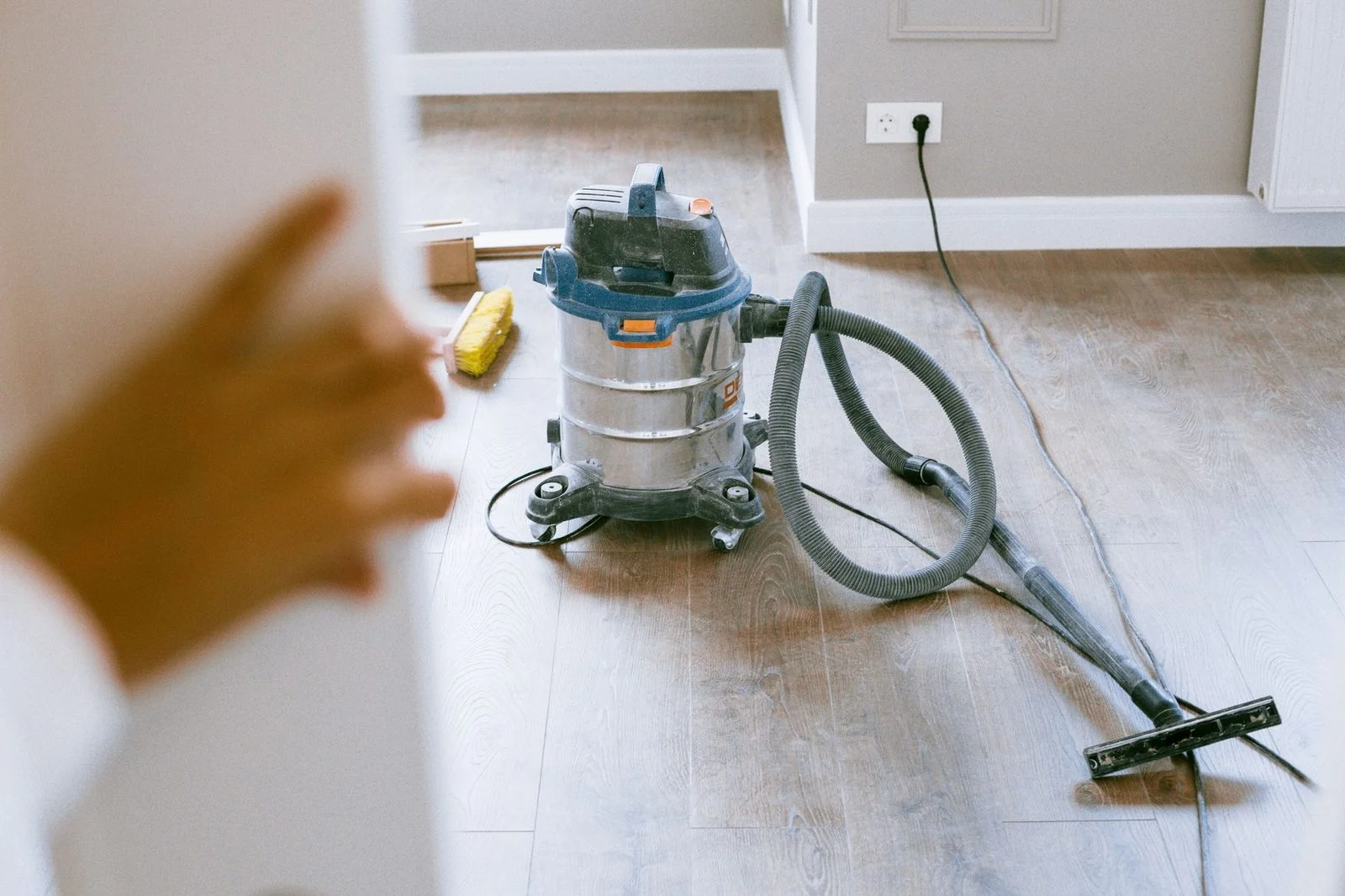
Yes. Abrasive tools scratch vinyl, and loose grit does the same damage quietly. Scouring powders, steel wool, abrasive pads, and stiff nylon brushes all leave dull paths across the finish.
Grit works like sandpaper. Sand and dirt get dragged under foot and under mop heads, so every pass grinds them into the surface. Dust mop or vacuum first, then wet-clean. Entryways carry the heaviest grit load, so check them most often.
For routine cleaning, choose a soft microfiber mop or a non-scratch pad. Rinse the mop head often, so it doesn’t spread dirt back across the floor.
Do waxes, oil soaps, and polishes harm vinyl floors?
Often, yes. Many oil-based soaps, paste waxes, and polishes leave a film that attracts dirt. Over time, the film turns cloudy or sticky, and it gets harder to remove.
Many vinyl and LVP manufacturers advise against waxes and polishes. Check the floor’s care instructions before you apply any finish. If you don’t know what the floor was treated with, check before adding anything.
Buildup is a common reason vinyl looks dull even after regular mopping. The mop moves the dirt around, and the film holds it in place. If film is already on the floor, follow the care instructions before adding anything new.
Is water or steam safe on vinyl floors?
Standing water is the main risk. Water can seep into seams and edges of vinyl plank and tile. Over time, that can loosen the floor or cause discoloration.
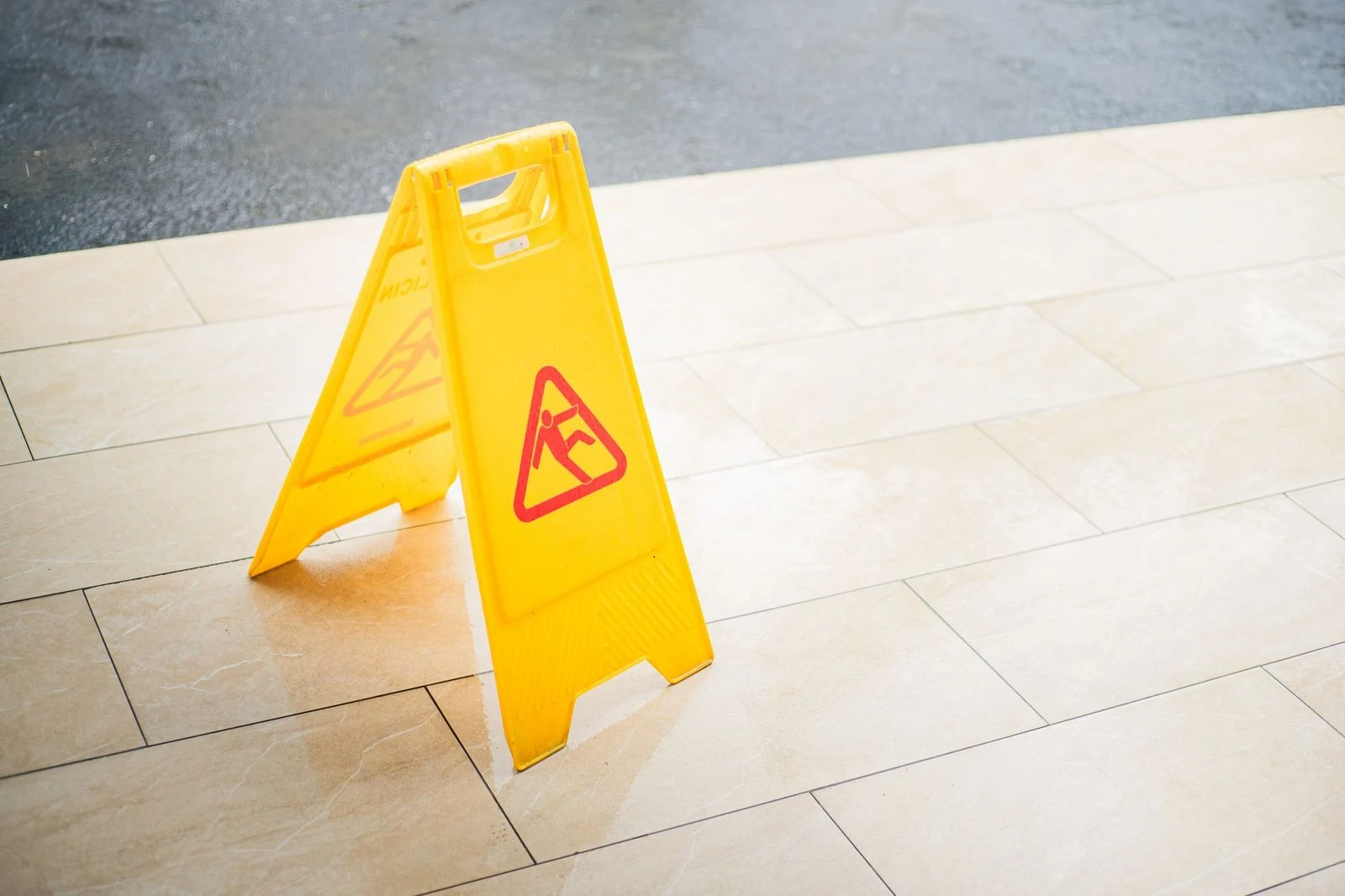
Damp mop with a well-wrung mop head, then dry the floor promptly. Change the mop water often, because dirty water spreads grit and film across the floor. Vinyl doesn’t readily absorb moisture, but seams and edges still need control.
Steam mops are a different question. Whether one is appropriate depends on the facts, including the floor type and the manufacturer’s instructions. Confirm both before using steam, and don’t assume a floor can handle it.
What equipment and furniture mark vinyl floors?
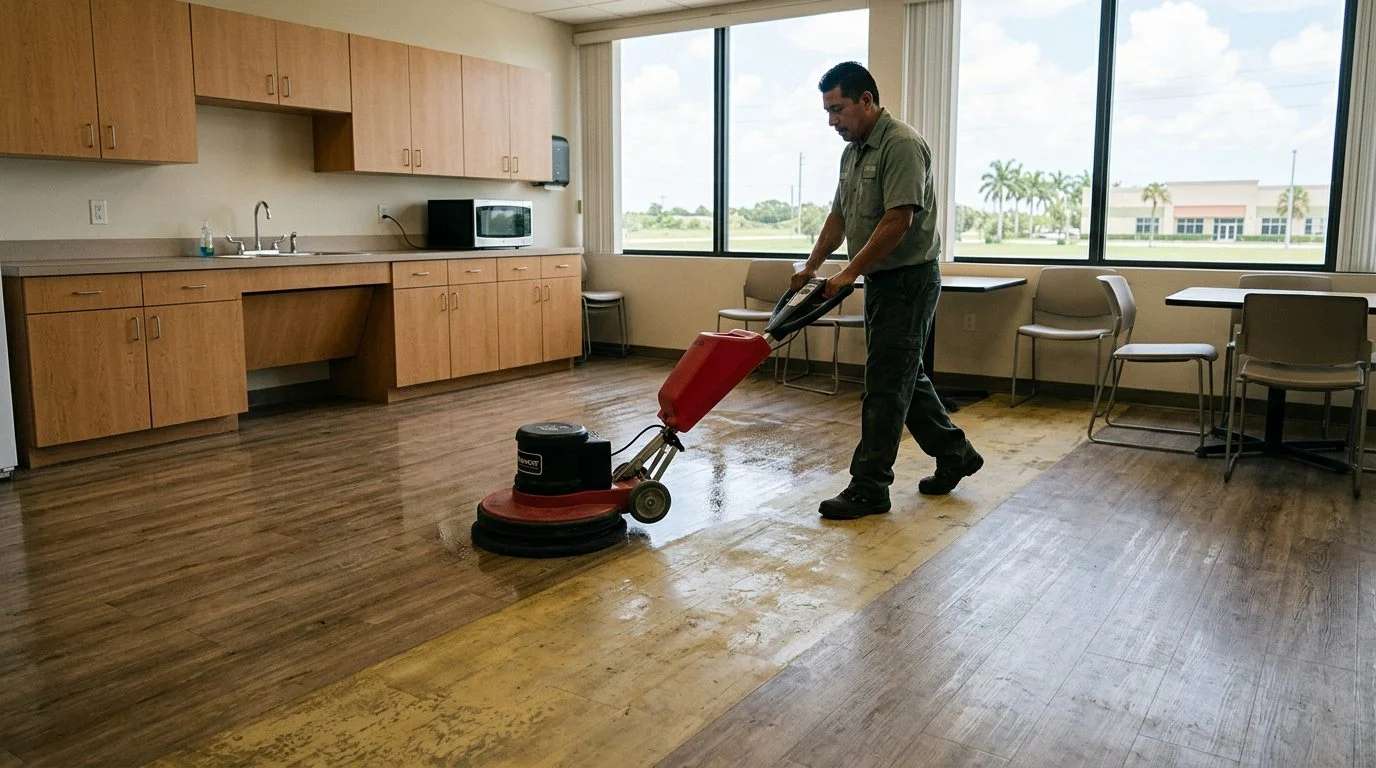
Wrong buffing pads, rolling chairs, and some rubber-backed mats are the usual culprits. An aggressive buffing pad can burnish, mark, or scratch vinyl, so match the pad to the floor and the job. In a commercial building, one wrong pad can run across a large floor for hours, so one mistake repeats over the whole space.
Rolling office chairs without suitable casters can gouge and dent planks. Furniture should have felt or non-staining glides. Some rubber-backed mats and rugs can cause staining or discoloration on some vinyl, so check before you lay one down.
Put an entry mat or transition strip at high-traffic doorways. Floor care labels also use terms like burnishing and polishing in specific ways, so learn what each means before choosing a machine or pad.
How do you keep a commercial vinyl floor in good shape?
A steady routine prevents most of these problems. Dust mop first, use a pH-neutral cleaner, control moisture, and use equipment matched to the floor. Routine keeps grit, film, and scuffs from building up between deeper cleans.
A floor you didn’t choose can carry a care history nobody wrote down. If that’s your situation, you’re trying to sort out which habits are causing the damage. That’s a reasonable place to start.
Our floor care work covers South Florida, including Miami-Dade, Broward, and Palm Beach counties.
Can you use bleach on vinyl plank floors?
Avoid it for routine cleaning. Lead-dust cleaning guidance from the Florida Department of Health recommends wet-mopping hard floors with an all-purpose cleaner or water.
Why does my vinyl floor look dull after mopping?
Buildup from oil soaps, waxes, or leftover cleaner is a common cause. Grit left in place can also scratch the surface.
Can a steam mop be used on vinyl plank flooring?
Check the manufacturer’s instructions first, because they decide whether steam is allowed.
If you’re keeping a vinyl floor clean in a building you didn’t choose, our team can talk through your floors and daily cleaning needs. Request a free quote or call the office to start. La consulta inicial es gratuita, confidencial y sin compromiso de continuar.
Key Warning
Bleach, ammonia-based cleaners, and abrasive pads can strip the finish and leave vinyl surfaces dull or etched. Before using any new product, check the flooring manufacturer's care instructions.
Products and Tools to Keep Off Vinyl Floors
Bleach and Ammonia
Strong chemicals can break down the surface layer of vinyl and cause discoloration over time.
Oil Soaps and Wax Products
These leave a residue that builds up, traps grit, and makes floors look dull after mopping.
Abrasive Pads and Steel Wool
Scrubbing tools scratch the surface, creating spots where dirt settles and wear accelerates.
Solvents and Harsh Degreasers
Aggressive solvents can soften or stain vinyl, especially in high-traffic areas.
How Gator Protection Helps Protect Your Vinyl Floors
Care Suited to Vinyl
Our team focuses on cleaning methods that fit vinyl surfaces rather than one-size-fits-all routines.
Scheduled Floor Care Maintenance
Regular maintenance keeps commercial floors clean, safe, and presentable across South Florida.
Day Porter Service
On-site attention to floors and high-traffic areas throughout the business day.
Free First Consultation
The first consultation is free, confidential, and carries no obligation to continue.