
Landscape Services · South Florida
Sharp Borders, Healthy Turf: Commercial Edging Across South Florida
Clean lines along walkways, curbs, and planting beds signal a well-kept property before anyone walks through the door. Here is what edging involves and how the schedule gets set.
By Ryan Jurney · Published November 24, 2026
If grass is creeping over curbs and into walkway joints on your property, you want to know what edging should cover and how often it should happen. Commercial landscape edging is the cutting that keeps the line between turf, planting beds, and hard surfaces clean. In South Florida, it usually needs to happen more often during the rainy months.
What Commercial Landscape Edging Includes
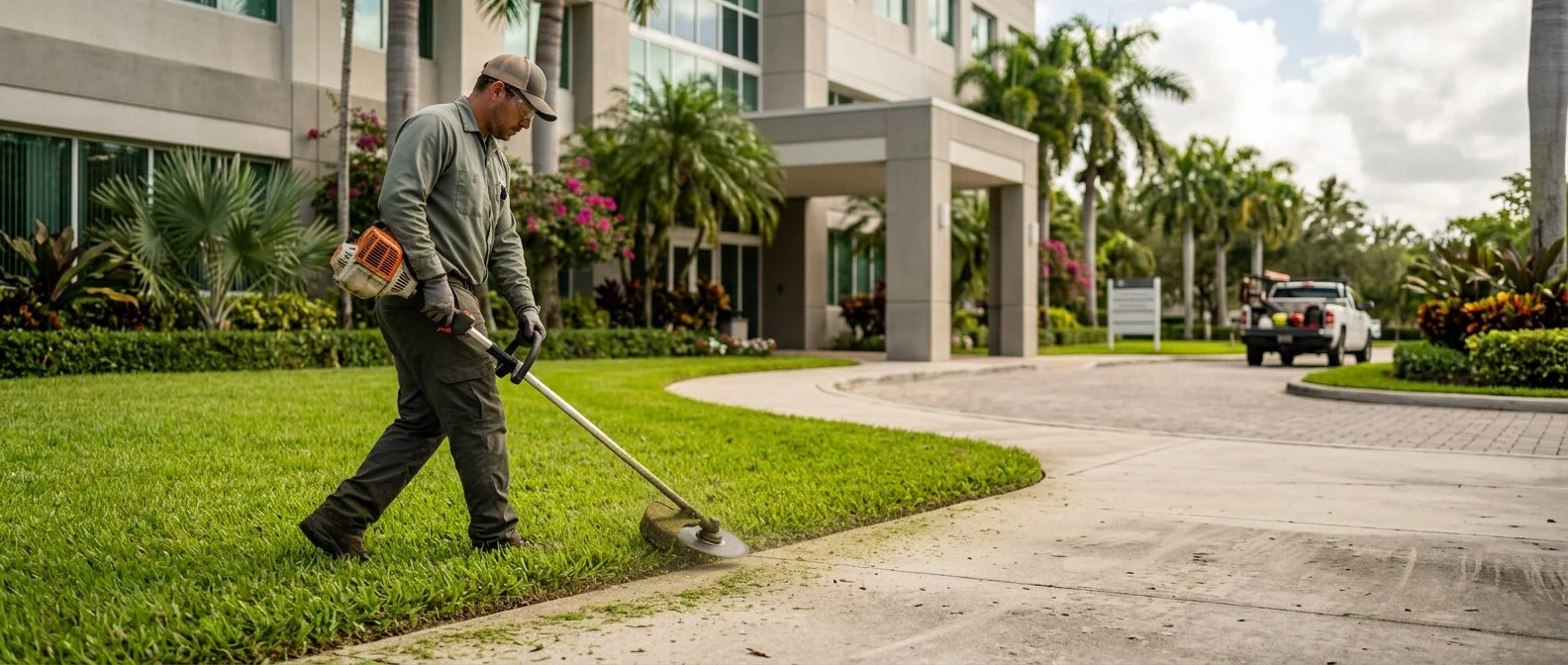
Commercial landscape edging covers every border where turf meets a planting bed, a curb, or a walkway. A typical visit re-cuts bed lines, trims turf back to the edge of curbing and walks, and clears grass and soil that have spilled over hard surfaces. The crew also removes the clippings left along each edge.
The scope comes from the physical edges on the site. Walk the property and note every place where grass meets something solid. Entrances, the area around signs, and the strip along building foundations usually count. Parking curbs and the sidewalk joints beside them count too.
Edging is one part of the broader commercial landscape maintenance routine that Gator Protection, Inc. offers. It is usually scheduled with mowing and other routine site work, so one visit can cover the whole perimeter.
If turf is creeping over your curbs and into your walkway joints, contact our team to request a quote and a site review of your edges. Talk it through with our team — the first consultation is free, confidential, and carries no obligation.

Edging Types on South Florida Commercial Properties
Most commercial edging falls into three edge types: concrete landscape curbing, aluminum edging, and soft cut bed lines. Each type changes how well the line holds between visits.
Concrete curbing around palms and shrub beds gives a firm, crisp line. Grass and soil still collect in the joint between the curb and the turf, so crews need to clear that joint on each visit. Aluminum edging along planting beds works the same way. It holds the bed line, but mulch and soil can wash over the top during heavy rain.
Soft bed lines have no physical border. The crew cuts the line into the turf, and the grass grows back into it. Soft edges look sharp right after a visit. They need re-cutting more often, because turf fills the line quickly in warm, wet weather.
The edge type on your site shapes the approach and the result you see. A property with mostly soft edges needs a shorter gap between visits than one with curbing on every bed.
How Often Commercial Edging Should Be Done in South Florida
Edging frequency in South Florida depends mainly on how fast turf grows, how much rain falls, and how much foot traffic the edges get. The wet season, which usually runs from late spring into early fall, is when growth speeds up. Edging generally needs more attention during those months than during the drier stretch of the year.
Foot traffic matters as much as growth. Entrances, front walks, and parking areas wear edges down faster than rear or service areas. A busy frontage with tenants or customers may need edging more often than a back lot few people see. Visibility counts too, because a blurred line at the front door shapes how the whole property looks to visitors.
The right schedule depends on the facts of your property. A site review checks each edge type, the growth along each border, and the traffic pattern. The schedule is then set from those findings, not from a fixed number of visits.
Edging With Palm, Shrub, Fertilizer, and Records Tasks
Edging is often scheduled alongside palm and shrub trimming, fertilizer work, and record keeping. Each task affects the others, so they work best as one plan.
Trimming palms and shrubs keeps beds and curbs clear. Fronds and branches that drop onto a bed line can hide the edge, so trimming first makes edging easier. Our team can discuss the timing of trimming for your commercial South Florida property.
Fertilizer is the other connection.
Keep a simple log of each edging visit, with the date and the edges covered. A log shows property managers what was done and when, and it makes a handover between contractors easier.
Signs Commercial Edging Is Overdue
Edging is overdue when grass grows over a curb or into a walkway joint. Other warning signs show up on the surfaces that people see first.
- Turf growing over concrete curbs or into walkway joints.
- Wavy or blurred bed lines that no longer look cut.
- Soil or mulch washing onto walks, driveways, or parking edges.
- Grass clippings and debris collecting along the edge.
These signs change how visitors and tenants see the property. They also make walkways harder to keep clean, because loose soil and clippings get tracked onto hard surfaces. Pressure washing can clean the walks afterward, but the edge still needs cutting to keep the buildup from returning.
Walk the main entrances and parking edges between scheduled visits. If you see any of these signs, note the location so the next visit can address it.

Request a Quote for Edging on Your South Florida Property
Property managers and board members who see overgrown edges need a set schedule. A site review is the first step toward one. Our team checks the edge types, the growth, and the traffic on your property, then sets the cadence with you.
The first consultation is free, confidential, and carries no obligation to continue.
Common Questions
Is edging the same as landscape curbing?
No. Edging is the cutting along a border, while curbing is a physical border, such as concrete, that grass meets.
How often should commercial edging be done in South Florida?
Frequency follows growth, rainfall, and foot traffic, so it is set after a site review.
Contact Gator Protection, Inc. to ask how that applies to your property’s landscape work.
If turf is growing over your curbs or into your walkway joints, reach out through the contact form or call the office to request a quote for a set edging schedule.
What a Commercial Edging Service Covers
Walkways and Paths
Crisp edges along sidewalks, entry paths, and parking lot islands keep turf from creeping onto hard surfaces.
Curbs and Borders
Turf and groundcover are trimmed back to the curb or border line so the boundary stays clearly defined.
Planting Beds
Bed lines around shrubs, flower areas, and tree rings are cut cleanly to keep plantings contained.
Cleanup After Each Visit
Clippings and debris are removed from paved areas so the finished work looks complete.
What Shapes How Often Edging Is Needed
Growth Rate
Warm, fast-growing grasses push back into borders quickly, so faster growth usually means more frequent visits.
Rainfall Patterns
Wet seasons accelerate growth along edges, which can change how often a property needs attention.
Foot Traffic
High-traffic entrances and walkways show edge loss sooner and may need more regular cutting.
Site Review
Every property is different, so the frequency is set after our team reviews the grounds in person.
A Quick Tip on Edge Depth
Cutting too deep into the soil can damage the root zone and leave bare strips that invite weeds. A proper edge removes the overhang without digging into the bed.