
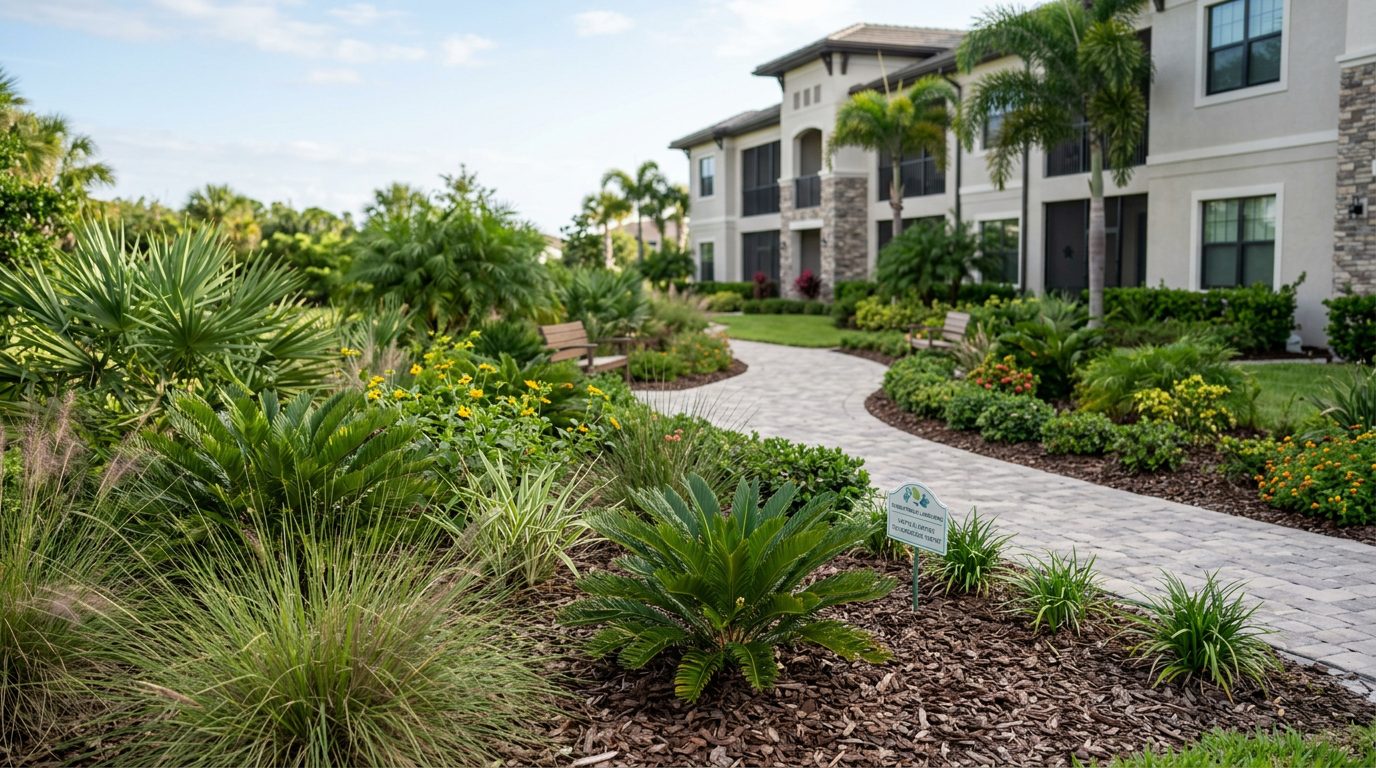
Landscape Services · South Florida
Florida-Friendly Landscaping for Condo Common Areas
Plantings and grounds that suit South Florida's climate, conserve water, and keep your common areas looking their best, with ongoing maintenance from our team across Miami-Dade, Broward, and Palm Beach counties.
By Ryan Jurney · Published November 4, 2026
Florida-friendly landscaping for condo common areas means planning and caring for grounds so they use less water, protect water quality, and need fewer replacements. The approach follows nine principles developed through the University of Florida IFAS Extension. For a condo board, the practical goal is simple: plants that suit each spot, so the grounds look good with less water and less work. This guide explains how the approach works in South Florida and where a board can start.
What Florida-Friendly Landscaping Means for a Condo Common Area
Florida-friendly landscaping is a set of practices for designing and maintaining grounds that conserve water and protect water quality. In a condo, these practices apply to entrances, courtyards, pool areas, and perimeter beds. One design decision touches residents, visitors, and the association budget at the same time.
A bed planted with thirsty species in a sunny, dry spot needs more irrigation, more replacement, and more attention. A lawn that gets heavy fertilizer can push nutrients toward storm drains and canals. Both problems cost money and add to the property’s upkeep.
Watering practices for commercial landscapes can differ from one property to another, and our team can review your site during a free first consultation, which is confidential and carries no obligation to continue. A board should understand those rules before it picks plants. Training also matters. The UF IFAS Extension runs a program that teaches landscape professionals about fertilizing, irrigation, and protecting water quality, through its GI-BMP program.
If your board is weighing a common-area update, you don't have to sort through every bed alone. Talk it through with our team — the first consultation is free, confidential, and carries no obligation.
The Nine Principles of Florida-Friendly Landscaping
Florida-friendly landscaping rests on nine principles that guide plant choice, water use, and day-to-day care. UF/IFAS presents them as one system:
- Right plant, right place
- Water efficiently
- Fertilize appropriately
- Mulch
- Attract wildlife
- Manage yard pests responsibly
- Recycle yard waste
- Reduce stormwater runoff
- Protect the waterfront
The principles work together, not one at a time. Swap a thirsty shrub for a native one, and irrigation, mulching, and pest management all change in that same bed. A board that only reads the plant list misses these links.
The framework also gives a board useful questions. Is this plant in the right spot? Is the bed mulched? Does the fertilizer plan match what the lawn needs? For properties near canals or lakes, the waterfront principle matters most. Limit fertilizer and pesticide use near the water’s edge.
Right Plant, Right Place: Matching Plants to Common-Area Conditions
Right plant, right place means choosing each species for the exact spot where it will grow. Common areas have many small microclimates, so one plant list rarely fits the whole property.
Start with sun exposure. A plant that needs shade will struggle in full afternoon sun against a building wall. Soil and drainage matter too. A bed that holds standing water after storms suits different plants than one on fast-draining sand.
Then look at walkways, parking, and benches. A shrub that grows wide will block a path within a few seasons. It will then need repeated pruning.
Mature size is the most common mistake. Boards often plant for the size of the nursery pot, not the size the plant reaches. The result is constant shearing and early replacement. Correct placement breaks that cycle.
Coastal and near-beach properties face extra conditions. Salt spray can burn foliage, and sandy soil drains fast and holds few nutrients. Properties in South Beach and Brickell can face these conditions, so plant choice should account for them before any installation.
Low-Water and Native Plant Options for South Florida Common Areas
Low-water common areas usually mix native and Florida-adapted plants in groundcovers, shrubs, grasses, and small trees. Choose each group for the light it gets, not for a single look.
Native plants grew up with local rain patterns and soils. Once established, many need less supplemental irrigation than plants from far-off climates. That is the main reason boards consider natives for low-water grounds. Native does not mean maintenance-free, though.
New plantings need regular watering until their roots are established. Set a defined irrigation schedule for that period, then reduce it as plants settle in.
To build the plant list, map the property zone by zone. Note the sun, drainage, and foot traffic in each zone. Then match a plant group to each zone, starting with the spots people pass every day.
Not sure what your next step is?
Talk it through with our team — the first consultation is free, confidential, and carries no obligation.
Attracting Birds, Butterflies and Beneficial Wildlife
Native flowering plants and shrubs can give butterflies, pollinators, and birds nectar, seeds, and shelter. This is the “attract wildlife” principle in action. A bed with flowers at several heights and seasons offers more food than a single hedge.
Reduced chemical use helps too. Beneficial insects, which help keep some pests in check, do better when broad spraying is limited. Leaf litter can also support insects and ground-dwelling wildlife when it is managed with care. Clearing every leaf and bagging everything removes that habitat.
The Florida Department of Agriculture and Consumer Services runs state licensing for pesticide applicators.
Wildlife-friendly beds can also add color and texture to entrances and courtyards. When the plants suit the site, those beds can keep their look without frequent replanting.
How Low-Water Design Connects to Lower Ongoing Maintenance Costs
Plant selection affects five recurring cost areas. These are irrigation water and system repairs, mowing and edging, pruning, fertilizer and pest treatments, and replacing failed plantings. The size of any savings depends on the property.
Mulching, grouping plants by water needs, and right-place planting each reduce how often those costs come back. Mulch holds moisture and slows weeds. Plants grouped by water needs let a crew water one zone differently from another. Right-place planting lowers pruning and replacement.
Fertilizer rules are part of the cost picture. Plants that need less fertilizer can lower that line item.
The savings depend on the existing layout, plant condition, and current maintenance schedule. Before deciding, the board should compare its current costs with a proposed plan, line by line.
Planning a Transition for Your Condo Board, and Next Steps
Start with the most visible common areas, then expand once the board has reviewed results and budget. Entrances and pool decks are often the first stop. A phased plan lets the board test the approach before committing to a full redesign.
Timing matters too. Hurricane season affects when new plants go in and how their roots settle before heavy rain and wind. For more on planting around storm damage, read our hurricane damage condo grounds guide.
For an overview of the full service range, see our Miami-Dade landscape services page.
Common Questions
What is Florida-friendly landscaping for a condo?
It is a set of practices that conserve water, protect water quality, and fit plants to their site.
Are native plants better for condo common areas?
Natives suit local rain and soils well. They still need a watering schedule while they establish.
Do Florida-friendly plants attract butterflies and birds?
Native flowering plants and shrubs can provide nectar, seeds, and shelter for them.
How can a condo cut landscape maintenance costs?
Right-place planting, mulching, and grouping plants by water needs can reduce how often costs recur.
If your board is weighing a common-area update, you don’t have to sort through every bed alone. Your first consultation is free, confidential, and comes with no obligation to continue. Reach out through our contact form to talk about your property.
Have questions about what happened?
Ask our team directly. The first conversation is free, confidential, and there is no obligation to continue.
What a Florida-friendly condo landscape looks like
Plants matched to the site
Sun exposure, drainage, soil, and foot traffic each shape which plants will thrive in a given spot.
Water used with purpose
Irrigation zones and watering schedules are planned around plant needs, with extra attention while new plantings establish.
Water quality in mind
Good plant choices and careful maintenance help keep fertilizers and runoff from moving into nearby waterways.
Maintenance that keeps it on track
Regular pruning, weeding, and seasonal adjustments keep the landscape healthy and the common areas welcoming year-round.
Tip: don't water on autopilot
A fixed watering schedule that never changes can overwater established plants and underwater new ones. Adjust irrigation as the seasons, rainfall, and plant growth change.
How we approach a condo common area
Site assessment
We walk the property to note sun, shade, drainage, existing plantings, and how residents and visitors use each area.
Plant selection
We recommend plants suited to South Florida conditions, with a focus on native and Florida-friendly options where they fit the site.
Irrigation planning
We help group plants by water needs and set a schedule that can be adjusted as conditions change.
Ongoing care and cleanup
Landscape maintenance and pressure washing of walkways, entries, and common surfaces keep the property tidy between visits.