
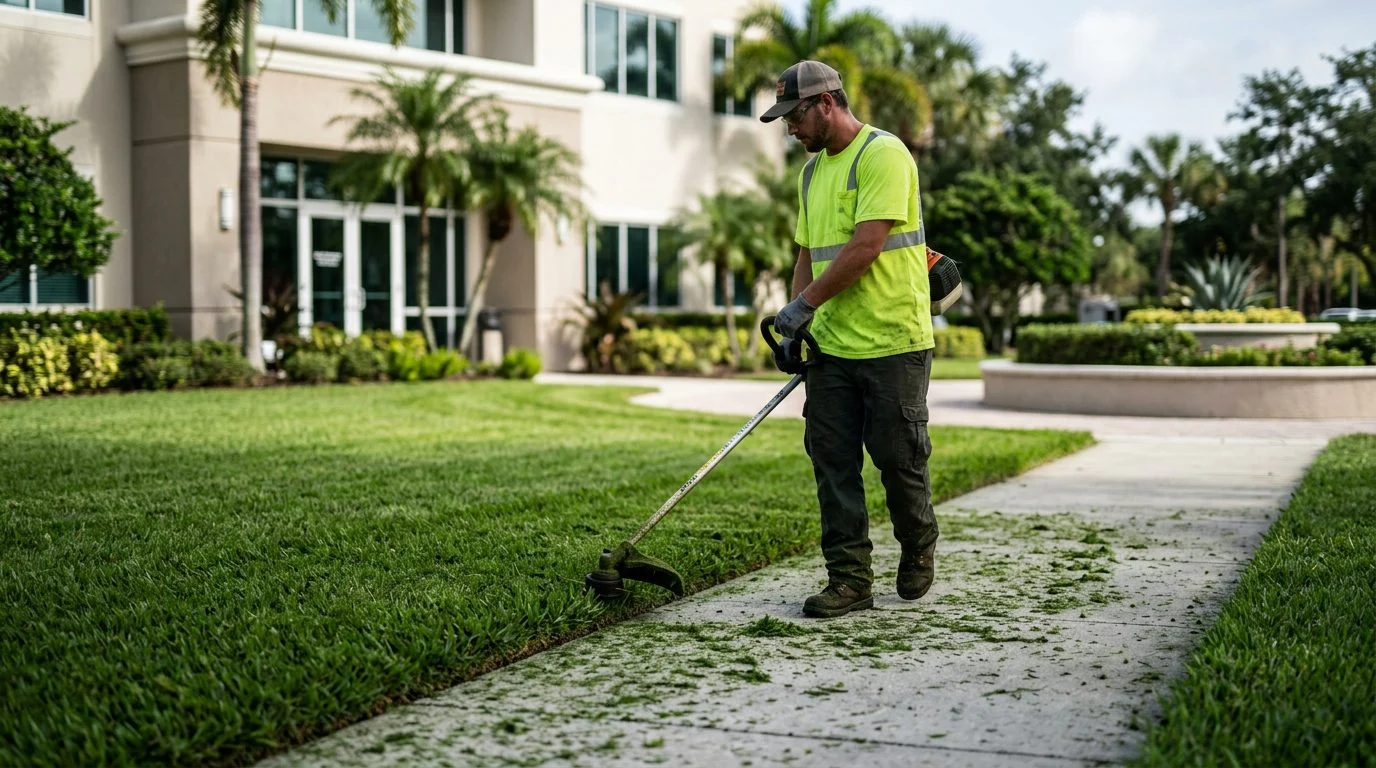
Landscape Services · South Florida
Why Is Your Condo Lawn Turning Brown in Florida?
Browning grass has a few common causes, and the right fix depends on which one is affecting your lawn. Our team focuses on commercial landscape maintenance across South Florida. Your first consultation is free, confidential, and comes with no obligation to continue.
By Ryan Jurney · Published November 3, 2026
Why a Condo Lawn Turns Brown in South Florida
Why is my condo lawn turning brown Florida? The short answer is that it usually has one or more causes you can identify. The most common are dormancy, pests, lawn fungus, drought stress, and overwatering.
Often the first person to notice is a board member, a property manager, or a resident who looks after the shared grounds. That person may not have chosen the grass or the irrigation. They still have to decide what to do next.
Each cause can look alike from across a courtyard. Each one, though, needs a different fix. Treating a watering problem with pest products wastes money and time. It also leaves the real cause untouched.
This page walks through each cause, shows the signs that point to it, and explains when a professional crew should take over. Finding the cause comes first.
If you're handling a browning lawn for your whole condo community and aren't sure what's behind it, reach out to our team . Talk it through with our team — the first consultation is free, confidential, and carries no obligation.
How Do You Tell Dormant Grass From Dead Grass?
Dormant grass can recover, while dead grass won’t come back on its own. Dormancy is a natural rest state. Many warm-season grasses turn tan or brown when days get dry or cool. They green up again when conditions change.
Dead turf is different. It has lost its living crown and roots, so it must be replaced or re-established.
Three quick field checks help you sort them out:
- Tug test. Grab a small clump of blades and pull gently. Rooted grass resists. Grass that lifts out easily is likely dead or badly damaged.
- Crown and runner check. Look at the base of the plant and along the runners for green growth. Green at the crown means the grass is still alive.
- Spread pattern. Note whether the brown area grows from week to week. A patch that keeps spreading points to an active problem, not a dormant one.
Timing matters too. Browning in the dry season often looks different from browning after a hot, stressful summer. Date your observations so you can compare them later.
Which Pests Cause Brown Patches in Florida Lawns?
Chinch bugs, lawn grubs, mole crickets, and sod webworms are the common pests behind brown patches. Each one damages turf in its own way.
Chinch bugs feed on warm-season grass, often in hot, sunny areas. They leave irregular brown patches.
Lawn grubs are beetle larvae that feed on roots. Turf over them can pull up easily and die in patches.
Mole crickets tunnel through the soil. That loosens the turf and leaves brown, damaged areas.
Sod webworms feed on grass blades and leave thin, patchy turf.
A useful clue is the edge. Pest damage often shows a defined edge around the patch. A few small soil or thatch checks help narrow the cause. Confirming the species is a technical step, so a crew can do it before any treatment begins.
Can Lawn Fungus Cause Brown Patches?
Yes, lawn fungus can cause circular or irregular brown patches. Sometimes a ring of discolored grass surrounds them. Fungal patches look a lot like pest damage, so a closer look is needed.
Humidity and poor airflow favor fungus. So does overwatering in shaded areas. Shade from buildings and mature trees is common on condo grounds. Shade slows drying, and slow drying raises disease risk.
Start with the shadiest spots, where grass stays damp the longest. Fungal patches are treated differently from pest damage. Correct identification keeps the response from being wasted and keeps the wrong product off the lawn.
Not sure what your next step is?
Talk it through with our team — the first consultation is free, confidential, and carries no obligation.
Is Drought Stress or Overwatering the Cause?
Drought stress and overwatering both brown grass, but they need opposite fixes. Drought stress makes grass look gray or bluish-brown. It wilts and fails to bounce back after a light footstep.
Drought-stressed areas often sit at the edge of sprinkler coverage, on slopes, or in full-sun spots. Water doesn’t reach those places well.
Overwatering can also turn grass brown. Soggy soil keeps roots shallow and weak, and disease finds an easier path. Look for standing water, moss, and brown patches in low spots.
Irrigation schedules on shared property are a common contributor. Irrigation timing is a detail worth reviewing with our team, and a free first consultation is confidential and carries no obligation to continue. A schedule that suits one zone can flood another.
Practical Steps to Treat Brown Grass on Condo Grounds
Start by mapping where the browning is and how large each area is. Note whether the patches line up with a sprinkler zone, a shade line, or a walking path.
Next, review irrigation timing and coverage. Adjusting watering is often the first change to make for drought stress or overwatering.
Keep mowing height right for the grass type. Cutting too low adds stress to warm-season turf.
Remove thatch and debris when the turf calls for it. They can hold moisture and hide pest activity.
Re-seed or re-sod only after the cause is fixed. Otherwise, new turf can fail to the same problem.
Take dated photos of the affected areas. Several weeks of photos let the board see whether things are improving or getting worse.
Pest and fungal treatments need correct timing and the right products. The UF IFAS GI-BMP program covers training and best management practices for fertilizing, irrigation, and water quality. A professional assessment is worth considering for these steps.
When to Call a Landscape Crew for Condo Lawn Browning
Call a crew when browning spreads quickly, covers large common areas, or returns after irrigation changes. Those signs suggest the cause needs a closer look than a quick fix.
Bring in a crew when you suspect pests. Correct identification and timing affect the result, and a crew can confirm the species first.
Storm damage needs its own look. Debris, fallen limbs, or saturated soil after heavy weather can change what the grass needs. See our guide to hurricane damage on condo grounds in Miami.
Shade from overgrown trees near balconies can also thin the turf. Our tree trimming near condo balconies guide covers that. Florida-friendly planning can also reduce recurring browning in common areas, as explained in our Florida-friendly landscaping guide. For the full picture, see our landscape services for Miami-Dade condos overview.
Why is my condo lawn turning brown Florida?
Browning usually comes from dormancy, pests, fungus, drought stress, or overwatering. Sorting out which one applies is the first step.
Will grass come back after turning brown?
It can, if the crown and roots are still alive. The tug and crown checks above help show whether they are.
Can an overwatered lawn turn brown?
Yes. Overwatering can suffocate roots and invite disease, so check for soggy soil and standing water.
If you’re handling a browning lawn for your whole condo community and aren’t sure what’s behind it, reach out to our team. Our first consultation is free, confidential, and carries no obligation to continue. (Spanish: consulta inicial gratuita, confidencial y sin compromiso.)
Common Causes of Brown Grass
Dormancy
Some Florida grasses slow down or go dormant during dry or cooler periods. Dormant grass often looks brown but can recover once conditions improve.
Pests
Insects and grubs feeding on the roots or crowns can cause patches of brown grass that pull up easily. Look for irregular patches rather than even browning.
Fungal Disease
Fungus often shows up as circular or irregular brown spots, especially during humid or wet weather. It can spread quickly if it is not identified early.
Drought or Overwatering
Too little water dries out the root zone, while too much water can suffocate roots and encourage disease. Both can turn a lawn brown.
Have questions about what happened?
Ask our team directly. The first conversation is free, confidential, and there is no obligation to continue.
How Our Team Approaches Condo Lawn Maintenance
Inspection First
We look at the pattern, the grass, and the conditions around the property before recommending any changes.
Targeted Care
Once the likely cause is clearer, we plan maintenance that addresses that specific problem.
Ongoing Scheduling
Regular mowing, irrigation checks, and monitoring help keep common problems from returning.
Local Experience in South Florida
Our landscape services cover Miami-Dade, Broward, and Palm Beach counties, including Brickell, Coral Gables, and South Beach.
Don't Guess at the Fix
Adding more water or fertilizer to a brown lawn without knowing the cause can make some problems worse. Identify the likely cause before making changes.