
Landscape Services · South Florida
Storm Debris Cleanup for Your Commercial Property
Fallen limbs, scattered branches, and debris on walkways and entrances can slow a property down fast. Here is how responsibility for cleanup is usually divided and how to plan for it.
By Ryan Jurney · Published November 22, 2026
A limb came down across your parking lot overnight, and palm fronds are piled at the front entrance. Someone needs to clear it before tenants and visitors can get through safely.
On a commercial property, storm debris clearing is usually split by area. Landscape services clear the grounds. Day porter, pressure washing, and floor care deal with the mess the storm leaves at entrances, walkways, and common areas. How the work divides depends on your service agreement, so confirm the split in writing before crews start.
What Counts as Storm Debris on a Commercial Property
Storm debris is any plant or loose material that wind and rain leave on your property. On most commercial sites, that means fallen limbs, broken branches, palm fronds, and uprooted plants.
It also includes mulch and leaves scattered across lawns, planting beds, and parking islands. These pieces look small, but they add up fast.
Debris often lands where it matters most. Material blown onto walkways, entrances, and drive aisles affects access and safety. A single palm frond on a sidewalk can cause a trip. A limb across a drive aisle can block a fire lane or a delivery route.
Start by mapping the property. Mark which areas are grounds, which are building exterior, and which are interior. Grounds debris usually goes to the landscape crew. Exterior surfaces may need pressure washing. Lobbies and entry floors may need day porter or floor care. A clear map keeps the cleanup from stalling while people argue over who does what.
If fallen limbs and palm debris are blocking your grounds and entrances, our team can help you sort out which crew clears what, and what gets hauled away. Talk it through with our team — the first consultation is free, confidential, and carries no obligation.
Which Service Covers Which Part of the Cleanup
Landscape services cover the grounds, and the other three services cover the residue that follows the storm.
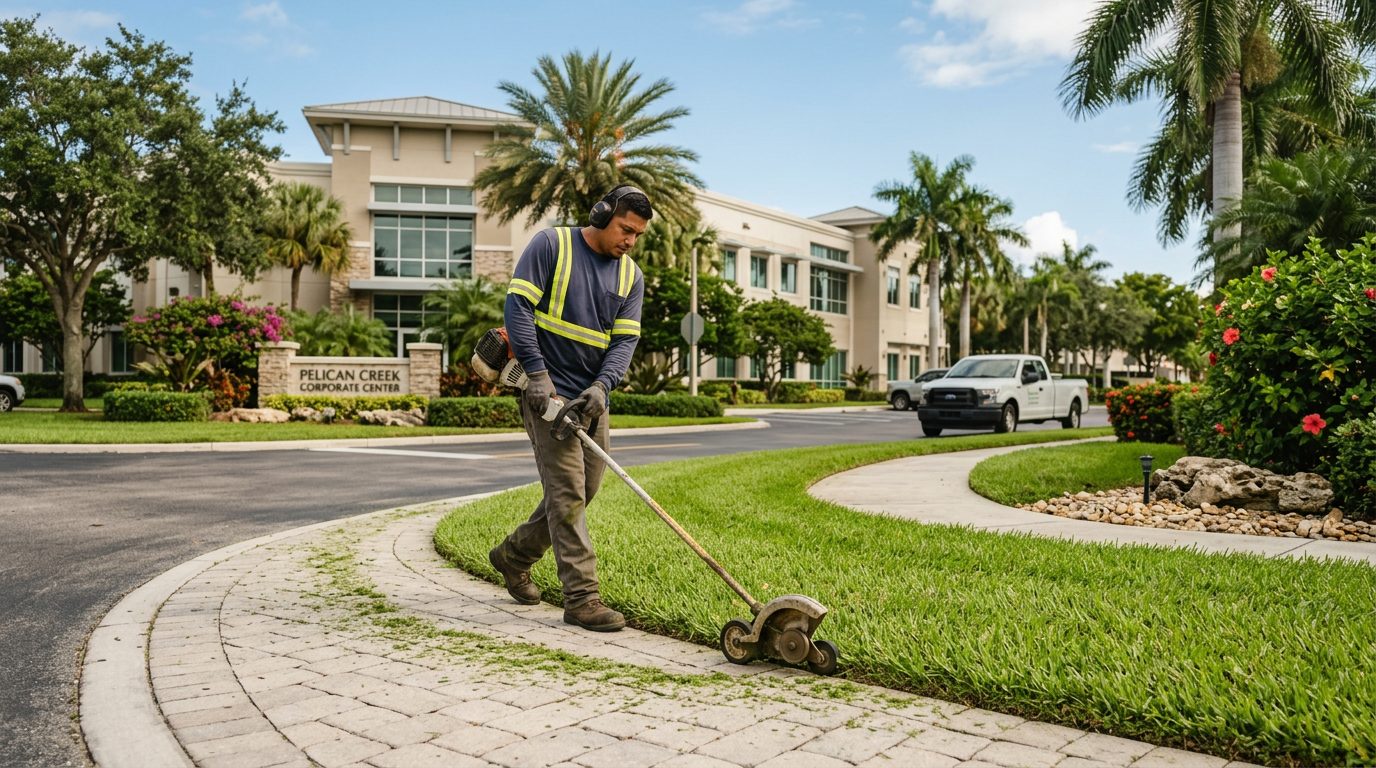
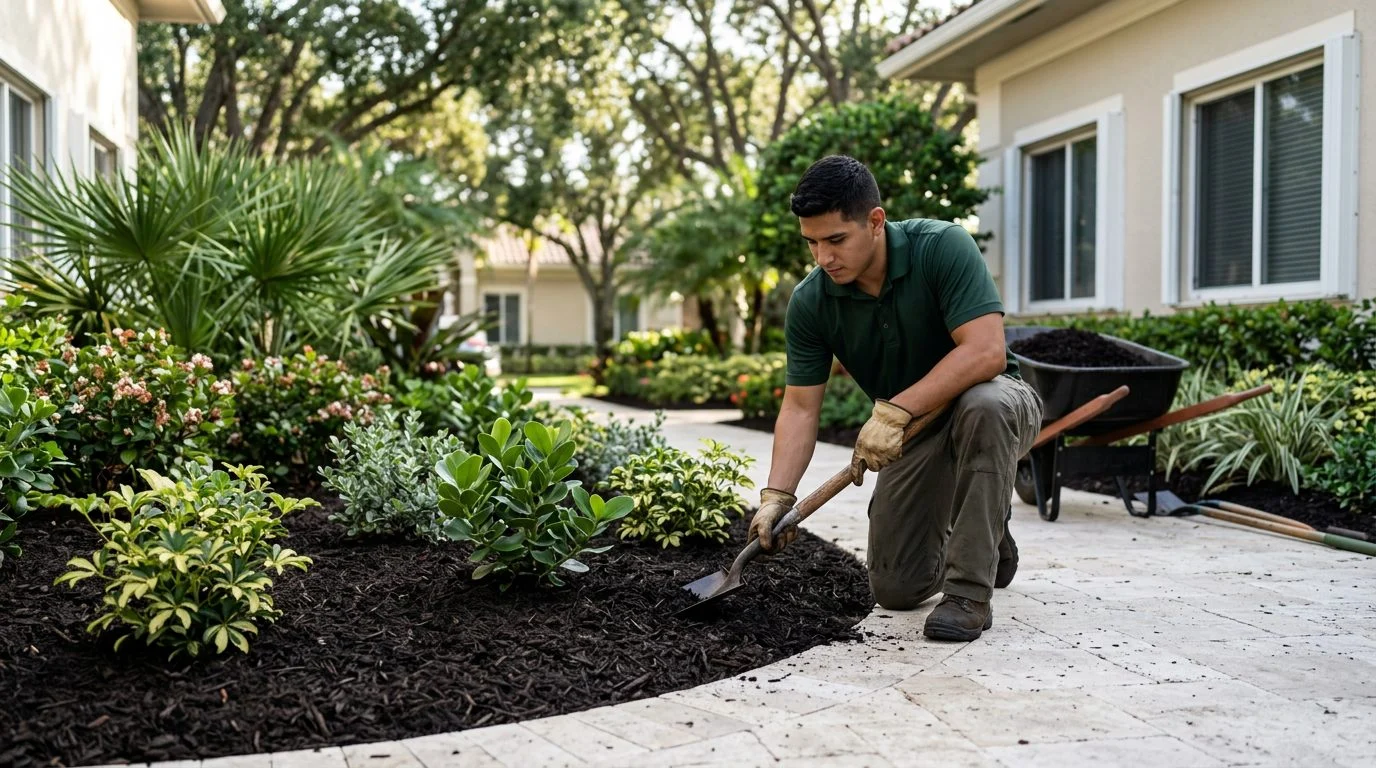
Landscape services handle the outdoor work. That means collecting and hauling fallen limbs and plant debris from lawns, planting beds, and common landscaped areas. This is the core of storm debris clearing for a commercial property in Florida. For the full scope, read our full landscape services scope.
Day porter service covers the interior and entrance areas. Wind-blown litter and debris often get tracked inside after a storm. A day porter keeps lobbies and common areas usable while outdoor crews keep working.
Pressure washing and floor care address what the storm leaves on hard surfaces. Silt, mud, and organic staining can stick to walkways, entry floors, and building exteriors. Pressure washing lifts that residue from hardscapes. Floor care restores entry floors after mud and grit have been walked across them.
Timing matters. Pressure washing usually makes more sense after the heavy debris is gone. Clearing the big material first keeps it from being washed into drains and gutters.
How Grounds Debris Removal Works After a Storm
Grounds debris removal usually starts with a site walk, then clears access routes, then removes the rest.
Start with the site walk. Someone walks the grounds to find hazards, blocked routes, and limbs resting on fences, lines, or vehicles. Those hazards go first. A limb pinned against a fence or resting on a parked car needs attention before general cleanup begins.
Next, clear the access routes. Drive aisles, entrances, sidewalks, and emergency paths come before the lawn. Once people and vehicles can move safely, crews collect and haul the remaining material from beds and common areas.
Hauling is where many properties run into trouble. Don’t pile material on site until that approval is in place.
County pickup is a separate step. Confirm that requirement before any pickup is scheduled. Also confirm haul-away in the scope, so you know what leaves the property and what stays.
Safety and Access Priorities in the First Days After a Storm
Safety comes first. Keep people away from downed limbs and damaged lines, and open the main entrances before anything else.
Restrict access to unsafe zones. Use cones, tape, or barricades around broken limbs, leaning trees, and damaged structures. Tell tenants, staff, and visitors which routes are closed and which are open.
Keep crews well away from downed power lines. Treat every line as live. Report damaged lines to the utility company and let its crews handle the repair.
Wet conditions add risk. Mud on entry floors and wet palm fronds on walkways can be slippery. Put warning signs near these spots until they are cleared.
Clear the main entrances and emergency paths first. Lobby doors, stairs, and exit routes matter more than the lawn. Once those are open, the rest of the cleanup can move at a steady pace. Re-check the grounds after each rain, because loose limbs can still fall.
Documenting Storm Damage for Your Records
Take photos of the damage and the debris before cleanup starts. Photos are the simplest record you can make.
Shoot wide and close. Wide shots show where the limb fell and how far the debris spread. Close shots show the damage itself. Note the date and location for each photo. Do this before crews move anything, so the starting condition is on record.
Keep a simple log. Record each work day, which areas were cleared, and roughly how much material was hauled. Save receipts, work orders, and disposal tickets in one folder.
Check your own paperwork too. Review your property insurance policy, lease, and association agreement for any documentation requirements. Those documents are the ones that apply to your building, so read them before you file a claim or make a repair decision.
Questions to Ask About Scope Before Storm Work Begins
Ask who clears what, where the debris goes, and whether your agreement covers storm events before crews start.
Ask which areas are included. Grounds, entrances, lobbies, pressure-washed surfaces, and floors should each be named. Ask whether hauling and disposal are included. Ask how access routes get priority. Ask whether a recurring service agreement covers storm work or only routine service.
A clear written scope prevents confusion. Grounds crews, janitorial staff, and building management often overlap after a storm. A written scope shows who handles the lobby, the lawn, and the drive aisle. That reduces gaps and double work.
Ask about wastewater as well.
Ask about standards too. The ISSA Cleaning Industry Management Standard addresses service quality, staffing, and green cleaning practices. Asking whether the work follows a documented standard is a reasonable question.
Not sure what your next step is?
Talk it through with our team — the first consultation is free, confidential, and carries no obligation.
Preparing a Commercial Property for Hurricane Season
Regular grounds care reduces the loose material a property has to deal with after a storm. It cannot stop a storm from causing damage.
Routine trimming matters. Removing deadwood and thinning dense plantings can cut down the loose material that strong wind throws around. These are general practices, not a plan that prevents damage.
Pressure washing and floor care on a regular schedule also help. Entrances and walkways cleaned on a routine basis are easier to restore after mud and debris arrive. Regular day porter service keeps lobbies and common areas from building up grit between storms.
Plan ahead for each area. Write down which service covers each zone, and keep a current contact list for your site crews. A short plan makes the first week after a storm much easier.
We work across South Florida, including Miami-Dade County, Broward County, and the wider South Florida area.
Talk With Our Team About Your Property’s Storm Cleanup
If limbs and palm debris are blocking your grounds and entrances, the next step is deciding who clears what. Picture a parking lot covered in limbs, palm fronds at the front door, and mud across the lobby floor. You need a clear split between the grounds, the entrance, the floors, and the hauling.
Reach out through the contact form, call the office, or request a quote. La consulta inicial es gratuita, confidencial y sin compromiso de continuar.
Frequent Questions
Who clears storm debris on a commercial property in Florida?
The answer depends on the specific property and its arrangements, so contact our team to talk through your site. A service provider can handle the grounds work under a written agreement.
Does landscape maintenance include fallen limb removal?
Yes. Landscape services cover collecting and hauling fallen limbs and plant debris from grounds.
Do condos need permission for county debris pickup?
The answer can vary by location and property, so contact our team to talk through your situation. Check your county’s rules before scheduling.
Should pressure washing wait until storm debris is cleared?
Usually, yes. Clearing heavy debris first keeps it from washing into drains and gutters.
Services That Support Storm Cleanup
Landscape Services
Collecting and hauling fallen limbs, leaves, and yard debris so grounds can be safely used again.
Pressure Washing
Clearing mud, grit, and debris residue from walkways, parking areas, and building exteriors after a storm.
Day Porter Service
Ongoing daytime attention to lobbies, entrances, and common areas that storm debris can quickly affect.
Floor Care Maintenance
Cleaning and maintaining interior floors that sand, water, and debris tracked in from outside.
Put the Scope in Writing
Before storm cleanup begins, confirm in writing which areas are covered, what work is included, and who to contact. Clear terms help avoid confusion when time is short.
How We Work With Commercial Properties
Responsive Planning
We help you map out who handles what, so cleanup starts without delay.
Written Agreements
Scope, schedule, and service details are set out clearly before work begins.
South Florida Focus
We serve Miami-Dade, Broward, and Palm Beach counties, including South Beach, Coral Gables, and Brickell.
Responsive Team
Our team stays in touch throughout the job so you always know where things stand.