
Commercial Landscape Maintenance | South Florida
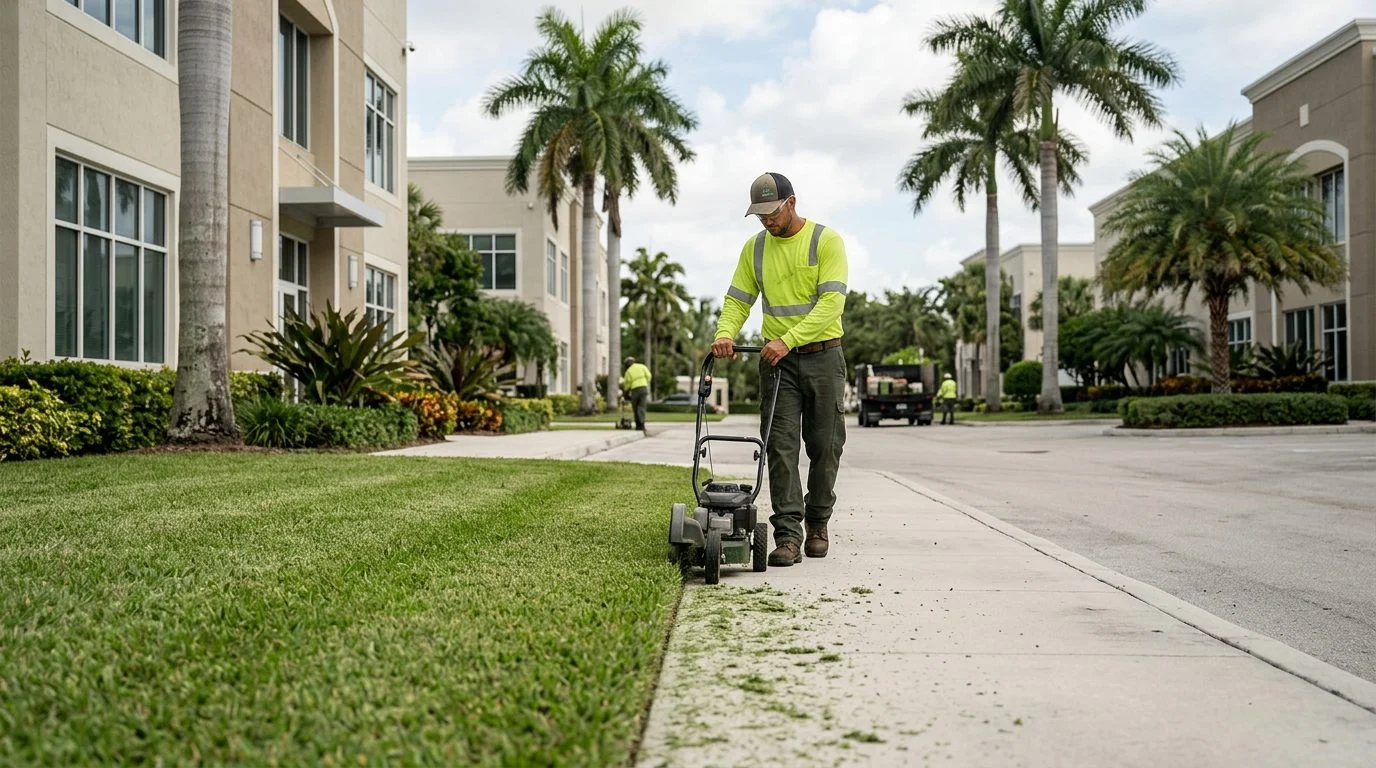
Grounds That Look Maintained Every Day of the Week
Scheduled upkeep for offices, retail centers, and multifamily properties from Miami-Dade to Palm Beach County.
Where We Work
3
South Florida counties served
Free
First consultation, no obligation to continue
Scheduled
Recurring service on your calendar
By Ryan Jurney · Published November 23, 2026
Who Pays for Landscaping in South Florida Commercial Leases?
Your landlord’s statement just showed a landscaping charge, or you’re about to sign a lease and want to know who pays for landscaping in a commercial lease in Florida. The lease answers that question. It assigns landscaping to the tenant, to the landlord, or to a shared formula.
This page walks through those lease terms. Gator Protection, Inc. provides commercial landscape maintenance across South Florida, including Miami-Dade, Broward, and Palm Beach counties.
If a landscape charge on your statement doesn't add up, our team can walk through the scope and invoices for your property with you. Talk it through with our team — the first consultation is free, confidential, and carries no obligation.

Who Pays for Landscaping in a South Florida Commercial Lease
The lease sets the split, so start by finding the landscape terms in the document. Landscaping usually falls into one of three arrangements.
- Direct contract. The tenant hires and pays a landscape vendor on its own.
- Common-area charge. The landlord hires the vendor and passes the cost to tenants as a shared expense.
- Formula split. The lease divides the cost by a set rule, such as each tenant’s share of the building’s square footage.
Routine work and capital work often sit in different places. Mowing, edging, trimming, and mulching are routine maintenance. New plantings or a rebuilt irrigation system are improvements. Leases often treat these groups differently, so read each clause.
Building type also changes the picture. In a multi-tenant building, one vendor often services shared grounds, so the cost gets divided among tenants. A single-tenant building may place the full landscape cost in one lease line.
For a business space, Fla. Stat. § 83.001 says this part of Florida’s landlord-tenant law applies to nonresidential tenancies.
How the CAM Clause Covers Landscaping
A CAM clause lists the shared costs a landlord can pass through to tenants. Landscaping belongs there only if the clause names it. CAM stands for Common Area Maintenance, the cost of parts of a property that all tenants use, such as parking lots, walkways, entrances, and grounds.
Read the clause for specific words. Look for “landscape maintenance,” “landscape services,” and “irrigation.” If the clause allows landscaping charges but says nothing about service level, that gap is where disputes usually start. Ask exactly what level of service the charge pays for.
Your statement usually shows these costs in an annual reconciliation. Find the landscape line and ask for the vendor invoices behind it. An invoice shows the work, the visits, and the price. A line item alone doesn’t.
Some leases use a pro-rata share. Your portion of the landscape line then depends on your square footage as a percentage of the building. Check your percentage before you check the total.
In one Miami-Dade County lease approval, common-area maintenance charges appear among costs allocated to the tenant. Your own lease may divide costs differently.
Reading the Landscape Line on a CAM Statement
Compare the landscape line with the contract’s service frequency first. A contract that calls for monthly service should show monthly visits, not weekly charges. Match the invoice dates to the schedule.
Next, check the scope of work. Confirm which beds, lawn areas, hedges, palms, and hardscape edges are covered and which are excluded. A vague scope makes every bill hard to check.
Watch for a separate “landscaping fee” or markup on top of the vendor cost. Ask what that fee pays for, and get the answer in writing. A fee with no described service is a question to raise before you pay.
Compare this year’s landscape line with last year’s. If it rose, ask what changed: added service days, new plantings, or a new vendor. Each answer should match a document.
Keep dated photos and site notes. Records of what the crew actually did let you check the bill against the work.
Mulch, Edging, and Landlord Requests for Extra Work
Mulch and edging belong in your costs only when the lease or the written scope lists them. A verbal request from the landlord does not change the scope by itself.
Mulch is usually a recurring item. Ask how many yards get mulched each year and whether the cost appears in CAM or as a direct charge. Those two answers show whether you pay for a shared program or a one-time job.
Edging does more than look neat. It affects drainage along walks and curbs, so an unclear edge line can cause real problems. Confirm in writing which edges the vendor covers.
If the landlord asks you to mulch, edge, or replant, get the request in writing. Include the scope, the price, and the timing before any work starts. Problems often begin when a request is made in a hallway and nobody writes down the details.
Storm Cleanup, Browning Lawns, and Shared Responsibility
Storm cleanup, brown turf, and irrigation repairs are separate cost questions. The lease may treat each one differently, so check each before you assume who pays.
Storm debris after heavy weather can be a common-area expense or a special charge. Read the clause that covers unusual work, and ask which one applies to your property.
Browning turf or beds can trace to watering, irrigation, soil, or pests. Ask whether the lease assigns irrigation repair to the landlord or the tenant. Florida’s water conservation guidance covers landscape irrigation restrictions and reclaimed-water use.
Fertilizer rules also apply. The UF IFAS GI-BMP program offers best practices on fertilizing, irrigation, and water quality.
If you pay a vendor directly, confirm the start date, the service days, and who approves changes.
Not sure what your next step is?
Talk it through with our team — the first consultation is free, confidential, and carries no obligation.
Questions to Ask Before You Sign or Renew
Ask for the landscape scope in writing before you sign, and ask for invoices before you renew. These questions expose gaps early.
- Can the landscape scope go in as an exhibit to the lease, listing frequency, areas, and exclusions?
- Are landscape costs in base rent, billed as CAM, or billed through a separate direct contract?
- Does the lease cap annual CAM increases? If so, what is the cap?
- Can you see the last 12 months of landscape invoices or the prior year’s CAM reconciliation before renewing?
- Who selects and supervises the landscape vendor, and how are service complaints handled?
Bring photos and your current scope to any site meeting. Those records keep the conversation on facts.
Bottom Line and a Next Step for Your Lease Review
The CAM clause and the written scope of work decide who pays for landscaping, so read them together. The landscape line should match the scope and the invoices.
La consulta inicial es gratuita, confidencial y sin compromiso de continuar.
If a landscape charge on your statement doesn’t add up, or you’re about to sign and want the service details spelled out, contact Gator Protection, Inc. and our team will walk through the scope for your property.
Frequently Asked Questions
Who pays for landscaping in a commercial lease in Florida?
The lease sets it, through a direct vendor contract, a CAM charge, or a formula split. Check the clause and the scope together.
What is a CAM charge for landscaping?
It is a share of shared-grounds costs passed to tenants. It applies only when the lease allows it.
Can I ask for the vendor invoices?
Yes. Ask for the invoices behind the landscape line before you accept it.
Do renters pay for landscaping in a commercial lease?
The lease terms decide that, so start with the CAM clause and the scope of work.
Why Property Managers Choose Gator Protection
A Dedicated Team
Our team stays familiar with your property so the same standards carry from visit to visit.
Local Knowledge
We work across Miami-Dade, Broward, and Palm Beach counties, including South Beach, Coral Gables, and Brickell.
Routine That Fits Your Schedule
Service visits are planned around your tenants, business hours, and seasonal needs.
Clear Communication
You will know who is coming, what was done, and what needs attention next.
Don't Let Small Problems Spread
Overgrown hedges, standing water, and bare patches can quickly affect how a commercial property is seen by tenants and visitors. Regular maintenance catches these issues early.
Commercial Landscape Services
Lawn Care and Mowing
Regular mowing, edging, and clean-up that keep turf even and grounds presentable.
Shrub and Hedge Trimming
Pruning and shaping that keep plantings neat, clear of walkways, and safe around entrances.
Debris and Bed Maintenance
Leaf and litter removal, mulch refreshes, and weeding for clean, well-kept planting beds.
Exterior Surface Cleaning
Pressure washing for walkways, entry areas, and paved surfaces that add to a property's curb appeal.
Ready for a Plan That Keeps Your Grounds in Shape? The First Consultation Is Free, Confidential, and Carries No Obligation to Continue.
More of our services
- Corporate Landscape RFP in South Florida: What to Require