
Commercial Landscape Maintenance | South Florida
Brown Grounds Are Rarely Random. Here Is What Is Causing Yours.
Heat, uneven watering, and fertilizer timing can each leave a commercial property looking tired. Learn how to read the signs before they spread.
By Ryan Jurney · Published November 23, 2026
You walk the grounds and see brown strips along the sprinkler line, or shrubs by the entrance that look dead. Why is a commercial landscape turning brown in South Florida? Usually it traces to water, soil, fertilizer timing, or pests and disease. The shape and location of the brown is the fastest clue to which one it is.
This guide walks through each cause and how to tell them apart. It is written for facility managers, property managers and board members who need to narrow the cause before they change a schedule or a product.
Read the Pattern Before You Blame the Product
The location of the brown usually points to the cause before any test is run. Look at where it sits, not only how bad it looks.
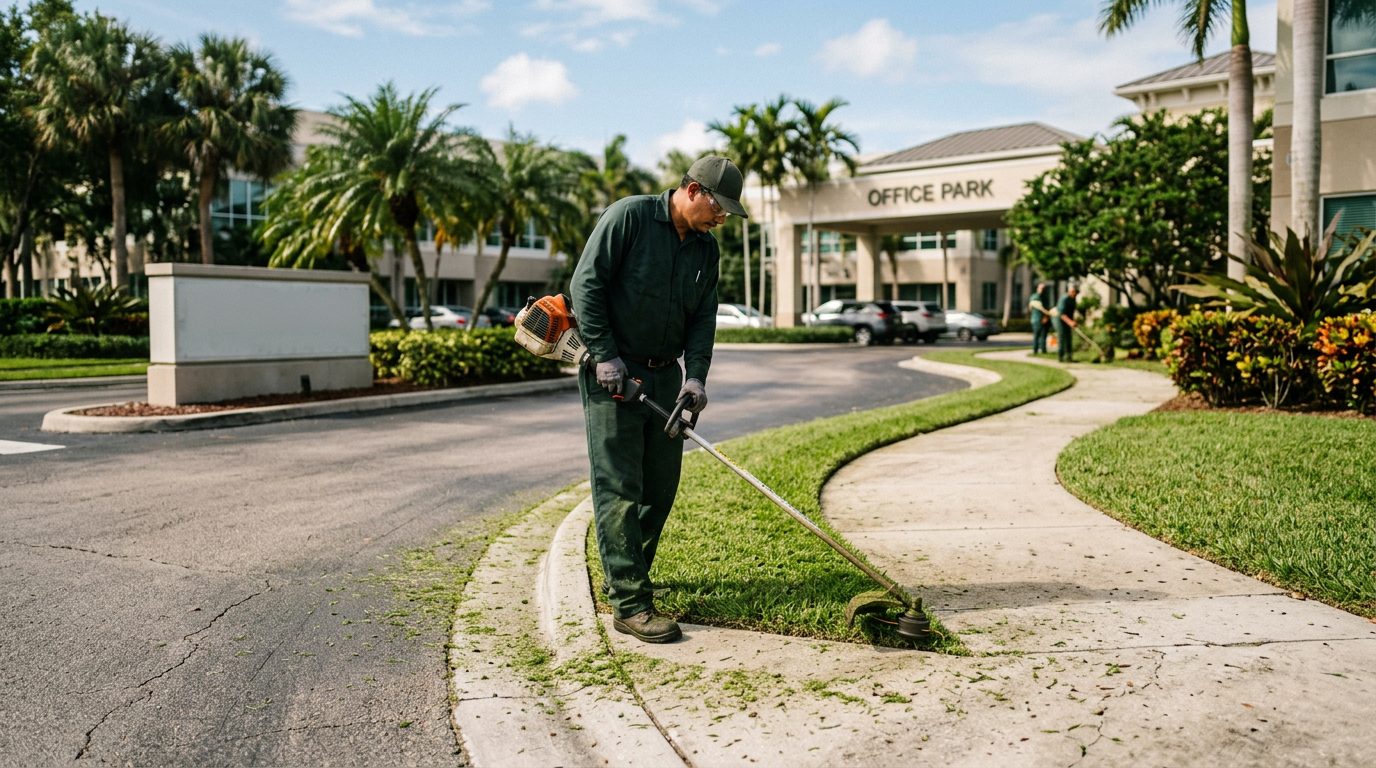
Brown that follows the irrigation zones points toward water. Brown in random patches or rings points toward disease. Brown near walks, parking edges and building walls points toward heat stress or runoff.
Whether the whole lawn is affected or only the shrubs changes the picture. Shrubs in one sun exposure often show stress that the lawn doesn’t. A lawn that browns evenly across every zone is a different problem than one zone that browns alone.
Narrowing the pattern first saves money. You avoid replacing products when a clogged sprinkler head is the real cause.
If brown strips are following your irrigation lines or your shrubs keep declining, our team can walk the site with you and help narrow the cause. Talk it through with our team — the first consultation is free, confidential, and carries no obligation.
Irrigation Problems That Starve Commercial Turf
Irrigation problems usually show up as dry zones that match the sprinkler layout. Check each zone before you look anywhere else.
Clogged, misaligned or broken heads leave dry spots. Mixing head types inside one zone can also give uneven coverage. Look at each head’s spray pattern, not just whether it turns on.
Overwatering hurts too. Long run times and short, frequent cycles keep roots near the surface, where they dry out and disease can take hold. Florida’s Department of Environmental Protection water conservation guidance covers landscape irrigation restrictions and water conservation practices.
A failed controller or rain sensor can keep the system running through the rainy season. That soaks turf that doesn’t need the water.
To test a zone, set catch cups across the area, run the cycle, and compare the amount in each cup. Uneven readings show exactly where coverage is missing.
Soil Conditions Common in South Florida Commercial Sites
Soil decides how long water stays where roots can reach it. Poor soil often turns a small problem into brown turf.
Sandy soils drain fast. Water passes through before roots can absorb it, and the soil holds few nutrients. Turf can dry out between cycles even when the schedule looks right.
Compaction is common on commercial grounds. Foot traffic, dumpsters, delivery trucks and maintenance equipment press the soil down. Roots struggle to get air and water through packed ground.
Thatch is a layer of dead grass and roots that builds up at the surface. It blocks water and air from reaching the root zone.
In parts of the region, limestone-influenced, alkaline soil can lock up nutrients. The turf can be fed and still look deficient. A soil test confirms the chemistry, so you aren’t guessing.
Fertilizer Timing and Rate Mistakes That Cause Browning
Too much fertilizer, or feeding dry turf, can burn grass and turn it brown. Timing and rate are the two things to check first.
Fertilizer burn happens when applications are too heavy or too concentrated. Feeding turf that is already dry makes it worse. The damage often follows the spreader pattern, in strips.
Under-feeding causes a different problem. Turf that lacks nitrogen or other nutrients thins and yellows. A product that doesn’t match the turf type won’t fix it.
Heavy summer rain can wash nutrients out of the root zone.
Records matter. Application logs with dates, rates and products show what was done. That helps when a browning complaint or a contract review comes up.
Pests and Disease: Brown Patch, Chinch Bugs and Grubs
Pests and disease often look like irrigation or fertilizer damage, so the exact pattern matters.
Brown patch shows up in warm, humid weather as circular or irregular brown rings. Excess nitrogen and wet leaf blades help it spread. Heavy feeding can make the problem worse.
Chinch bugs and sod webworms cause dead areas that expand over time, often along sunny edges. Grubs lift turf in sections. A tug test helps: if the turf pulls up like a loose rug, look closely for grubs underneath.
Some of these problems look like dry spots from sprinklers. Check the edges, the blades and the soil before you decide. The Florida-Friendly Landscaping Program FAQs cover turfgrass selection and care, which helps keep turf healthy and less open to pests.
Next Steps for a Browning Commercial Landscape
Start by documenting the pattern, then get a site assessment before you change schedules or products.
Heat and sun add stress. Reflected heat from pavement and building walls can push weak turf over the edge. Shrubs beside walls often show it first.
Gather dated photos of the brown areas. Record irrigation run times for each zone. Log every fertilizer application with its rate and date. This record narrows the cause faster on site. The UF/IFAS Green Industries Best Management Practices program is a state-recognized training program covering fertilizing, irrigation and water quality for landscape professionals.
Why are only the shrubs by my building turning brown?
Shrubs near walls often get reflected heat and extra sun. Check irrigation coverage on that side first.
Can fertilizer alone turn commercial grass brown?
Yes. Heavy or concentrated applications, or feeding dry turf, can burn it.
Who can apply fertilizer to commercial turf in Florida?
If brown strips follow your irrigation lines or your shrubs keep declining, contact our team to set up a site assessment. La consulta inicial es gratuita, confidencial y sin compromiso de continuar.
Common Reasons Commercial Turf and Plantings Turn Brown
Reflected Heat Near Walls
Shrubs and grass beside buildings, pavement, and reflective surfaces often take on extra heat and sun, which stresses them faster than open areas.
Gaps in Irrigation Coverage
Sprinkler heads that are blocked, misaligned, or spaced too far apart can leave one side of a property dry while the rest stays green.
Concentrated or Poorly Timed Fertilizer
Heavy applications, or feeding turf that is already dry, can burn grass and leave yellow or brown patches behind.
Drought Stress on Dry Turf
Grass that is not getting consistent moisture can go dormant or die back, especially in high-traffic areas and along exposed edges.
What Our Team Reviews on Your Property
Irrigation Coverage
We check each zone for dry spots, broken heads, and areas that receive too little or too much water.
Site Conditions
We look at sun exposure, heat reflection from walls and pavement, and plant placement to find patterns.
Careful Fertilizer Practices
We focus on proper rates and timing so your turf is not stressed by applications that are too heavy or too early.
Ongoing Maintenance
Regular landscape maintenance helps catch early browning before it spreads across a commercial property.
Warning: Do Not Feed Dry Turf
Applying fertilizer to grass that is already drought-stressed can burn it. Concentrated products and heavy rates make this worse. Check moisture and timing first.