
Pressure Washing · Miami Condos
Clean Your Condo's Stucco Without Damaging It
Pressure washing can lift paint, scar the finish, and open cracks when the pressure or technique is wrong. Here is how to tell the difference, and how we approach stucco in Miami-Dade, Broward, and Palm Beach counties.
Working With Us
Free
First consultation, confidential and with no obligation
South Florida
Miami-Dade, Broward, and Palm Beach counties
By Ryan Jurney · Published November 4, 2026
The Short Answer: Yes, If the Method or Pressure Is Wrong
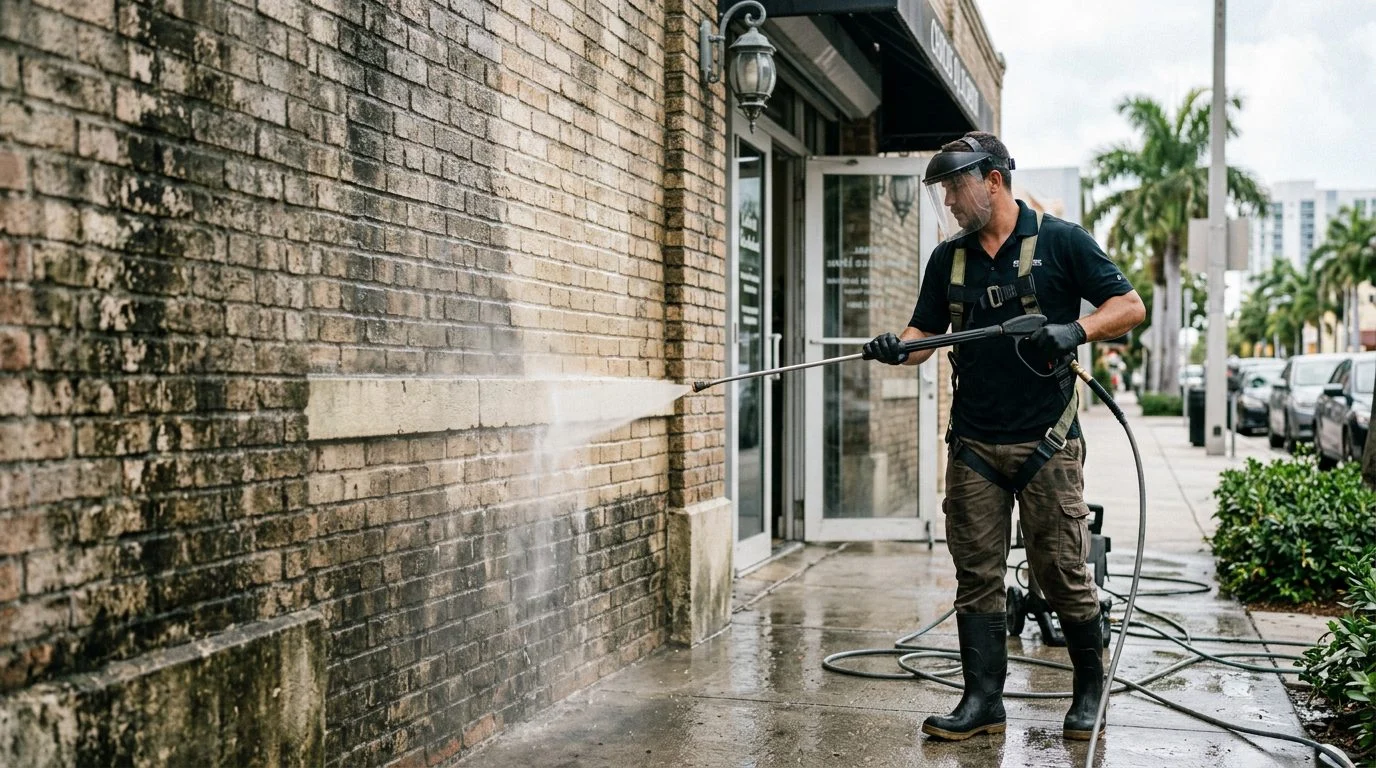
Yes, pressure washing can damage stucco and painted walls on a condo building. Damage happens when the pressure, nozzle, distance, or technique does not fit the surface. The question most boards ask first is simple: can pressure washing damage stucco on a condo in Miami? The answer depends on how the work is done and what condition the wall is in.
It is not a fixed rule that every pressure wash harms every building. A sound, well-bonded stucco wall cleaned with a careful setup behaves very differently from an old, cracked wall hit with the same spray.
Many South Florida condos have stucco or painted concrete exteriors, and balconies often have painted rails. Each surface reacts to spray force in its own way.
Board members do not need to be cleaning professionals to judge a proposal. They should ask how the method is set up, how it will be tested, and how the work will be watched. For the broader planning side of condo exterior cleaning, read our pressure washing guide for Miami-Dade condos. This page stays focused on the damage question.
If your board is deciding how to clean cracked stucco or peeling paint, reach out and we'll walk through your building's walls with you. Talk it through with our team — the first consultation is free, confidential, and carries no obligation.
What High Pressure Does to Stucco
High pressure can erode stucco’s surface and the paint or sealer on top of it. Stucco is a porous, cement-based finish. Concentrated water force can wear away its texture and coating, especially where the finish is thin or already worn.
Forceful spray can also push water into hairline cracks and joints. Moisture that gets behind the surface can linger there and add to damage that is already starting.
Aggressive passes can strip the finish unevenly. The result is patchy or lighter areas that show from the street, and those marks are hard to hide.
Older stucco deserves extra care. A wall that was patched or painted years ago may react differently from the original surface. A patch can be weaker than the wall around it, and fresh spray can expose the difference.
A common mistake is judging the wall only by how it looks from the ground. Crack edges, soft spots, and areas that sound hollow when tapped tell you more about the surface than a quick glance does.
What Pressure Washing Does to Painted Walls
High-pressure spray can lift paint that is already loose or poorly bonded to the wall. Paint that is chalking, blistering, or peeling is the most at risk.
Damage often starts at edges and seams. Paint can chip around window and door trim, corners, and joints, because adhesion is weakest there.
Uneven pressure can leave visible streaks, halos, or gloss differences across a large painted facade. These marks are easy to spot on a tall building, and they can make a clean wall look worn.
Paint damage is hard to reverse after the fact. Repainting a full facade is a large job with its own scheduling and cost. That is why the test step matters before full work begins.
Delicate areas need a gentler approach than the main wall. Trim, painted balcony rails, and older paint all call for lower force and a closer, steadier distance. The main facade can take a stronger setting only if the test shows it is safe.
Warning Signs to Check Before Any Work Starts
Look for damage before any spray reaches the wall. A walk-through is the simplest protection a board has.
Note existing hairline cracks, loose or hollow-sounding stucco, and areas where the finish is already flaking. Mark paint that is blistering, peeling, or chalking. These spots are more vulnerable to spray force.
Flag walls hit by recent storms too. A weakened finish needs a closer look before cleaning. For one storm-related case, see our guide to garage cleaning after a storm in Miami.
Document conditions with dated photos. Shoot each elevation and label each photo with its date and wall location. That gives the board a baseline if questions come up later.
Plan for runoff as well. Wet walkways and pool decks can become slippery. Ask how the crew will manage water on walking surfaces.
Not sure what your next step is?
Talk it through with our team — the first consultation is free, confidential, and carries no obligation.
Lower-Pressure and Soft-Wash Methods for Stucco and Paint
Soft washing is commonly used on stucco and painted walls because it limits force on the surface. It uses low pressure and a cleaning solution to lift dirt, mildew, and grime.
Stucco can be pressure washed when the pressure, nozzle, and distance are set for that surface. Many condo facades are better served by a low-pressure method with a suitable cleaning solution. The right setup depends on the wall’s condition, so it should be set after the walk-through, not before.
Wide-angle nozzles, a steady distance from the wall, and even passes reduce the risk of gouging and streaking. Crews should keep moving rather than holding the spray on one spot.
Cleaning solutions need the same care as water pressure. Ask for the product’s safety data sheet before the work starts.
Questions to Ask Before the Board Approves a Method
Ask how pressure and nozzle choice differ for stucco and for painted surfaces. A clear answer shows whether the crew understands the building’s surfaces.
Request a test patch on an inconspicuous wall section. Review the result with the board before the full building is cleaned.
Ask how residents, balconies, and parked vehicles will be protected from overspray. Ask how runoff will be controlled and how the schedule will be coordinated with residents.
Read the written scope closely, not only the total price. The scope should name the method, the surfaces it covers, and the protection steps. A low number paired with a vague method leaves the board carrying the risk.
Ask who will be on site and who will watch the work. Board members should know whom to contact during the job if a wall starts to change.
Have questions about what happened?
Ask our team directly. The first conversation is free, confidential, and there is no obligation to continue.
Talk Through Your Building’s Stucco and Paint Before You Approve Work
Yes, a board can talk through its building’s surfaces before approving any cleaning method. Start with the walk-through notes and the dated photos.
Picture a common case: hairline cracks on the upper floors, peeling paint near the pool deck, and storm-stressed walls on one side. The board faces a real choice about which method fits each area, and one setting may not fit all of them.
Our first consultation is free, confidential, and carries no obligation to continue. Our team can review your building’s stucco and paint conditions, then outline a proposed method with its test and protection steps. The same team also handles floor care, day porter, and landscape work, so one plan can cover the whole property.
You can contact our office at any time to start that conversation. If your board is deciding how to clean cracked stucco or peeling paint, reach out and we’ll walk through your building’s walls with you.
Frequently Asked Questions
Can pressure washing damage stucco on a condo?
Yes, it can, when the pressure, nozzle, or distance does not fit the surface. A test patch helps show the right setting first.
Does pressure washing strip paint from a condo building?
It can lift paint that is loose, chalking, or poorly bonded. Edges and trim are the most common trouble spots.
What is soft washing?
Soft washing uses low pressure and a cleaning solution to lift dirt and mildew while limiting force on the surface.
Should a board test a cleaning method first?
Yes, a test patch on an inconspicuous wall shows the result before full work begins.
What We Check Before Washing Stucco
Surface Condition
We look for hairline cracks, loose or chalking paint, soft spots, and areas where the finish is already weathered before any water touches the wall.
Pressure and Nozzle
A narrow nozzle held close to the wall can etch or strip stucco. We adjust pressure and spray pattern to suit the surface, using a wider fan and lower pressure where needed.
Test Patch First
A small test area in an inconspicuous spot shows how the stucco and paint respond. We use the results to set the method for the rest of the building.
Edges, Trim, and Joints
Window frames, caulk lines, balcony edges, and paint trim are the most common trouble spots. We work these areas with extra care and slower passes.
A Common Mistake to Avoid
Using a high-pressure rotary tip or holding a wand close to the wall to remove stains quickly is one of the most frequent causes of stucco damage. Do not try to blast off mildew or grime at full strength.