
Pressure Washing | South Florida
Clean Your Vinyl Siding Without Damaging It
Gentle technique protects the finish, and the right approach depends on your home's height, panel condition and surroundings.
By Ryan Jurney · Published November 18, 2026
You want the siding clean, but you don’t want to crack a panel or force water behind it. That worry is common when the building belongs to a condo association or a client, not to you.
Exteriors clad in vinyl are a common case where the pressure setting matters: they need a lower, controlled setting rather than the high settings used on concrete.
How much PSI to clean vinyl siding? The short answer
Vinyl siding needs low, controlled pressure, and a stronger machine is not the goal. What matters is a gentle, steady spray that cleans without forcing water into the wall. Think of the goal as removing grime, not stripping the finish off the siding.
Pressure is measured in PSI, but no single number works for every wall. The right setting depends on the panel’s condition, the age of the siding and the cleaning method you use. Old, brittle, or already-damaged panels need less force than sound, newer ones.
Before you start, test a small hidden area. Watch the surface and the seams as you work. If the panel gouges, streaks, goes glossy or starts to lift, the setting is too strong.
For the broader service picture, read our pressure washing services guide for Miami-Dade condos.
If you manage a building and its siding is out of reach, our team can talk the job through with you, so you don't have to decide alone. Talk it through with our team — the first consultation is free, confidential, and carries no obligation.
What PSI and GPM mean for siding
PSI measures how hard the spray hits the surface. It stands for pounds per square inch. A higher number means more force on one small spot.
GPM measures water flow in gallons per minute. More flow carries more water to the wall and rinses faster. It works with PSI to set how much cleaning power the machine delivers.
Because the two work together, a high-PSI machine with high GPM can deliver more total force than a low-PSI unit with low flow. So don’t judge a machine by one number. Vinyl doesn’t react to the machine’s label. It reacts to the force that actually reaches the panel.
Look at the nozzle, the distance and the panel condition too. Those factors change what the spray does to vinyl.
Why vinyl siding needs gentler pressure than most surfaces
Vinyl is a plastic panel that flexes. When force hits one spot, it can crack, warp or pull loose.
Wood decks and fences can usually take more force than vinyl, and so can concrete. Vinyl is thinner and moves under load, so the same spray that is fine on a deck can mark siding.
The weak points are the seams and nail holes. Water forced into a seam can get behind the panel and stay there. That trapped water can loosen the panel’s hold on the wall.
Watch for common signs of too much pressure. Look for gouges or scuffs, streaks, a stripped or glossy look where the finish has worn, and panels that lift at the edges. If you see any of these, drop the pressure and rethink the approach.
Is 1800 PSI or 4000 PSI too much for vinyl siding?
Both numbers can be too much for vinyl, depending on how the machine is used. A rating is the most the machine can produce, not the setting you should aim at the siding.
A 1,800 PSI unit with a narrow tip can damage vinyl. A 4,000 PSI unit is a lot of force for siding. Control matters more than the label.
A lower setting with a wide fan tip and a siding-safe soap is usually the safer path. Use the same care at any rating. If you’re working from a machine’s box or a rating chart, remember it describes the machine, not your wall.
Nozzle, distance, and technique that protect vinyl
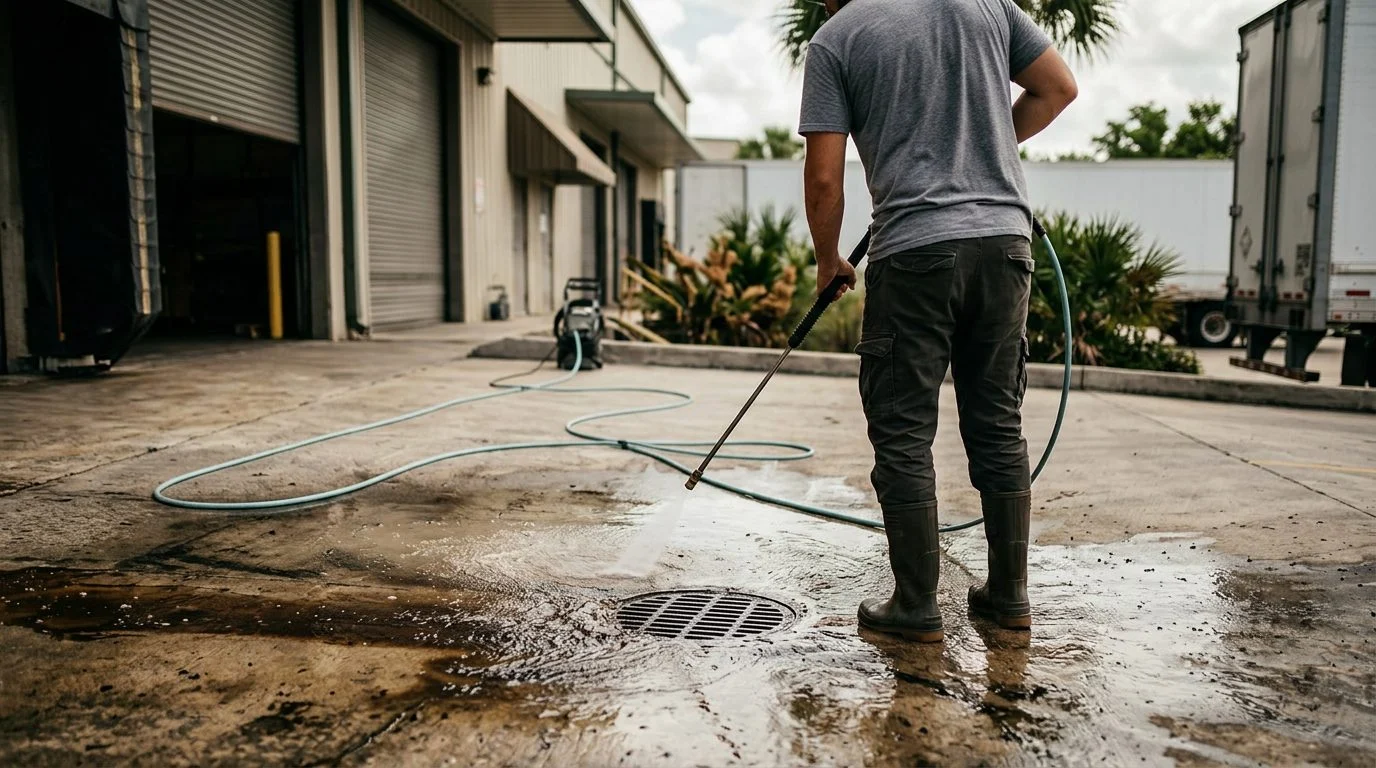
Use a wide fan tip and keep the spray moving. Avoid zero-degree and other narrow tips on vinyl, since a concentrated jet cuts into the panel.
Keep the wand far enough from the wall that the spray cleans without blasting. Start farther back and move closer only if the grime needs it. Move in steady, overlapping passes. Never hold the spray in one spot.
Work from the bottom of the wall upward. Rinse water then runs down and off the panel instead of being pushed up behind it, and streaks are easier to avoid.
Use a soap or cleaning solution made for siding, and follow its label. Read them before you mix anything.
Rinse thoroughly so no soap dries on the surface. Dried soap can leave a film.
Timing and weather when cleaning vinyl siding
Shaded or cooler hours usually work better than direct, hot sun. Sun heats the panel and dries soap fast, which can leave residue.
Rinse before the soap dries. Early or shaded work gives you more time to rinse each section.
Rain and storms add risk. Wet surfaces and water driven toward the wall make it harder to control where the water goes. Check the forecast before you start and wait for dry conditions.
Wet ground also raises a safety issue. Treat runoff on walkways the same way. Plan the job around the building’s entry points and foot traffic so people aren’t walking on slick ground.
Not sure what your next step is?
Talk it through with our team — the first consultation is free, confidential, and carries no obligation.
When a professional crew is the better fit
A professional crew makes sense when the siding is out of reach, the building is tall, or the panels already show damage.
Many readers are in a specific spot. They manage a multi-story condo where the siding sits high up. Or they look after a building for someone else. Or an earlier attempt left streaks, lifted panels or uneven color.
Tall buildings, mixed siding materials and panels with existing damage call for careful setup. The job means managing access, nozzle choice, distance and water flow on every wall, not just one.
Our pressure washing services cover siding and building exteriors in South Florida, including Miami-Dade, Broward and Palm Beach counties.
Can I pressure wash vinyl siding myself?
Yes, if you use a low, controlled setting, a wide fan tip and a siding soap, and you test a hidden area first. A crew is the better fit when the wall is high or the panels are already damaged.
Can you pressure wash vinyl siding in the rain?
Rain makes control and water flow harder to manage, so wait for dry conditions. Check the forecast before you schedule the work.
Talk with our team about your siding
If you’re responsible for a building’s siding, you don’t have to sort out the right pressure on your own.
You may be planning this for a building you manage, or wondering whether the job is safe to do yourself. Our team can look at the siding with you and talk through the setup. We’ll help you decide what the siding needs before any spray goes on it. Reach us through our contact form, by phone, or to request a quote for a siding assessment.
La consulta inicial es gratuita, confidencial y sin compromiso de continuar. (The initial consultation is free, confidential, and carries no obligation to continue.)
Why Work With Gator Protection
Careful Vinyl Siding Cleaning
Our crews focus on low, controlled pressure and gentle cleaning methods that help protect your siding's finish.
Dependable Scheduling
We plan pressure washing around your property's needs and the local weather.
Support Staff Backing Every Job
Our assistants and office staff help keep communication clear from the first call to the final walkthrough.
Serving South Florida
We provide services across Miami-Dade County, Broward County, Palm Beach County, South Beach, Coral Gables and Brickell.
Before You Start
High pressure and tight nozzle angles can crack, warp or strip vinyl siding. If your walls are tall, the panels are already damaged or you are unsure of the right setting, let our team handle it.
Key Habits for Safe Vinyl Siding Cleaning
Start Low and Test First
Begin on the gentlest setting and test a hidden area before cleaning the full wall.
Use a Wide Fan Tip
Keep the nozzle moving and maintain a safe distance to avoid concentrated streaks or damage.
Choose Dry Conditions
Clean on a dry day so you can control water flow and spot problems as you work.
Know When to Call a Crew
Tall buildings, damaged panels and stubborn stains call for trained hands and the right equipment.