
Pressure Washing Services | Miami-Dade County
Clean Condo Exteriors, Scheduled Around Your Building
Gator Protection, Inc. pressure washes shared walkways, stairwells, entry walks, pool decks and parking garage slabs for condominium associations across Miami-Dade County.
By Ryan Jurney · Published November 3, 2026
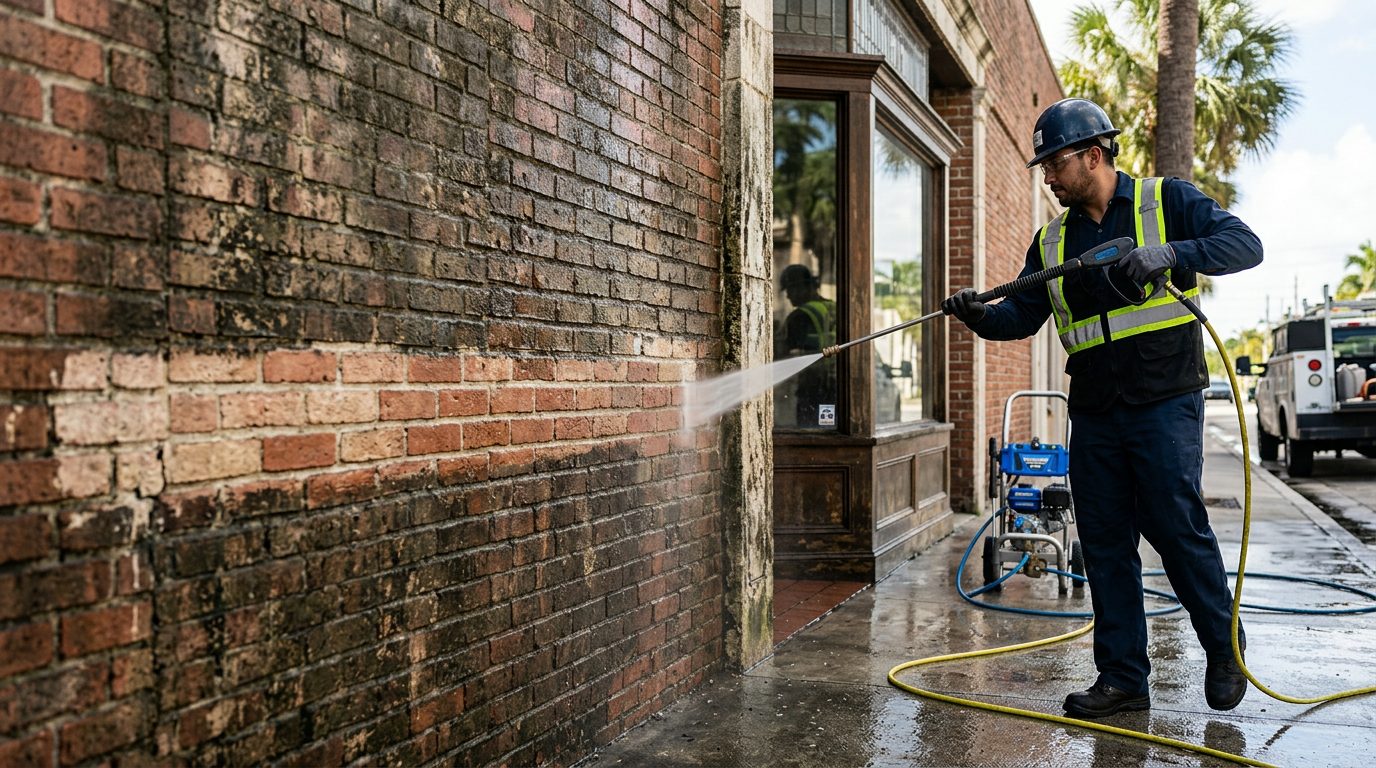
Pressure washing services for condos in Miami-Dade cover the shared exterior surfaces residents see and walk on every day. The scope is set by the property’s surfaces, how people reach them, and what the board or management wants done. It’s confirmed during a walk-through.
This guide covers what’s usually included, how the work fits around residents, and what to check before you approve a job. Gator Protection, Inc. provides pressure washing for condominiums, apartment communities and gated properties in South Florida. The company also offers janitorial, day porter, floor care and landscape services.
What Pressure Washing Covers at Miami-Dade Condos and Apartments
Pressure washing at a multi-unit property is a scheduled cleaning of shared exterior surfaces, not a one-time spot clean. It targets the areas where grime, film and growth build up between visits. A one-time project might cover a single entry walk. A recurring plan covers the grounds on a set cycle.
Scope for pressure washing services for condos Miami-Dade depends on three things. Those are the surfaces the property has, how people get to them, and what the board or management wants to achieve. Two buildings of the same size can need very different work. A property with heavy foot traffic and a shaded courtyard is a different job from one with open walkways.
Florida law gives a useful starting point for sorting shared areas. It defines common elements as “the portions of the condominium property not included in the units” (Florida Statutes § 718.103). That split helps boards decide which exterior areas belong in the shared scope.
Gator Protection’s pressure washing work is built for condos, apartment communities and gated properties across South Florida. A separate guide explains why mildew returns between cleanings. The walk-through is where the crew sees the surfaces, traffic and condition before anything is quoted.
Not sure what your next step is?
Talk it through with our team — the first consultation is free, confidential, and carries no obligation.
Building Exteriors, Walkways and Common Areas
The most common exterior surfaces at a condo are entry walks, stairwells, balconies, building facades and common-area sidewalks. These surfaces take the most foot traffic, and they show dirt first. Residents notice them every day.
Humidity and shade leave a film on exterior walkways in South Florida. That film can turn into surface growth that builds up quickly. Crews don’t use one setting everywhere. They match equipment, nozzle and pressure to each surface, so the cleaning removes buildup without damaging the material. A concrete walk and a painted wall call for different approaches.
If the property is a rental apartment community, Florida law sets a baseline for shared areas. A landlord of a dwelling unit other than a single-family home or duplex must make reasonable provisions for the clean and safe condition of common areas, unless the parties agree otherwise in writing (Florida Statutes § 83.51). That gives management a clear reason to keep shared walkways and stairwells clean.
Pool Decks and Gated Community Amenities
Pool decks, cabana areas and clubhouse walkways are usually scoped as their own zones. They get wet, they get heavy use, and each needs a plan that fits its surface.
Deck surfaces raise a safety question. Keeping floors clean and dry is part of our floor care maintenance work. That goal makes a sensible standard for any wet deck. The walk-through should note which areas stay damp or slick.
Amenity cleaning also has to fit around resident use. The plan sets hours for each zone. Pool areas can be cleaned at times when fewer people are using them, and the rest of the property stays open. Gate access and sequencing are covered in a later section.
Parking Garages and Post-Storm Cleanup
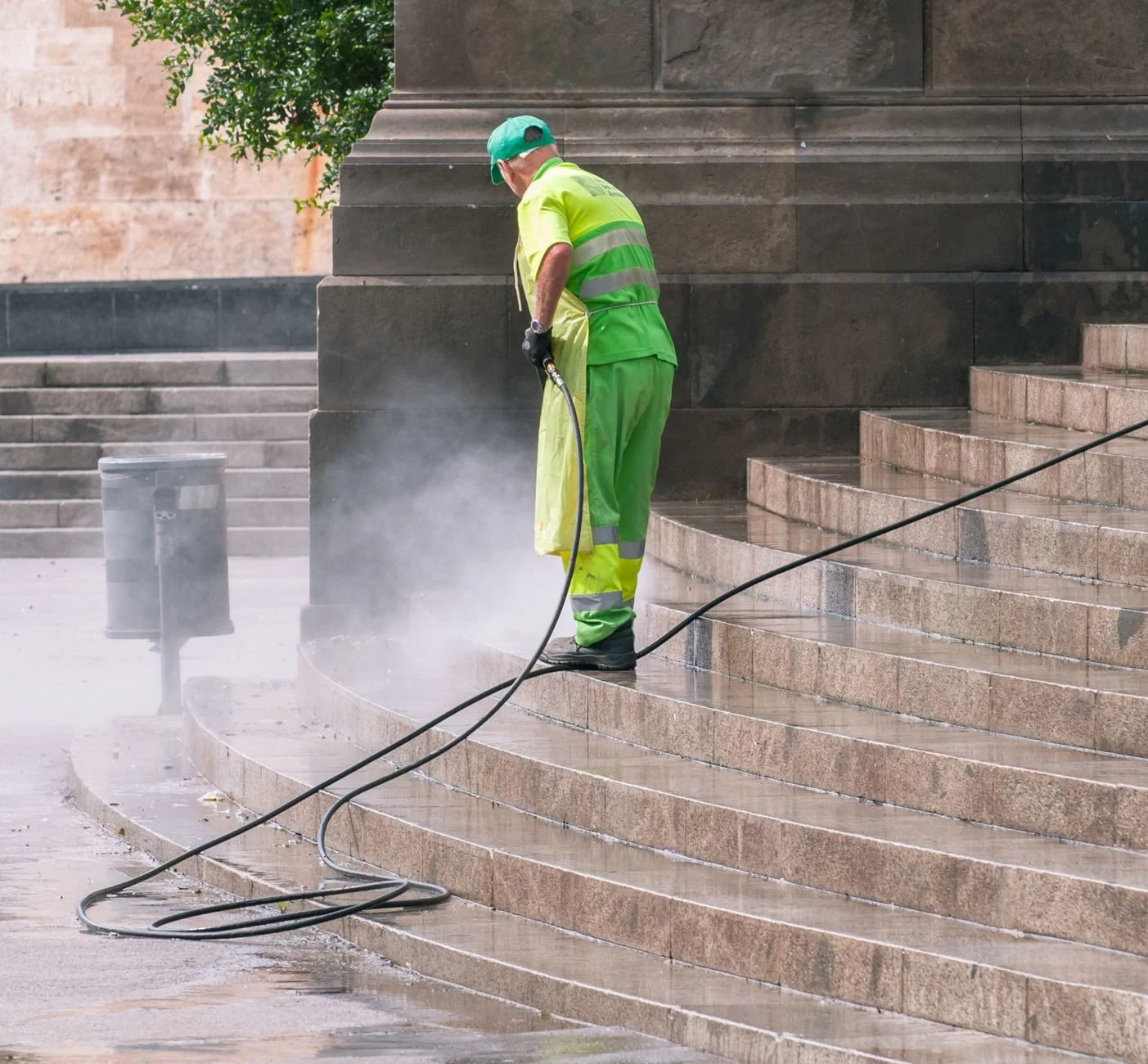
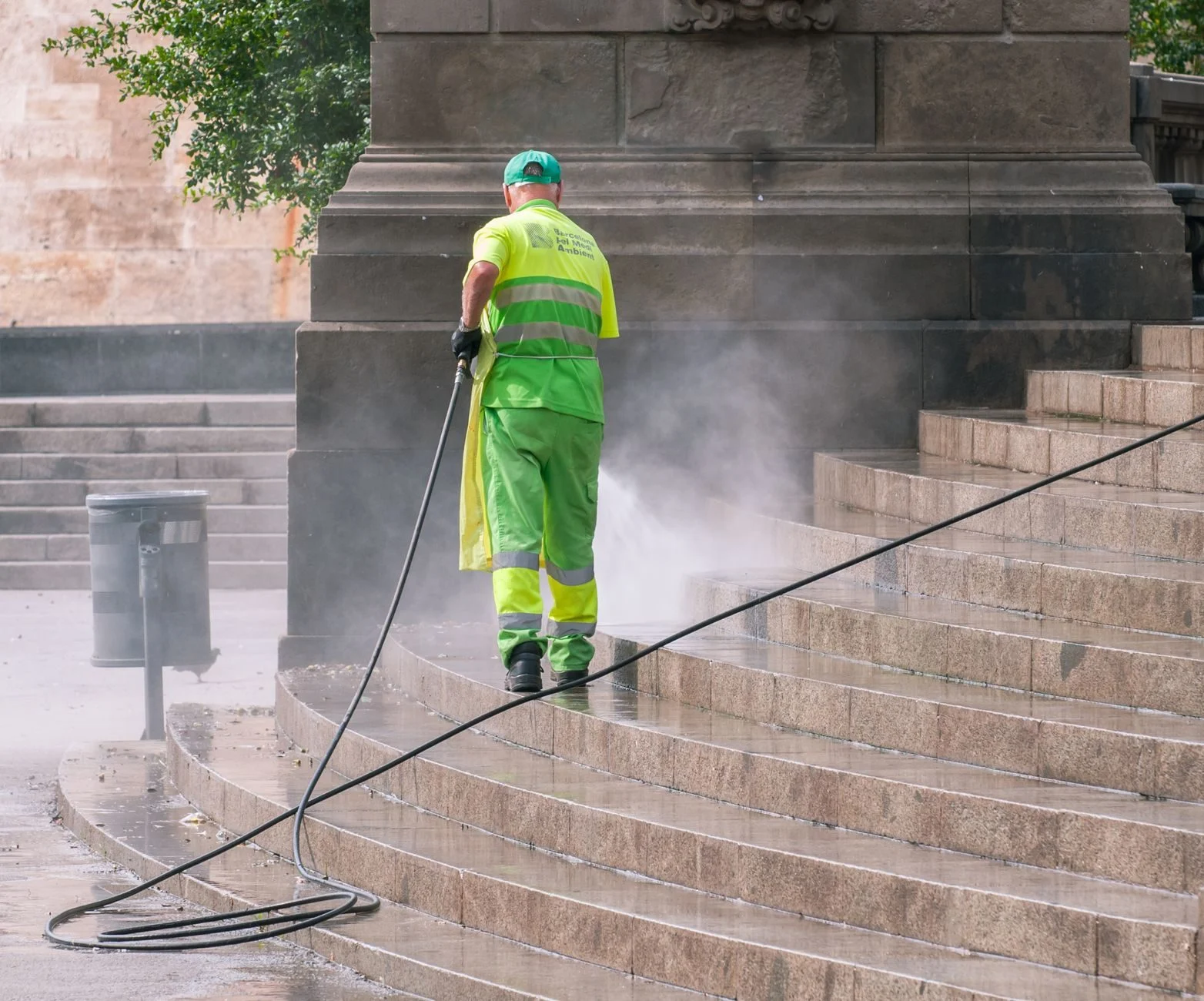
Parking garage pressure washing covers ramps, drive lanes, ground-level slabs and entry areas. These surfaces collect oil, grit and debris from daily traffic. Wet ramps and drive lanes also raise slip concerns, so the walk-through should flag slick spots.
Heavy weather adds another layer. After a storm, debris, sediment and tracked-in material can pile up on garage surfaces quickly. The walk-through shows what’s on the surfaces right now. Crews scope the cleaning from that actual condition, not from a fixed package. A separate guide covers after-storm garage cleanup in more detail.
Dumpster Pads and Trash Rooms at Multi-Unit Properties
Dumpster pads and trash room floors are cleaned to keep the service area orderly for residents and vendors. These spots see daily use, so grime and staining show quickly. A clean pad also makes it easier for residents to see what’s expected of them at the bins.
Pressure washing a pad removes built-up residue from the slab and drain areas. Trash rooms get the same method-matched approach, covering floors, reachable walls and drains. Good planning also looks at access. The walk-through should note how the truck reaches the pad and how bins get moved during the work.
Have questions about what happened?
Ask our team directly. The first conversation is free, confidential, and there is no obligation to continue.
Stucco and Painted Surfaces: Why Method Matters
Stucco and painted masonry need a cleaning method matched to the material and its condition. Excess pressure can strip or etch an aging surface. Crews adjust pressure, nozzle choice and cleaning solution for each surface and its condition.
A separate guide covers stucco considerations in more depth.
Why Mildew Can Return Between Cleanings
Mildew comes back between cleanings when moisture, shade and humidity stay on exterior surfaces. South Florida’s warm, humid climate gives growth the conditions it needs. Shaded walls and courtyards hold moisture longer than sunny ones.
Poor drainage adds to the problem. When water sits on walkways and slabs, growth has time to settle in. How quickly a surface shows growth again depends on those conditions and on the time since its last cleaning. That’s why the walk-through notes shade, drainage and sun exposure. A separate guide explains mildew returns after pressure washing in full.
How Often Multi-Unit Properties Schedule Pressure Washing
Scheduling frequency depends on surface type, exposure, foot traffic and the property’s goals. A property with heavy traffic and shaded surfaces may need cleaning sooner than one with open walkways that see light use. The right frequency is a judgment made on site, not a fixed number.
A common plan pairs a recurring cycle with one-time projects. The recurring work keeps common areas maintained. A project addresses a specific problem, such as a garage after a storm. Boards and managers can plan the one-time work alongside the routine cycle.
A written schedule helps. It should list each zone, the cleaning cycle and the expected timing. That way management can plan around the work and tell residents what to expect.
Scheduling Around Residents and Gated Access
Crews plan work hours, zones and sequencing to limit disruption to residents. Work moves zone by zone, so entries and parking stay open where possible. Sequencing matters most at gated properties, where a blocked drive lane can affect the whole building.
Gated communities need coordination on gate codes, crew and vehicle access, parking, and notices to residents. The walk-through should settle these details before work starts. Management or the board is the main contact for these decisions.
Notice rules matter when a board funds work through a special assessment. Written notice of any meeting that will consider a regular or special assessment must specifically state that assessments will be considered and give the estimated cost and description of their purposes. Within 45 days after receiving the structural integrity reserve study, the association must distribute a copy of the study to each unit owner or deliver a notice that it is available for inspection and copying upon written request (Florida Statutes § 718.112).
Want to know where you stand?
Tell us what happened and our team will walk you through the options available to you, at no cost.
Who Pays and How the Free Walk-Through Quote Works
Who pays for exterior pressure washing can depend on the association documents and how the property is set up. Under Florida law, a unit owner is liable for all assessments that come due while he or she is the unit owner (Florida Statutes § 718.116). For a cost-responsibility question, see the separate guide on who pays for exterior pressure washing in a Florida condo.
Board records matter too. Bids for work must be kept for at least one year after receipt (Florida Statutes § 718.111). Under Florida Statutes § 718.111, the association must keep minutes of all meetings of the board of administration.
A clear written scope protects everyone. The Florida Supreme Court has said even an oral contract needs an offer, acceptance, consideration and sufficiently specified essential terms (St. Joe Corp. v. McIver).
At the walk-through, the crew reviews the surfaces, access, condition, timing and the scope to be quoted. Gator Protection offers a free first consultation that is confidential and carries no obligation to continue (consulta inicial gratuita, confidencial y sin compromiso). Gator Protection serves South Florida, including Miami-Dade, Broward and Palm Beach counties, with South Beach, Coral Gables and Brickell properties included.
Frequently asked questions
What does pressure washing services for condos Miami-Dade usually include?
Shared walkways, stairwells, entry walks, pool decks and parking garage slabs are common parts of a condo exterior scope. The walk-through confirms what goes into the quote.
What happens during a walk-through?
The crew reviews surfaces, access, condition, timing and the scope to be quoted. That gives the board or management a written basis for approval.
How often should a condo be pressure washed?
Frequency depends on surface type, exposure and traffic, and it’s set on site.
If your condo’s walkways, pool deck or parking garage show buildup, contact Gator Protection to request your free walk-through quote. We can walk the property with your board or management before anything is approved.
Why Condo Associations Work With Us
A Clear Scope Before Work Begins
We walk the property with your board or management contact to review surfaces, access, condition and timing, so the quote reflects exactly what will be cleaned.
Scheduling That Fits Residents
We plan work around resident routines, parking needs and building access so common areas stay usable during service.
Built for Miami-Dade Properties
We serve condominiums in Miami-Dade, Broward and Palm Beach counties, including South Beach, Brickell and Coral Gables.
Part of a Full Maintenance Program
Pressure washing can be coordinated with our day porter, floor care and landscape services for a consistent standard across the property.
Don't Let Buildup Set In
Algae, grime and oxidation on walkways and pool decks become harder to remove the longer they sit. Regular cleaning keeps surfaces safer for residents and easier to maintain.
Common Condo Areas We Pressure Wash
Walkways and Entry Walks
Sidewalks and entry paths that collect dirt, pollen and mildew from heavy foot traffic and sun exposure.
Stairwells and Exterior Steps
Stairs and landings that show wear and grime, especially in high-traffic buildings.
Pool Decks and Patios
Deck surfaces that gather algae and residue, cleaned with attention to resident safety.
Parking Garage Slabs
Concrete slabs and drive areas where oil, tire marks and road grime build up over time.