
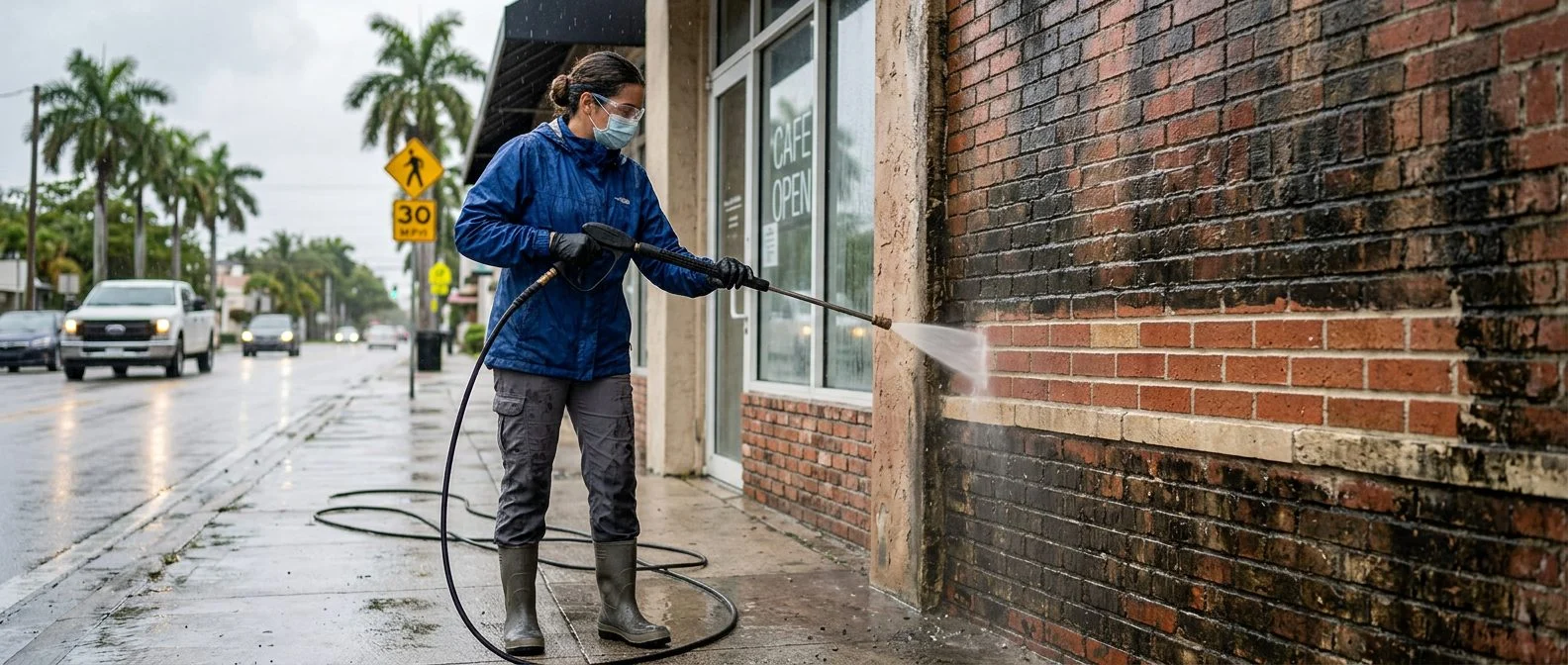
Pressure Washing | South Florida
Can You Pressure Wash During Rain? Here's When to Wait
South Florida's afternoon storms can throw off an outdoor cleaning schedule. Here is how to tell which weather is workable and which calls for a new date.
By Ryan Jurney · Published November 18, 2026
Your wash is on the calendar, and the forecast shows rain. Can you pressure wash during rain? Light, steady drizzle can often go ahead. Heavy rain and storms usually mean you should wait.
The right call depends on how hard it’s raining, what surface you’re cleaning, and how the wash is done. This guide walks through each factor for property managers and condo board members in Miami-Dade, Broward, and Palm Beach counties who need to decide on a job that’s already booked.
The short answer: light rain and heavy rain are different jobs
Light drizzle can sometimes go ahead, while heavy rain or active storms usually call for rescheduling. The difference matters because light rain adds little water to a surface that is already being rinsed. Heavy rain changes how the wash performs and how runoff moves.
Two things decide the call: the intensity of the rain and the surface itself. The method matters too. A low-pressure rinse on painted walls behaves differently from a high-pressure pass on pavers.
Exterior cleaning services can be applied to condo facades, balconies, and paver walkways. Think of this page as a companion to our main pressure washing services guide for Miami-Dade condos.
If a wash is already on your calendar while storms keep rolling through, our team can talk through the schedule with you. Talk it through with our team — the first consultation is free, confidential, and carries no obligation.
Which rain conditions are workable?
Light, steady rain is usually workable. Sudden downpours usually are not. Start with the rain pattern. Drizzle that falls steadily gives a crew a predictable window. Intermittent downpours don’t. A burst can rinse detergent off before it has worked, then pass and leave the surface half-cleaned. Sheet rain, where water falls in a continuous curtain, is a clear stop.
The surface’s starting condition matters too. A surface already wet from earlier rain holds water, so detergent sits diluted. A dry surface at the start of the job gives the crew more control over the result.
Wind is a separate problem. Gusts push spray and detergent onto windows, doors, and neighboring walls. That’s a damage risk even when the rain itself is light. Wind can end a job that the rain alone would allow.
Crew assessment on the day matters more than any general rule. Conditions can shift quickly in South Florida. The decision should rest on what’s on site at the time, not on the morning forecast alone.
How rain changes cleaning results
Rain weakens detergent and can leave streaks behind. Most cleaning solutions need time on the surface to loosen grime. That time is called dwell time. Heavy rain dilutes the solution and can wash it off before it has worked. The result is soil left behind that looks like a job that didn’t finish.
Streaking is the second problem. When rain lands on a freshly cleaned surface before it dries, residue dries unevenly. You get marks instead of a clean finish.
Runoff creates a third problem. Water running off a higher area carries loosened dirt down onto sections that were already cleaned. The lower sections can end up dirtier than before.
Surface type changes the picture. Painted stucco can show streaks. Pavers can hold dirt in their joints, and rain pushes that dirt around. Concrete can look uneven until it fully dries. Plan the finish with the surface in mind.
Can a pressure washer get wet?
Yes, the machine can get wet. Water just has to stay away from its electrical and fuel parts. Electric units are the main concern. Keep the unit, its cord, and its outlet off standing water and wet ground. Use an outlet with ground-fault protection. Keep cords and connectors dry before startup. A cord with a damaged jacket or a wet connector is a shock risk, so inspect it first.
Gas-powered units have different exposure concerns. Fuel, the engine, and the air intake should stay dry and covered during a shower. Water in the fuel system causes trouble later, so keep the machine out of pooled water even if it runs fine on the day.
One simple habit helps most. Set the machine, hoses, and cords on a raised, dry spot away from low areas where water collects. Move them if water starts to pool around the work area. The crew should recheck the setup whenever the weather shifts, not just at the start.
What safety checks matter most when it’s wet?
Wet conditions raise the risk of slips, falls, and electrical faults. Start with footing. Wet pavers, tile, walkways, and balcony surfaces can be slick, especially with detergent on them. Crew members need non-slip footwear and a stable place to stand.
Ladders and lifts need extra care. Soaked or soft ground can shift under a ladder’s feet, and elevated work in the rain adds risk. If a section can’t be reached safely from the ground, that section should wait.
Visibility drops in rain. Spray and mist make it harder to see the surface, and harder to see people or pets nearby. Keep the work area marked off and watch for anyone who walks into it.
Storms bring a different kind of risk. When lightning is near, stop outdoor work and move indoors. Don’t wait for the rain to stop before making that call.
Finally, check the electrical setup before each start. Look over cords, plugs, and connectors for damage, and confirm the outlet is dry.
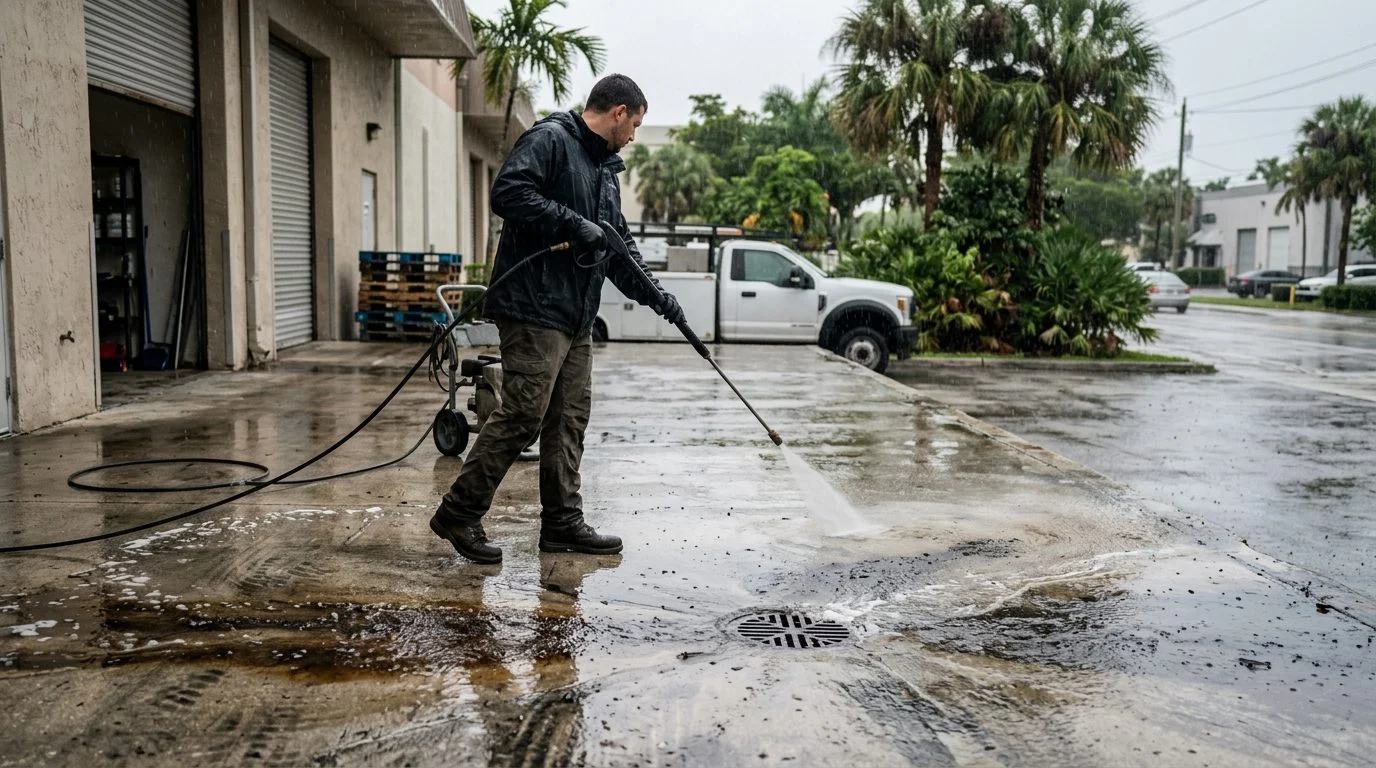
When should you postpone a pressure washing job?
Postpone when storms or lightning are active, or when water is standing on the work area. Those two conditions are the clearest reasons to wait. Other triggers include:
- Heavy rain that is expected to continue through the work window.
- Standing water that makes footing and equipment setup unsafe.
- A rain forecast soon after the wash that could leave streaks or rinse off fresh detergent.
- A surface that was just cleaned and then soaked by a storm before the rinse was complete.
Runoff is a reason to wait too. Wash water carries whatever it picks up. The South Florida Water Management District explains that runoff can carry pollutants from paved surfaces and properties. It also notes that polluted runoff entering storm drains is discharged untreated into connected water bodies. A wash during a heavy storm sends that water straight toward the drains.
Whether a particular job needs coverage depends on the facts. What’s clear is that washing during a downpour adds to the load.
Not sure what your next step is?
Talk it through with our team — the first consultation is free, confidential, and carries no obligation.
How long do surfaces take to dry after rain?
Surfaces dry at their own pace. That pace depends on the material, the sun, the wind, and the humidity. Humid air can slow drying in South Florida, even on a sunny day.
Open pavers in direct sun dry faster than shaded areas. Balcony undersides and enclosed terraces often stay damp longer, since they get less sun and less airflow. Don’t judge dryness by the top surface alone. Check joints, corners, and shaded edges.
Drying matters most before any coating goes on. Sealers and paint need a dry surface to bond well. Applying a coating over moisture can interfere with adhesion, and the problem may not show right away. Schedule sealing or painting only after the surface has been checked and is dry.
Planning pressure washing around South Florida storm season
Build a rain plan into every wash. Afternoon storms are a regular part of the season across South Florida, whether the building is in Miami-Dade, Broward, or Palm Beach County. The planning question is simple: what happens if the forecast turns?
For condo exteriors, a good plan sets a backup date inside the same window. Sequence the work so the most rain-sensitive surfaces are cleaned when conditions are steady. Hold the work that can wait. On balconies and terraces, order the tasks so railings, ceilings, and enclosed areas are not left wet and then sealed.
Paver walkways in gated communities, including those in Coral Gables, often have many small areas. Each one may need its own weather check. Buildings in Brickell and South Beach can present similar tight spaces, often with people passing close by.
A rain contingency keeps the job on track. Pick a backup date, agree on the decision point with the property manager, and make the call on site. That way the work window survives a single passing cloud.
Frequently asked questions about pressure washing in the rain
Can you pressure wash during light rain?
Often, yes. Light, steady drizzle can be workable when the crew checks conditions first. Heavy rain usually means rescheduling.
Does rain after a wash ruin the results?
It can. Rain that lands before a freshly cleaned surface dries can cause streaks or rinse off fresh detergent.
Is it safe to use an electric pressure washer near rain?
Only with dry connections, ground-fault protection, and cords kept off standing water. Inspect the cord and outlet before every start.
How do I know when to reschedule?
Reschedule for lightning, heavy or sustained rain, standing water on the work area, or a storm forecast soon after the wash.
If a wash is already booked while storms keep rolling through, our team can talk through the schedule with you. Reach out through the contact form or by phone. The first consultation is free, confidential, and carries no obligation to continue.
Signs It's Time to Reschedule
Heavy or steady downpours
Rain that puts standing water on the surface pushes detergent off too fast and makes the rinse less effective.
Lightning or thunder nearby
Any storm close enough to hear is a safety issue for the crew and equipment. Pause the work until the sky clears.
Rain forecast soon after the wash
A surface that gets wet before it has dried from the cleaning can streak, spot, or lose the finish you paid for.
Wind-blown debris and spray
Strong gusts can carry detergent onto plants, vehicles, and walkways, and make it hard to control the spray pattern.
Good Timing Matters
Light, steady drizzle may still allow work when conditions are checked on site first. When in doubt, the crew will recommend a new date rather than rush a job in unsafe or poor conditions.
How We Plan Around the Weather
Weather checked before arrival
We review the forecast and confirm conditions before the crew heads out so the day is planned, not improvised.
Safety comes first
Our team will not run equipment through lightning, heavy rain, or hazardous wet surfaces to keep a schedule.
Service across South Florida
We provide pressure washing and related services throughout Miami-Dade, Broward, and Palm Beach counties.
Clear communication
If weather changes the plan, we tell you what is happening and what the next available window looks like.