
Pressure Washing · South Florida
Is Pressure Washing Your House Worth It?
Humidity, salt air and Florida sun leave a steady film on every exterior. Here is how to tell when a wash is the right call.
By Ryan Jurney · Published November 21, 2026
Dark streaks on a stucco wall or green film near the front walk can make you wonder whether a cleaning is worth the money. Usually it is, once that buildup is visible and affecting how the house looks or how its surfaces hold up over time.
This guide explains how to judge that for your own house, or for a parent’s or relative’s home.
The Short Answer: When Pressure Washing a House Is Worth the Cost
Pressure washing a house is usually worth it when visible grime, mildew, or algae has built up for a while. Three questions show whether a cleaning makes sense for a specific home.
First, look at the surfaces. Check for dark streaks on painted siding, a green or black film on stucco, and grime on walkways near the walls.
Second, consider exposure. South Florida’s heat, humidity, and frequent rain keep exterior walls damp for long stretches. Shaded sides and walls near the ground tend to stay wet longest, and they often show growth first.
Third, count the time. If the last exterior cleaning was long ago, or nobody remembers one, buildup has had time to settle into the surface.
Walk around the house and note which walls are dark, which stay shaded, and where the ground-level edges look green. When all three questions point the same way, scheduling a cleaning is a reasonable step. For a broader look at the service, read our pressure washing services guide.
If you're deciding this for a parent or relative, our team can talk through what you're seeing on the house and what a cleaning would involve. Talk it through with our team — the first consultation is free, confidential, and carries no obligation.
What Pressure Washing Removes From a House Exterior
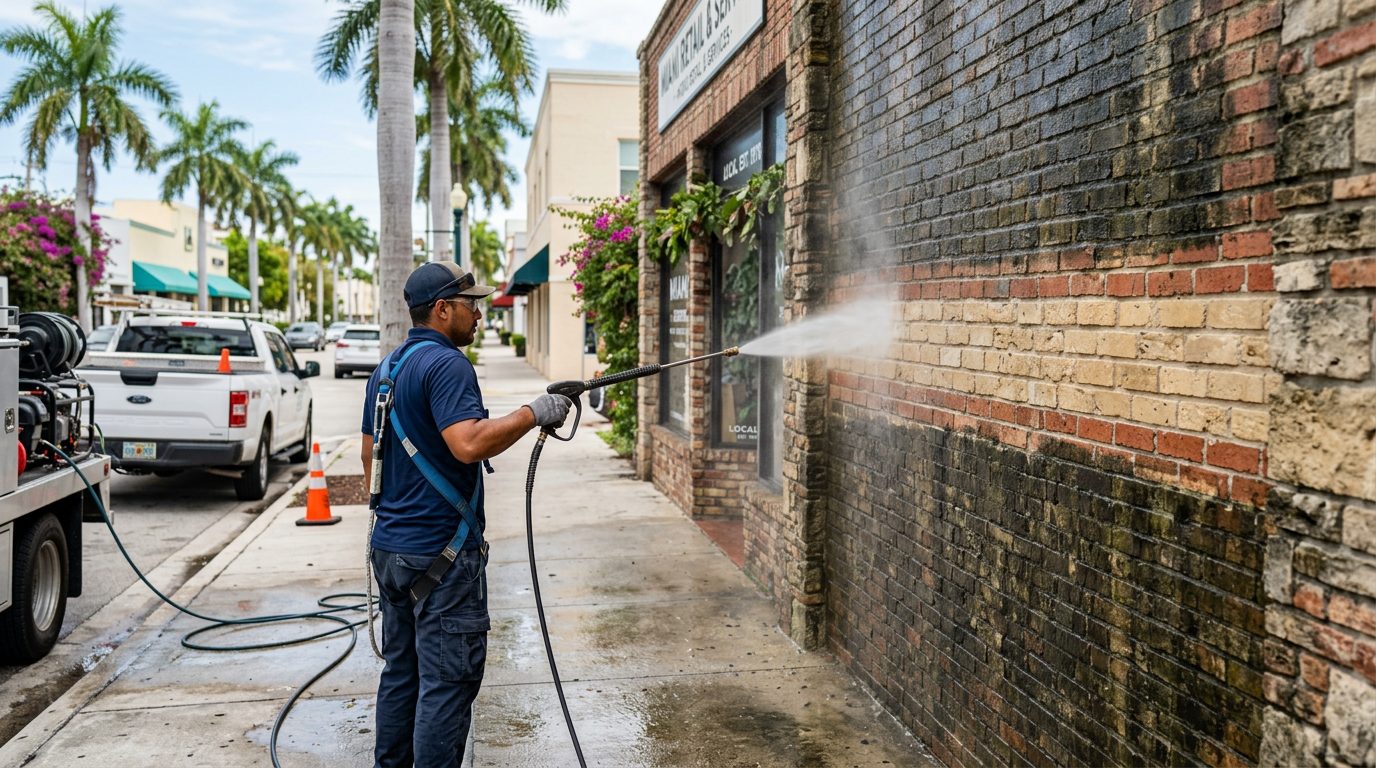
Pressure washing removes dirt, mildew, algae, pollen, and grime from surfaces such as siding, stucco, masonry, walkways, and driveways. It uses a stream of pressurized water, and the force used decides how much it lifts.
In South Florida, mildew and algae start where moisture lingers. North-facing walls and shaded areas dry slowly, so the film builds there first. Ground-level surfaces also collect splashed dirt and plant debris, which feeds that growth.
Built-up grime changes how a surface looks and behaves. Paint can look flat and chalky under a layer of dirt. Stucco and masonry can hold moisture against the surface when growth covers them.
Cleaning removes that layer. Once the surface is visible, you can check it for real wear, such as cracks, peeling paint, or soft spots, that dirt had been hiding.
The Benefits: Curb Appeal, Preventive Care, and Time Saved
The main benefits are a cleaner look from the street, less buildup to deal with later, and less work on your side. Each one follows from removing the grime itself.
Curb appeal. A clean exterior changes how a home looks from the street. That matters when a house is being shown, listed, or simply kept up for neighbors and visitors.
Preventive care. Removing mildew and algae before they spread can reduce the scrubbing and repair work that heavy buildup often leads to. A light cleaning is usually easier than a deep one.
Time saved. A scheduled crew brings the equipment, manages the water, and cleans up afterward. You avoid ladders, hoses, and hours of weekend work.
Contact our team to talk through the scope of your property’s needs. The initial consultation is free, confidential, and carries no obligation to continue.
DIY Pressure Washing vs. a Professional Crew
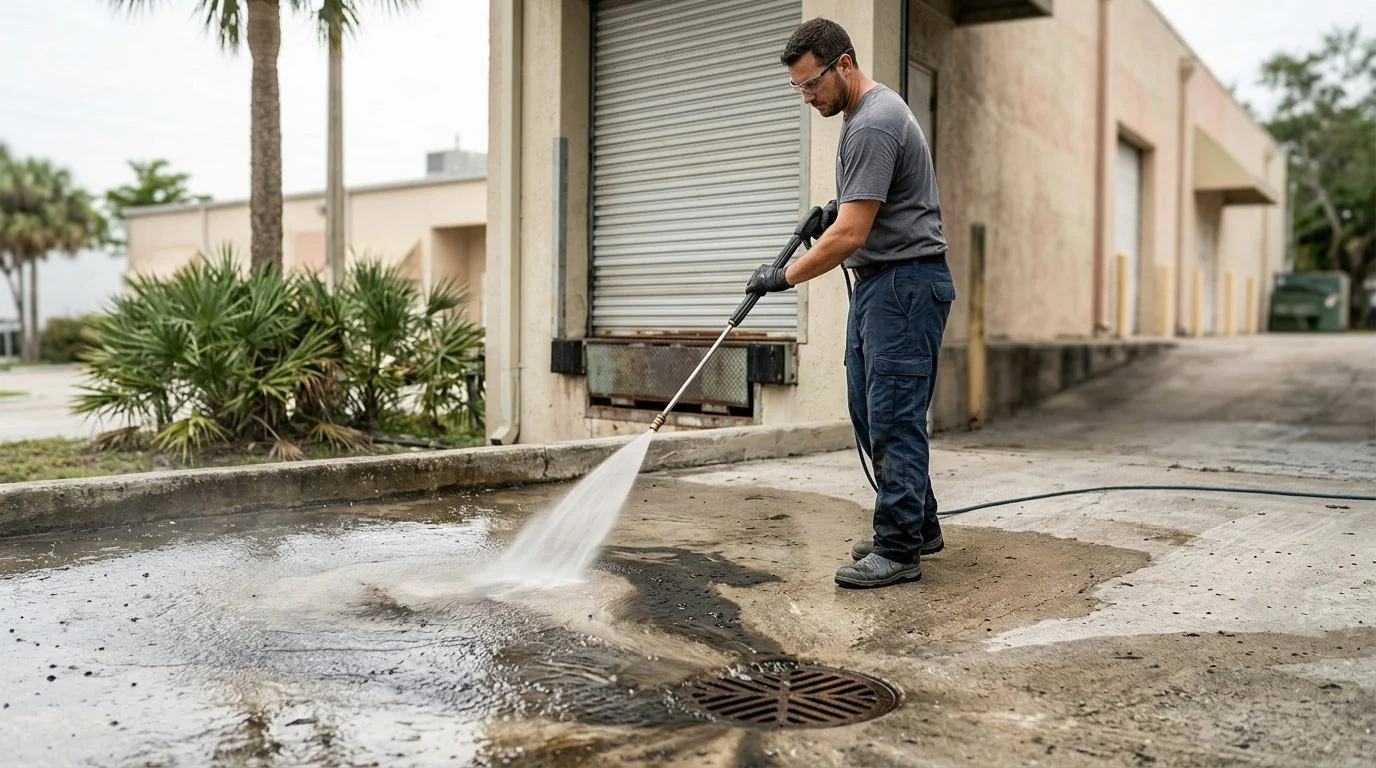
A professional crew is usually the safer choice for a whole house, because pressure, water handling, and height all carry risk. A DIY job can work on a small, low area, but a full exterior is harder to do well.
Pressure level matters most. Too much force can etch, strip, or damage siding, paint, stucco, and window seals. Too little leaves grime behind. A higher pressure rating is not automatically better, because the right setting depends on the material.
Water goes somewhere, too. Runoff can carry dirt and pollutants off the property. Residents can learn more about protecting local waterways from the South Florida Water Management District.
Water can also get where it should not. Spray pushed into vents, around electrical fixtures, or under siding edges can cause problems later. Ladders and cleaning solutions add their own safety risks.
A machine means paying for the unit, hoses, and upkeep, and it sits idle between cleanings. Compare that with one professional visit, and count your own time too.
How Often a House Should Be Pressure Washed
There is no single schedule that fits every house. The right interval depends on the facts of each home: its surfaces, its shade, and what grows or collects near its walls.
Homes with heavy shade, ground-level walls, or dense plantings often build up growth sooner than sunny, open exteriors. Sprinklers that hit walls, mulch piled against siding, and overhanging trees all keep walls wet. Check those spots first.
Surface type matters too. Painted siding, stucco, and masonry each need a different approach, so the crew should set the method for the material in front of them.
A site walk-through is the most reliable way to set a schedule for a specific house. Someone looks at each exposure, notes where growth starts, and marks the walls that stay damp. That gives you a plan based on the house itself.
Making the Decision for Your Home or a Family Member’s Home
If the walls show buildup, a cleaning is likely worth the cost. Doing it with the right equipment and water handling is safer than trying it alone.
Decide using three things: the condition of the surfaces, the benefits of regular cleaning, and the risks of doing it without the right equipment.
If you’re deciding for a parent or relative, you may be reading the signs from a distance. You might have noticed darkening walls on a visit, or you may be looking after a house you never planned to manage. Take photos of each wall and note the shaded areas. Those notes give a professional something specific to check.
Frequently asked questions
How often should a house be pressure washed?
The right interval depends on shade, nearby plantings, and surface type. Ground-level and shaded walls usually need attention sooner.
Can pressure washing damage siding or stucco?
Yes, if the pressure is too high for the material. The surface type and the setting decide that risk.
Is a higher PSI always better?
No. The right pressure depends on the material being cleaned.
If you’re weighing this for a parent or relative, you don’t have to sort it out alone. Our team can talk through what you’re seeing and what a cleaning would involve. Your first consultation is free, confidential, and carries no obligation to continue. Reach out through our contact form when you’re ready.
Why homeowners choose Gator Protection
One provider for exterior care
Pressure washing sits alongside our landscape services, floor care and day porter service, so your property is handled by one team.
Built for South Florida
We serve Miami-Dade, Broward and Palm Beach counties, including South Beach, Coral Gables and Brickell.
Surface-aware methods
Our team adjusts pressure and technique to the material, whether that is stucco, siding, pavers or concrete.
Clear, direct communication
We explain what we see, what we recommend and what it will cost before any work begins.
A quick tip before you start
More pressure does not always mean a cleaner result. A setting that works on concrete can etch stucco or force water behind siding. Let a trained crew assess the surface first.
Signs your house may be due for a wash
Dark streaks or green film
Algae and mildew often build up on shaded walls and along the ground-level base of a home.
Dull driveways and walkways
Oil, dirt and tire marks can make concrete and pavers look older than they are.
Slippery surfaces
Organic growth on walkways and pool decks creates a slip risk that a wash can reduce.
Pollen and grime buildup
Landscaping debris and airborne dust settle on siding and trim, dulling paint and finishes over time.