
Pressure Washing & Property Care | Miami
Clear Salt and Debris From Your Miami Condo After a Storm
Storm residue can wear on facades, walkways, pool decks, and landscaping. Here is how to approach the cleanup.
By Ryan Jurney · Published November 17, 2026
After a storm, a Miami condo can have salt film on its windows and railings, plus sand, leaves, and broken branches across the grounds. To remove salt and debris, clear the loose material first, then rinse and wash each surface type, then handle landscaping and common areas.
Doing these steps out of order makes the job harder. This guide walks through that order and explains why it matters for a condo building.
Why Salt and Storm Debris Need Prompt Attention on a Miami Condo
Salt and storm debris should be cleared soon after a storm because they settle and stick to the property. Wind pushes salt spray onto building exteriors, railings, glass, walkways, and landscaping. Once it dries, that residue can cling to painted walls, concrete, and glass.
Storm debris like leaves, sand, and twigs gets ground into corners, pushed into seams, and tracked through lobbies. The longer it stays, the more work the cleanup becomes.
Debris also affects drainage. Water carries material toward storm drains. The same guidance says runoff can carry pollutants from paved surfaces and properties.
This guide follows a clear sequence: clear debris, rinse and wash by material, handle landscaping and walkways, then keep common areas clean. For an overview of condo pressure washing work, see our condo pressure washing overview.
Not sure what your next step is?
Talk it through with our team — the first consultation is free, confidential, and carries no obligation.
Safety and Planning Before Anyone Starts Cleaning
Walk the grounds before any equipment comes out. Look for downed branches, broken glass, loose railings, and standing water. Mark those areas off so residents and staff stay clear of them.
A few minutes of walking the property shows what needs clearing first. It also shows which jobs need a crew with the right gear.
Balconies, upper floors, and damaged railings call for trained crews with proper access equipment. Improvised ladders and makeshift platforms add risk, and a loose railing can fail under weight. Leave that work to people equipped for it.
Coordinate with building management or the association before work starts. Residents should know when washing and debris removal will happen, which areas will close, and how long access will be limited.
The scope of a storm cleanup depends on the property’s size, its surfaces, and any damage. Those details are reviewed during the consultation.
Step 1: Clear Loose Debris Before Any Water Touches the Surface
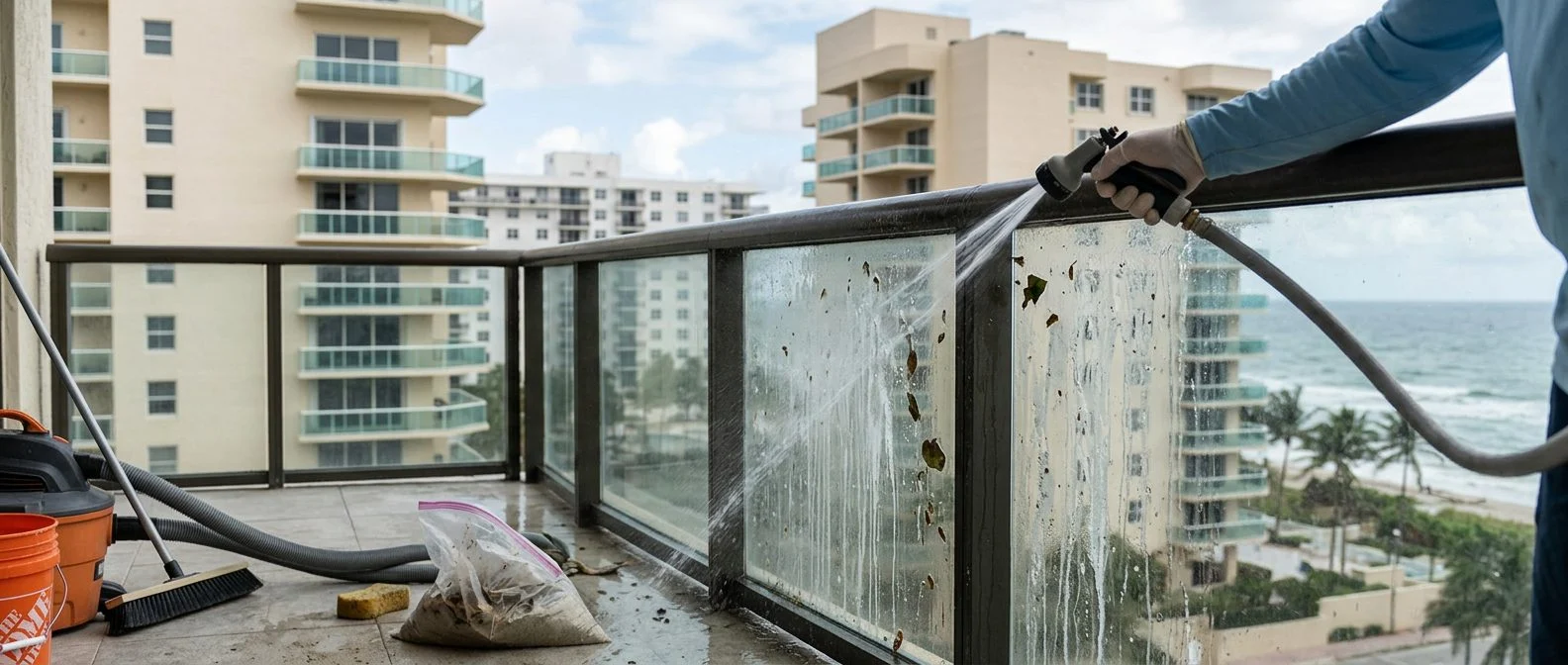
Clear loose debris by hand, with a broom, or with a rake before any water is used. Water pushes loose material into seams, corners, and drains. If leaves and sand wash into storm drains, they add to the runoff problem.
Start with walkways, parking areas, pool decks, and building entries. Sweep sand and leaves toward a collection point, not toward a drain. Then clear the entries so people can move through safely.
Next, clear gutters, scuppers, and drains. Scuppers are openings that let water leave a roof or balcony edge. When they are blocked, water has no clear path off the building and can pool or spill in unplanned spots.
Heavy or sharp debris, such as broken branches, glass, or metal pieces, should come out by hand before any equipment gets near it. Equipment can throw small pieces, and those pieces can damage surfaces. Bag the debris and haul it off-site so it does not wash into the storm system.
Step 2: Rinse Salt Residue and Wash Surfaces by Material
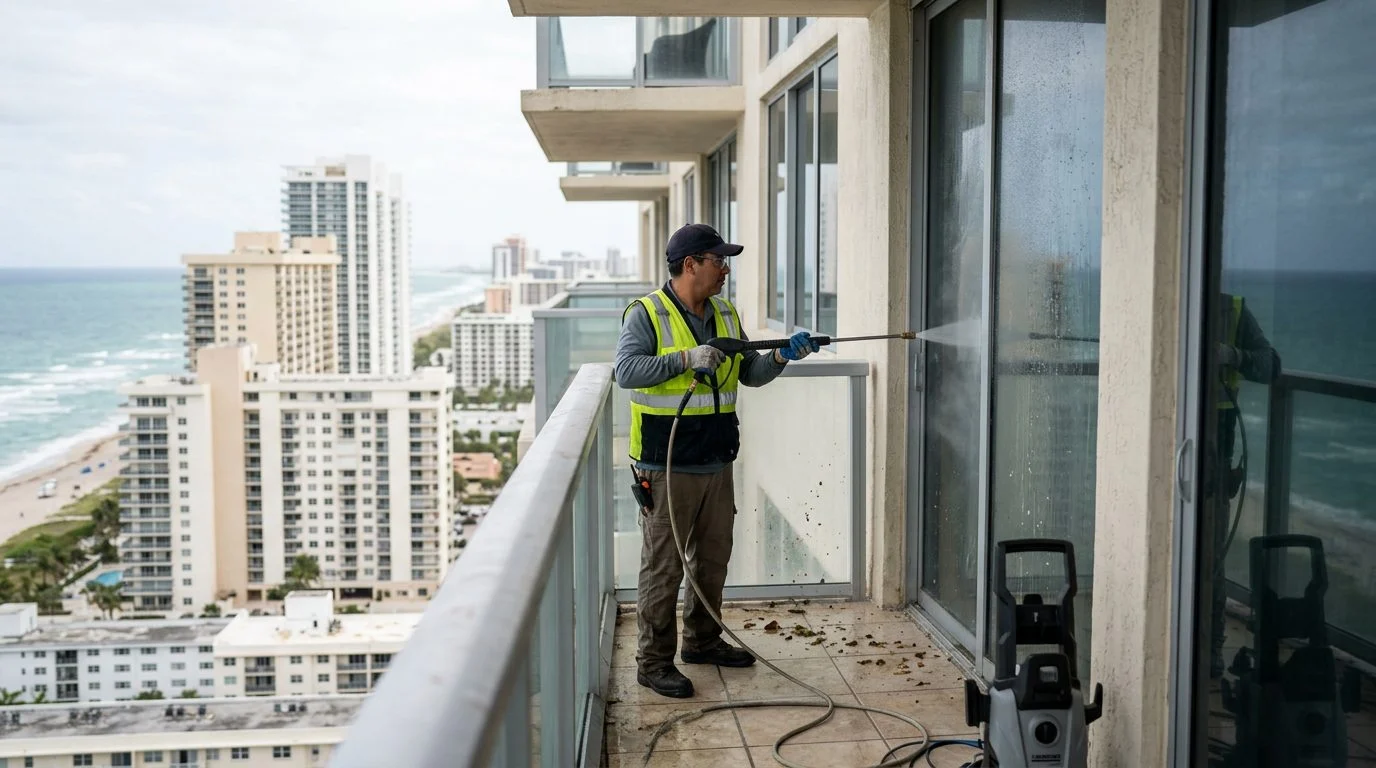
Rinse salt residue first, then wash only the spots where residue has built up. Salt can look like a faint haze on glass and painted walls, and it can bond to concrete over time. A thorough rinse loosens much of it before any scrubbing starts.
Pressure must suit the surface. High pressure can strip paint, chip stucco, break window seals, and tear screens. Use a lower pressure and a wider spray pattern on painted siding and stucco.
Save stronger settings for tougher surfaces, like concrete walkways, and only where the surface can take it. Test a small area first when you’re unsure.
Work from the top of the building down. Runoff from higher areas flows over lower surfaces, so starting at the top keeps residue from landing on areas already cleaned. Rinse each section fully before moving on.
Methods differ for painted walls, concrete balconies, and glass. Painted finishes need gentler handling than bare masonry. The right approach depends on the material and its condition.
Step 3: Handle Landscaping, Walkways, and Parking Areas
Rinse salt off landscape plants and clear storm debris from planting beds before you clean hard surfaces. Salt spray can burn leaves and settle into soil, so rinse plants gently. Hedges and turf edges catch the most salt, so check them carefully.
Clean walkways, parking areas, and garage entries next. Keep pressure away from landscaping and irrigation components. Strong spray can knock down young plants and damage irrigation heads and lines.
Watering rules also matter in South Florida.
Weather affects timing too. Plan washes around forecast rain and wet surfaces, since wet conditions change how much a surface can take. For a detailed breakdown of which condo surfaces are covered, see the condo pressure washing scope of work guide.
Step 4: Keep Common Areas Clean With Day Porter Coordination
Day porter service keeps lobbies, entries, elevators, and trash areas clean once the heavy cleanup is done. Residents return to normal use quickly after a storm, and foot traffic carries sand and salt inside. A porter on shift catches that buildup before it spreads.
A day porter can also report new debris, spills, or residue between pressure washing visits. That report gives the board and property manager a clear view of what needs attention next. It also helps the washing crew plan its next visit.
Shifts and washing visits need to line up. The porter should not clean areas that are about to be washed, and the crew should not wash areas that are about to get fresh debris. For how those shifts and visits are coordinated, see the day porter shift coordination guide.
Keep a written record of the work after each visit. A simple log of areas cleaned, surfaces treated, and areas still needing attention helps boards track progress.
Not sure what your next step is?
Talk it through with our team — the first consultation is free, confidential, and carries no obligation.
Frequently Asked Questions About Post-Storm Condo Cleaning
Below are direct answers to common questions about cleaning a condo after a storm.
Can you use a pressure washer on condo siding?
Yes, but use a lower pressure setting, a wider spray pattern, and a method suited to the surface. High pressure can damage paint and finishes.
How is the cost of pressure washing a condo set?
The price depends on the property’s size, its surfaces, its condition, and the scope of work. Those details are reviewed during the consultation.
Can pressure washing happen during or after rain?
Scheduling accounts for weather and wet conditions. The crew adjusts the work to what the surfaces and conditions allow.
Do residents need to move cars or clear balconies?
Areas being washed are closed off while the work happens. Building management can share access details during coordination.
Talk Through Your Condo’s Post-Storm Cleanup
If salt film, storm debris, or landscape damage is still on your building’s exterior, walkways, or common areas, the next step is a conversation about those specific surfaces. Share the building’s size, the surfaces involved, and any damage you’ve noticed. Our team can review those details and talk through the order of work, from debris clearing to landscaping and day porter support.
Contact Gator Protection to schedule a consultation for your Miami condo. You can call the office, use the contact form, or request a quote. We serve South Florida, including Miami-Dade, Broward, and Palm Beach counties and neighborhoods such as South Beach, Coral Gables, and Brickell. For a broader view of our services, see the South Florida service area page.
La consulta inicial es gratuita, confidencial y sin compromiso de continuar.
How Gator Protection Supports Miami Condo Associations
Pressure washing with care
We match pressure, spray pattern, and method to each surface so that building finishes are cleaned without unnecessary wear.
Coordinated property cleanup
Our team can plan the work around residents, common areas, and building access.
Serving South Florida
We provide commercial janitorial and landscape maintenance services throughout South Florida, including Miami-Dade, Broward, and Palm Beach counties.
Ongoing maintenance
Beyond one-time cleanups, we offer day porter, floor care, and landscape services that keep a property in good condition between storms.
Avoid High-Pressure Blasting on Painted or Delicate Surfaces
Salt residue and grit can be abrasive, but aggressive pressure can strip paint, damage stucco, and force water behind siding or into seals. Use a wider spray pattern and a lower setting, and test a small area first.
A Practical Storm Cleanup Sequence
1. Survey the property
Walk the grounds, facade, walkways, pool deck, and parking areas to note where salt, sand, and debris have collected.
2. Remove loose debris
Clear leaves, branches, sand, and trash before washing so that material is not pushed into drains or spread across surfaces.
3. Rinse and wash salt residue
Rinse salt from hard surfaces, glass, and metal, using the gentlest method that gets the job done for each material.
4. Care for floors and landscaping
Clean and protect lobby floors, garage areas, and landscaped beds, and rinse salt-exposed plants to reduce ongoing stress.
Need help clearing storm salt and debris from your condo?
The first consultation is free, confidential, and carries no obligation to continue.