
Pressure Washing | Miami-Dade County
Mildew Back Already? Why It Returns After a Condo Pressure Wash
A clean surface can grow mildew again within weeks when the moisture and residue behind it are still there. Here is what to look for and how our team approaches condo exteriors in South Florida.
Start With a Free Consultation
Free
First consultation, confidential and with no obligation to continue
4 Services
Pressure washing, day porter, floor care and landscape services
By Ryan Jurney · Published November 4, 2026
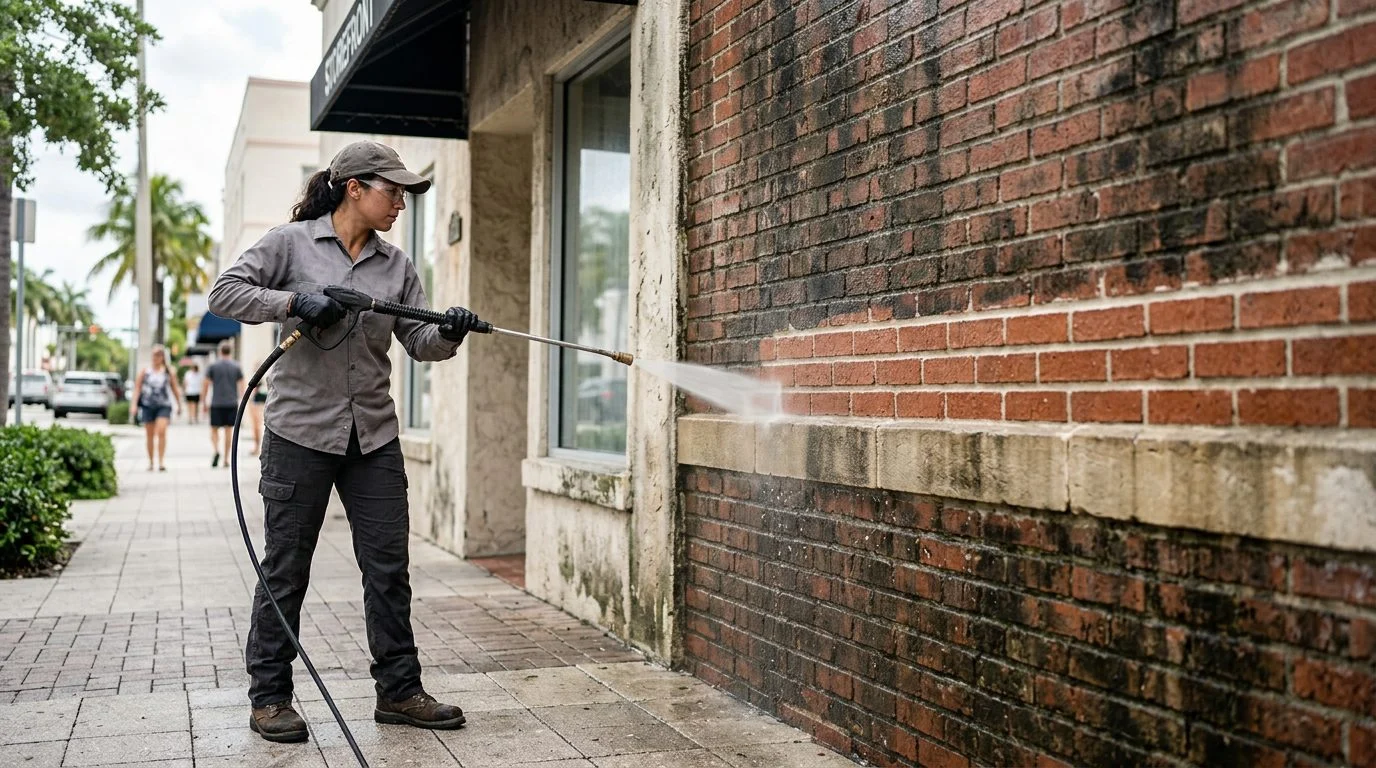
If mildew came back after pressure washing condo Miami walls, the wash may have cleaned the surface while the damp conditions stayed in place. Mildew is a living fungal growth, and it can return when those conditions remain. This guide explains why regrowth happens on Miami-Dade condo exteriors and what to record before you ask for a follow-up scope.
Why Mildew Looks Gone and Then Shows Up Again
Mildew often returns because the wash removes what you can see, while the moisture that feeds it stays in place. Right after the wash, walls look fresh and even. Within days or weeks, a dark or greenish tint often returns in the same spots.
Mildew is a living fungal growth. A clean look does not prove the surface is free of it, because some growth hides in pores, cracks, and joints.
Can mildew return after cleaning? It can, if the damp conditions and residue that support it are still there. A single wash does not change those conditions on its own.
Condo boards and property managers often notice this first. The building looks clean after the wash, then changes over the following days. Knowing the likely cause helps you plan the next step instead of repeating the same wash.
For an overview of our service on Miami-Dade condos, see pressure washing for Miami-Dade condos.
Not sure what your next step is?
Talk it through with our team — the first consultation is free, confidential, and carries no obligation.
What a Pressure Wash Removes and What It Leaves Behind
A pressure wash physically removes visible growth, dirt, and loose film from the surface. It does not reach everything that feeds mildew.
Spores and fungal material settle into pores, cracks, and joints. Water alone may not lift all of it, especially from rough or textured finishes.
Organic residue is the other part of the problem. Dust, pollen, and soot can form a thin film on walls. That film holds moisture and gives growth something to feed on.
Water also stays inside porous material after the wash. Wet material dries slowly, and that longer damp period gives mildew time to start again.
This is why visual cleanliness does not confirm the surface is free of mildew. Clean-looking walls can still hold spores in places you cannot see.
Conditions That Let Mildew Return on Miami Condo Walls
Mildew returns when walls stay damp longer than they can dry. Miami-Dade’s warm, humid climate makes long damp periods common.
Frequent rain keeps exterior walls wet for long stretches. Humidity also slows drying on days without rain.
Irrigation adds water to the mix. Sprinkler heads and overspray can hit the base of a building again and again. Local SFWMD landscape irrigation rules govern how and when that watering is done.
Shaded walls and areas under overhangs or balconies dry more slowly. These spots often regrow first.
Gutters and downspouts matter too. A clogged gutter or a downspout that empties onto a wall sends water down the same section over and over. Landscape plantings pressed against a wall can hold moisture there as well.
Whether the building sits in Brickell, South Beach, or Coral Gables, the same moisture factors apply. The mix of moisture, shade, and residue differs from building to building, so most regrowth comes from a combination of causes.
How Surface Type Changes the Result
Surface type decides how deep growth goes and how long moisture stays. The same wash can look different on different walls.
Stucco and other textured finishes have more surface area and more pores. They can hold moisture and residue longer after washing, so they often need a closer look before and after the job.
Painted masonry and smooth coatings may show growth differently. How the surface was prepared before the wash affects how well growth comes off and how well the coating holds up.
Wood needs extra care. Can pressure washing clean growth off wood surfaces? It can clean growth off the surface. Growth that has soaked into the grain may stay behind, even after a strong wash.
Why is wood fuzzy after pressure washing? Force can raise and roughen the wood grain. A rough surface holds water longer, which invites mildew back.
Have questions about what happened?
Ask our team directly. The first conversation is free, confidential, and there is no obligation to continue.
When Pressure Washing Is the Wrong Tool
Pressure washing is the wrong choice when the surface is already damaged, because force can make that damage worse.
Skip or limit high pressure when stucco is aged or cracked, paint is loose, wood is soft or damaged, or sealants are worn. Water forced into those gaps can spread damage and give mildew more places to start.
Pressure, nozzle choice, and water temperature should match the material. A setting that is too aggressive can open or roughen the surface. A rough, open surface can make regrowth more likely, not less.
A surface check comes first. It helps decide whether a wall should be washed, treated, or repaired first. That decision is part of the job, not a guess made at the wall. Industry practice, such as the ISSA cleaning standard, treats this kind of planning as part of service quality.
What to Document Before Requesting a Scoped Follow-Up
Good records help define the scope of a follow-up, so gather them before you ask for one.
Photograph the affected walls at the same time of day, before and after rain or a cleaning. Note which sections regrow first. Repeat photos over several weeks show the pattern clearly.
Record shade patterns, sprinkler locations, and where overspray lands on the walls. Note gutter and downspout conditions, and any landscape plantings touching the walls.
Write down the date of the last wash and the method used. Note any changes you see in the wood, paint, or stucco.
These notes give a clear starting point. They show where moisture sits, which areas regrow, and what the surface looks like now.
Will mold come back after cleaning?
It can, if the damp conditions and residue that fed it are still there. A single wash does not remove those conditions.
Can pressure washing remove mold from wood?
It can clean the surface. Growth that has soaked into the grain may stay.
When should you not power wash your house?
Skip high pressure when stucco is cracked, paint is loose, wood is soft, or sealants are worn.
Why is wood fuzzy after pressure washing?
Force can raise the wood grain. That leaves a rough surface that holds water.
If mildew came back after pressure washing condo Miami walls and you want to talk through a scoped follow-up, you can reach out through our contact page. Your first consultation is free, confidential, and comes with no obligation (consulta inicial gratuita, confidencial y sin compromiso).
Common Reasons Mildew Returns Quickly
Moisture Still Present
Shaded walls, poor drainage, sprinklers that hit the building, and water pooling on walkways keep surfaces damp long after the wash.
Leftover Residue
Dirt, organic film and spores can remain in pores and grout. They give new growth something to feed on.
Porous Surfaces
Stucco, concrete and wood hold moisture and can trap growth in their texture, so a surface that looks clean may still harbor it.
No Follow-Up Plan
A single wash on its own rarely changes the conditions that caused the problem in the first place.
What Our Team Looks at on a Condo Property
Exposure and Shade
We note which sides of the building stay damp, and where sun and airflow are limited.
Water Sources
We check for sprinkler overspray, roof runoff and drains that leave standing water near the structure.
Surface Type
We match the cleaning approach to stucco, masonry, wood or coated surfaces so the method suits the material.
Maintenance Schedule
We can discuss a recurring plan for your property so the cleaning is part of ongoing care, not a one-time fix.
Tip: Ask About the Cause, Not Just the Stain
If mildew reappears after pressure washing, the wash may have been correct while the moisture source went untreated. Describe where the growth returns and when, and our team can help you plan the next step.
Get a Plan That Addresses the Cause
Want to know where you stand?
Tell us what happened and our team will walk you through the options available to you, at no cost.
Related practice areas
- Miami Condo Pressure Washing Schedule: How Often to Clean