
Pressure Washing | Miami-Dade County
Thinking About Pressure Washing Before a Milestone Inspection?
Here is how exterior cleaning can fit into your condo building's inspection timeline, and what to plan for.
By Ryan Jurney · Published November 18, 2026
If your condo board has a milestone inspection on the calendar, you may be wondering whether the exterior must be pressure washed first. Often the person asking is a board member or property manager working toward a date they did not choose.
No. The milestone inspection statute does not list exterior pressure washing as a step before the inspection. Cleaning is separate maintenance, and it can help the inspector see the building more clearly. Here is how the two fit together.
What a Milestone Inspection Covers for a Miami-Dade Condo
A milestone inspection is a structural check of a condo building. A licensed architect or engineer performs it. Under the Florida milestone inspection statute, § 553.899, the inspection covers load-bearing elements and the primary structural members and systems.
Its job is to attest to the life safety and adequacy of the building’s structural components. It also determines, to the extent reasonably possible, the building’s general structural condition. The statute says the inspection is not meant to check whether an existing building meets the Florida Building Code or the firesafety code.
The inspection then repeats every 10 years.
The inspection looks at the building. It does not clean or repair anything. A unit owner has no authority to act for the association just because they own a unit, under the association statute § 718.111.
If your board is weighing exterior cleaning against a milestone inspection date you did not choose, our team can talk through your building's surfaces and timing with you. Talk it through with our team — the first consultation is free, confidential, and carries no obligation.
Does Exterior Pressure Washing Need to Happen First?
No. Section 553.899 describes a structural review by a licensed professional. Section 718.111 treats the inspection reports described in ss. 553.899 and 718.301(4)(p), and any other structural or life safety inspection report of condominium property, as official records.
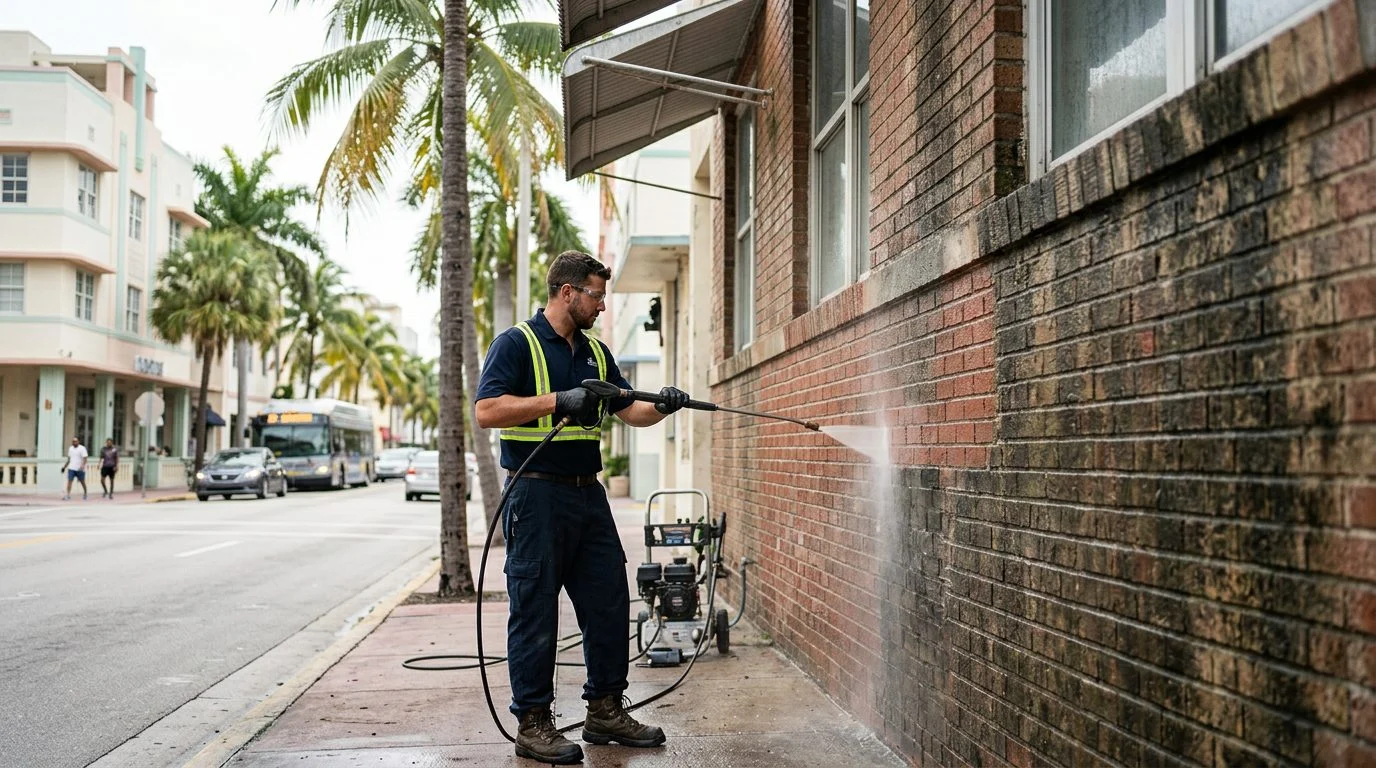
The practical reason boards raise it is visibility. Dirt, mildew, and grime can cover concrete and stucco. A cleaner surface lets them look at the same spot without guessing.
A wash can reveal those conditions or hide them.
One mistake to avoid is booking the wash before asking the inspector which areas they want to see first. Ask first, then set the order. Cleaning before the inspection can also make the building’s general exterior condition easier to document.
Why Cleaning Does Not Replace Inspection or Repairs
Cleaning removes material from the surface. It does not fix what sits underneath. Pressure washing will not close a crack, rebuild deteriorated concrete, restore failing sealant, or stop water from getting into a wall.
That means a clean building can still need repairs. If the inspection identifies work, those repairs are a separate scope from cleaning. They should be priced, approved, and tracked on their own. Then the board can see what was washed and what was repaired.
Keep the paperwork together. Official records must also be organized so a unit owner can inspect them. Put the cleaning scope, the cleaning records, and the inspection report in one file. The sequence is then easy to show later.
Choosing the Right Method for Stucco, Concrete, and Painted Surfaces
Pressure washing uses higher force and suits hard, durable surfaces. Soft washing uses lower pressure and a cleaning solution, and it suits delicate or painted surfaces. The right choice depends on the material and its condition.
Stucco and painted walls are where method matters most. Too much force can strip paint, wear the finish, or open small gaps in older stucco. Concrete can usually take more force. A worn or already cracked slab, however, may not. The surface’s condition, not habit, should set the method.
This is why a written scope matters. It records each surface, the method for it, and any surface the board wants left alone until the inspector has seen it. Ask the crew to explain their method for each surface before work begins. A clear answer is a good sign that the plan was made with the surfaces in mind.
Building a Written Scope Before Exterior Cleaning Begins
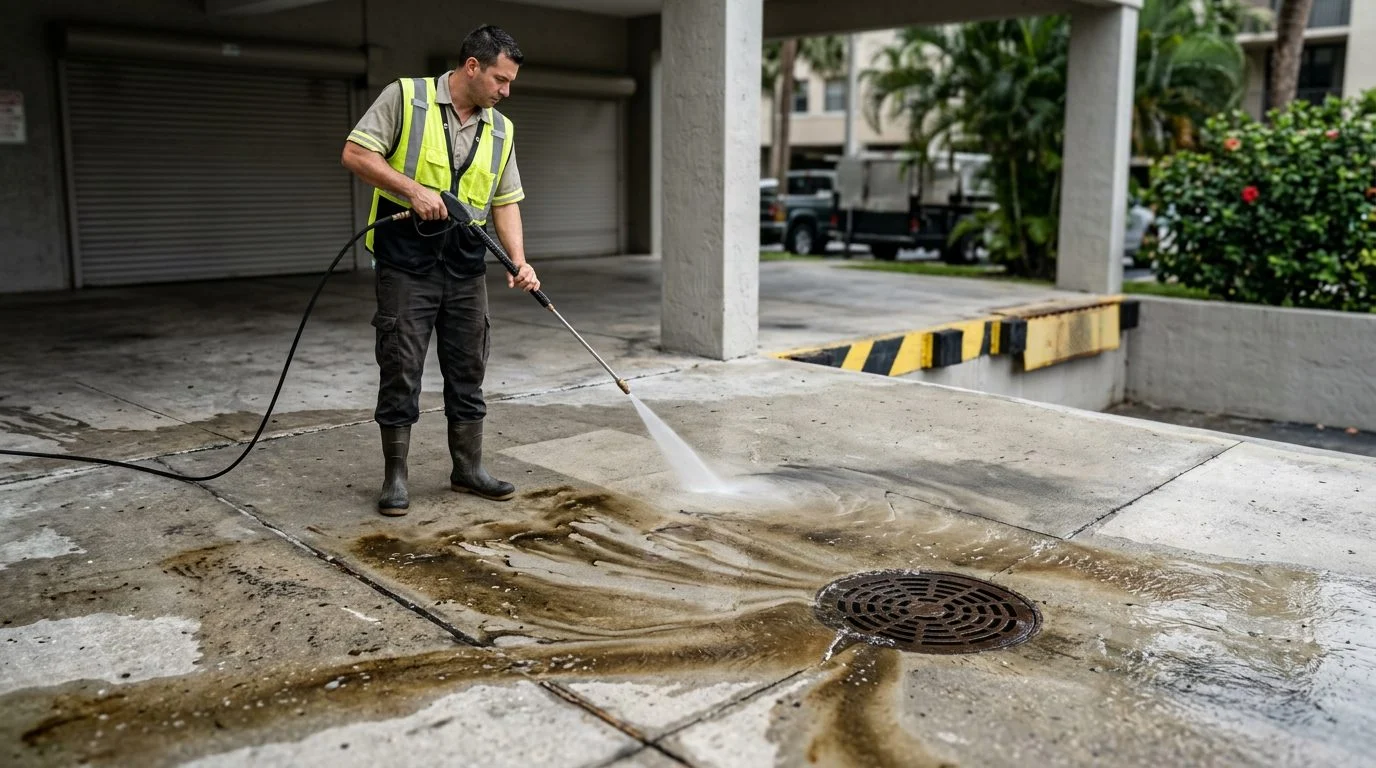
A clear scope names the areas to be washed and the surface type for each. It lists access windows and the protection needed for landscaping, doors, vents, and fixtures. It also says how wash water will be handled.
Wash water matters. The South Florida Water Management District says polluted runoff entering South Florida storm drains is discharged untreated into connected water bodies. That runoff can carry pollutants from paved surfaces and properties. Name the containment method in the scope so the board isn’t left guessing.
List post-storm debris as its own line item. Storm buildup often needs separate attention from routine washing. Coordinate exterior work with day porter service and ongoing maintenance between inspection dates. The Community Associations Institute guidance describes organized maintenance programs and checklists as useful when developing vendor scopes of work.
Questions to Bring to the Association Before Scheduling Exterior Work
Three questions help a board move from idea to approved scope.
- What does the inspecting professional need to see on the exterior? Should any area stay untouched until they review it?
- Which surfaces are in the cleaning scope, and which are excluded?
- When is the access window, so cleaning and the inspection don’t compete for the same time slot?
Get the answers in writing. A single owner cannot act for the association, so the board approves the scope and the timing.
Not sure what your next step is?
Talk it through with our team — the first consultation is free, confidential, and carries no obligation.
Talk Through Your Building’s Exterior With Our Team
If you’re handling this for a board with a date already set, you don’t have to sort out the sequence alone. The questions above can get tangled quickly once several people are involved.
Gator Protection provides pressure washing services, along with day porter service, floor care maintenance, and landscape services, across South Florida. That includes Miami-Dade, Broward, and Palm Beach counties. Share your building’s surfaces and timing through our contact form, or call our office. La consulta inicial es gratuita, confidencial y sin compromiso de continuar.
Frequently Asked Questions
Should a Miami condo building be pressure washed before its milestone inspection?
Before cleaning, check with the inspector first, because dirt, mold, and grime can hide surface conditions. It does not replace the inspection, and a licensed engineer or architect still determines the building’s condition.
Can pressure washing make it easier to see cracks or damage on the building?
It may. Clean concrete, stucco, and painted surfaces often make it easier to spot cracking, staining, and flaking, but the inspector decides what to examine and report.
Can pressure washing harm concrete or stucco on a condo before an inspection?
It can if the pressure is too high or the wrong nozzle or technique is used on older or weakened surfaces. Pressure and method should be adjusted for each surface type.
How far ahead of a milestone inspection should a condo schedule pressure washing?
Schedule the wash with enough time before the inspection date to allow for weather delays and any repairs the board wants to make. Our team offers a free first consultation that is confidential and has no obligation to continue, so you can talk through your building’s timeline with us.
How We Plan Condo Pressure Washing
Coordinate with your inspector
We encourage associations to confirm timing with the inspector before any cleaning begins.
Schedule around residents
Our team works with property managers to plan around building access, parking, and routines.
Careful surface handling
We adjust pressure and methods to the materials on your building so surfaces are cleaned with care.
Clear communication
Our team keeps your board or management company informed from scheduling through completion.
Important: Cleaning Is Not an Inspection
Pressure washing removes dirt, mold, and grime that can hide surface conditions, but it does not replace the milestone inspection. A licensed engineer or architect is responsible for assessing the building's condition.
Steps to Plan Your Condo Pressure Washing
Contact your inspector
Ask whether the building should be cleaned before the inspection and what areas they plan to review.
Share your building details
Tell us about the building's height, exterior materials, and areas that need attention.
Set a schedule
We plan the work with your management team so access, noise, and parking are handled in advance.
Confirm the work
Walk through the completed areas with your team so everyone knows what was cleaned and what remains.