
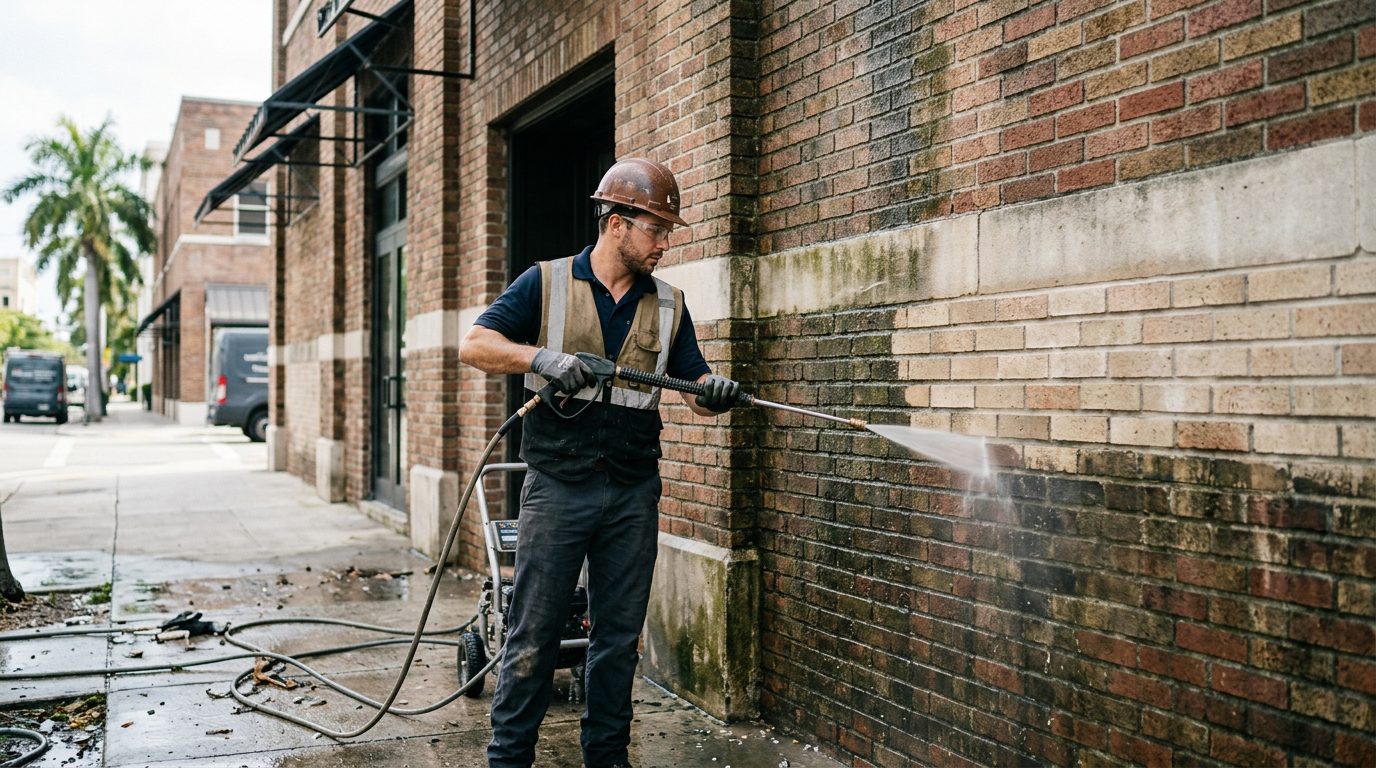
Pressure Washing · Miami Condo Garages
Pressure Wash Your Flooded Condo Garage the Right Way
Flood silt, debris and grime need a careful, ordered clean-up. Gator Protection pressure washes condo garages across Miami-Dade, Broward and Palm Beach counties.
By Ryan Jurney · Published November 4, 2026
To pressure wash garage after flood Miami condo spaces well, clean in order: safety first, then loose debris, then silt, then washing. Washing too early pushes mud into drains and corners, which makes the job longer. This guide walks through that order and shows where pressure washing fits among the other services a building may need.
Why the Order of Cleaning Matters After a Flood
Cleaning in the right sequence makes the work faster and cleaner. A garage after standing water holds three kinds of material: bulk debris, loose silt, and a thin film of residue. Each one behaves differently. Debris can be lifted by hand. Silt turns to slurry once it gets wet. Residue bonds to concrete and painted block.
Washing first moves all three at once. The water carries silt into floor drains, corners, and gaps near the ramp. That means more work later.
Structural and electrical repairs are not among the services described here, so our team focuses on cleaning and maintenance tasks. We can talk through your property’s needs in a free, confidential first consultation with no obligation to continue. This guide focuses on cleaning and on the pressure washing step. Start with the pillar overview at pressure washing services for Miami-Dade condos.
Not sure what your next step is?
Talk it through with our team — the first consultation is free, confidential, and carries no obligation.
Start With Safety and Access Before Any Washing
The first step is confirming the garage is safe to enter. Flood water can hide cracks, loose ceiling material, and damaged stairs. Please point out wet electrical equipment, gate motors, and door controls before any cleaning begins near them, so those areas can be handled with care.
That law describes a milestone inspection as a structural check by an architect or engineer. The purpose of a milestone inspection under Fla. Stat. § 553.899 is not to determine if the condition of an existing building is in compliance with the Florida Building Code or the firesafety code.
Write down who decided what, and when. Photograph the damage before cleaning starts. Those photos support the association’s records and any talks with insurers or contractors.
Step One: Clear Debris and Loose Material
Remove loose debris before any water touches the floor. Start with branches, leaves, sand, bags, furniture pieces, and trash. Pick these up by hand or with equipment.
Next, shovel or sweep the bulk of the silt into bins. Dry silt is easy to lift. Once it’s wet, it spreads across the floor.
Then clear floor drains, trench drains, and gutters of blockages. Water needs a path out. A clogged drain turns the garage into a pond during the next wash.
Washing before this step is a costly mistake. The water pushes debris into low points, and the crew ends up cleaning the same spot twice.
Step Two: Remove Silt and Mud Residue
Silt and mud come off in layers, so remove the loose layer first. Sweeping and vacuuming handle dry silt well. Wet mud needs time to dry, or it needs scraping, before any rinse.
After the loose layer is gone, rinse with a controlled flow. Work from the farthest, highest point toward the exit and the drains. Runoff then carries residue out instead of across clean floor.
Pay close attention to ramp transitions and expansion joints. Silt settles in these spots and often hides there. Walking surfaces should be kept clean, dry, and free of slip hazards. Keep this work within the garage floors and entry areas the association is responsible for maintaining.
Have questions about what happened?
Ask our team directly. The first conversation is free, confidential, and there is no obligation to continue.
Step Three: Pressure Wash the Surfaces in the Right Order
To pressure wash garage after flood Miami condo surfaces, work from the top down and from the far end toward the exit. Start with ceilings and upper walls, but only where residue has reached them. Then move to walls, columns, and finally the floor.
Use lower pressure on painted surfaces, block walls, and stucco. High pressure can strip paint or damage the surface. Concrete and stained areas may need a stronger nozzle or a cleaning product.
Choose cleaning products carefully and use them as the label directs.
Walk the lobby and stairwells last. Clean them after the garage is clear so tracked-in residue isn’t brought back. The right pressure and detergent depend on the facts of each surface and its condition.
How Pressure Washing Fits With the Other Services
Pressure washing is one step in a larger recovery. It works best alongside the other services we offer.
After a storm, day porter service keeps access routes, trash areas, and common spaces tidy while cleanup continues. Floor care maintenance comes after washing. It restores traction and a consistent finish on garage floors once they dry.
Landscape services handle silt and debris left in planting beds, curbs, and entry landscaping. Those rules matter once landscape cleanup is complete.
For local context, see our pages for South Florida, Miami-Dade County, and Broward County.

Talk With Our Team About Your Garage
A garage covered in storm debris raises a practical question. Who cleans what, and in what order? Board members and property managers often face that decision with little time.
If that’s your situation, reach out through our contact page. You can fill out the form, call the office, or request a free quote. Our initial consultation is free, confidential, and carries no obligation to continue.
Frequently Asked Questions
What should be cleaned first in a flooded condo garage?
Make the space safe first. Then remove debris and loose silt before any washing starts.
Should you pressure wash before removing silt?
No. Washing first spreads silt into drains and low points, so remove the loose layer first.
Can pressure washing push silt into floor drains?
Yes. Clear the drains by hand before washing so water has a path out.
Can you pressure wash garage after flood Miami condo floors the same day as cleanup?
The timing depends on the facts of each garage, including how wet the surfaces remain.
Want to know where you stand?
Tell us what happened and our team will walk you through the options available to you, at no cost.
Why Property Managers and Condo Boards Call Gator Protection
South Florida Coverage
We work in Miami-Dade, Broward and Palm Beach counties, including South Beach, Coral Gables and Brickell.
Clean in the Right Order
We remove debris and loose silt before pressure washing, so the mess does not get pushed into drains and low points.
Support You Can Schedule
Our team coordinates pressure washing with floor care and day porter service, so the garage is ready when you need it.
Free First Consultation
Our free first consultation is confidential and comes with no obligation to continue.
Warning: Do Not Start With the Pressure Washer
Spraying a flooded garage before the loose silt is removed pushes mud into floor drains and against walls and low corners. Clear the debris first, then wash.
How a Flooded Garage Clean-Up Works
1. Make the Space Safe
Before any cleaning begins, the area should be safe to enter, with power and access points checked and walkways cleared.
2. Remove Debris and Silt
Loose mud, sediment and debris come out first, so the wash does not spread them across the floor.
3. Pressure Wash in Order
We wash from the high points down toward the drains, keeping the loosened material moving out of the space.
4. Final Rinse and Drain Check
Floor drains and low spots are checked after the wash so the garage is left clean and ready for use.