
Day Porter Services | Condo Properties in South Florida
Keeping Pressure Washing and Day Porter Work on the Same Schedule
Shared calendars, clear hand-offs between crews, and a plan for each common area help exterior cleaning and daily upkeep run side by side.
By Ryan Jurney · Published November 18, 2026
If you manage a condo with a day porter on set hours, you may wonder whether a pressure washing crew can work at the same time. Yes, it can, as long as the property manager sets the time windows and both teams share them before the first visit. The sections below cover where the two jobs overlap, how to hand off the building, how to keep one daily log, and how to order the work.
The Short Answer: Yes, When Both Schedules Are Planned Together
A pressure washing crew can work around a day porter’s shift when the property manager sets the windows, shares them with both teams, and agrees on lobby access in advance. The conflict is rarely the washing itself. It is the timing. The porter covers the lobby, entrance, and common areas during set hours. Exterior work needs water, hoses, equipment, and clear access to walkways, entries, and garage approaches. When both needs land on the same doors at the same time, the lobby gets wet, the porter gets pulled away, and the crew waits.
Gator Protection provides day porter service, floor care maintenance, landscape services, and pressure washing services in South Florida, including Miami-Dade and Broward counties. This page focuses on one planning question: how to put exterior washing and porter duties in the right order.
If your lobby stays open while exterior washing is on the calendar, contact our team and we'll set the windows with you before a crew arrives. Talk it through with our team — the first consultation is free, confidential, and carries no obligation.
Where a Day Porter’s Duties and Exterior Washing Overlap
The overlap is greatest at the front entry, the lobby threshold, and the sidewalk outside the main door. Those spots see the most foot traffic and the most water from a wand or surface cleaner. Vestibules and thresholds need attention first, because grit and water pass through them into the lobby. Sidewalks near the door matter too, since a porter may already sweep them or keep them clear for residents.
Pool decks, parking entries, and pedestrian walkways are the next overlap. A porter often monitors these areas or clears debris from them during the day. Pressure washing in these zones can push dirt back toward the door, so the crew and the porter need to agree on which area gets cleaned first.
Waste and loading areas carry a different risk. Spray, runoff, and foot traffic can carry water and debris back into the lobby on shoes and carts. Floors inside the lobby take the hit after exterior work, because tracked water and grit land on the same surfaces the porter maintains.
The Handoff Steps Before Any Pressure Washing Visit Begins
A clean handoff sets the plan before any crew arrives. Walk the property with the property manager first. Mark which exterior zones will be washed, which lobby doors and entries stay open, and which areas must stay clear.
Next, confirm the porter’s shift hours and fixed duties. Those may include tenant check-in, package handling, or scheduled floor cleaning. The crew needs to know when the lobby is busiest. Name one contact on the property side and one crew lead who can change the plan on the day. Without a named lead, small changes stall.
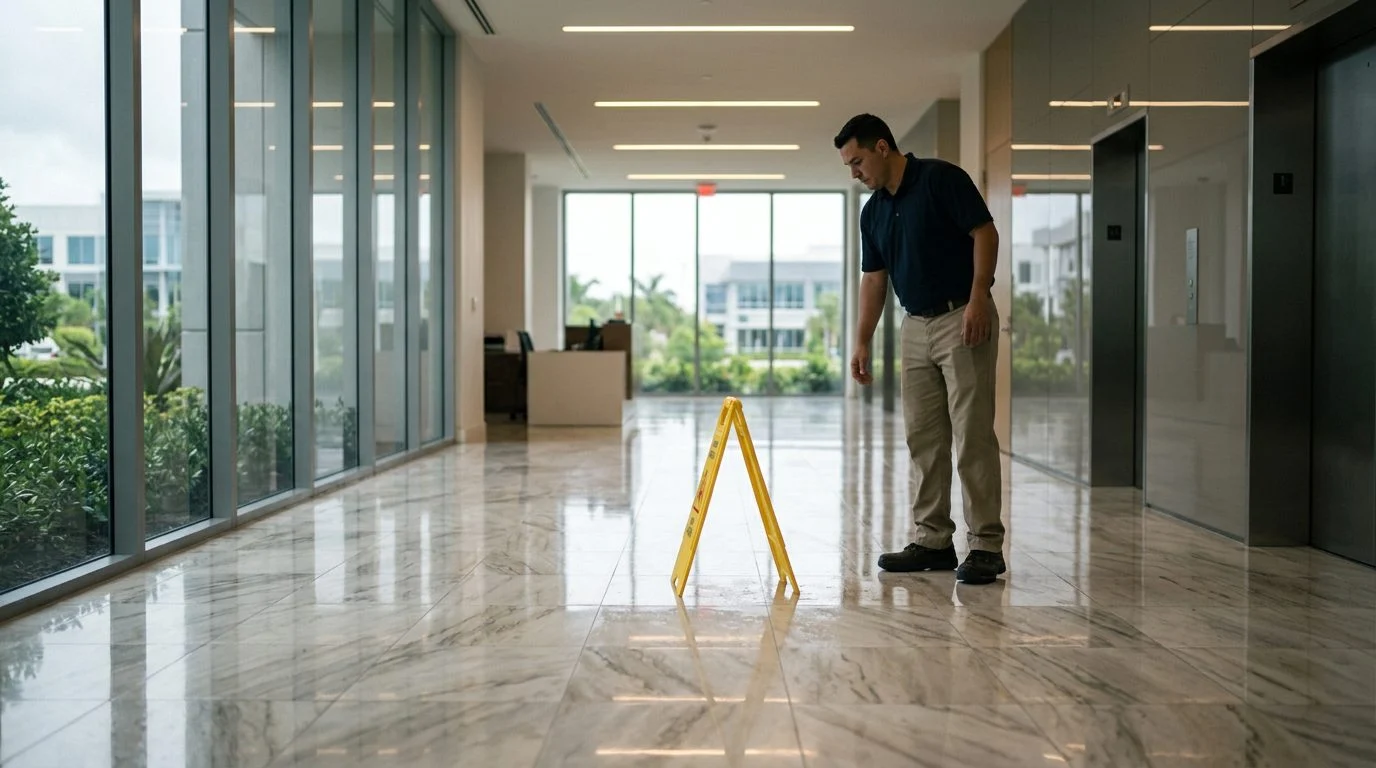
Set signage and cordon locations for wet surfaces. Agree on who places the signs at the start of each visit and who removes them at the end. Chemical handling deserves a check too. Have the data sheets on hand before the first visit, not during it.
Using a Shared Daily Log So Tasks Do Not Duplicate or Conflict
A shared daily log lets the porter and the crew see the same plan, progress, and open items for every visit. Verbal handoffs fail when people are busy. A written log gives both teams the same picture.
Each entry should record the date, the planned exterior zones, the lobby areas affected, the time windows, and who handled each handoff. Those five fields answer most questions about what happened and when.
Lobby problems belong in the log too. Note tracked water, damaged mats, or debris at entries during exterior work. The porter can then address the most urgent item first when the shift starts or resumes.
Keep one open-items list per visit. Every pending task gets assigned to one team. That stops both crews from repeating the same job, and it keeps a task from falling between shifts. Most conflicts start when a task is recorded by neither team, so review the log at the start of each porter shift.
Sequencing Pressure Washing, Floor Care, and Porter Duties Without Conflict
Wash exterior surfaces before lobby floor care in the same area, and let the porter resume routine duties once surfaces are dry. That order keeps runoff and debris off floors that were just cleaned.
Floor care maintenance comes after exterior work at lobby entries. The porter should confirm dry, safe surfaces before foot traffic returns. A quick check of mats, thresholds, and the tile near the door saves a return trip.
Landscape work needs the same care. Walkways and planted areas often share zones with pressure washing. Each area should be handled once, in the right order, so beds are not soaked twice or walkways washed after plants are trimmed. Landscape timing also depends on water rules.
Disinfecting restrooms and high-touch surfaces is also part of the sequence. Use products whose label claims match the job. The U.S. EPA’s list of selected EPA-registered disinfectants publishes those label claims. Schedule that work after the exterior crew has left the area.
Next Step: Plan Your Condo’s Exterior Washing With a Walk-Through
A walk-through with the property manager is the simplest way to map zones, windows, and lobby access before any washing is scheduled. Picture a condo with a working day porter, a lobby that stays open during business hours, and exterior surfaces that need washing on a set schedule. The walk-through turns that picture into a written plan the porter, the crew, and the board can all read.
Our team walks the zones with you, notes the entry and lobby timing, and proposes a sequence. If the building also needs landscape work, that goes into the same plan.
The initial consultation is free, confidential, and with no obligation to continue.
Frequently Asked Questions
Can a pressure washing crew work while a day porter is on shift?
Yes, when the property manager approves the time windows and both teams share them in advance.
Should exterior washing happen before or after lobby floor cleaning?
Exterior washing usually comes first in the same area, so runoff does not reach floors that were just cleaned.
What should a condo daily log record?
It should record the date, planned zones, lobby areas affected, time windows, handoffs, and open items.
If your lobby stays open while exterior washing is on the calendar, contact our team and we’ll set the windows with you before a crew arrives.
How We Plan Around Your Building
Agreed Time Windows
We set pressure washing hours with the property manager so they fit around the day porter's shift and resident traffic.
Coordinated Crews
Our team shares the schedule with day porter staff so both crews know which areas are active and when.
Area-by-Area Sequencing
We plan each zone, from entries and walkways to garages and pool decks, so finished floors are not exposed to runoff.
Written Scope and Schedule
Each property receives a clear outline of tasks, timing, and contacts before work begins.
Tip Before Scheduling
Confirm access times, parking, and any areas that must stay open to residents before the pressure washing crew arrives. A brief walkthrough with the day porter prevents most timing conflicts.
Common Scheduling Questions
Who Approves the Timing?
The property manager typically approves the time windows, and both teams work from the same agreed plan.
What Comes First?
Exterior washing usually starts in an area before interior floors are cleaned, keeping water away from freshly finished surfaces.
How Do We Protect Residents?
Signage, cordoned walkways, and advance notice help residents move safely while work is underway.