
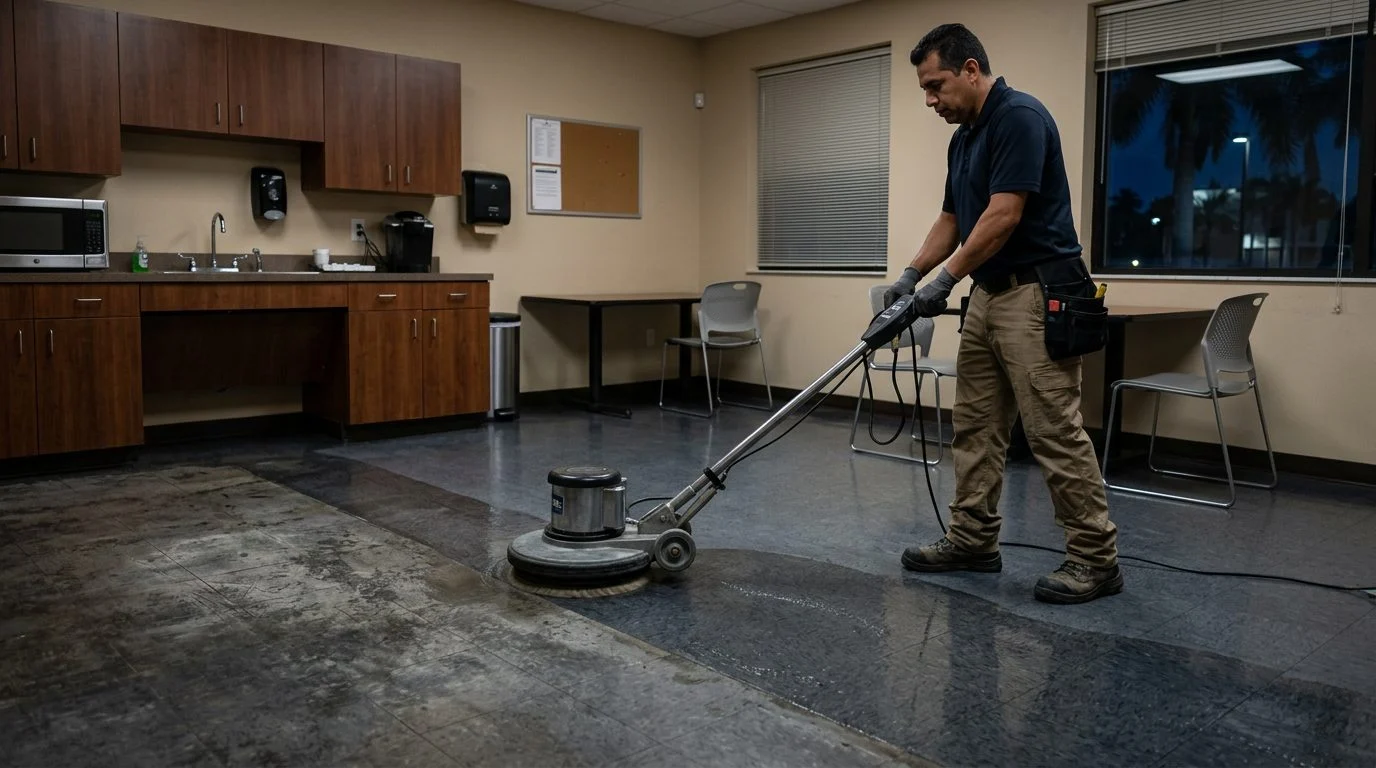
Floor Care Maintenance · Boca Raton, Palm Beach County
Floor care scheduled around your plaza's trading hours
Tell us about your retail plaza and we will help you build a floor care calendar that fits your site. Your first consultation is free, confidential, and carries no obligation to continue.
By Ryan Jurney · Published November 26, 2026
If your plaza’s floors need care but the stores can’t close, the schedule decides whether shoppers ever notice. After-hours floor care is floor work done outside trading hours, planned around open storefronts, walkways, and tenant needs.
This guide explains how that scheduling works, one step at a time. It’s written for plaza managers and tenants in Boca Raton and across Palm Beach County.
What After-Hours Floor Care Means for a Retail Plaza
After-hours floor care is maintenance work scheduled outside a plaza’s trading hours. That keeps storefronts and walkways open to shoppers. It can include cleaning, stripping, waxing, and buffing, done when few people are walking through.
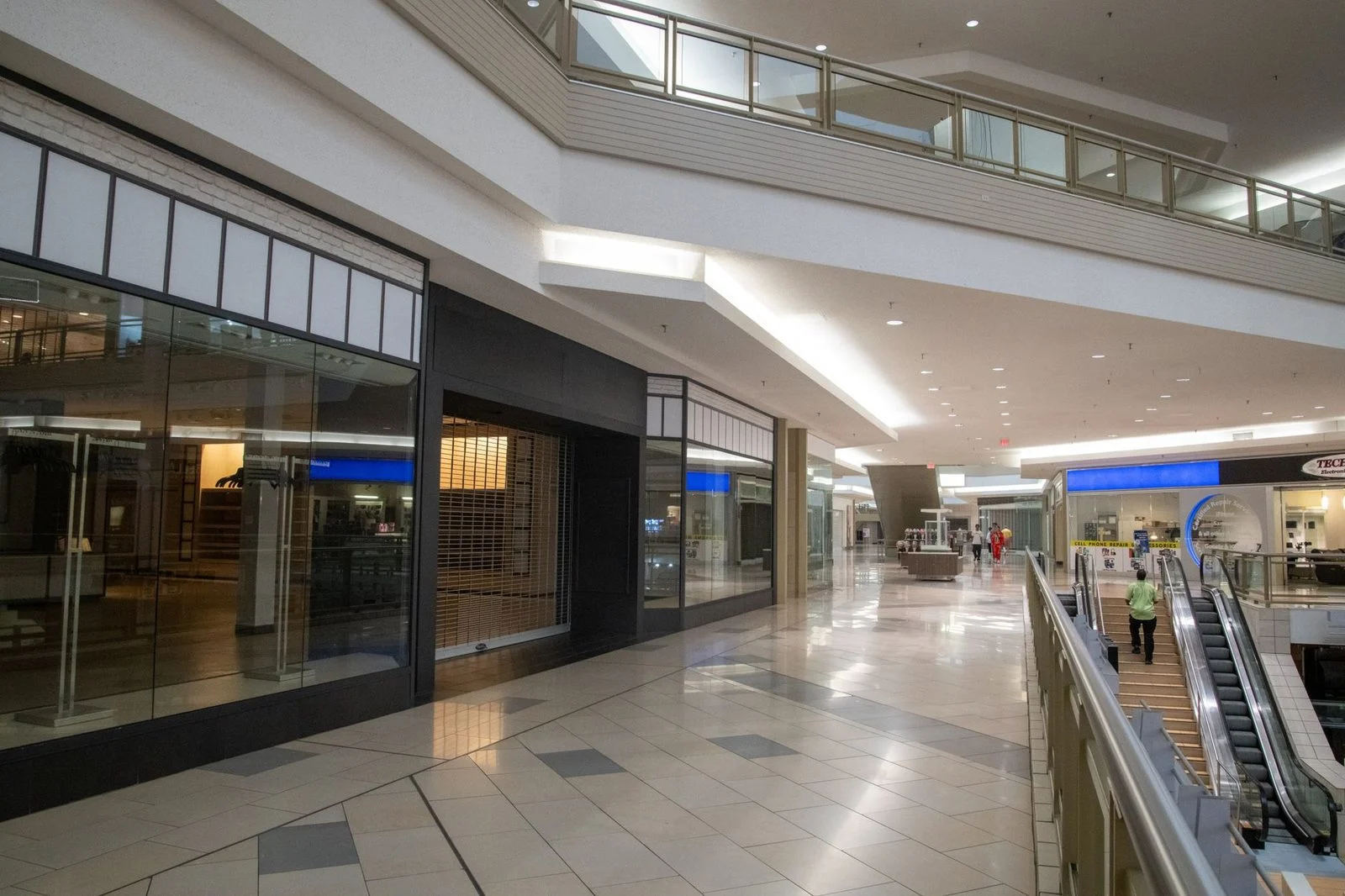
A plaza shares its floors. The main walkway, the entrance, and the corridor outside each store are common areas. Work on one stretch affects every tenant whose door opens onto it, so the plan looks at the whole plaza.
Gator Protection, Inc. provides floor care maintenance for commercial clients in South Florida. Hard-surface floors in shared areas need regular attention.
If your plaza's floors need care but stores can't close during the day, we can talk through your trading hours, floor areas, and access needs. Talk it through with our team — the first consultation is free, confidential, and carries no obligation.

Why Timing Matters When Stores Stay Open
The right window keeps shoppers, deliveries, and tenant hours clear of the work. Start with the times that already run on the property: opening hours, delivery windows, and any late-evening tenant activity.
Foot traffic changes the picture. A floor being cleaned while customers walk past creates a slip risk, visible disruption, and complaints. A schedule that keeps work away from open hours lowers the chance of those problems.
The right window also differs by plaza layout and tenant mix. A small strip with one entrance needs a different plan than a center with several anchor stores. The plan starts with the property’s own hours and layout.
How the Scheduling Process Is Set Up
The process starts with a site review. It then moves to access and a calendar. It ends with a written plan the plaza manager approves before any work begins.
First comes the site review. The crew identifies floor types, traffic zones, and which areas must be clear by opening time. Terrazzo needs different handling than sealed concrete or tile. The National Terrazzo & Mosaic Association recommends neutral-pH cleaning products for routine terrazzo care.
Second is access. The plaza manager confirms key or badge handling, alarm coordination, and the time the crew arrives. These details are settled before the first visit, not on the night itself.
Third is the calendar. The schedule can be recurring or one time. The plaza manager reviews and approves it before work starts.
Fourth is documentation. The agreed schedule is written down, so every party knows what’s planned for each night. Cleaning chemicals are part of the plan too.
Coordinating With Tenants and Shared Spaces
Work is sequenced so common areas stay passable. Tenants hear about the plan before the first night. Each zone gets its own turn, so no corridor closes without a clear route around it.
Common areas and storefront floors are scheduled separately. The crew works through one zone, lets it set, and then moves on. The plaza stays passable throughout.
Tenant notice comes next. Before work starts, tenants are told which nights and which areas are affected. A written notice gives each store time to plan deliveries and staffing.
Holidays, events, and tenant openings can shift the plan. When that happens, the schedule changes, and the change goes out the same way the original plan did.
Staffing a late crew also means following Florida’s limits on young workers. Fla. Stat. § 450.081 limits when 16- and 17-year-olds can work: on a night before a scheduled school day, their work hours must fall between 6:30 a.m. and 11 p.m. However, subsection (5) excludes some 16- and 17-year-olds from these restrictions, including those who have graduated from high school or received a high school equivalency diploma, and subsection (6) allows the department to grant waivers.
Planning Around Drying and Walk-On Time
A floor needs enough time to dry and set before foot traffic returns. That window sets the latest finish time before opening. Planning backward from opening time keeps the floor safe when stores open.
Wet floors are a known hazard. Our crew plans its finish time around the full time floors need to be ready for foot traffic, not just the work itself.
Drying and cure time depend on the finish and the product used, so the crew confirms the window for each job.
The crew works backward from opening time. It sets the last section’s finish, then the drying window, then the opening. If a section can’t dry in time, it moves to the next night’s plan.
Request a Free Consultation for Your Plaza
If your plaza’s floors need care but no window in store hours fits the work, a consultation is the place to start. The conversation covers your trading hours, floor areas, and access needs before any calendar is set.
La consulta inicial es gratuita, confidencial y sin compromiso de continuar.
Common questions
Will floor work happen while stores are open?
The schedule places floor work outside trading hours, so storefronts and walkways stay open to shoppers.
Who approves the plan?
The plaza manager approves the calendar before any work begins.
Do tenants get notice?
Yes. Tenants are told which nights and areas are affected before work starts.
Tell us your plaza’s hours and the floors that need care, and we’ll plan a night schedule that fits your trading hours. Reach out through our contact form.
Why plan floor care after hours
Built around your hours
Floor work is set for the period after trading closes, so the calendar follows your plaza's schedule rather than the other way around.
Coordinated with management
We work with the plaza manager and site contacts to confirm access, timing, and the areas to be covered before work begins.
Shoppers and tenants stay in mind
Planning keeps walkways and storefronts open to visitors, and our team keeps tenants informed about upcoming work.
A plan you can review
Your floor care calendar is written out clearly, so everyone involved can see what is scheduled and when.
Share your trading hours early
Send us your plaza's trading hours, access arrangements, and any site rules at the start. Scheduling is much smoother when these details are settled before the calendar is set.
How after-hours scheduling works
Share your site details
Tell us about the plaza, its floor types, and the areas that need care.
Agree on a calendar
We propose a schedule and review it with the plaza manager for approval before any work starts.
Work outside trading hours
Our team carries out floor care after the plaza closes, keeping storefronts and walkways open.
Review and keep it on track
We check in on the schedule as the plaza's needs change and adjust the calendar when required.