
Floor Care | South Florida
Clean Floors Start With the Right Order of Steps
Humidity, foot traffic, and sandy entryways make South Florida floors work harder. Here is how to approach each stage of the job.
By Ryan Jurney · Published November 16, 2026
Your floor looks dull, sticky, or dirty, and you need a clear way to clean it.
How do you clean a floor? Identify the floor type, sweep or vacuum away loose dirt, then mop in small sections with a cleaner diluted as its label directs. Rinse, let the floor dry, and check your method if it still looks dirty.
Start by Identifying Your Floor Type
The right cleaning method depends on what the floor is made of.
Ceramic and porcelain tile, natural stone like marble or granite, luxury vinyl plank, sealed concrete, and wood or laminate each need different care. Water-sensitive floors, such as wood, laminate, and some stone, need less moisture and gentler cleaners. Tile and sealed concrete handle more water.
South Florida buildings often mix materials. A tile lobby may lead to vinyl plank hallways and wood-floored offices. Plan cleaning by area instead of using one method for the whole building. Check the care guidance for each area before you choose a cleaner.
If you’re unsure what the surface is, test a small spot in a hidden corner before you use a new cleaner. Watch for dulling, haze, or color change. Tile and grout often need different handling, so plan for both. Good planning saves time and protects finishes you paid to maintain.
If a floor in a building you didn't choose has you stuck, we're glad to talk it through with you. Talk it through with our team — the first consultation is free, confidential, and carries no obligation.
Remove Dry Debris First: Sweep, Dust Mop, or Vacuum
Remove loose dirt before any water touches the floor.
Grit and sand scratch a floor when a wet mop drags them across the surface. Sweep or dust mop edges, corners, and the areas under fixtures first. A microfiber dust mop picks up fine dust without spreading it into the air.
Sweep before you vacuum on hard floors with large debris, and vacuum after sweeping to catch the fine dust that remains. For fine particles, a vacuum with a hard-floor setting works well. Keep a beater bar off finishes that scratch easily, since the spinning brush can mark some surfaces. Skipping this step leaves grit in your mop water, and that grit smears across the floor as you clean. Work from the room’s corners toward the middle so debris gathers in one spot for pickup. Empty the dust pan or change the dust mop head when it’s full of grit. Do this step before every wet clean, not only on busy days.
Wet Clean in Sections with the Right Solution
Mix a floor cleaner with warm water at the product’s own dilution, then mop in small sections.
More soap does not mean a cleaner floor. Extra product leaves film behind, and film holds new dirt. Use a damp mop, not a soaking one, because excess water can seep into seams, grout, and wood. Work from the far wall toward the exit so you don’t walk on clean floor. Change the mop water when it looks dirty, since reused water puts soil back on the floor. Mop in one direction with overlapping strokes and rinse the mop head often. A mop head that stays dirty spreads soil with every pass.
Chemical handling matters too. If you want a lower-hazard option, the EPA Safer Choice list names floor cleaners that carry its certification.
Rinse, Dry, and Avoid Residue
Rinse with clean water and let the floor dry before anyone walks on it.
Leftover cleaner is a common cause of dullness and a sticky feel. A clean-water rinse pass lifts that film on many floors. Wring the mop well, then go over the floor once more with plain water. Rinse water should look clear by the end. If the rinse water is cloudy, change it and rinse again.
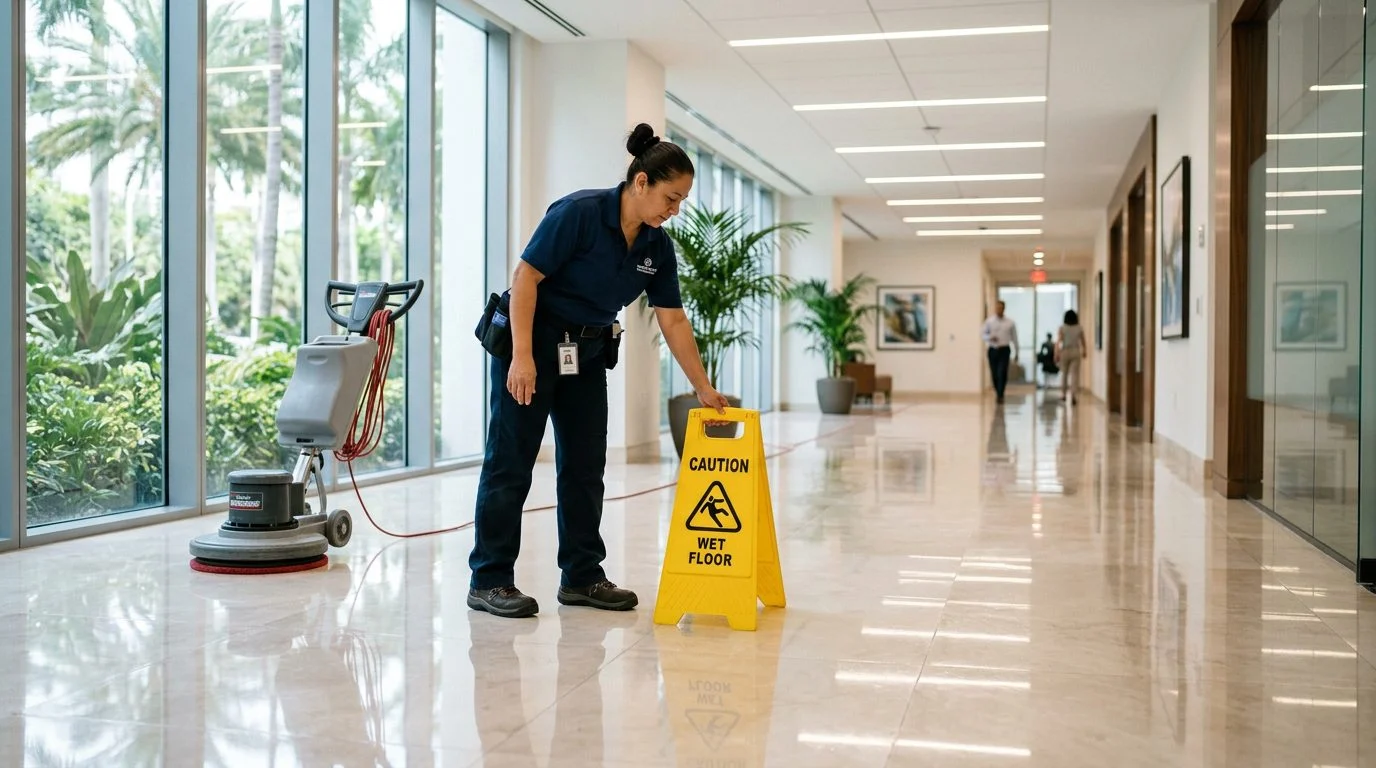
Let the floor air dry, or buff it with a dry microfiber pad. Keep foot traffic off until the surface is dry. In busy buildings, place wet floor signs so people see the hazard before they step on it. Test the finish after drying. If it feels tacky, rinse that section again rather than adding more cleaner.
Wet floors are a slip risk, so drying time matters for safety as well as looks.
Why Does My Floor Still Look Dirty After Mopping?
Often the cause is the mop water, the amount of cleaner, or a skipped step, not the floor itself.
Common causes include reused or dirty mop water, too much cleaner, and skipping the dry debris step. A worn or dirty mop head and residue from older products also leave a floor looking dull. Each one spreads or holds soil.
Grout lines and corners hold soil that one mop pass does not lift. Give them targeted scrubbing with a soft brush, then rinse. Work the brush along the grout line rather than across the whole tile, so you lift the dirt instead of smearing it.
A dull look can come from worn finish rather than dirt. Test a small hidden spot first. If the finish is worn, more scrubbing usually won’t restore it, and that calls for a different maintenance step. Start with the dry debris step, then mop with fresh water and a measured amount of cleaner. If the floor still looks dirty, change one variable at a time so you know what made the difference.
When a Regular Floor Care Routine Makes Sense
A routine schedule makes sense when a floor takes heavy foot traffic every day.
High-traffic commercial spaces, condo common areas, and lobbies usually need a set schedule instead of occasional cleaning. Each of these areas gets dirty faster than a private room.
Our floor care maintenance service covers this kind of routine across South Florida, including Miami-Dade, Broward, and Palm Beach counties. For an overview, see our floor care maintenance overview. Condo boards can review a cleaning schedule on our condo floor care schedule page. For local details, see South Florida floor care information.
The ISSA Cleaning Industry Management Standard describes service quality, staffing, and green cleaning practices for commercial cleaning organizations. Plan each of those points into your routine: service quality, staffing, and cleaning products.
Should you sweep or vacuum before mopping?
Yes. Loose grit scratches the floor and smears when the mop goes over it.
Do floor cleaners need a Safety Data Sheet at work?
Cleaning products can vary in how hazardous their ingredients are. A Safety Data Sheet provides information about a chemical’s hazards and how to handle it safely. A product’s hazard information is typically found on its label and in its Safety Data Sheet. Check the label, and request the Safety Data Sheet from the manufacturer or supplier if you don’t have one. For questions about the cleaning products or procedures we use at a site we service, you can reach our team through the contact page.
Common Floor-Cleaning Mistakes
Mopping Over Loose Grit
Dirt left on the floor gets smeared and can scratch the surface once the mop moves across it. Sweep or vacuum first.
Using Too Much Water
Soaking a floor leaves residue, slows drying, and can damage some flooring materials. Work with a damp mop, not a wet one.
Choosing the Wrong Product
A cleaner made for one floor type can dull or stain another. Match the product to the surface and follow its label.
Skipping the Final Rinse
Leftover cleaner builds up into a film that attracts dirt. A clean rinse pass keeps the finish looking its best.
Why Commercial Properties Choose Gator Protection
Scheduled Floor Care
Routine maintenance keeps floors in step with the traffic your building sees every day.
Day Porter Support
On-site porter service handles spills, high-traffic cleanups, and everyday upkeep between deep cleanings.
Built for South Florida
Our team focuses on the conditions local properties face, from Miami-Dade and Broward to Palm Beach County, Brickell, and Coral Gables.
Clear, Careful Methods
We follow a consistent process and use products suited to each surface.
Safety First
Never mix cleaning products, especially bleach with ammonia or acid-based cleaners. Mixed chemicals can release harmful fumes. Keep the area ventilated and read each product label before use.