
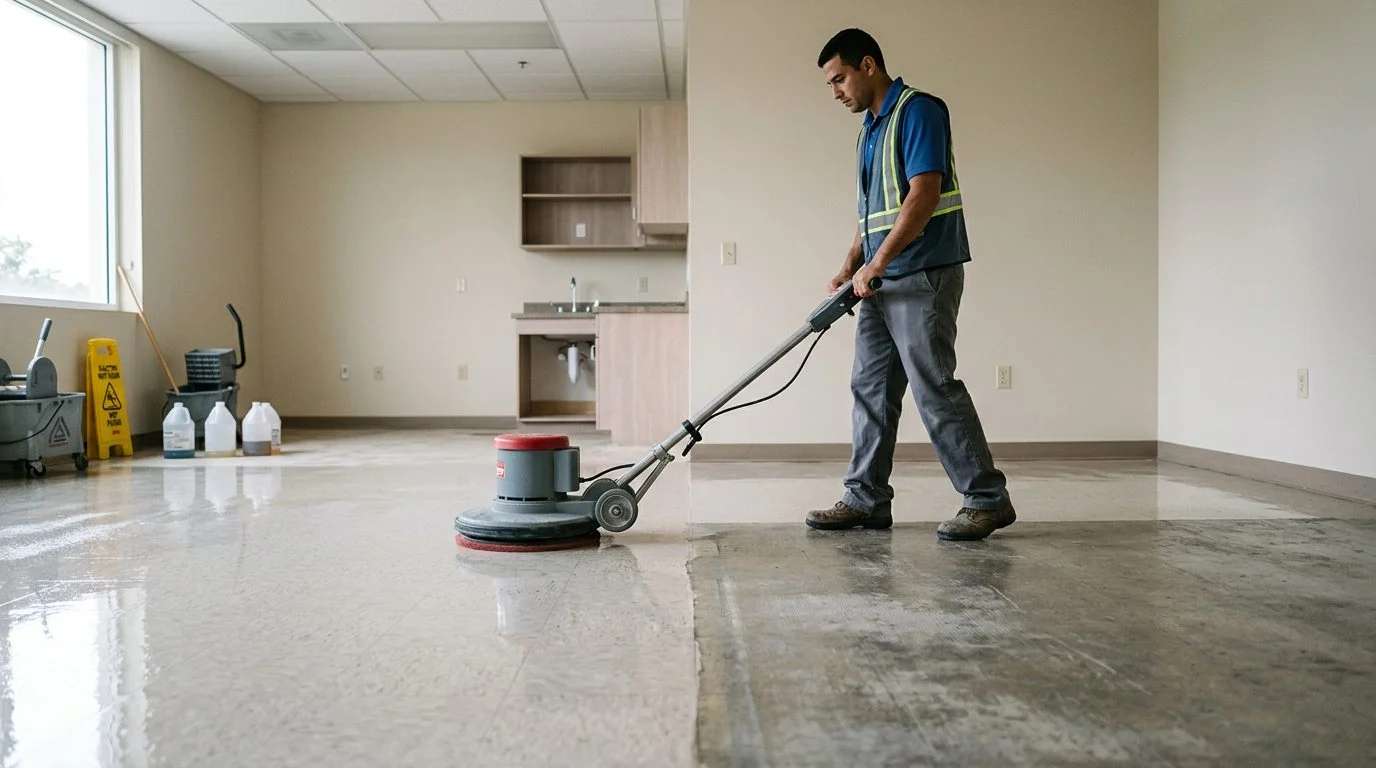
Floor Care Maintenance | South Florida
Clear Answers on Floor Care Costs in Your Leased Office
Before you sign or renew, learn which questions to ask about cleaning, upkeep, and shared spaces, and how to plan floor care with your building's needs in mind.
By Ryan Jurney · Published November 24, 2026
If you rent office space, the first question is often who pays for floor care in a leased office in Florida. The answer sits in your lease, not in a general rule.
Often the tenant pays for its own suite, while the building covers shared areas and may bill those costs back to tenants. The sections below show how to read your lease and what to gather before you ask for service.
Who Usually Pays for Floor Care in a Leased Office
The lease sets the split, so start with its maintenance and operating-expense language. Floor care usually falls into one of two buckets: a cost of your own suite, or part of the building’s costs shared among tenants.
Two offices in the same building can have different arrangements, because each lease is its own written contract. Your lease still decides the details.
Start by finding the sections on maintenance, repairs, and operating expenses. Read the exhibits too. They can hold cleaning specifications or building rules that shift who does what. Check for amendments as well, since a later amendment can change who pays for a service. If something is missing, ask the landlord for it in writing. Do this before you call for service, so your request matches the contract.
If your suite's floors need care now and your lease places that cost on your side, contact Gator Protection so we can scope the work for your space. Talk it through with our team — the first consultation is free, confidential, and carries no obligation.

Start With the Maintenance and Repair Clause
The maintenance and repair clause is where your floor duties are written, so read it word by word. Look for words such as maintenance, repairs, janitorial, and the condition you must keep the premises in.
Then check whether the clause names floors, carpet, or cleaning. A clause that only says “general upkeep” leaves more room for dispute than one that names the floors.
Floor condition at move-out can become a dispute, so note exactly what the lease asks for.
How Gross, Modified Gross, and Triple-Net Leases Split Costs
In a full-service (gross) lease, the rent often covers building services, so shared floor care usually sits inside the rent. A modified gross lease mixes the two approaches. Some services are included in rent, and others pass through to tenants, so you must read it clause by clause.
A triple-net (NNN) lease usually asks tenants to pay a share of building operating costs. That can include common-area cleaning.
Suite-only floor care works differently. Many leases make the tenant responsible for its own space, whatever the lease type. A gross lease can still leave your suite’s carpet and hard floors on your side.
Lease labels are a starting point, not the answer. Use the lease type only as a guide to which clause to read first. The clause wording controls the split.
Common Areas Versus Your Suite
Shared spaces usually belong to the building, and your suite usually belongs to you. Lobbies, corridors, restrooms, and shared entrances are commonly managed by the building owner. Interior office floors, reception areas, and suite-specific carpet are often the tenant’s responsibility unless the lease says otherwise.
Mixed-use and shared floors need a clear map. Ask for a floor plan that marks which areas belong to which party. Without one, a hallway outside your door can become an argument over who cleans it.
Carpet and hard-surface floors may fall under different clauses in the same lease. Check each one separately.
Day porter service covers in-day upkeep during business hours, such as spill response and restroom checks. Map the areas first, then decide which upkeep you need and who will handle it. See day porter service for how it works.
Operating Expenses and How Floor Care Appears on the Bill
Building floor care often reaches tenants through operating expenses, such as common area maintenance (CAM) charges. CAM is the shared cost of running the property, billed back to tenants. Those charges can include floor cleaning, so a line on the bill may cover work you never saw.
Ask the landlord or property manager for the operating-expense breakdown in writing. Look for whether floor care is itemized or lumped into a general line. Then compare the CAM statement against the lease’s pass-through language before you pay.
One mistake is paying a CAM statement without checking it against the lease. If a charge does not match the lease, raise it in writing right away.
Tenant-requested floor work is separate. A service you order for your suite is billed to you, whether or not CAM applies. Keep your requests and invoices together, so each charge has a clear source.
When Damage or Wear Changes the Answer
Normal wear and tear and damage caused by the tenant are often handled differently in a lease. Read how the lease defines each one, because the definitions decide the cost. A busy suite wears carpet over time. A stain on a hard floor can land on a different side of the lease.
Document the floor’s condition with dated photos at move-in and before any service request. Photos give both sides the same starting point. Note the floor type too. Commercial carpet, vinyl composition tile (VCT), and sealed concrete need different care, which changes the scope and cost of service.
Scrubbing and stripping are separate services. Stripping removes old floor finish, and waxing puts a new one down. Match the lease’s cleaning terms to the service you actually need.
Wood floors need extra attention to moisture.
Not sure what your next step is?
Talk it through with our team — the first consultation is free, confidential, and carries no obligation.
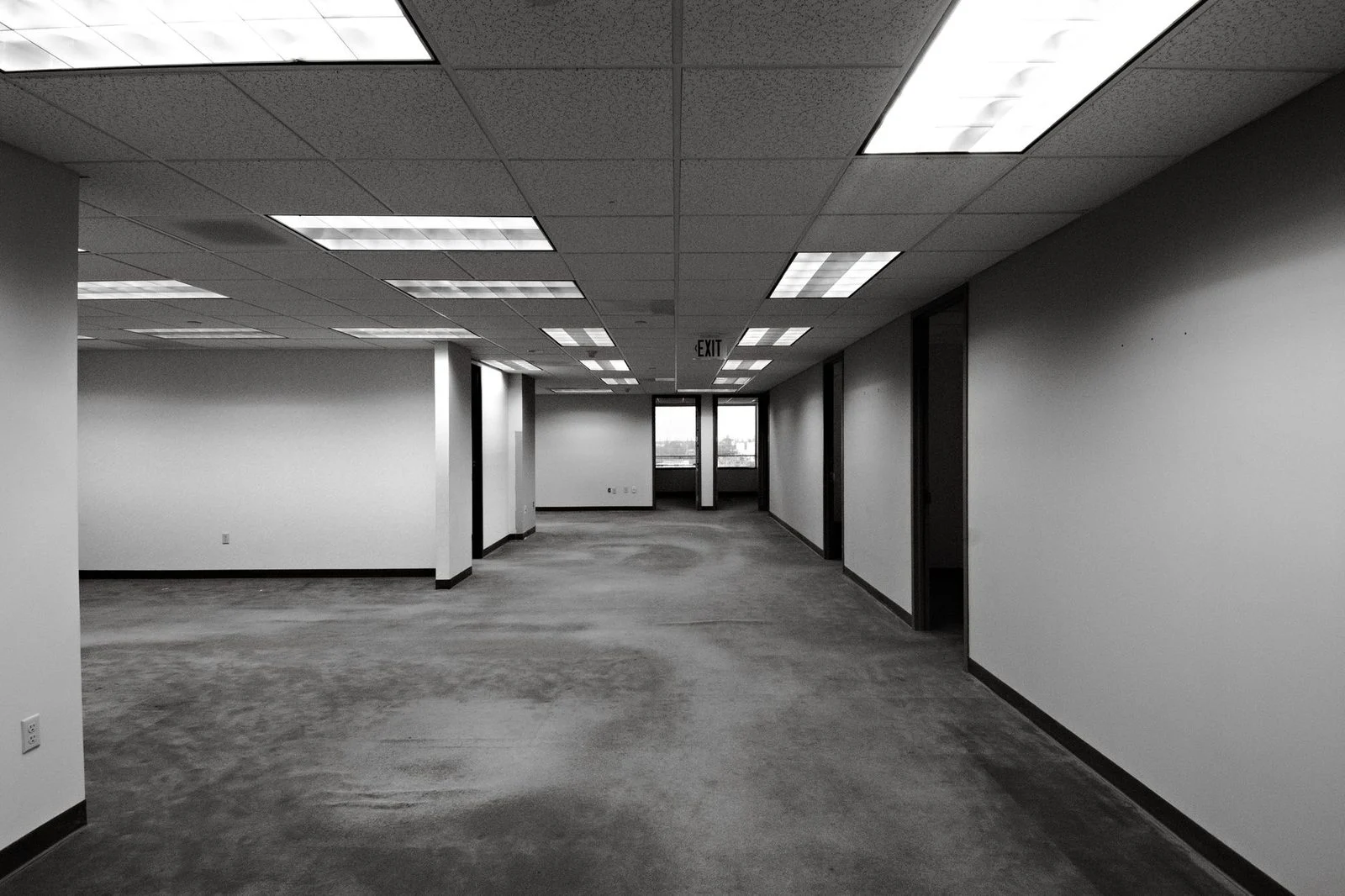
Ask for Floor Care for Your Office Suite
If your suite needs floor care now and your lease puts that cost on your side, Gator Protection can scope the work for your space. Our team provides floor care maintenance, day porter service, and pressure washing across South Florida, including Miami-Dade, Broward, and Palm Beach counties, plus Coral Gables, Brickell, and South Beach. Work can be scheduled around your business hours.
The first consultation is free, confidential, and carries no obligation to continue.
Common Questions
Who pays for floor care in a leased office in Florida?
Often the tenant pays for its own suite, and the building covers shared areas. The lease wording decides the split.
Read your maintenance clause, gather dated photos of your floors, and then contact Gator Protection with your building address, floor type, and a copy of that clause.
How Gator Protection Supports Office Floor Care
Floor Care Maintenance
Routine upkeep that keeps office floors clean, safe, and presentable for staff and visitors.
Day Porter Service
On-site support during business hours to keep common areas and high-traffic spaces in order.
Serving South Florida
Commercial service for offices across Miami-Dade, Broward, and Palm Beach counties, including Brickell, Coral Gables, and South Beach.
Clear Communication
Our team walks you through service scope so you can plan floor care with confidence.
Check Your Lease Before Assuming Anything
Floor care responsibilities can differ from one building to the next. Read the cleaning, maintenance, and common area sections of your lease, and note any questions to raise before you commit.
Questions to Bring to Your Lease Review
Which areas are included?
Confirm whether your suite, hallways, lobbies, and restrooms fall under your responsibility or the building's.
What is the floor type?
Carpet, tile, and hard surfaces each need different care, and the lease may not spell out the details.
How often is service performed?
Clarify the schedule for routine cleaning and periodic floor maintenance, and who arranges it.
Who handles the cost?
Ask whether floor care costs are included in rent, passed through as operating expenses, or billed to your business directly.
Plan Your Office Floor Care With Gator Protection. The First Consultation Is Free, Confidential, and Comes With No Obligation to Continue.
More of our services
- Floor Care Maintenance for Miami-Dade Condos, Apartments and Gated Communities
- Office Entrance & Sidewalk Pressure Washing, Broward County