
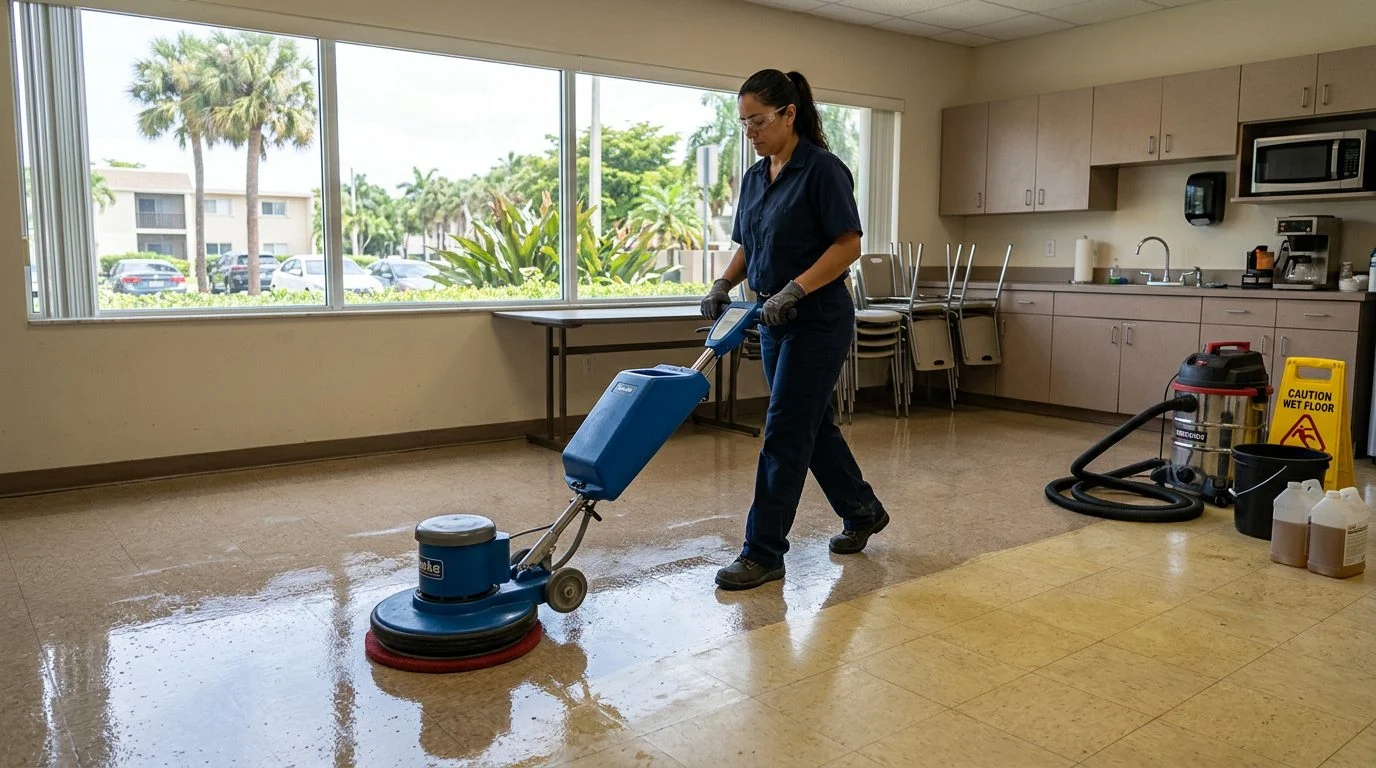
Floor Care Maintenance | South Florida
Why Your Commercial Floor Finish Is Turning Yellow
Heat, sunlight, and heavy daily traffic can change how a finished floor looks over time. Here is how to tell what is happening and where to start.
By Ryan Jurney · Published November 27, 2026
If a lobby or corridor floor looks dull and yellow, you may be wondering whether the finish has failed. Usually it has not. Why does a floor finish turn yellow in South Florida? Most often, three things work together: the finish ages, soil and cleaning residue get trapped in it, and the heat and humidity of the local climate speed up both.
Start with a diagnosis before anyone strips the floor. The right fix depends on which of these causes is behind the color.
Why commercial floor finishes turn yellow in South Florida
A yellow cast on a commercial floor is a surface condition, not proof the floor is ruined. It shows up most on light tile, terrazzo, and sealed concrete in lobbies, corridors, and retail floors. It usually creeps in over months, so the change is hard to notice day to day.
Many managers first see it when they compare the floor to an old photo or to a section near a wall that gets less traffic. The color looks strongest where people walk most. Entrances and main routes take the most wear, so the yellow tone often follows those paths.
Before you choose a fix, look at where the color sits and how it spreads. That check shows whether you are dealing with a finish problem, a soil problem, or both. Our floor care maintenance overview for Miami-Dade explains how this work fits into a full maintenance plan.
If a lobby or corridor floor in your building looks dull and yellow, we can walk the space with you and look at the finish up close. Talk it through with our team — the first consultation is free, confidential, and carries no obligation.
How finish aging causes yellowing
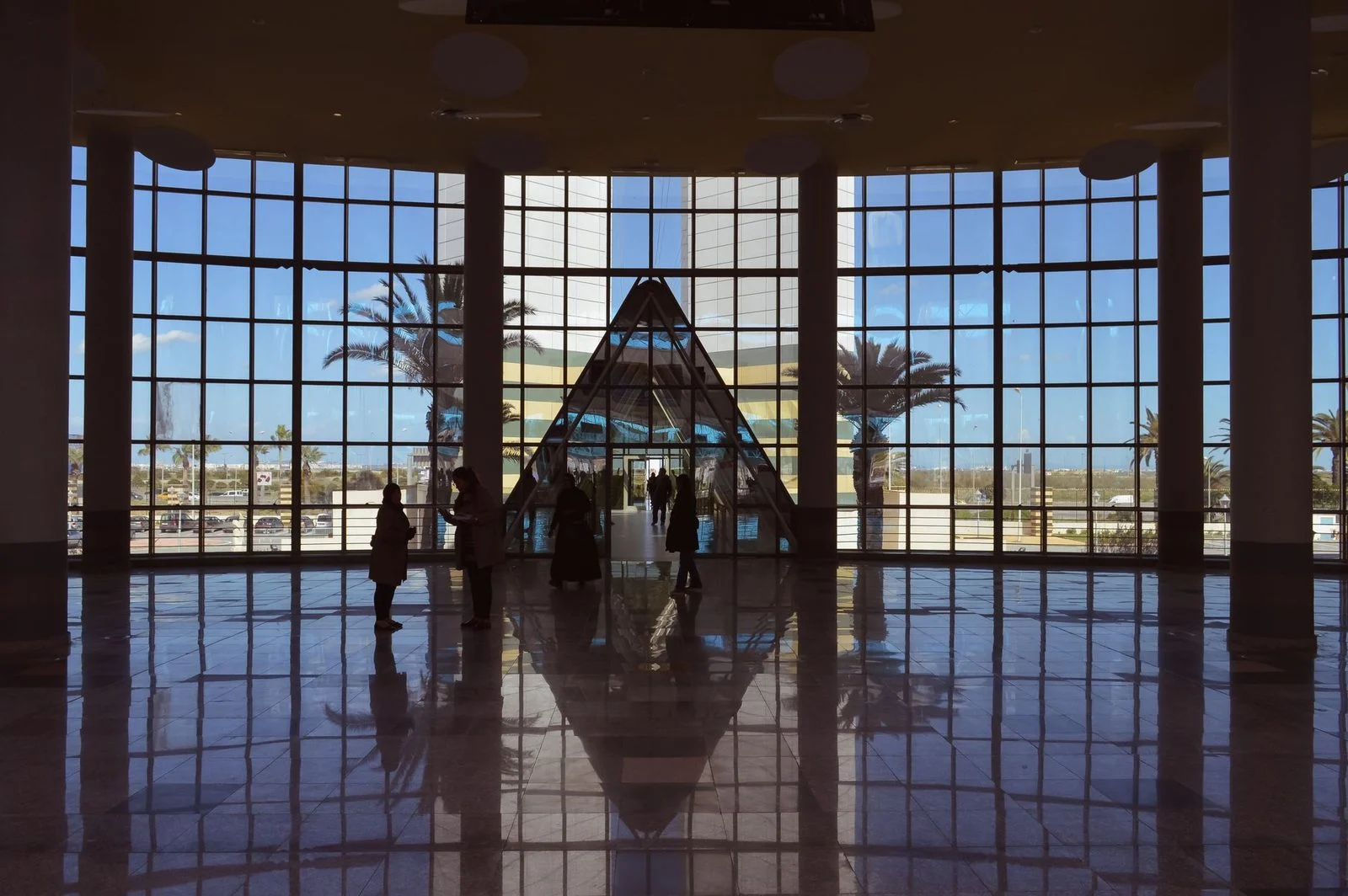
Finish aging causes yellowing when the protective coating wears down and takes on an amber tone over the years. Floor finishes guard the surface against foot traffic, cleaning, and sunlight. Over time, that coating changes, and older layers can look warmer or yellower, most clearly on light floors.
A finish that was clear when it went down can look yellow years later, even with routine care. The change is gradual. Staff who see the floor every day often do not notice it until someone compares it to the original.
Water-based and solvent-based finishes can age differently. Some oil-based polyurethane finishes yellow over time, so the finish type on your floor matters. Our team can confirm the finish type on site, since it affects which cleaners and stripping methods are suitable. Contact us to arrange that assessment.
How trapped soil and buildup make the problem worse
Trapped soil makes yellowing worse by holding dirt and residue in the finish, where a quick mop can’t reach it. Dirt, grease, and tracked-in grime work into worn spots and sit there. Over time that film looks darker or yellowish, and it dulls the shine.
Cleaning can add to the problem. A cleaner that leaves a soap film behind, or too much product that doesn’t rinse, creates a haze that holds more dirt. Each new layer of residue traps more soil.
Surface mopping alone often misses discoloration that is embedded in the finish. The floor may look a little better after a cleaning, then drift back. That pattern points to residue and worn coating underneath, not a simple surface stain.
Buildup is a maintenance problem. It is not a sign the floor has to be replaced, and it can be planned for with a regular cleaning routine.
Why heat and humidity in South Florida speed up yellowing
Heat and humidity speed up yellowing by working on the finish and on the soil it holds. South Florida stays hot and humid for much of the year. Warm, damp air gives grime a better chance to bond with the coating and to build into haze.
Entrances take the heaviest load. Humid outdoor air and wet footwear come in with every door opening. That moisture, plus tracked-in soil, collects in the same paths again and again, which is why the color often looks worst near the doors.
Buildings with limited climate control in back-of-house or service areas can also see more change, because warm, damp conditions help grime build up where cleaning happens less often. How fast this shows up varies by building, traffic level, and cleaning routine.
Yellowing or natural color change? How to tell the difference
Natural color change and finish yellowing look alike but have different causes. Wood, including white oak, changes color over time from light exposure and age. That change happens in the wood itself, not in the finish, so stripping the finish will not reverse it.
Vinyl and epoxy surfaces can also discolor. The cause and the fix may differ by material, so a method that suits one floor may not suit another.
Use a simple check. First, decide whether the color sits in the finish layer or deeper in the wood or material. Next, look at the pattern. Even color across a room points to the finish layer or the material. Color concentrated in walking paths and entrances points toward soil buildup.
Cleaning products matter too. Use cleaners made for the specific finish. The EPA Safer Choice product list includes floor-cleaning, floor-finish, and floor-stripper products that meet EPA’s criteria, which can help narrow your options.
The fix sequence: clean, assess, then strip if needed
Start with a thorough cleaning, then assess the finish, and strip only if the yellow tone or wear is still there. This order avoids work the floor does not need. It also keeps the planned process in view: clean first, judge second, and then decide.
Step one is cleaning. Remove soil, residue, and soap film with a cleaner suited to the finish, and rinse well. Many floors look noticeably better after this step alone.
Step two is assessment. Once the floor is clean, look at wear, remaining finish coverage, and whether the yellow tone remains. Bare spots, heavy wear, or color that stays after cleaning point toward a finish problem.
Step three is stripping and refinishing, if the finish needs it. Commercial floor finishes are often specified by type and applied in multiple coats. The Palm Beach County floor finish specification shows how commercial finishes are specified this way.
Stripping is more involved than cleaning. OSHA chemical hazard guidance states that floor-stripping chemicals can cause serious health effects. It also notes that ventilation, chemical mixing, sprays, and mechanized equipment affect worker exposure.
Slip resistance is a separate concern on commercial floors. See slip resistance on commercial floors in Florida for that topic.
Common questions
Can yellowed floor finish be cleaned?
Often, yes. A thorough cleaning removes residue and haze. If the yellow sits in worn finish, the floor may need stripping and recoating.
Does water-based floor finish turn yellow?
It can age differently from oil-based finishes. The finish type on your floor is the first thing to confirm.
Is an amber white oak floor a finish problem?
Not always. White oak changes color with light and age, which is separate from finish yellowing.
Not sure what your next step is?
Talk it through with our team — the first consultation is free, confidential, and carries no obligation.
Request a walk-through quote for your floor
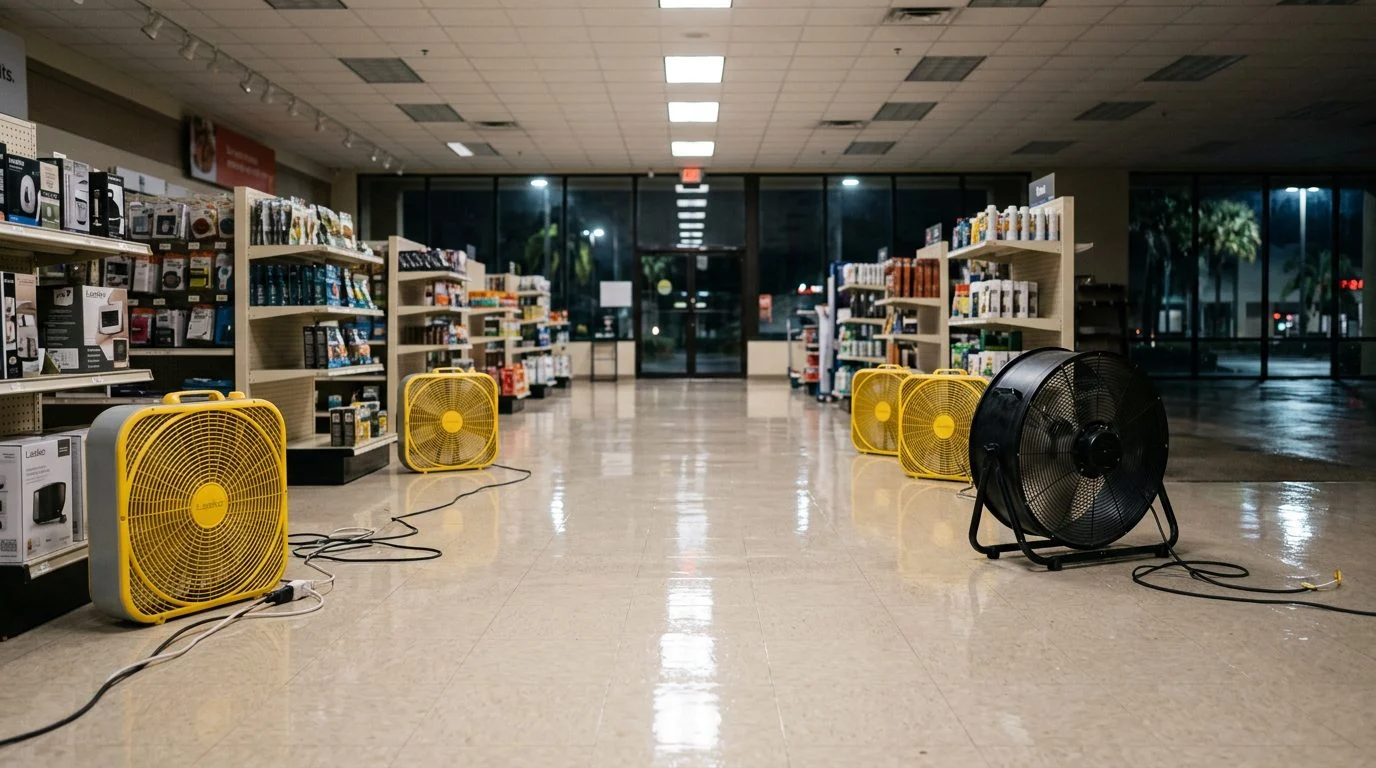
A dull, yellowing lobby, corridor, or retail floor affects how tenants, guests, and customers see the space. If that is your situation, a closer look at the floor will help you decide what to do next.
Our team can walk the floor with you. We look at the finish, the soil buildup, and the surface condition in person, then talk through your options. Our day porter service can also keep lobbies and corridors clean between deeper floor care cycles.
La consulta inicial es gratuita, confidencial y sin compromiso de continuar.
To get started, fill out our contact form and ask for a walk-through of your floor.
Common Reasons Floor Finish Yellows
Sunlight and UV exposure
Windows and bright lighting can slowly age certain finishes, especially in lobbies, storefronts, and open floor plans facing the sun.
Residue buildup
Soap film, wax layers, and dirt that were not fully rinsed can trap in the finish and create a dingy, amber cast.
Aging of the finish
Over time, a finish can oxidize and wear unevenly, so the yellow tone may show most in high-traffic paths.
Cleaning products
Some strong or mismatched cleaners can react with the finish and leave a film that looks yellow under commercial lighting.
Check the Finish Type First
Routine cleaning and stripping are different jobs. Before any stripping or recoating begins, confirm what type of finish is on the floor so the right process is used.
How Our Team Approaches Floor Care Maintenance
Assessment
Our team looks at the floor, the finish, and the conditions it lives in, including foot traffic and light exposure.
Gentle, appropriate cleaning
We use methods matched to the finish to remove residue without adding to the haze.
Routine maintenance
A regular schedule helps keep buildup from settling into the finish, so the floor stays easier to care for.
Clear recommendations
We explain what we see and what we suggest, so you can decide on the next step for your property.