
Landscape Services | South Florida
How Often Should Commercial Landscapes Be Edged in South Florida?
Edging frequency depends on how fast your grass grows, how busy the property is, and how it is maintained between visits.
By Ryan Jurney · Published November 23, 2026
Grass that creeps over a walkway makes a whole property look tired. For a commercial site in South Florida, the short answer is that edging usually rides along with each mowing visit.
Short Answer: How Often Commercial Edging Is Usually Done in South Florida
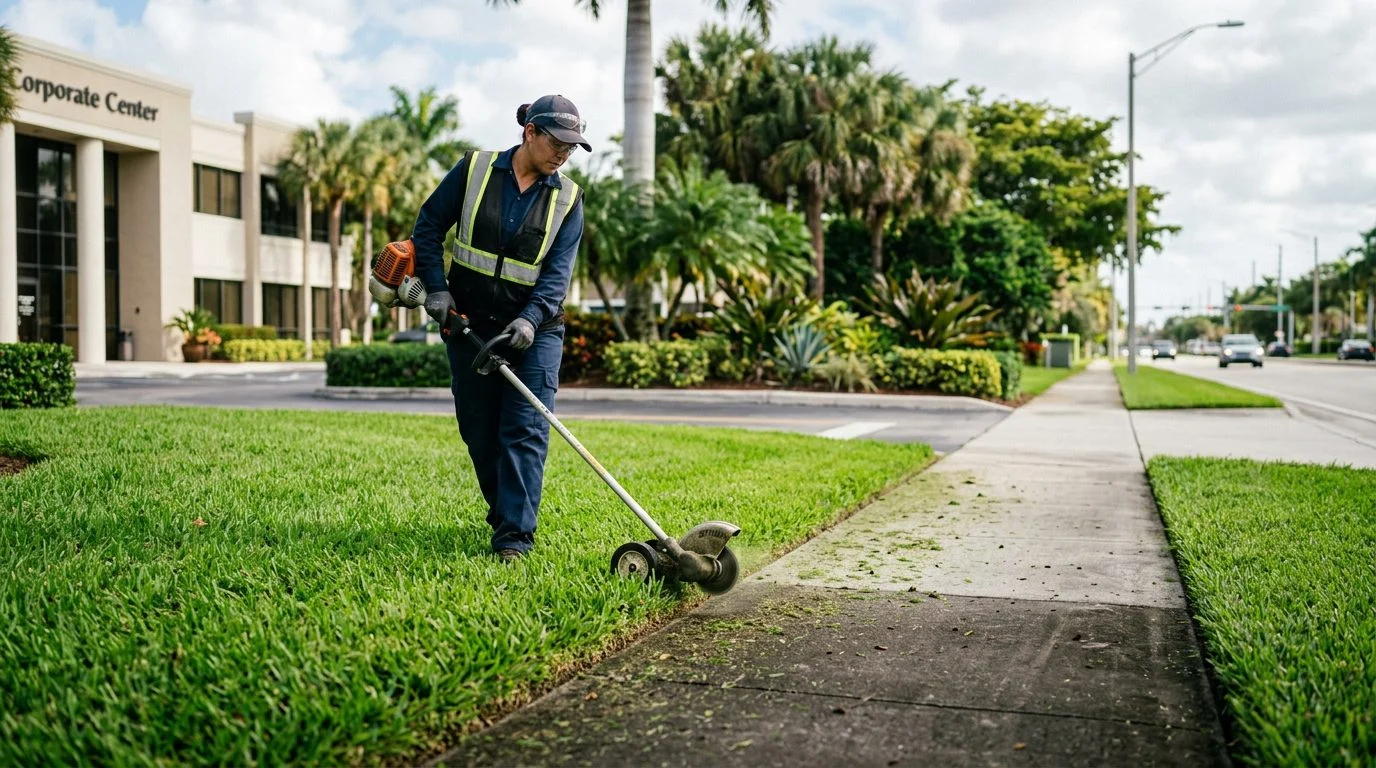
Commercial edging in South Florida is scheduled in different ways, and the right timing depends on the property. Crews cut the edge along walks, curbs, and beds on the same trip.
South Florida’s warm temperatures and frequent summer rain keep grass and groundcover growing for much of the year. Edges soften faster here than in cooler regions. A line that looked sharp at the last visit can blur again before the next one.
The right interval still varies from one property to the next. A busy entrance with a heavily watered lawn needs attention sooner than a quiet side lot. That is why a site walk comes before any schedule is set. The sections below cover what drives the schedule, how deep to cut, and the signs that edging is overdue.
If grass is already spilling over your walks and curbs, we can walk your property with you and set an edging schedule that fits it. Talk it through with our team — the first consultation is free, confidential, and carries no obligation.
What Edging Does and Why Edge Lines Fill In
Edging cuts a clean, defined line between turf and the surfaces next to it. Those surfaces include walks, curbs, driveways, planting beds, and building foundations.
Grass doesn’t stay put. Runners and rhizomes push outward into hardscape and beds. Between visits, the line softens and the grass starts to spill over.
A crisp edge does more than look neat. Tenants, residents, and visitors read a sharp line as a property that is cared for. Clear edges also keep walking surfaces easy to see and use.
Turf type matters too. Some South Florida lawn grasses and groundcovers spread faster than others. A fast spreader needs re-cutting sooner, so the plants on your site shape the schedule. Edges that stay defined also make each mowing visit faster to finish.
What Drives the Edging Schedule on a Commercial Property
The growing season sets the pace. Warm, wet months speed growth, so the schedule often tightens from late spring through early fall.
Turf and groundcover type come next. Aggressive runners push into walks and beds faster than slow growers do.
Irrigation is a third factor. Zones that get heavy watering, and areas near sprinkler heads, often show edge growth sooner. The Florida Department of Environmental Protection describes water-conservation practices that apply to landscape maintenance.
Traffic and visibility matter. Entrances, main walkways, and street frontage get edging first because people see them every day.
Mowing cadence ties it together. Edging follows the mowing routine, so a change in mowing frequency usually changes the edging schedule too. The right answer depends on the facts of each property.
How Deep Should Landscape Edging Be?
The goal is a clean, near-vertical cut. The cut separates turf from the adjacent surface and keeps runners out of beds.
Cut deep enough to define the line. Don’t dig so deep that you cut into the soil bed or chip the hardscape. A shallow pass at the surface looks neat for a short time, then the line blurs again.
Match the cut to the edge. Against concrete curbing, the cut sits tight to the curb. Against pavers, keep the cut clear of the paver joints so the pavers stay put. Against a soil bed, the cut should follow the bed line cleanly.
A well-cut edge holds its line longer between visits than a shallow one. On commercial sites, the crew should check the edge line at each visit before moving to the next area.
Edging Styles and Edge Materials Compared
Powered edgers cut a sharp line quickly along long runs of walk and curb. String trimmers and hand tools work better around fixtures, tight corners, and irregular beds. Many commercial crews use both on the same visit.
Hardscape edges such as concrete curbing and paver borders stop spread when they are installed well. They give the turf a firm boundary to meet.
Physical barriers like steel, plastic, or concrete edging can cut down how often a line needs cutting. Barriers can shift, fade, or buckle over time, so they need regular looks. Irrigation heads near barriers should be checked too.
The trade-off is simple. Barriers reduce how often a cut is needed, but they don’t remove the need for regular mowing and trimming around them.

Signs Your Commercial Edging Is Overdue and Next Steps
Grass growing over walkway edges is the clearest sign that edging is overdue. Runners in planting beds and a soft, blurred line along curbs are close behind.
Mulch or soil pushed onto paved surfaces is another warning. Storm debris can collect in gaps along the edge. Turf that browns near hardscape can point to a problem worth a look.
A site-specific edging plan sets the schedule around the property’s turf, irrigation, traffic, and mowing routine. That keeps the timing tied to what the property actually needs, not to a guess.
If your walks and curbs already show these signs, the first step is a site walk. Your first consultation is free, confidential, and comes with no obligation to continue. Reach out through our contact page, and we’ll walk the property with you to set an edging schedule that fits it.
Frequently Asked Questions
How deep should landscape edging be?
A clean cut that defines the line, without digging into the soil bed or damaging the hardscape, is the goal.
Should edging be done with every mowing visit?
Yes, edging can be paired with the regular mowing visit, depending on the property and its needs.
What can you use instead of landscape edging?
Concrete curbing, paver borders, and physical barriers can reduce how often a cut is needed. Mowing and trimming still continue around them.
A Common Mistake to Avoid
Cutting edges too deep can dig into the soil bed and damage hardscape. Edging should define the line cleanly without gouging the ground.
How We Approach Commercial Edging
Clean, Defined Lines
We cut edges along walkways, curbs, and beds to keep the property looking neat.
Scheduled With Your Mowing
Edging can be paired with regular mowing visits, based on your property's needs.
Careful Around Hardscape
Our team works to protect concrete, pavers, and other hard surfaces during every visit.
A Dedicated Team
Our team stays in touch with you so the schedule keeps up with your property's changing needs.
Factors That Shape Your Edging Schedule
Growth Rate
Warm, wet months can speed up turf growth along edges, so your schedule may need to adjust through the year.
Foot Traffic
Busy entrances, parking areas, and walkways often need edges kept sharp more often.
Mowing Schedule
Edging that follows each mow keeps lines consistent and reduces buildup along borders.
Hardscape Layout
Long curbs, many beds, and tight corners can change how much time edging takes on each visit.