
Landscape Services | South Florida
A Mulching Schedule That Keeps South Florida Beds Looking Their Best
Heat, heavy rain, and fast growth all change how quickly mulch breaks down. Here is how to build a schedule that accounts for those conditions.
By Ryan Jurney · Published November 22, 2026
If you manage a condo, office, or retail property in South Florida, you’ve probably asked how often the beds need fresh mulch. For most commercial landscape beds in South Florida, the answer is a cycle with three levels: a routine check, a touch-up when a spot thins, and a full refresh on a longer timeline.
The right interval depends on the facts of each property, so one number rarely fits every site. This page explains the cycle, why South Florida conditions matter, and what to write into a scope.
The Short Answer: Commercial Beds Run on a Scheduled Cycle
Commercial beds are usually checked on a recurring schedule, touched up as needed, and fully refreshed less often. Each level does a different job.
A routine check is a look at each bed during a regular service visit. The crew notes bare soil, thin spots, mulch pushed onto walks, and new weeds, then fixes small problems on the spot.
A touch-up adds mulch to bring a thin area back to the intended layer. Building entrances, monument signs, and parking-lot islands often need touch-ups first because people see them most.
A full refresh is a larger job. It makes sense when the mulch has broken down, matted, or lost its color, or when weeds have taken hold. It comes on a longer cycle than touch-ups.
For the wider plan, see our commercial landscape services for condos and multi-unit properties page.
If your beds look thin, matted, or washed out between visits, contact us and we can talk through a mulch schedule that fits your property. Talk it through with our team — the first consultation is free, confidential, and carries no obligation.
Why Do South Florida Heat and Rain Shorten the Mulch Cycle?
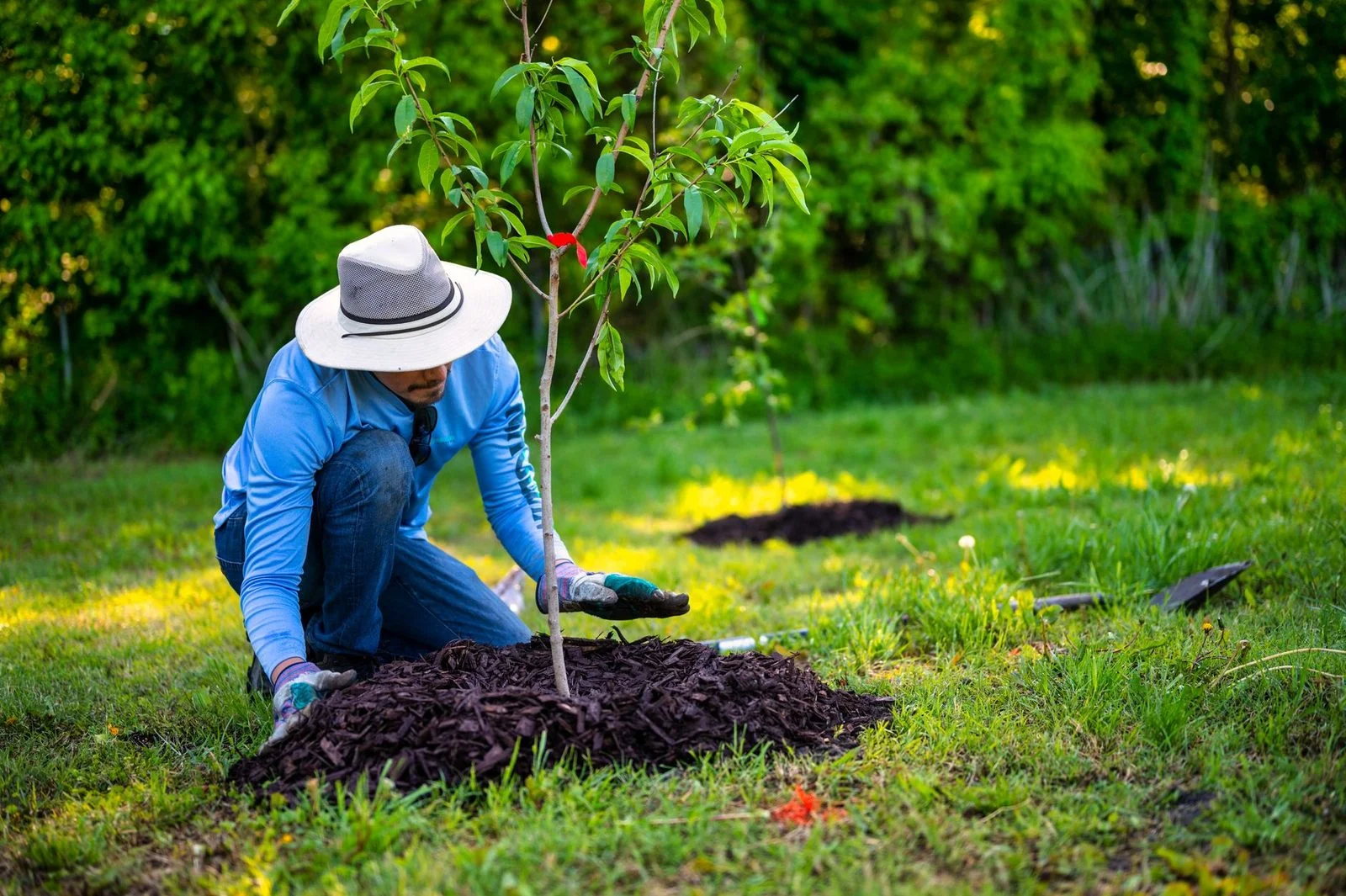
Heat, humidity, and summer rain tend to break organic mulch down faster than cooler, drier conditions do. Organic mulch is plant material, and it is meant to decompose over time. Florida’s warmth keeps that process running most of the year.
Irrigation adds to the problem. Beds that stay damp mat down and break apart sooner. FDEP water conservation guidance offers general information on water use, and reviewing watering schedules alongside the mulch plan is a practical step in landscape maintenance.
Storms add another problem. Heavy rain and wind wash mulch off beds and onto walkways, lawns, and storm drains, which creates cleanup work and slip hazards on paved areas.
Soil and watering zones also vary. Sandy ground and heavily watered zones can thin faster than shaded beds, so check each zone on its own. The UF/IFAS Florida-Friendly GI-BMP program provides training and practices for landscape professionals on fertilizing, irrigation, and water quality.
A Practical Mulch Schedule for Commercial Beds
A practical schedule pairs a check on every service visit with touch-ups as needed and a full refresh on a longer cycle. Write those intervals down so the crew and the property owner work from the same plan.
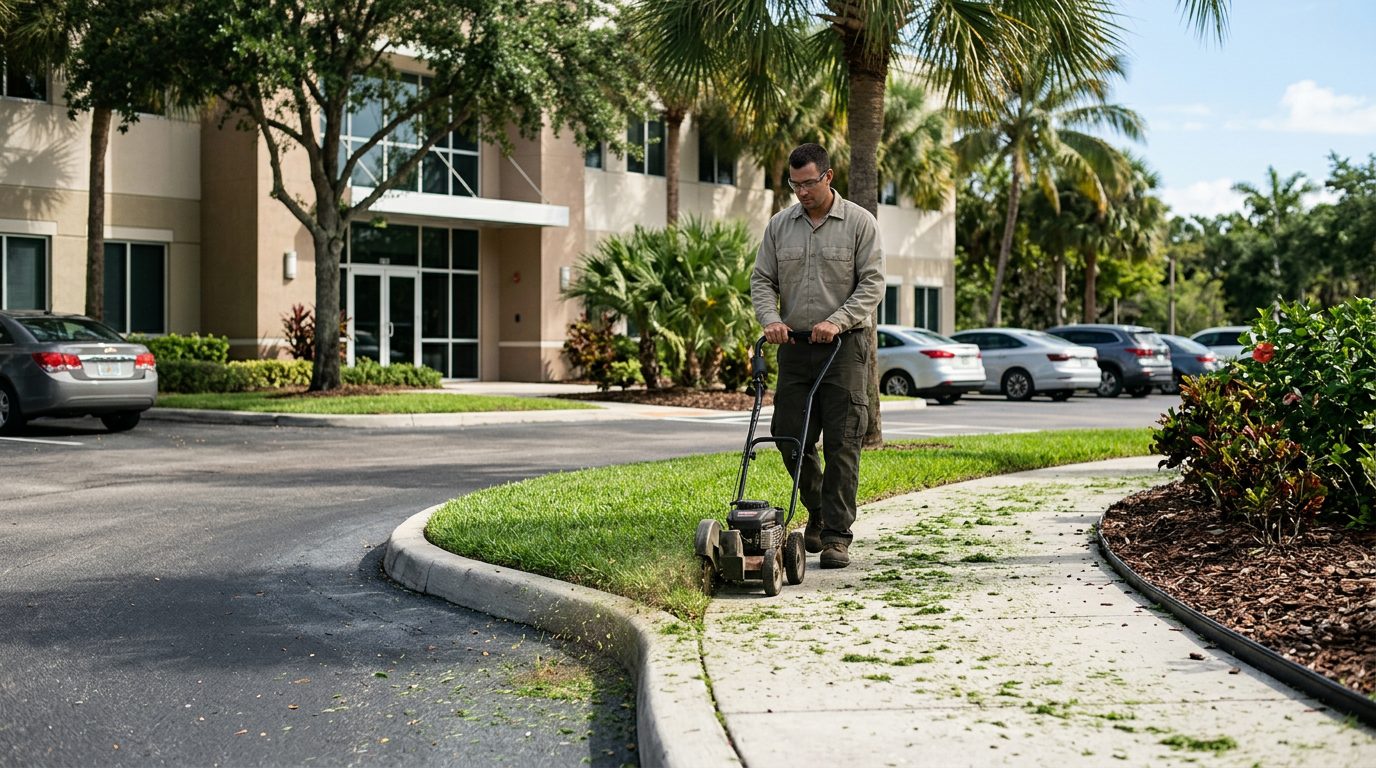
If mowing and edging run on a set route, the mulch check can happen on the same visit. Nothing extra needs to be scheduled.
Property type matters. A condo’s common areas, an office frontage, and a retail bed each see different traffic and visibility. A bed by a lobby door or a busy street usually needs a closer look than a planting on a back side.
Set triggers for each level. A touch-up trigger might be a visible bare patch. A full-refresh trigger might be a matted layer, heavy weed pressure, or mulch that has packed into a crust. Write the triggers down so the crew knows when to act.
Plan the first full refresh on a date, then adjust it after a few cycles based on what the crew finds. Build in a short review after storm season, because heavy rain is when mulch shifts most.
Do You Have to Remove Old Mulch Before Adding New?
No, old mulch does not always need to come out first. A crew can loosen and fluff the existing layer. It can pull out matted or compacted sections. Then it adds new mulch until the bed reaches its target depth.
Remove only what you must. Taking out good mulch adds cost and time without adding much benefit. Keep the old mulch you can reuse in place.
Full removal makes sense in certain cases. Heavy decomposition, a layer far above the target depth, or signs of a disease concern are good reasons to take old material out.
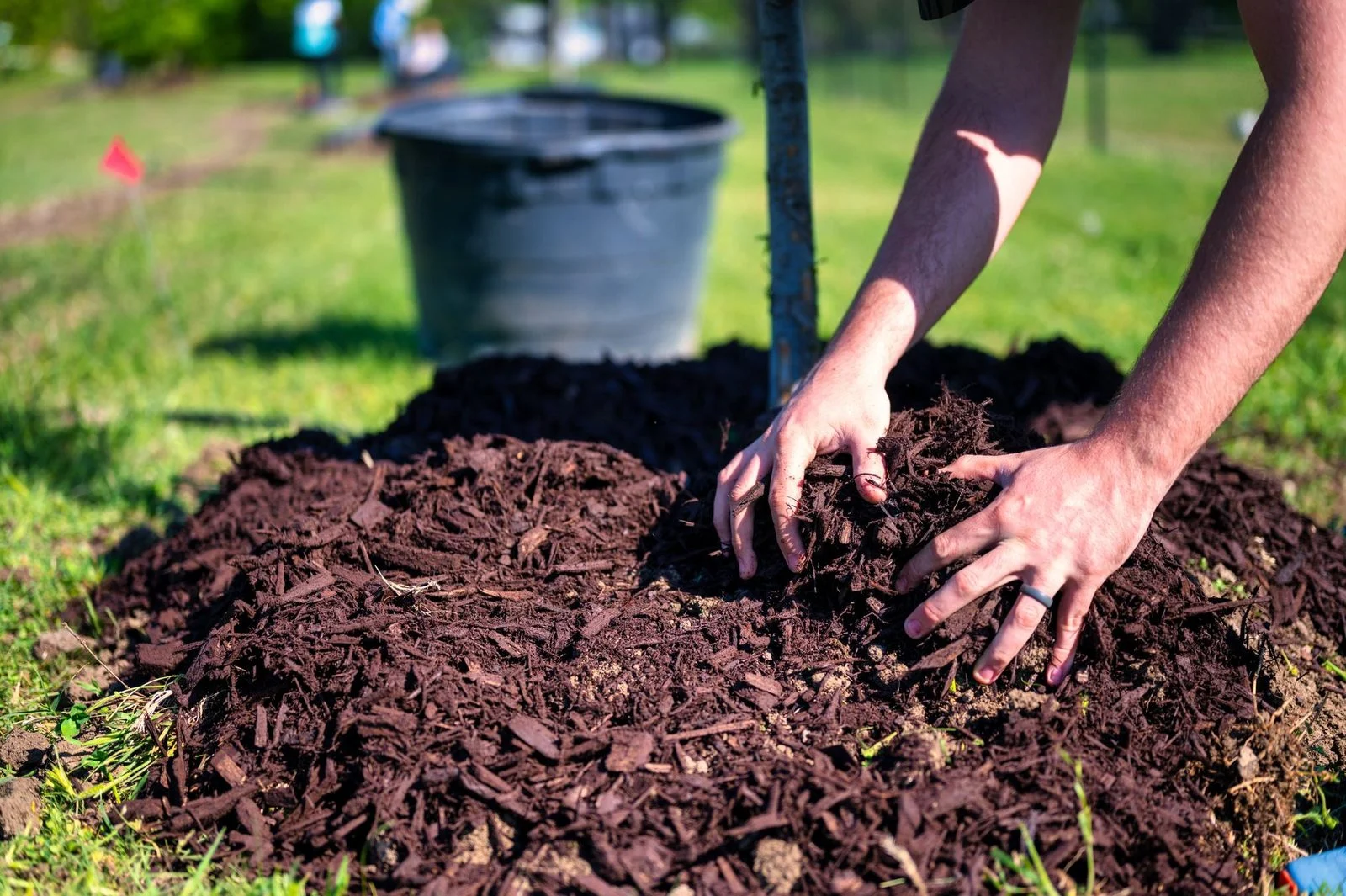
Placement matters too. Keep mulch pulled back from tree trunks and plant stems so it does not hold moisture against bark. Keep it clear of building foundations and siding as well. The target depth belongs in the written scope, not in a rule of thumb.
What Are the Disadvantages of Mulching?
Mulch causes trouble when it is piled too deep, left wet against structures, or washed into drains. A set schedule catches each problem while it is still small.
Too much mulch can suffocate roots and hold excess moisture against plants. Wet mulch piled against walls can also hold moisture near foundations. Mulch that washes into storm drains or onto pavement creates cleanup and safety issues after heavy rain.
Beds that are never refreshed can look neglected, and thick old mulch can hide weeds and irrigation problems. Ad hoc mulching, done only after a complaint, lets these problems grow unseen. When the crew writes down what it finds, the owner can see the pattern and plan the next refresh.
How Do You Write Mulch Into a Maintenance Scope?
A written scope should name the check frequency, touch-up triggers, target depth, and full-refresh interval in plain terms. Those four items make the work easy to review at a board or ownership meeting.
A clear scope also helps invoices match the work performed, so each visit is easy to check. Clear language protects both sides when the work is reviewed.
Keep mulch language apart from pesticide and fertilizer language. Fertilizer and pesticide application are distinct tasks, so they can be described in separate sections of a service scope.
If a bed sits near the beach, check the state dune rules first.
How often should commercial landscape beds be mulched in South Florida?
A typical plan gives each bed a check on every service visit, touch-ups as needed, and a full refresh on a longer cycle.
Do you have to remove old mulch before adding new?
No, not always. Loosen the layer, remove matted or compacted sections, and add new mulch to reach the target depth.
Can mulch go against a building foundation?
Keep mulch clear of foundations and siding. Pulling it back helps keep moisture away from the structure.
If your beds are thinning, matted, or washing out between visits, contact us and we can talk through a schedule that fits your property. La consulta inicial es gratuita, confidencial y sin compromiso de continuar.
How Our Team Approaches Bed Mulching
Bed-by-Bed Review
Each planting bed is checked on every service visit so small problems are caught early.
Schedule Matched to Your Site
Refresh timing depends on your plantings, sun exposure, and rainfall patterns, not a one-size-fits-all calendar.
Clear Communication
We explain what we see and recommend, so you know why each visit includes the work it does.
Supported by Our Staff
Our team of assistants and office staff keeps scheduling and follow-up organized from start to finish.
Tip: Keep Mulch Away From Trunks and Walls
Mulch piled against tree trunks, palm bases, or building walls holds moisture and can harm plants and surfaces. Keep it pulled back from these areas when refreshing a bed.
Signs a Bed Needs Mulch Now
Bare Soil Showing
Exposed soil dries out quickly in the sun and invites weeds to take hold.
Thin or Washed-Out Layer
Heavy rain and irrigation can carry mulch off the bed, especially on slopes.
Weeds Breaking Through
When weeds push through the layer, the mulch is no longer doing its job of blocking light.
Matted or Compacted Mulch
Old mulch that has packed down can shed water instead of absorbing it.
Start With a Free, Confidential First Consultation. No Obligation to Continue.
More of our services
- What Should a Landscape Crew Cover at a Broward Office Park?