
Commercial Landscape Maintenance | South Florida
Planning Grounds Care for Your New South Florida Office?
Get the outdoor details sorted before you move in, from curb appeal to upkeep schedules.
By Ryan Jurney · Published November 22, 2026
Setting up landscape maintenance for a new office lease in South Florida starts with the lease itself. The short answer: read the grounds clauses, map the site, define scope and frequency, go over the pricing details with our team, plan for storm season, and review the first 30 days.
Many setup problems trace back to paperwork. A missing line item or an unclear debris clause can leave the grounds unkept or cost you money later. The steps below follow the order a new tenant usually works through.
Start With Your Lease: Who Is Responsible for the Grounds?
The lease sets who is responsible for the grounds, so read its maintenance, repair, and common area clauses before you request a quote.
Florida’s Chapter 83, Part I, applies to nonresidential tenancies, which includes an office lease. Fla. Stat. § 83.001 sets that scope.
Start with three questions. Does the building’s common area charge already cover landscaping, parking lot islands, and entrance areas? Are those costs passed through to tenants each month? Does the lease name a property manager or require landlord approval before you hire a contractor?
Get that contact in writing before you schedule a site visit. Also note your start date, any early access or move-in period, and whether the landlord expects the grounds to look a certain way at turnover.
Lease wording carries weight. If your lease has a notice step, the exact wording matters.
For an overview of the services, see the landscape services overview.

Map the Property Before You Ask for a Price
Walk the site with your lease in hand and list every outdoor area the provider will be responsible for before you ask for pricing.
Start with entrances, walkways, parking islands, planting beds, turf zones, and dumpster enclosures. Give each area its own line on the site map, so nothing gets priced or left out by accident.
Note any irrigation parts you can see, such as valves, timers, and spray heads. Report visible problems as they are. Don’t assume a broken spray head has been fixed.
Photograph each area and note its surface type, whether concrete, pavers, asphalt, or stucco. Surface type shapes the pressure washing estimate.
Record access points, gate codes, key handling, and where equipment can be staged. A provider can’t estimate accurately without those details.
Two local details matter. Properties near the beach, such as those in South Beach, may have native dune plants. The Florida DEP dune guidelines address native dune vegetation seaward of a Coastal Construction Control Line, so flag dune areas before any work starts.
A common mistake is skipping the walk and asking for a price from the lobby. A quote built from a short walk often misses side yards, dumpster pads, and beds behind the building.
Define the Scope and Frequency of Service
Define scope and frequency in writing, because those two settings decide what the monthly service covers and how the property looks.
Core tasks usually include mowing and edging, shrub and hedge trimming, weeding, litter and leaf removal, and bed maintenance. Name each task and the area it covers.
Periodic tasks need their own decision. Pressure washing of walkways, entrance pavers, and outdoor furniture areas can be recurring or quarterly. Pick one schedule and write it down.
South Florida’s warm climate keeps turf and plants growing for much of the year. The right frequency depends on the site: turf type, shade, and rainfall all matter.
Finally, set visual standards. Decide how fast litter gets removed on business days and what the property should look like on a Monday morning.
Planning Your Landscape Maintenance With Our Team
A workable proposal lists scope by area, service frequency, and included tasks, so you can check each line against your site map.
Look closely at what the monthly price covers. Pressure washing, trimming, debris removal, and extra visits are sometimes priced separately, and a low monthly figure can leave those costs out.
Ask how scope changes get documented and approved. Also ask how off-cycle requests are handled, such as a fallen limb or a spill on the entrance walk.
Confirm who performs any pesticide or fertilizer work.
A common mistake is signing before the scope is written by area. Vague wording like “general grounds care” leaves room for disputes later. For a full checklist, see the proposal line items checklist.
Schedule Crews Around Your Office Hours
Schedule grounds work for the hours that cause the least disruption, usually early morning, late afternoon, or after hours.
Base that choice on staff arrival times, client visits, and noise sensitivity. A suite with a morning client rush needs different timing than a building with a quiet back lot.
Align the first service date with your move-in or lease start date. That way the property is maintained from day one, not after the first complaint.
Ask how crews handle blowers, mowers, and pressure washers near occupied entrances and outdoor seating. Ask what gets done first when a visit runs long.
A common mistake is booking the first visit during move-in week, when staff are busy with deliveries and furniture. Pick a quieter day. For scheduling options, see the guide on working around staff hours.
Plan for Storm Season and Debris Responsibilities
Settle in writing who clears fallen limbs, palm fronds, and storm debris before the first storm season arrives.
The answer can be the landlord, the tenant, or a contracted provider. Check whether the lease or the maintenance contract assigns that duty. If the two documents point different ways, fix that before a storm.
Ask how post-storm cleanup gets requested, prioritized, and billed. Find out whether it falls under the regular agreement or is a separate charge.
Photograph the grounds after the first cleanup, too. Both sides then have a clear record of the condition. Asking these questions now is easier than asking them after a storm. For a closer look, see the storm debris responsibilities guide.
Onboarding: The First 30 Days of Service
In the first 30 days, confirm scope on site, record the starting condition, and set one contact for all requests.
Hold a walk-through with the provider and your property contact. Confirm boundaries, access routes, and any no-go zones, such as a protected planting bed or a tenant’s private patio.
Document the baseline with dated photos of every area. That starting record is what both sides will rely on if questions come up later.
Name one point of contact for service requests, complaints, and after-hours issues. Agree on how requests get logged, whether by email, phone, or a shared form.
Review the first month’s visits and the punch list. Adjust frequency or scope before the first invoice cycle closes, not after.
A common mistake is skipping the baseline. Without dated photos, a dispute over a bed or a lawn turns into a question of memory.

Talk With Our Team About Your Lease Start Date
If your new office lease starts soon and you have no grounds vendor yet, a conversation with our team is the next step.
Who pays for landscaping under an office lease?
Your lease sets that. Some leases pass common area costs, including grounds care, through to tenants each month.
Does Florida’s Chapter 83 cover office leases?
Part I of Chapter 83 applies to nonresidential tenancies, which includes office leases.
How often should office pressure washing happen in South Florida?
The schedule should follow the site’s surfaces, shade, and foot traffic, and it should be written into the proposal.
Our team serves Miami-Dade, Broward, and Palm Beach counties, including Brickell, Coral Gables, and South Beach. If you’re facing a new office lease with a start date close and no grounds plan, bring your lease clauses and site photos to our contact form, and we’ll talk through the steps with you.
La consulta inicial es gratuita, confidencial y sin compromiso de continuar. (The first consultation is free, confidential, and carries no obligation to continue.)
Questions to Raise Before You Sign
Grounds care scope
Confirm in writing which exterior areas, planting beds, and lawns the lease or service plan covers.
Service frequency
Agree on how often mowing, trimming, and seasonal work will happen so your property always looks ready for clients.
Site access and conditions
Share details about parking lots, entrances, and irrigation so the work can be planned around your building.
Coordination with the building
Clarify who to contact for grounds issues and how requests are handled between tenants, management, and vendors.
Tip: Get the Plan in Writing
Before you finalize your lease, ask for a clear written description of the landscape and exterior maintenance responsibilities so there are no surprises after move-in.
Services for Your New Office
Landscape Services
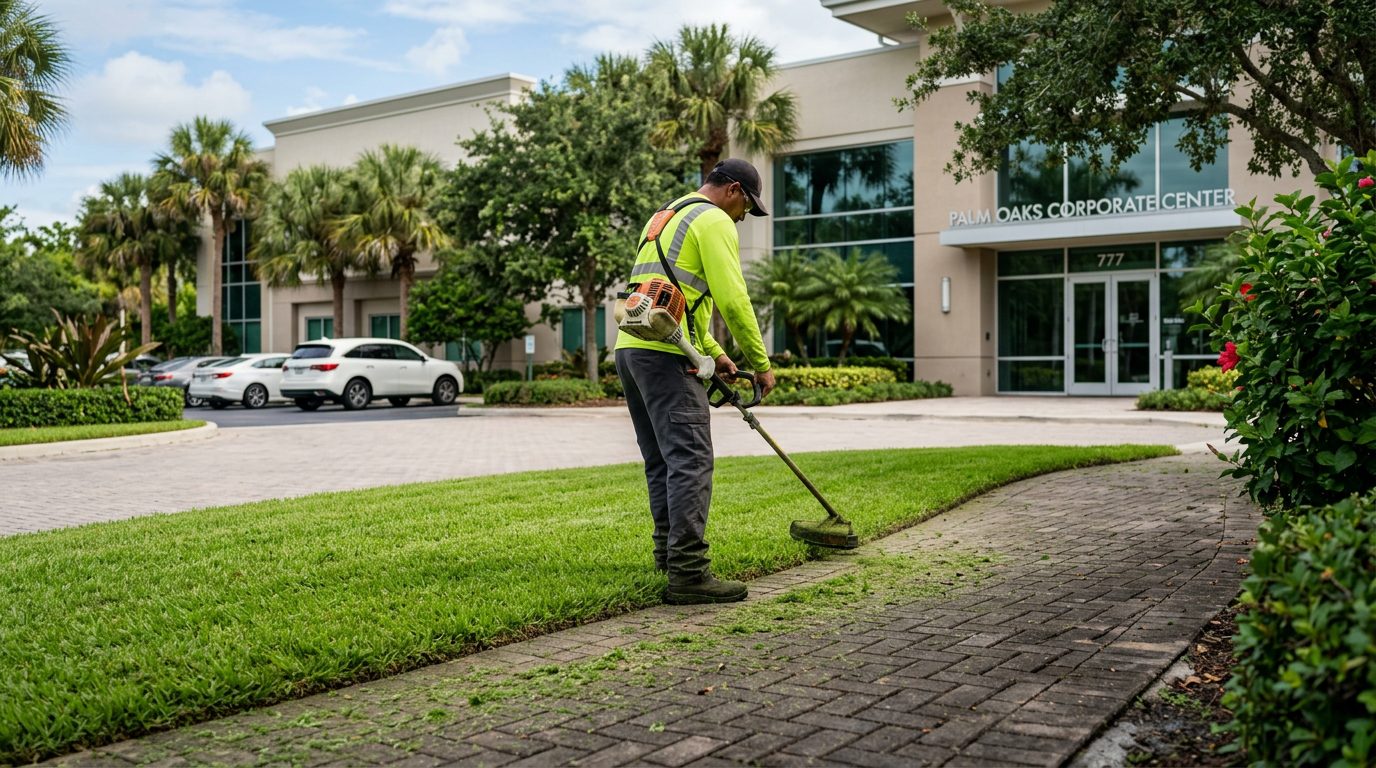
Routine maintenance for lawns, shrubs, and planting beds that keeps your entrance and grounds looking well kept.
Pressure Washing
Cleaning for walkways, entry areas, and building exteriors to keep surfaces fresh and presentable.
Floor Care Maintenance
Interior floor care that supports a clean, professional space for your staff and visitors.
Day Porter Service
On-site daytime attention to restrooms, common areas, and everyday cleanliness during business hours.
Our first consultation is free, confidential, and carries no obligation to continue. Contact us to talk through your new office grounds.
More of our services
- Landscape Company Workers’ Comp in Florida: How to Check?