
Commercial Landscape Maintenance | South Florida
Make Every Weekly Visit Count for Your Commercial Grounds
A consistent weekly routine keeps properties presentable, catches small problems early, and gives property managers a clear record of what was done.
By Ryan Jurney · Published November 23, 2026
If you’re reviewing a landscape contract or checking on a crew that comes to your property each week, you want a clear answer to one question: what should a landscape crew do on each visit? A landscape crew should do the tasks in the written scope for that property on every visit, then leave a record that shows the work was done. The core routine is a site walk-through, mowing and edging, bed and shrub care, irrigation and drain checks, debris cleanup, any approved treatments, and a visit log.
The sections below cover each task, why it matters on shared commercial property in South Florida, and what to look for in the visit record.
What a Weekly Commercial Landscape Visit Is Meant to Accomplish
A weekly visit keeps the grounds, entrances, and planted beds neat and safe for everyone who uses the property.
On a shared property, the landscaping is seen every day. Residents, tenants, delivery drivers, and visitors all pass the same entrances and beds. A home lawn can go a week without much notice. A condo entrance with a broken sprinkler head or a blocked walk gets noticed fast.
A set routine stops small problems from piling up. Weeds spread, and a clogged drain can turn a light rain into standing water. South Florida’s wet season makes drainage and debris matter as much as mowing. A regular schedule also gives the property manager a steady point to check the work, instead of a surprise at the end of the month.
The exact tasks come from the written scope of work for each property. A good scope names the zones, the mowing height, the pruning schedule, and which drains are included. If a task is missing from the scope, ask for a written change before the crew adds it.
Not sure what your next step is?
Talk it through with our team — the first consultation is free, confidential, and carries no obligation.

Arrival and Site Walk-Through Before Work Begins
The crew should walk the site for hazards and blocked areas before starting any equipment.
A quick walk-through protects people and the work. The crew looks for fallen limbs, storm debris, standing water, and damaged signs or light fixtures. It also checks which gates and zones are scheduled and notes any area blocked by parked cars or construction trailers.
Then the crew records its arrival time and a short condition note. That note is the starting point for the visit log. If the crew finds a hazard it cannot fix, it should flag the problem to the property manager and keep people away from the area until it is cleared.
Storm damage calls for more care. Broken limbs, wind-damaged plants, and debris after a storm can need a different response than routine trimming. Palm Beach Gardens publishes hurricane guidance for landscape properties.
Mowing, Edging, and Blowing Standards
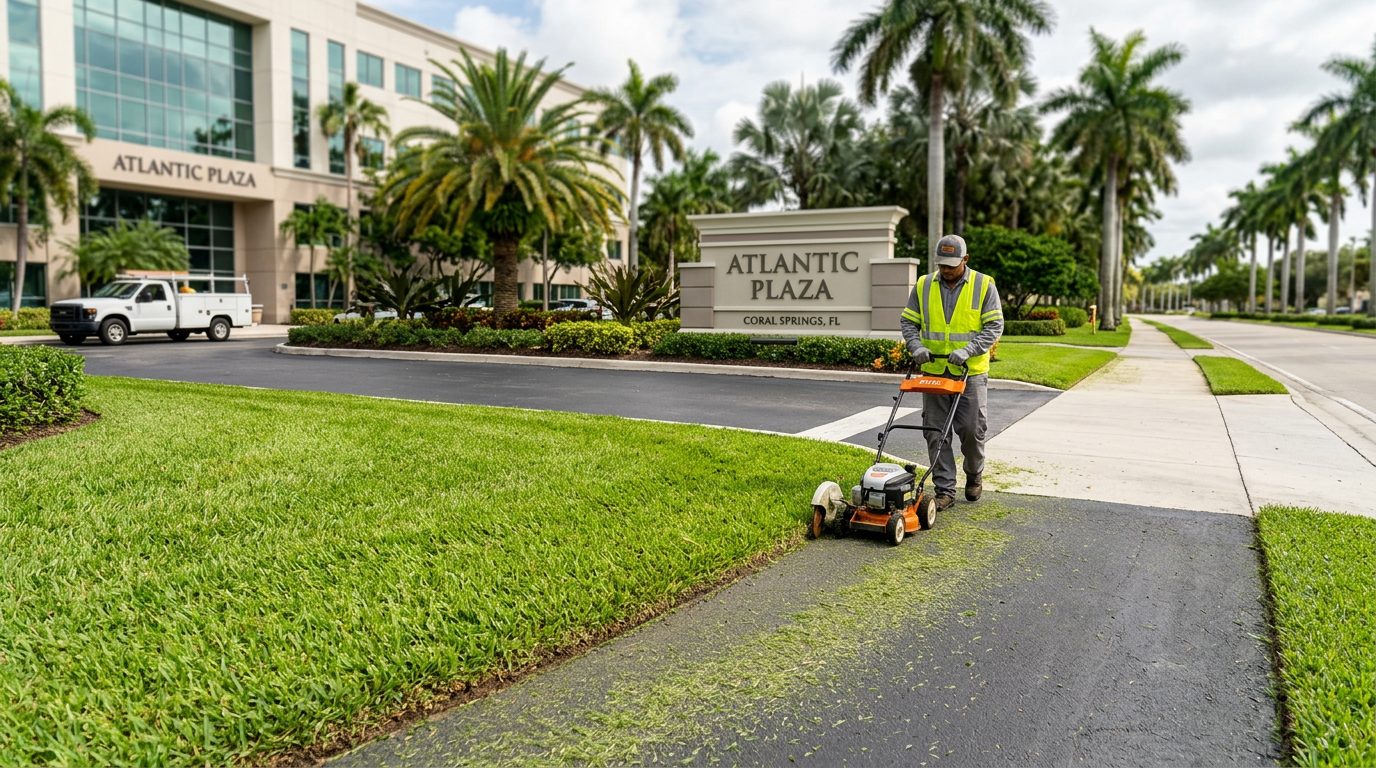
The crew should mow at the height and pattern in the scope, then edge and blow clippings off hard surfaces.
Mowing height matters more than many people expect. Cutting too low can scalp turf, which removes too much green growth and leaves bare, uneven patches. The crew should follow the height in the scope. Where the scope asks for it, the crew changes mowing direction from visit to visit. That reduces ruts and keeps the lawn even.
Edging comes next. Clean lines along walks, curbs, and planting bed edges make a property look cared for. Those lines are easy to check from one visit to the next, so they show whether the work is steady. For background on turfgrass care, see the Florida-Friendly Landscaping FAQs.
Blowing is where many crews slip. Clippings left on walkways, entrances, and parking areas get tracked inside and washed toward drains. The crew should blow them off hard surfaces and back onto the turf or into bags. A common mistake is blowing clippings against a building wall and leaving them there.
Bed, Shrub, and Plant Care on the Route
On each visit the crew should weed planting beds and trim growth that blocks walks, lights, signs, or parking.
Weeds left in beds spread into turf and creep against foundations. Pulling them each week keeps a small patch from becoming a large one. Shrubs and groundcovers need trimming when they grow onto sidewalks, light fixtures, signs, or parking spaces. The crew should follow the pruning schedule in the scope rather than cut on its own timeline.
Plant problems are different. If a plant shows stress, pest damage, or disease, the crew should report it to the property manager instead of treating it without approval. A treatment changes the cost and the scope, so the manager should decide first. A written note with a dated photo gives the manager something concrete to act on.
Irrigation and Drainage Checks
The crew should check each irrigation zone and look for pooling water on every visit.
A quick irrigation check finds the problems that waste water and damage pavement. Look for broken heads, clogged emitters, and spray that hits sidewalks or the building. Each problem is a small fix when caught early. It becomes a larger repair when it runs for weeks.
Drainage matters during South Florida’s wet season. Standing water near drains and low spots can lead to erosion and turf loss, and it makes a property look neglected. The crew should look for pooling and erosion near every drain on the route. When a repair is needed, the visit log should say whether the crew fixed it on the spot or flagged it for follow-up.
Irrigation care is part of a broader standard. The UF/IFAS GI-BMP program offers training and management practices for landscape professionals on fertilizing, irrigation, and protecting water quality.
Debris and Hard-Surface Cleanup
Before leaving, the crew should pick up litter, leaves, and clippings and clear drains and entry points.
Litter and leaves collect in the same places every week, such as curbs, drains, and entrances. A crew that sweeps these spots on each visit keeps the property looking finished. The work is simple, but it is easy to skip when the crew is in a hurry.
Catch basins and storm drains need attention wherever the scope includes them. A blocked drain cannot move rainwater, and water can stand in the same spot after a heavy rain. Clearing drains on a set schedule is a small step with a large effect.
Dumpster enclosures and service corridors belong on the route too. Landscape debris left there can delay waste collection. Heavier grime on entrances, sidewalks, and dumpster pads is pressure washing work. That is a separate scope item and can be scheduled apart from the weekly visit.
Not sure what your next step is?
Talk it through with our team — the first consultation is free, confidential, and carries no obligation.
Treatment Visits and Documentation
Florida’s rules for fertilizer on lawns and landscapes come from state law.
For every application, the crew should record the product name, the area treated, the date, and the applicator’s name. That record lets the property manager check the work later. When a treatment calls for re-entry or notice instructions, post or communicate them, so residents know what to expect and when.
A common mistake is treating an area the scope does not cover, or skipping the log because the job seemed small. Both problems are easy to prevent with a written entry before the crew leaves.
Recording the Visit and Reporting to the Property Manager
Every visit should leave a log with the date, time on site, tasks completed, and any issues found.
A visit log turns a weekly service into a record a manager can check. Each entry should list the arrival and departure times, the tasks finished, and any issues found. It should also say what was fixed on the spot and what was flagged for follow-up.
Dated photos add proof. Take before-and-after photos of problem areas, especially for drainage, storm damage, and debris. A photo of the same spot across two visits shows change more clearly than a sentence can.
The scope should list each recurring task, how often it happens, and the standard it must meet. When a manager compares the log to that list, gaps are easy to see. Contract terms matter too. Tampa’s standard purchase order terms address invoice contents, so keeping invoices and visit logs side by side is a practical habit.
Talking Through Your Property’s Weekly Visit Checklist
If you’re reviewing a crew’s weekly work, the next step is to compare the visit log with the written scope.
Many people reading this are doing it on someone else’s behalf. A board member may be hearing residents complain about a dirty entrance. A property manager may be reviewing a contract before renewal. These situations call for specifics, not general tips.
Board members carry their own duties. Under Florida Statutes s. 720.303, the officers and directors of a homeowners’ association that operates a community as defined in s. 720.301 have a fiduciary relationship to the members who are served by the association. The scope and the visit log give a board a clear record to review.
What should a landscape crew do first on each visit?
The crew should walk the site for hazards, blocked areas, and damage before starting equipment. It then logs the arrival time and a short condition note.
Does a landscaper need a license to apply fertilizer or pesticides in Florida?
Check the requirements that apply to your contract’s treatments.
What should a visit log include?
At minimum, the log should show the date, time on site, tasks completed, and issues found. Dated photos of problem areas make the record easier to check.
Should the crew fix plant problems on its own?
Not without approval. The crew should report stress, pests, or disease to the property manager first.
Reviewing a crew’s weekly work on behalf of residents or a board can feel like a lot to carry alone. Gator Protection, Inc. can walk through your property’s weekly tasks and compare them with the scope you already have. You can contact Gator Protection to start that conversation. La consulta inicial es gratuita, confidencial y sin compromiso de continuar.
Why a Consistent Weekly Routine Matters
Predictable Scheduling
A fixed weekly visit lets tenants, staff, and visitors count on grounds that are ready for them.
Early Problem Spotting
Regular walkthroughs help crews notice hazards, damage, and irrigation issues before they grow.
Consistent Standards
A repeatable checklist keeps the work steady from one visit to the next.
Clear Visit Records
Arrival times and short condition notes give you a simple record of each visit.
Start With a Site Walk
Before any equipment is started, walk the property for hazards, blocked areas, and damage. Note anything unusual in the visit log so it can be addressed promptly.
Core Tasks for Each Weekly Visit
Site Walk and Safety Check
Review access points, walkways, and common areas for hazards or damage before work begins.
Mowing, Edging, and Trimming
Maintain turf, beds, and hedges to the standard agreed for your property.
Debris Removal and Clean-Up
Clear clippings, leaves, and litter from walkways, parking areas, and entrances.
Visit Log and Condition Notes
Record arrival time and a short summary of what was done and what needs attention.