
Pressure Washing | Miami Condos
Balcony and Terrace Pressure Washing Built for Miami Condos
Clean outdoor spaces that residents and visitors notice first, cleaned with care for the surfaces your building depends on.
By Ryan Jurney · Published November 17, 2026
If your condo’s balconies look dingy, the terrace floors stay slick, or the drains back up after rain, you need a clear plan. Balcony and terrace pressure washing cleans the floors, railings and drains in one scoped job, and the work is written out before any water touches the surface.
This page explains what the job covers, how it runs and what a condo board should know before it approves the work.
What Balcony and Terrace Pressure Washing Covers in a Miami Condo
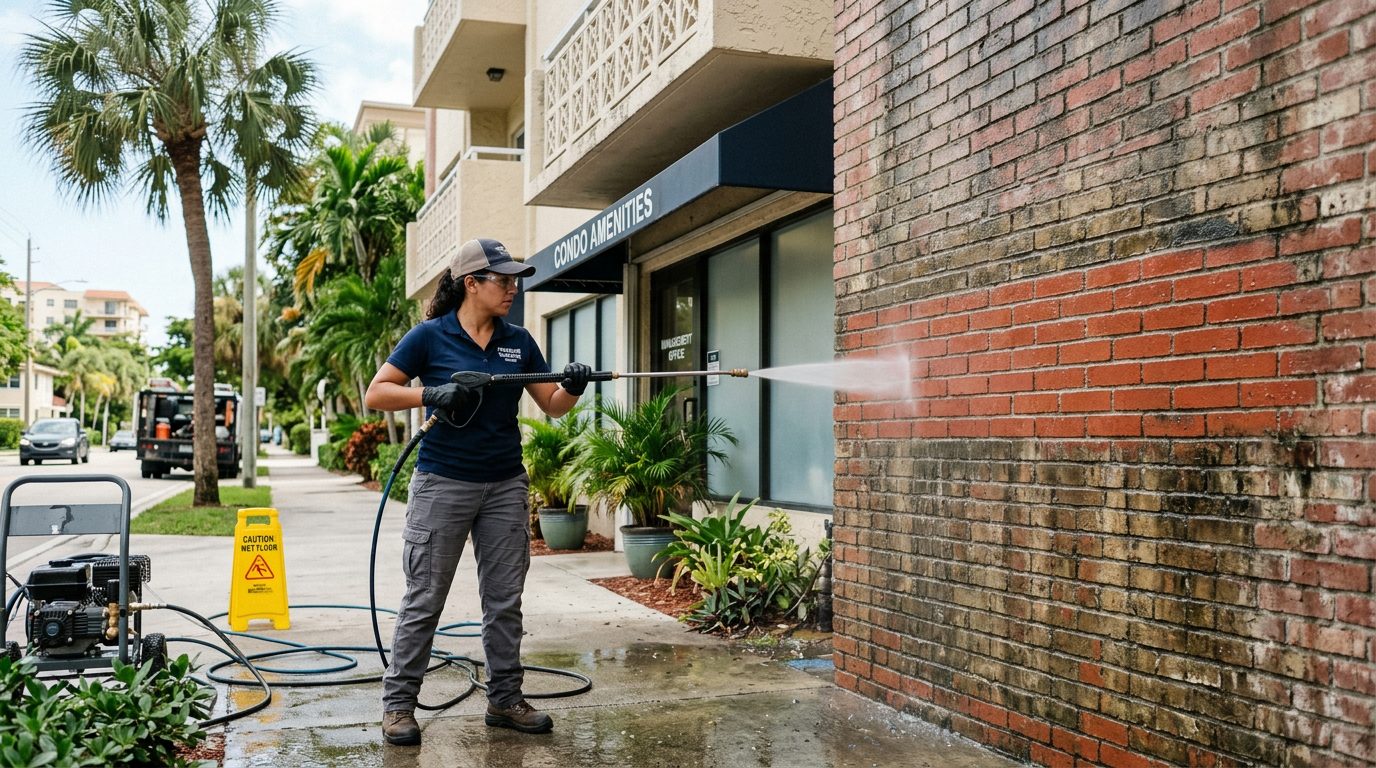
Balcony and terrace pressure washing is high-pressure cleaning of the walking surfaces, railings and drains on condo balconies and shared terraces. Miami’s climate builds grime on these surfaces faster than many owners expect. Humidity feeds mildew and algae. Salt air leaves residue on metal and concrete. Wind carries in dust and debris, and rain pushes that grime toward the drains and edges, where it sits.
Built-up grime also makes walking surfaces slippery, which is a safety concern for residents and guests. Owners often notice the problem only after a slick spot or a clogged drain causes trouble.
The work fits condo association boards, property managers and building managers who look after shared terraces. It also fits individual unit owners who want their own balcony cleaned. Gator Protection serves South Florida, including Miami-Dade, Broward and Palm Beach counties, with neighborhoods such as South Beach, Brickell and Coral Gables. We also serve parts of Atlanta, Georgia.
Keep the difference clear: this is cleaning, not an engineering review.
Not sure what your next step is?
Talk it through with our team — the first consultation is free, confidential, and carries no obligation.
What’s Included: Floors, Railings, Drains and Related Surfaces
The scope covers the floor, railings and drains on each balcony or terrace, plus nearby surfaces that collect the same grime.
- Floors and slabs: Dirt, mildew, algae and stains come off concrete, tile and pavers, including edges and corners.
- Railings: Upper rails, balusters and bottom channels are cleaned in aluminum, steel or glass-and-metal setups, with extra care at joints where grime builds up.
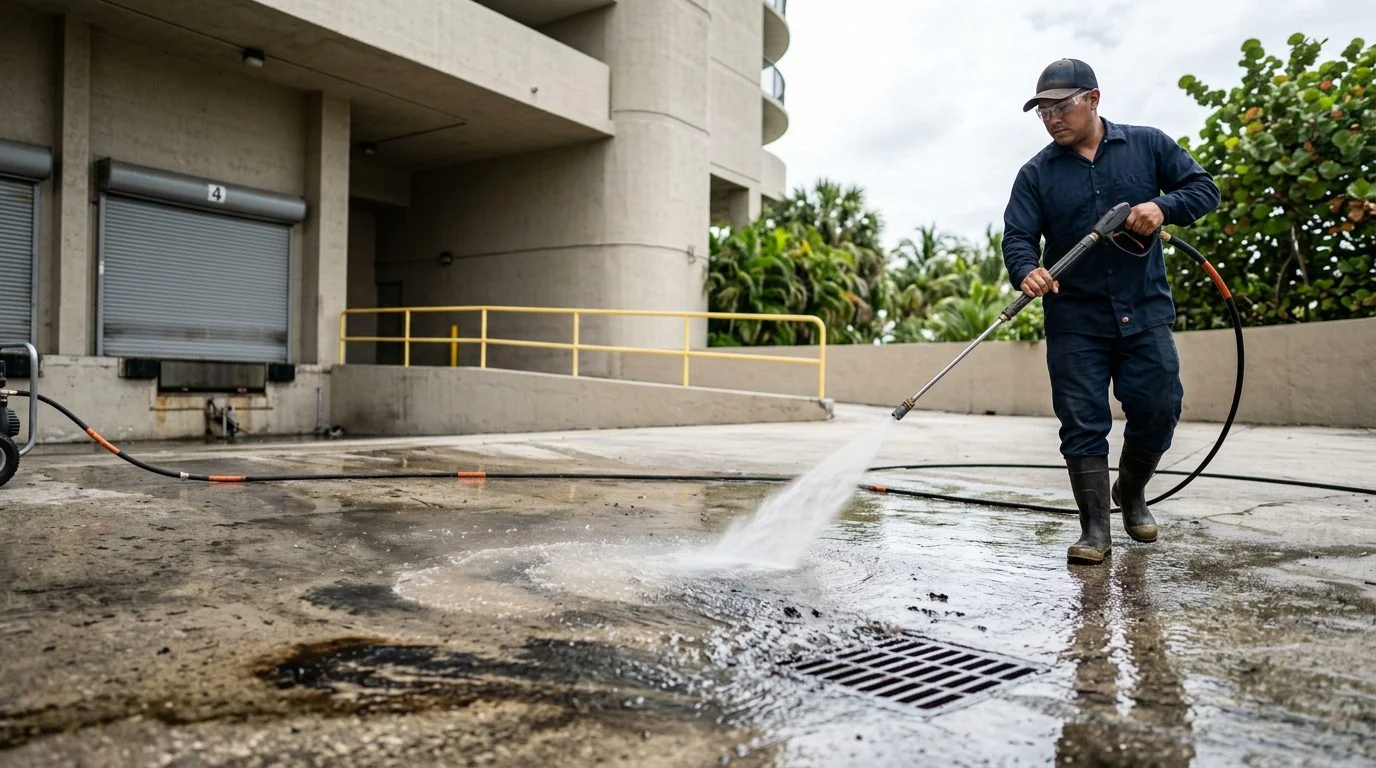
- Drains and scuppers: Debris is cleared from drain openings, and the surface around them is cleaned so water can move off.
- Walls and ledges: Residue on walls, ledges and planter edges is included when the written scope lists them.
- Pressure by surface: Tile, painted metal and concrete respond differently, so pressure is set for each one before cleaning starts.
Rinse water matters on any balcony job. Runoff that enters storm drains in South Florida is discharged untreated into connected water bodies, and it can carry pollutants from paved surfaces, according to the South Florida Water Management District. That is why drain clearing is a named line item in the scope, not an afterthought.
A scope that names every rail, drain and floor gives you a clear checklist for the final walkthrough.
How the Job Works: From Site Walk to Final Rinse
A balcony and terrace job follows six steps, starting with a site walk and ending with a final walkthrough. Before the site walk, gather the building’s balcony count, any floor plans or unit lists, and records of past cleaning or repairs.
- Site walk. We meet with the board or property manager to identify each balcony and terrace, access points and surfaces in scope.
- Written scope. Each area, surface and drain is listed, along with anything that needs protection or relocation.
- Scheduling. Timing is set with building management, and units that need access receive notice in advance.
- Protection. Furniture, plants, lighting and nearby surfaces are covered or moved before water is applied.
- Cleaning. Work runs from higher points down, so runoff does not re-soil finished areas. Drains are cleared during the process.
- Final rinse and walkthrough. Completed areas are reviewed, and any spots that need a second pass are noted.
The length depends on the facts of each property, including the number of balconies, terrace size, access and surface condition.
Board review often comes first, and that step has its own timing. Under Fla. Stat. § 718.112, the operation of the association is governed by its articles of incorporation, if it is incorporated, and its bylaws.
Balcony work often slips when the scope arrives late, because the board needs time to put it on an agenda. A written scope gives the board a clear item to place on that agenda. Under Fla. Stat. § 718.111, bids for work must be kept for at least 1 year after receipt, so the scope and bid belong in the board’s records.
Why Gator Protection for Condo Balcony and Terrace Work
Gator Protection handles balcony and terrace pressure washing alongside the other building services a condo often needs, so one contractor can coordinate the work.
- Related services, one contractor: Pressure washing pairs with floor care maintenance, day porter service and landscape services.
- Support staff: Assistants and office staff handle scheduling, written scopes and communication with building management.
- Commercial focus: Commercial janitorial and landscape maintenance is the core of the business, across South Florida and parts of Atlanta, Georgia.
- Planned around routines: Balcony work can be timed so it does not disrupt landscape or janitorial routines already in place.
- Ongoing maintenance: Terrace cleaning can be added to a building’s regular maintenance plan.
For a property manager, one contractor means fewer vendors to schedule and fewer separate invoices to track.
Balcony and Terrace Pressure Washing: Common Questions
Most questions come down to scope, access and surface type, and each one has a direct answer.
Does the board need to approve the work?
Boards usually review outside work, and a written scope gives them something specific to review.
Will residents need to be home?
Access is confirmed during the site walk and scheduling step, and units that need access get notice in advance.
Can railings and drains be cleaned in one visit?
Yes. Railings and drains are standard parts of a balcony or terrace scope.
Will pressure damage painted metal or tile?
Pressure is set for each surface type before cleaning starts, so the setting matches the material.
What should residents move before the work?
Furniture, plants and loose items should be moved or covered, and the written scope lists what needs protection.
How does the board keep a record of the scope?
The written scope lists each area, surface and drain, so it can go into the board’s bid and meeting records.
Does pressure washing count as a milestone inspection?
No. Florida milestone inspections are performed by licensed architects or engineers, according to Miami-Dade County guidance. The inspection report must bear that professional’s seal, under Fla. Stat. § 553.899.
Request Your Balcony and Terrace Cleaning Quote
A written scope is the next step if mildewed balconies, slick terrace floors or clogged drains are holding up a board decision. Tell us whether you are a board member, a property manager or a unit owner, and which balconies or terraces need attention. We can then outline the scope for those areas.
Fill out the contact form, call our office, or request a quote for your balcony and terrace scope before your next board meeting.
La consulta inicial es gratuita, confidencial y sin compromiso de continuar.
Gator Protection serves South Florida and parts of Atlanta, Georgia.
Test before the full wash
Painted, sealed, and older surfaces can react badly to high pressure. Ask for a small test area first so the team can confirm settings that clean well without etching concrete, lifting paint, or loosening railing fixtures.
Balcony and terrace areas we clean
Balcony floors and slabs
Removal of grime, salt residue, and everyday buildup from concrete and tile surfaces.
Terrace and patio surfaces
Shared and private outdoor areas cleaned to a consistent, even finish.
Railings and balusters
Careful cleaning of metal and glass railings, including the hard-to-reach edges where grime builds up.
Drains and corners
Clearing of drain openings and corners so water and debris move away from the walking surface.
What to expect when you work with us
Careful surface handling
We adjust the method to the material, so concrete, tile, and metal are each cleaned appropriately.
Scheduling around residents
Work is planned with building access and resident routines in mind.
A clear scope
The work to be done is outlined so you know what is included before any cleaning begins.
Easy to reach
Call the office or send a message through our contact form, and our team will follow up.
Your first consultation is free, confidential, and comes with no obligation to continue.
More of our services
- Pressure Washing Services for Miami-Dade Condos, Apartments and Gated Communities
- Miami Condo Common Area & Entrance Landscape Maintenance